Robbie Thain
Founder, CEO

Turn passive trade show badge scans into a qualified sales pipeline. Learn a practical framework to capture buyer intent and improve event measurement.
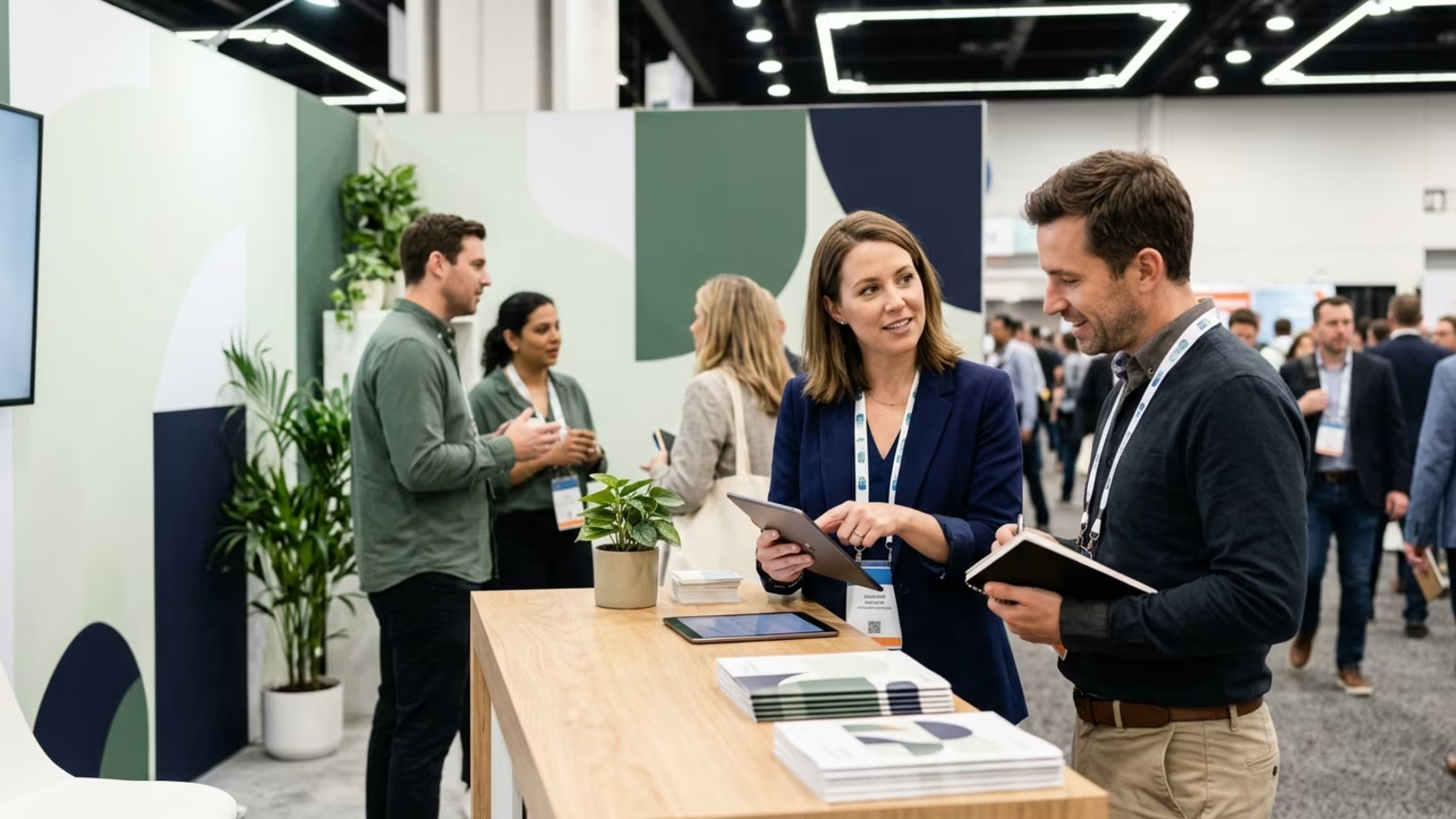
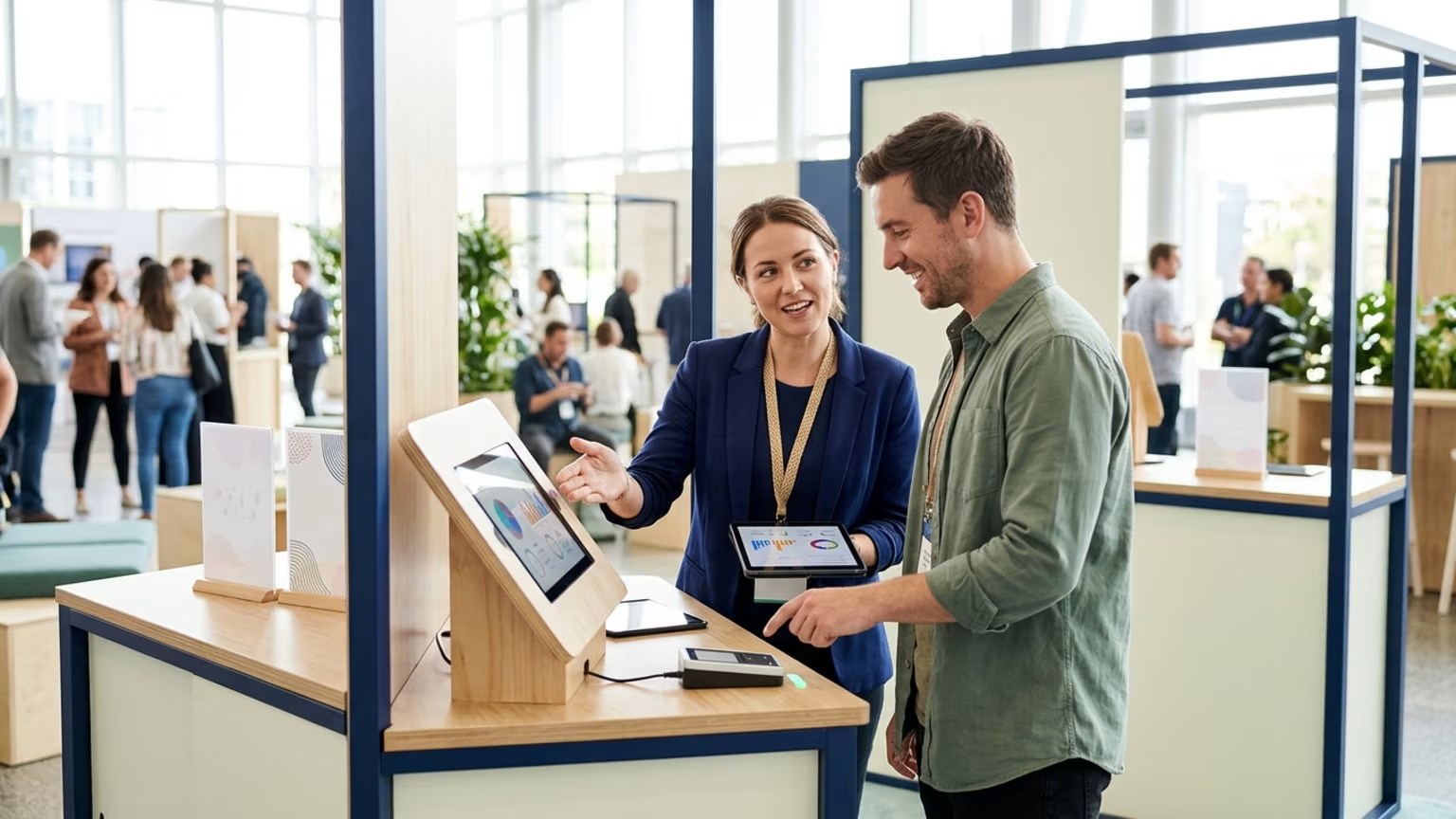
How do you distinguish a meaningful sales conversation from a simple badge scan at a crowded trade show? Trade show programs get judged on raw badge scans, but a high scan count rarely translates directly to retail expansion or sales pipeline. A scan simply records a contact. It does not establish if the person fits your target buyer profile, has real buying intent, or agreed to a useful follow-up.
According to lead capture guidance, an undifferentiated scan list provides far less value than a list augmented with staff ratings and qualification information. To make event data more useful, marketing operators must record the fit, intent, and next step for every qualified visitor. This shift in perspective turns trade show booths into high-functioning lead generation engines.
Field marketing directors face intense pressure to prove that their activations drive measurable business outcomes. Without a structured framework to grade leads by quality, they risk wasting massive activation budgets on unqualified foot traffic. Building a diagnostic lead capture system is the only way to justify the expense of modern experiential marketing.
Planning a layout requires more than arranging banners and applying for floor space permits. You have to design the physical flow to capture intent before a visitor even reaches the core product. If you build a space strictly for volume, you will struggle to separate casual samplers from retail buyers. Managing foot traffic proactively gives your staff the time they need to record accurate contact details.
We handled concept, operations, staffing, and breakdown for a 40 by 20 foot trade show environment for Glanbia at Natural Products Expo West 2025. We united think! and Isopure with Optimum Nutrition and Amazing Grass into one coordinated space. This allowed us to structure the floor plan to manage massive crowds effectively. Distributing more than 14,000 recorded product samples across multiple activation stations required a layout that naturally filtered general attendees.
This careful physical filtering gave the floor staff the breathing room to transition from casual product trial to serious commercial discussions. Brands that understand this dynamic can align their event footprint with their actual measurement goals. This physical filtering is why event marketers are trading massive trade show crowds for qualified buyer deals. Without a floor plan that supports deliberate conversations, even the best lead capture technology will fail to record meaningful buyer intent.
The human element remains the ultimate filter for lead quality. Trained brand ambassadors drive in-store sales and trade show success through real conversations, not passive badge scanning. Staff must be prepared to identify the contact type immediately and route them appropriately. Relying on technology alone often results in an undifferentiated list of contacts with zero context.
One published trade show guide suggests asking what brought the visitor over, when the issue needs attention, who else needs to see a solution, and what should happen next. Based on those answers, staff can apply hot, warm, and cold tags to prioritize the lead. Industry guidance also recommends recording the contact's role and product interest alongside their timeline and desired follow-up action. These specific details transform a simple scan into a robust profile.
Our mobile activations and roadshows rely on this human-centric methodology to accelerate consumer trial and build trust. By training our teams to ask the right qualification questions, we transform initial product interest into sustained consumer confidence. We turn audiences into participants with live and digital experiences that invite people to act.
Giving your field staff a script is not enough; they need a diagnostic mindset. They must understand the difference between a consumer looking for a free sample and a retail buyer looking for a partnership. This clarity on the floor directly impacts the quality of the data passed to the sales team.
Moving a handshake into a structured CRM record requires strict operational protocols on the floor. Industry lead capture guidance recommends recording qualification answers and notes alongside the scanned contact. One exhibitor guide outlines a workflow of scanning a badge and answering preset questions. Staff then add notes and save the data before exporting the lead records.
When teams track awareness, engagement, and conversion accurately, they can turn brand moments into actionable data. A trade show lead generation guide recommends personal follow-up for hot leads and giving that outreach a specific purpose. This might mean confirming a scheduled demo or booking a meeting to discuss a concrete commercial opportunity. An undifferentiated scan list provides far less value than a list augmented with staff ratings.
We managed a four-week, multi-market Costco sampling program for Pulmuone's PlantSpired line where strict data capture was critical. The program delivered more than 65,000 samples and allowed us to isolate concrete performance baselines that connect trial data directly to subsequent CRM strategies. Structuring this data collection ensures that every field interaction has a clear path to the bottom line.
Accurate CRM routing eliminates the friction that typically follows large industry events. Teams that transition from passive scanning to active lead capture playbooks for trade show scans generate clearer reporting and better return on investment. The goal is to leave the event with a prioritized pipeline, not just a spreadsheet of names.
Even the most rigorous qualification framework faces reality when Wi-Fi drops, lead retrieval hardware fails, or massive crowds overwhelm the booth staff. A broken scanner should never stop a brand from capturing a critical retail buyer lead. When digital systems fail, the field general must switch the team to manual capture immediately to protect the investment.
Staff must know how to quickly pivot to capturing the most critical details on paper or offline devices. In these worst-case scenarios, the focus narrows to the buyer's role, specific need, timeline, and follow-up action. Once the floor calms down and systems reboot, teams can manually enter the notes to ensure no high-value conversation is lost.
Maintaining this discipline keeps the event prep timeline running smoothly, preventing permanent data gaps. The best experiential teams anticipate these technical failures and train their ambassadors to keep the conversation flowing naturally. A seamless recovery on the floor demonstrates professionalism and operational excellence to prospective buyers.
By establishing a clear contingency plan, you protect the integrity of your lead scoring framework. The ability to troubleshoot the floor without losing critical buyer context separates professional activations from amateur setups.
Before planning your next major exhibition, establish what counts as success and build your capture framework around it. Decide whether the activation is meant to drive broad consumer trial or secure concrete buyer meetings. Train your floor staff to recognize the difference and record the necessary context for each distinct path.
Aligning your booth layout and your staff training with clear measurement goals will transform your presence. Stop counting raw scans and start measuring qualified conversations. Provide clear reporting on reach, trials, leads, and sales to guide next steps in campaign optimization.
Focus on recording the exact next step agreed upon during the conversation. Whether it is a product sample request or a formal buyer meeting, clarity on the outcome drives post-event momentum. This structured methodology guarantees that your experiential marketing investment translates into a verified commercial pipeline.
Moving from passive badge scans to a structured lead framework requires strict operational control. Makai provides this by managing your physical footprint and taking over the execution burden. We eliminate the friction of navigating complex event logistics, permits, and staffing. Through our Storage & Logistics service we store your sampling product and event gear, then ship, track, and coordinate delivery nationwide so every activation stays on schedule.

30 Years Experiential & Retail Activation Partner for CPG & Beverage Brands | Multi-Market Demos, Roadshows & Costco/Club Programs That Actually Sell