Robbie Thain
Founder, CEO

An operator's take on choosing activation goals, data owners and review windows before measuring trial, qualified leads or retail outcomes.

A beautiful activation is not evidence of a successful one. The sacred cow to retire is the belief that a spectacular footprint proves commercial value. A packed booth and a polished recap still leave the real question unanswered: what business decision did this experience help the team make?
For a CMO weighing a six-figure commitment, that question is not academic. The anxiety is paying for production and leaving with no qualified pipeline to defend. More dashboard tiles do not fix a plan that never defined what a useful result would look like.
Our position is simple: decide what the activation must teach the business before choosing what to count. That might mean deciding whether to repeat a sampling format or change a trade show approach. The creative should serve that decision rather than become an expensive substitute for it.
An activation becomes a beautiful dumpster fire when its visible success has no agreed commercial meaning. Marketing celebrates attendance. The field team reports samples. Sales receives contacts without a shared definition of which conversations deserve follow-up.
Those observations can all be accurate while answering different questions. A sample count describes distribution. Buyer qualification answers a different question about fit and intent. Both belong in the discussion only when the objective calls for them.
The failure is not necessarily that the team collected too little data. It is that no one agreed which evidence would change the next decision. Without that agreement, the recap can become a debate over which metric makes the event look best.
Production details also deserve commercial scrutiny. Poor booth flow and inconsistent staffing are among the operational problems Makai addresses. In our view, a design that draws attention but makes a useful conversation difficult has missed its purpose.
That is why execution planning belongs in the creative discussion. The question is not whether the experience looks impressive. It is whether the physical setup and the people running it support the intended response.
At Makai, aloha-style warmth means making a face-to-face experience feel like a welcome rather than a transaction. Our operator view is that warmth makes trial inviting while discipline gives conversion a practical route. The conversation should feel natural while the execution behind it stays accountable.
We have connected brands with people through live experiences and retail programs since 1995. That history informs our stance: logistics is part of the brand experience, not a separate backstage concern. Product availability and staffing deserve the same attention as the centerpiece.
Our retail demonstrations use trained brand ambassadors to support in-store sales through product trials and real conversations. Our integrated services extend from permitting to CRM reporting. Together, those capabilities reflect a practical belief: a human interaction deserves an operational path beyond the moment.
The same philosophy applies to consumer events. We build festival zones and pop-ups designed to turn viewers into fans and fans into advocates. Our crews manage execution and track reach and response metrics. Shareable creative and accountable fieldwork belong in the same brief.
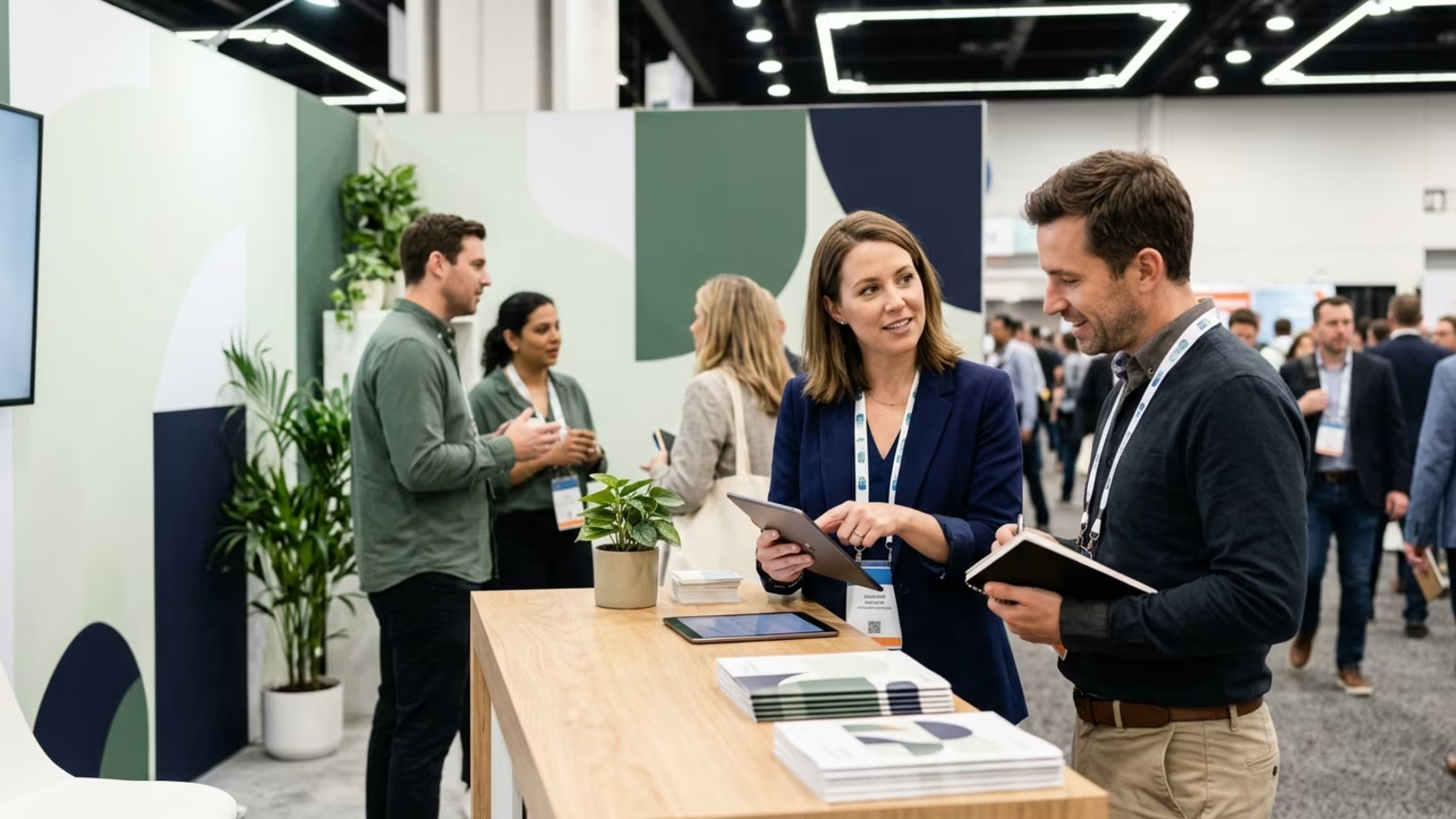
At Natural Products Expo West 2025, we designed and managed a 40 by 20 foot trade show environment for Glanbia. The coordinated space brought together think!, Isopure, Optimum Nutrition and Amazing Grass. We handled concept and operations as well as staffing and breakdown. More than 14,000 recorded product samples were distributed across the activation stations.
The lesson here is not that a large footprint automatically pays off. That recorded distribution is evidence of sampling activity, not a claim about qualified buyers or attributable sales. We believe the value of disciplined execution is making the intended interaction possible and the resulting activity visible.
A simple experience is not automatically effective either. Our argument is not to strip away emotion or entertainment. It is to require every creative choice to support the response the business actually needs.
Start with the decision rather than the dashboard. Is the team deciding whether to expand a program, revise the experience or change the audience? The primary objective should identify which outcome would inform that choice.
At Makai, our reporting covers reach and trials alongside leads and sales. We track awareness, engagement and conversion to guide campaign optimization. That range does not mean every measure deserves equal weight in every activation.
For us, connecting the reporting plan to a business goal means agreeing on a small set of useful indicators before production takes over. Each indicator needs an owner and a review window. The plan also needs to say what evidence would justify repeating or changing the program.
We recommend organizing that agreement around the intended outcome.
Count recorded samples as a delivery measure. Where the intended audience can be identified, distinguish samples reaching target consumers or retail buyers from general distribution. Pair trial with later purchase behavior only where the tracking pathway exists.
Assign responsibility for field capture and for any purchase data used later. Review distribution after the activation. Review purchasing when the agreed data becomes available rather than pretending both outcomes arrive together.
A lead objective needs an agreed definition of qualification. The evidence should describe why the contact fits the opportunity and what follow-up is relevant. Retail meetings booked can be a tangible outcome when the purpose is opening a buyer conversation.
Assign a team to capture the relevant information and a team to own the next contact. Review lead quality separately from later conversion. A meeting booked should not be presented as a customer won.
For a retail objective, sales velocity is closer to the commercial question than a crowd count. The plan should establish whether the relevant retailer data is accessible. A baseline and a traceable connection to later purchasing belong in the plan before interpreting a sales change.
The review window should match the available sales data and the decision being made. If partner data is unavailable, report the activity that can be documented without relabeling it as sell-through. A sales change alone does not establish incremental impact.
Retailer confidence needs its own definition of useful evidence. Our recommendation is to agree on what the retailer needs to see. That could include documented execution or available sales data rather than consumer engagement counts alone.
Name the person responsible for presenting that evidence and agree on the review point. This is a planning judgment, not a tested measure of retailer confidence.
Trust also deserves a place in the discussion when it is an explicit objective. In its 2026 research announcement, Freeman reported that 56% of surveyed consumers who had attended a brand event trusted that brand. The comparison was 11% among those who had not. The research was designed by The Freeman Company and fielded independently by The Harris Poll.
The announcement provides limited methodological detail. This is an association, not proof that attendance caused trust or sales. Our view is that trust can matter without being converted into a revenue claim.
Before calling a result Return on Investment (ROI), the plan needs defined attribution rules and a consistent reporting window. Avoid combining immediate activity with later commercial outcomes as though they describe the same thing. Keep the field reporting structure tied to the agreed indicators rather than adding metrics just because the system can collect them.
Before approving the centerpiece, ask whether the brief names a decision, a primary outcome and an accountable review. A plan that cannot answer those questions needs more thinking rather than more spectacle. Creative ambition should stay, but it should have a job.
Core takeaway: Demand execution before rewarding aesthetics. Warm human engagement gives the experience its reason to matter; operational discipline gives the team something usable to assess. The strongest brief is not the one with the longest metric list. It is the one that connects a business decision to evidence the team can actually capture and review.
Attention is only part of an activation's job when useful follow-up must survive after the event. Makai addresses inefficient post-event follow-up and CRM routing with experiential campaigns designed to connect consumer interactions to qualified leads for premium CPG brands. Its Consumer Events bring brands and people together through interaction, emotion and engagement.

30 Years Experiential & Retail Activation Partner for CPG & Beverage Brands | Multi-Market Demos, Roadshows & Costco/Club Programs That Actually Sell