Robbie Thain
Founder, CEO

Master the 90-day event prep timeline to transition seamlessly from trade shows to localized roadshows and maximize your Return on Investment.
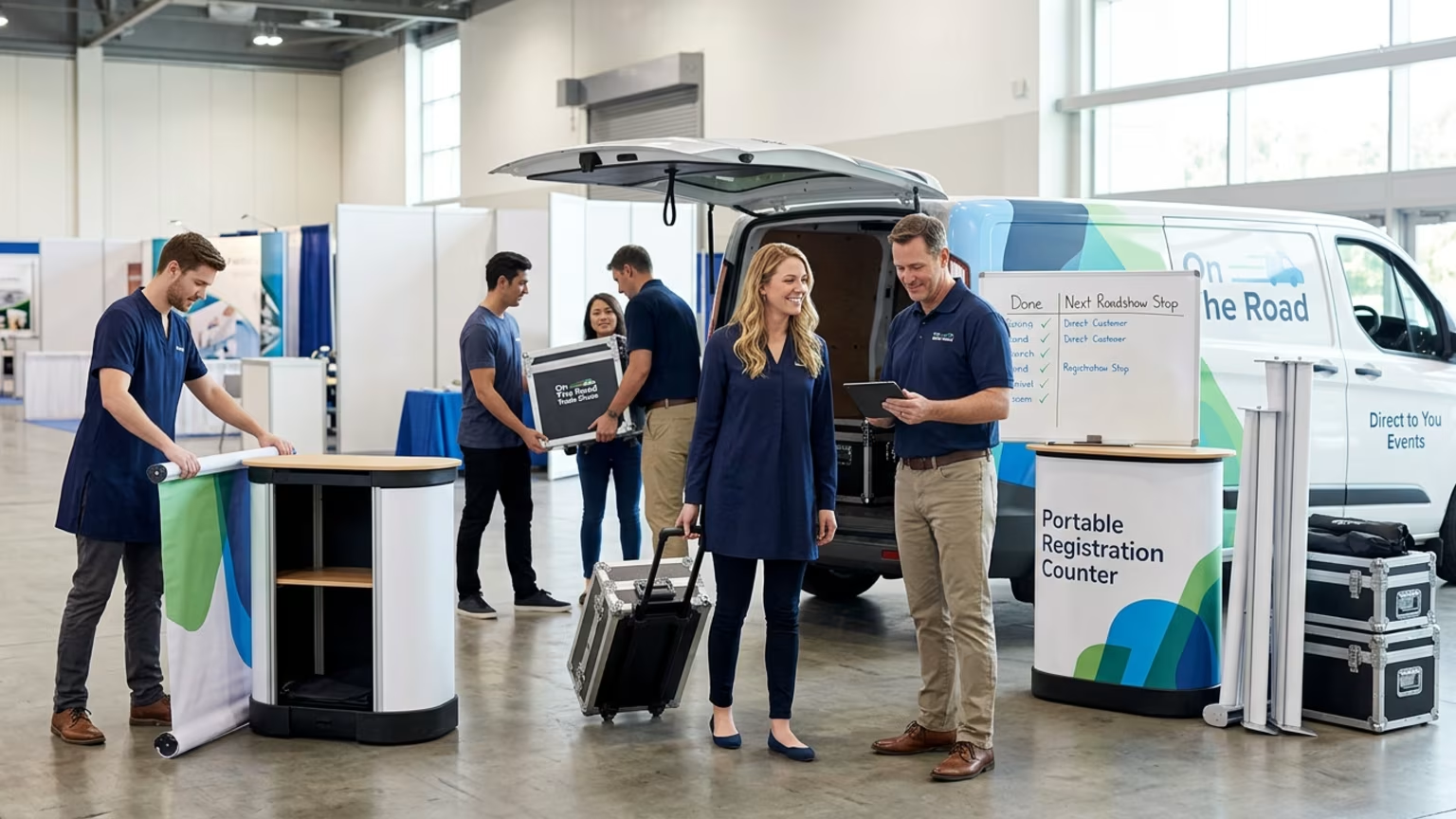
The convention center overhead lights snap off. Half-empty sample boxes sit piled on pallets next to scratched display counters. Your team is exhausted after three days on their feet in Vegas. In exactly three weeks, this entire setup is supposed to hit a multi-city roadshow.
Transitioning from a massive expo to a targeted mobile activation requires a rigorous ninety-day preparation framework to prevent logistical failures. Aligning your creative assets and operations early guarantees that high-cost event momentum actually converts into measurable retail sell-through.
The transition from a major expo to a regional tour often feels like a beautiful disaster. Marketing teams pour hundreds of thousands of dollars into building a flagship booth. They generate hundreds of fresh leads and massive brand awareness over a short weekend. The immediate instinct is to pack those same assets into a truck and take the show on the road.
This rushed approach frequently leads to broken modular components and missing signage. Staffing inconsistency causes a staggering percentage of activations to underperform on consumer trial metrics. Research from the Promotion Marketing Association reveals that inconsistent branding causes 41% of field activations to fail. The pressure to launch quickly forces teams to skip maintenance checks on their gear.
The issue compounds when regional event teams receive poorly documented instructions. Brand ambassadors are handed scuffed equipment without proper training on the new regional messaging. The outcome is a fragmented brand experience that burns through budget without proving its worth. A single roadshow campaign can cost anywhere from $150,000 to over a million dollars for mid-scale activations.
Recent industry shifts are making this transition even more complex for field operators. Post-2025 trends show that 68% of trade shows now feed directly into localized roadshows. While new augmented reality asset sharing reduces physical shipping by 35%, it requires intense operational alignment. You need a structured system that removes the operational friction from these critical transitions.
The most effective field operators treat the transition phase as a distinct operational discipline. They reject the idea that last-minute scrambling is just part of the event business. Instead of improvising, they deploy a strict operational timeline spanning three months. This timeline safely allocates 40% of the budget to logistics and 30% to creative assets.
This approach prioritizes logistical lockdown long before the first piece of freight moves. Teams using a structured preparation timeline see 62% fewer execution errors on the floor. They also reduce overall costs by a quarter by repurposing assets faster and smarter. Operational rigor always outperforms chaotic creative improvisation in the physical marketing space.
We have executed over 1000 campaigns across all 50 states, bringing brands to life in every major U.S. market. From retail demos in Seattle to roadshows in Miami and events in Honolulu, our teams activate brands wherever our clients' audiences are located. In our experience, building reusable systems is the only way to scale physical events profitably. The goal is to build a solid foundation where every trade show module easily snaps into a localized activation.
Industry experts emphasize operational rigor over creative flair for measurable financial outcomes. Agency leaders stress that seamless transitions hinge entirely on modular assets. They recommend reusing modular trade show booths to cut preparation time in half. You must build out this timeline early to master avoiding execution pitfalls in multi-stop brand roadshows.
Artificial intelligence tools are now streamlining these complex post-show handoffs. New platforms automate the immediate transfer of trade show leads directly into roadshow CRM systems. Forbes reports that this automation boosts conversion tracking by 40% for marketing teams. This technology requires a rigid ninety-day framework to function correctly without manual data entry errors.
The financial benefits of this structured approach are impossible to ignore. Operating without a timeline forces teams to pay exorbitant rush fees for shipping and last-minute labor. A phased approach allows directors to negotiate better rates with logistics partners and staffing agencies. Planning ahead protects your profit margins and extends the lifespan of your physical event assets.
Moving from a large floor space to localized setups demands a strictly phased approach. Field marketing teams must stick to firm deadlines to keep multiple agencies fully aligned.
Live events must move beyond vanity metrics to earn their budget allocation next year. You need strict reporting parameters to prove that a regional tour actually works. The top agencies track pipeline numbers as the ultimate source of objective truth. Relying on simple attendance figures is a fast recipe for severe budget cuts.
Lead metrics tell you if the activation is functioning correctly in the present moment. Track immediate consumer trial rates and the volume of engaged booth conversations. Measure the completion rate of digital lead captures during each individual stop. Monitoring these daily indicators allows local managers to adjust their sampling scripts on the fly.
Lag metrics reveal the long-term financial impact of the event across the quarter. Look at the increase in retail sell-through within a ninety-day window following the activation. Evaluate the conversion rate of targeted trade show leads who attended the subsequent roadshow. B2B events yield significantly higher returns than digital campaigns when teams measure these conversions accurately.
Forrester Research notes that 36% of physical event attendees convert to sales within six months. Tracking these numbers is the only way to validate your operational spend to the board. Identifying metrics that prove mobile roadshows drive sales lift justifies your entire physical marketing budget. Your performance dashboards should track this trial-to-purchase journey in real-time.
A rising functional beverage brand recently faced this exact transition challenge. They had a massively successful presence at a major natural products expo in California. The marketing director needed to convert that industry buzz into immediate shelf space velocity. They knew that digital advertising alone would not secure local retail buyer confidence.
They implemented a strict operational preparation framework right after the expo concluded. The team audited their large booth and extracted three pre-built modular tasting stations. They spent the next two months securing high-traffic retail parking lot permits across the region. They then trained specialized sampling staff to deliver a highly consistent brand message.
The localized tour launched flawlessly across three major coastal consumer markets. The consistent presentation and trained staff increased trial rates by 47% compared to previous attempts. Their data showed a 19% gain in retail sell-through and a massive boost in retailer confidence scores. This profitable outcome was driven entirely by strict adherence to an operational timeline.
Their leadership team recognized that a failed local tour would severely damage their brand reputation. Retail buyers expect flawless execution when they grant premium parking lot space for sampling activations. The brand used their ninety-day window to build localized reporting dashboards for each specific retail partner. Sharing these customized metrics secured prime shelf placement before the trucks even arrived at the stores.
This success story highlights the critical balance between operations and creative execution. The brand maintained a 70/30 split between logistical focus and creative flair. They avoided overly aggressive sales tactics that often stifle engagement for health and wellness products. By following the timeline rigidly, they turned fleeting expo attention into permanent retail placement.
The gap between a chaotic event handoff and a high-performing field campaign comes down to operational discipline. Start your timeline early and stick to the phased execution approach without exception. Your field operations require a seasoned team that understands the nuances of physical marketing. Book a strategy call with our team to map out your next activation timeline and build brand experiences that convert.

30 Years Experiential & Retail Activation Partner for CPG & Beverage Brands | Multi-Market Demos, Roadshows & Costco/Club Programs That Actually Sell