Robbie Thain
Founder, CEO

Learn why small language models are replacing artificial intelligence hype in physical retail to fix store level execution and drive measurable brand returns.

The most profitable retail technology of this decade is incredibly boring. Everyone wants to talk about large generative models creating art and writing code. Real operational power sits in small language models that quietly solve repetitive physical retail problems.
This article outlines why small language models are replacing large generative tools in physical retail environments. You will learn how to deploy these focused systems to fix broken store level execution and drive measurable consumer action.
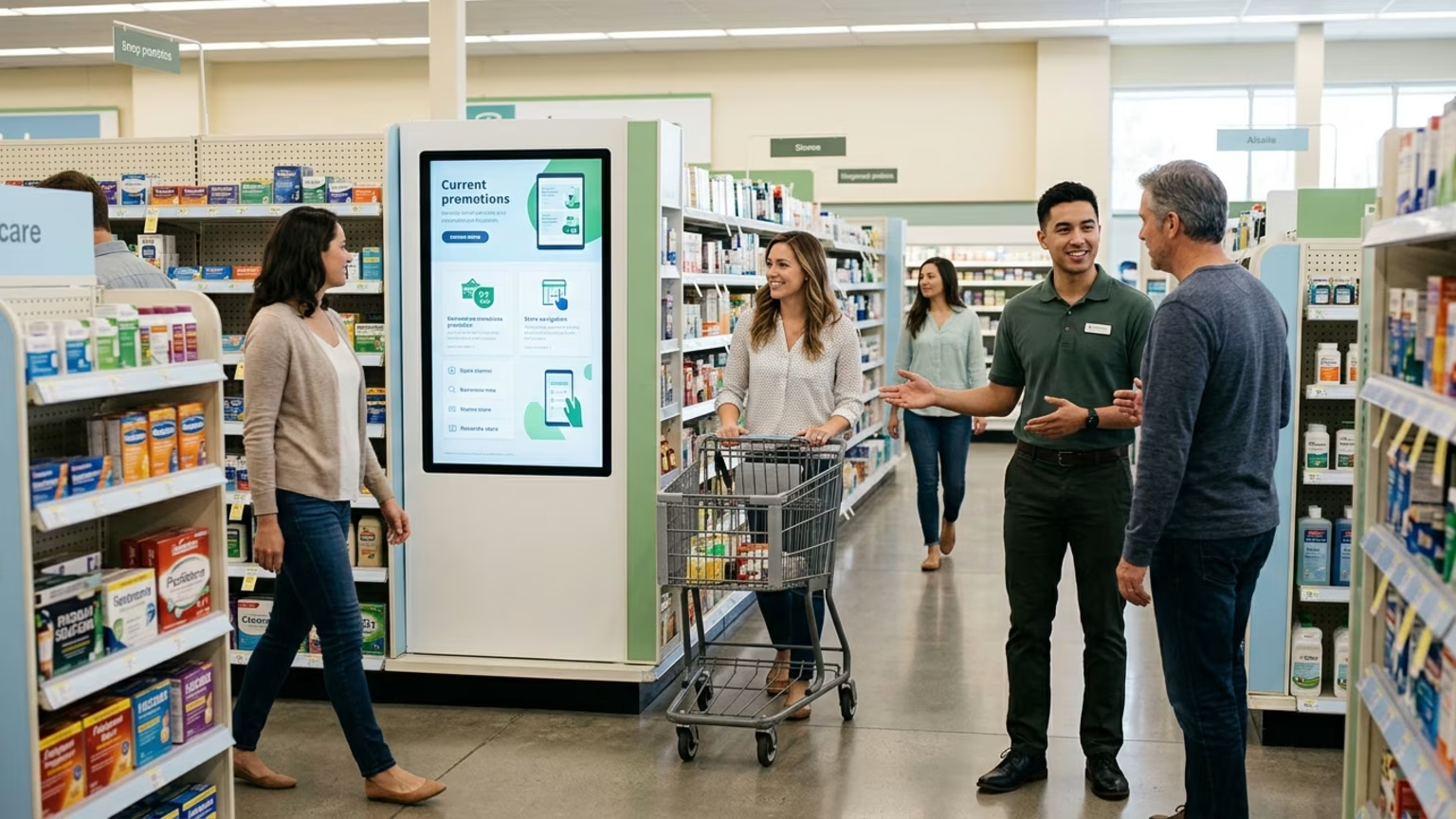
Imagine launching a massive promotional push across five hundred retail locations. Shoppers arrive expecting a seamless experience between their digital offers and the physical shelf. They find missing promotional signage, improperly stacked merchandise, and disconnected inventory systems. Store associates cannot answer basic questions about the new product line.
Your live activations turn into an uncoordinated mess when venue internet access inevitably fails. This is the reality of modern field marketing where broad digital promises crash into the messy physical world. Broad artificial intelligence promises miracles, yet the retail floor demands fast, predictable execution instead of creative guessing. The execution gap leaves millions of dollars in potential sales unrealized.
Brands endure immense pressure to prove that physical activations drive real pipeline. Marketing leaders constantly worry about fragmented execution and poor in store presentation. A beautiful promotional strategy falls apart without rigorous operational support on the ground. A single disconnected database can ruin a carefully planned regional launch.
Brands need tools that actually function in chaotic physical spaces. Store associates deal with high turnover rates, conflicting directives, and a constant stream of demanding shoppers. They do not have time to operate complex digital dashboards or wait for cloud based queries to resolve. The physical retail environment strictly punishes any operational friction.
A brand might invest heavily in an interactive booth design or an expensive national sampling tour. All of that visual appeal crumbles when the fundamental data layer breaks down. Consumers walk away the moment an associate struggles to find a basic product specification or a valid promotion code. Experiential marketing requires airtight logistics just to earn the right to engage a shopper.
The smart approach relies on small language models designed for narrow, defined tasks. According to retail industry analysis, these small defined database models deliver one to one precision. They do not create a messy cloud of probabilities like their massive counterparts. Smaller models are fifty times smaller than standard generative systems.
They provide better performance and lower latency on production systems with strict requirements. Brands get zero latency updates for pricing, merchandising, and product information right at the shelf edge. This localized processing means systems function without perfect internet connectivity. Store staff get immediate, accurate answers to operational questions instead of waiting for a central system to load.
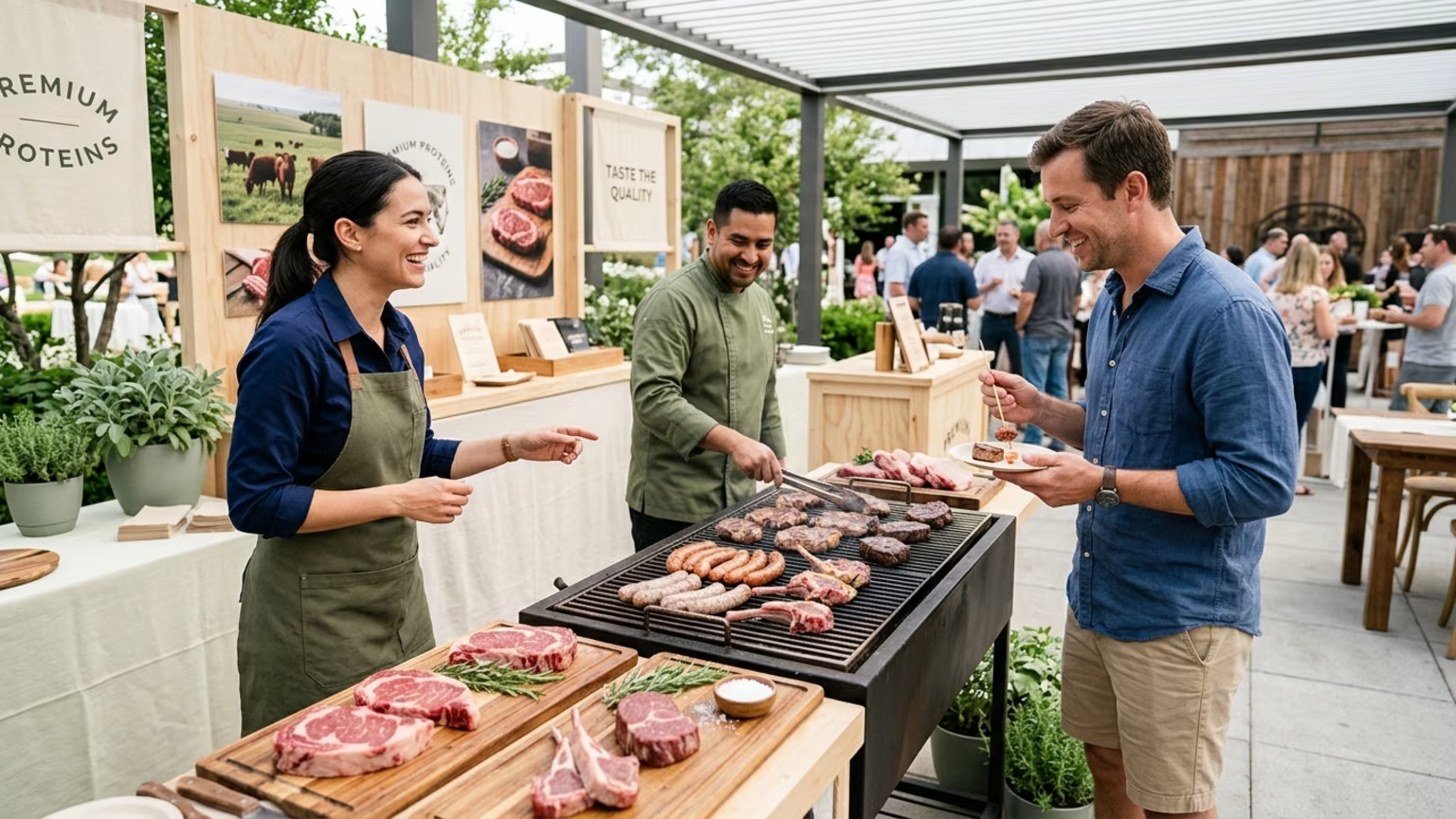
We specialize in creating retail demos, product sampling programs, and roadshows that bring brands face to face with their audiences. Each program is designed to drive trial, build consumer relationships, and accelerate retail velocity across multiple locations. We know that speed, accuracy, and reliability matter far more than technical breadth when you stand on a busy shop floor. Small language models power the back office and integrated channel systems required to make shopping functional.
When brands understand how to fix retail fragmentation, they create consistent activations that actually convert. The shift away from hype prioritizes practical, performance driving applications in consumer packaged goods environments. Smaller models behave more predictably, remaining easier to understand and govern at scale. You can book a strategy call with our team to align your next product launch with these exact operational principles.
Governance is a critical requirement for food and beverage brands dealing with strict nutritional claims and compliance laws. A large model might hallucinate an incorrect allergen statement, creating a massive liability for the company. Small defined database systems lock down those critical facts. They refuse to invent creative answers when a simple, factual response is required.
This strict boundary protects brand integrity during thousands of daily consumer interactions. Precision matters far more than creative generation when presenting a product. Shoppers want clear information about ingredients, pricing, and availability. Focused operational technology delivers exactly what is needed without risking hallucinated errors.
Turning this technology into live event and retail success requires a disciplined step by step approach.
When field teams stop wrestling with slow databases, they spend more time having real conversations with shoppers. Teams that correctly link event specific offers and codes to localized product databases see much faster retail sell through. The playbook builds an unbreakable foundation of operational control.
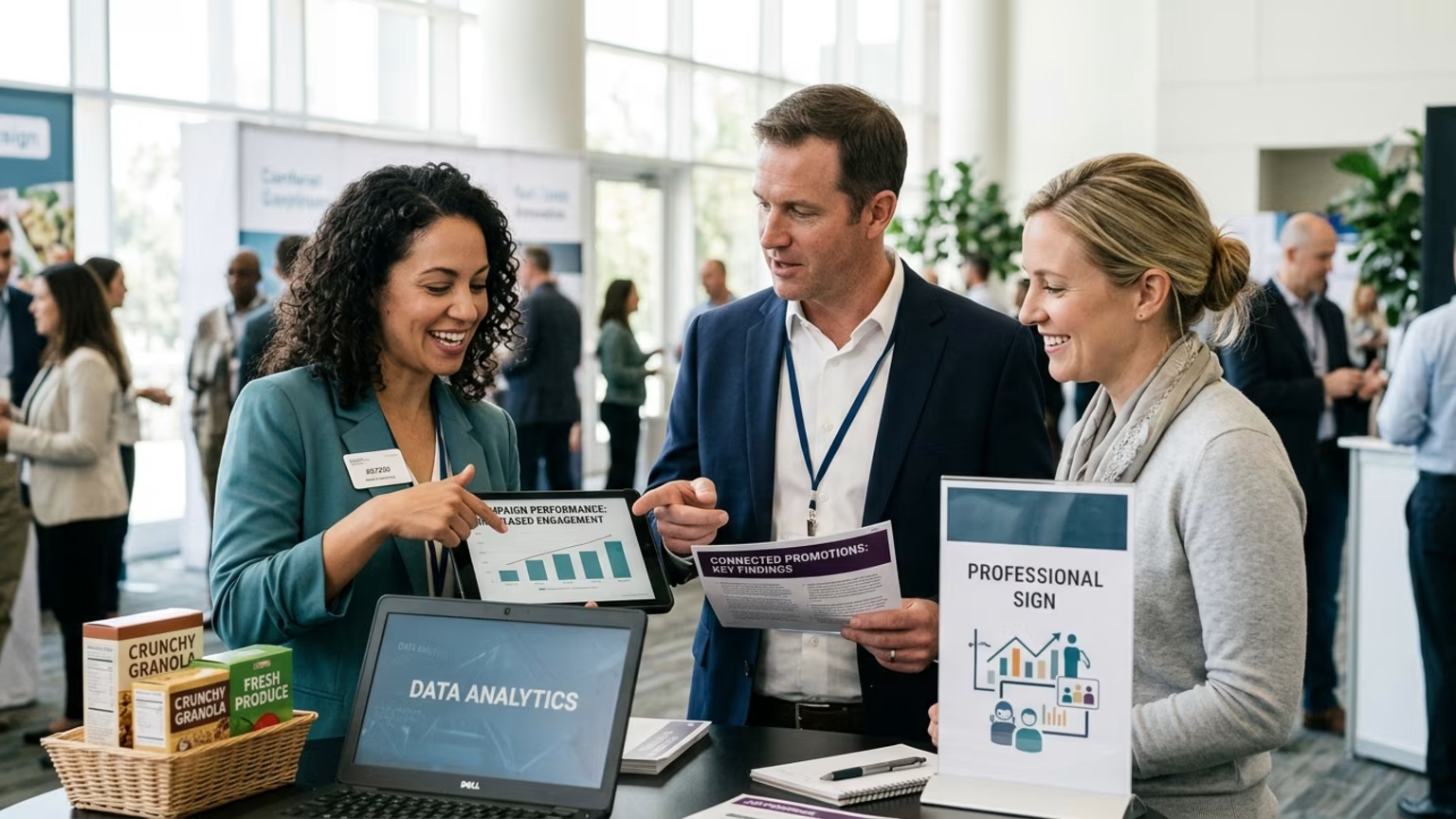
You must measure the impact of these operational improvements to prove Return on Investment beyond basic foot traffic. Without rigorous measurement, operational upgrades look like unnecessary expenses.
Lead Metrics:
Lag Metrics:
The shift toward focused operational technology is already happening at the enterprise level. Shopify uses smaller, fine tuned models to improve product understanding and merchant workflows without blowing up response times. They validate that targeted language models are enterprise grade tools, not experimental laboratory projects. Hardware leaders are deploying solutions purpose built for the physical retail space.
For example, AMD supports systems like ShopAssist that use computer vision to automatically detect and recognize products. This technology can process stacked items and handle age verified products like alcohol at the shelf edge. These are deployed tools helping major brands win attention and dollars in the physical world. They reduce the staff burden and eliminate massive data quality friction points.
Emerging research highlights that local, uncertainty aware reasoning is necessary for trustworthy decision support in high stakes environments. Brands that rely on edge deployed models face a significantly lower risk of margin erosion. Physical retail requires technology that functions perfectly under stress. We see firsthand how better data access transforms a timid brand ambassador into an authoritative product expert.
The tools fade into the background, leaving only the consumer and the product experience. Relying on consistent local relevance data lets field teams build authentic connections. Marketing leaders evaluated on trial, sell through, and activation returns must pay attention to this shift. The unsexy stuff scales beautifully.
The retail floor has always been an unforgiving place for fragile technology. Progress does not come from building bigger systems that promise the world, but from small, quiet tools that simply work when you need them.

30 Years Experiential & Retail Activation Partner for CPG & Beverage Brands | Multi-Market Demos, Roadshows & Costco/Club Programs That Actually Sell