Robbie Thain
Founder, CEO

Coachella 2026 proved experiential marketing is a capital-raising asset. Learn how to track event ROI with data capture and measurable economic models.
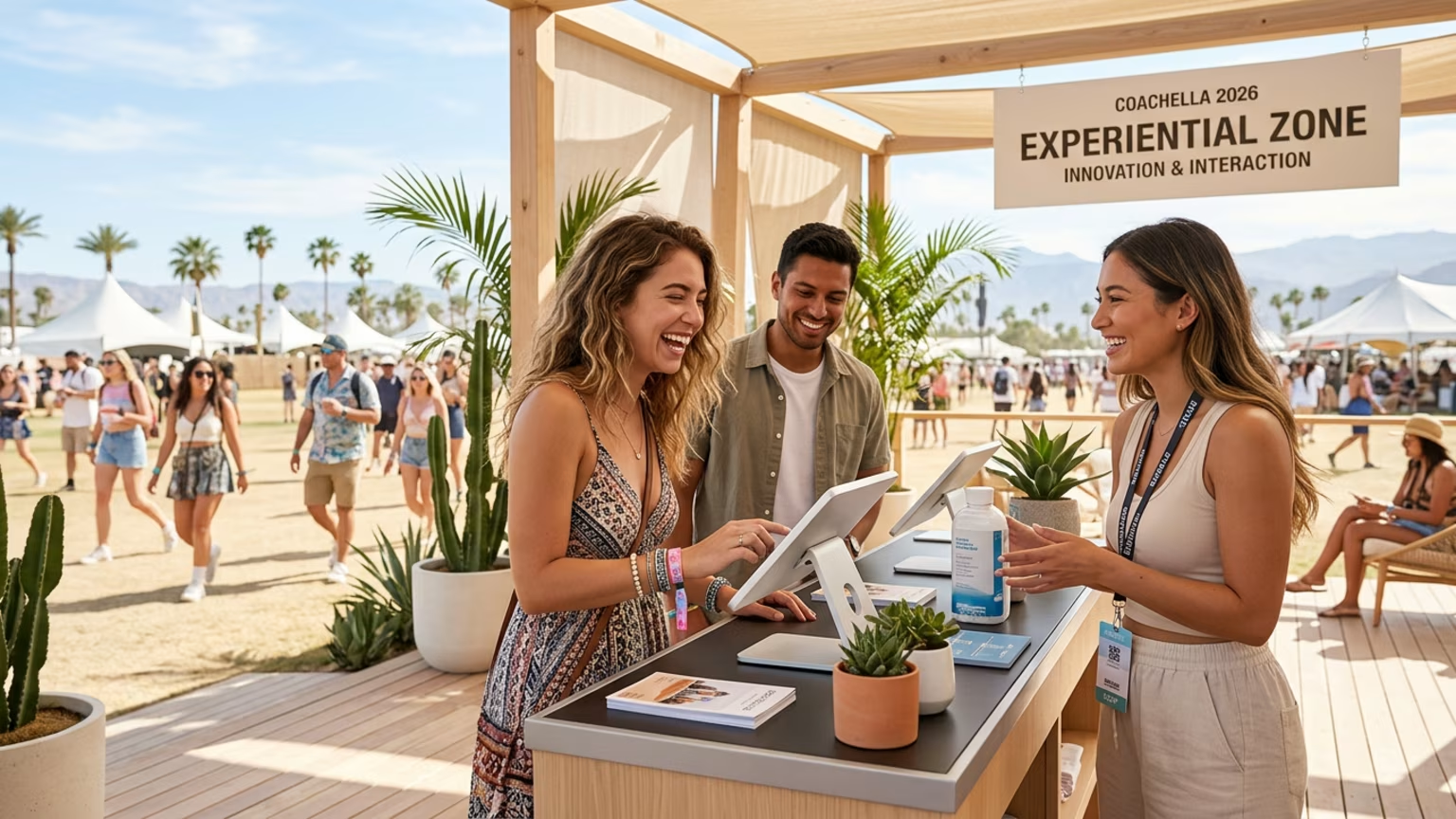
According to recent market analysis, Coachella 2026 demonstrated that experiential marketing has evolved into an infrastructure-backed business model capable of attracting serious institutional capital. This shift is highly significant. It proves that premium experiences generate defensible data, predictable unit economics, and measurable financial outcomes.
Experiential marketing has evolved from a creative cost center into a highly trackable economic engine. Marketing leaders must now prioritize operational infrastructure and data transparency to secure internal budget and drive undeniable retail sell-through.
Historically, experiential marketing existed in a gray area of corporate budget allocation. Brands knew they needed to show up in the physical world to build deep consumer trust. They understood that letting consumers taste, touch, and feel a product was incredibly powerful. Yet, measuring the direct financial impact of those physical interactions was always a massive struggle.
The industry relied heavily on estimated impressions and vague sentiment analysis for decades. Recent developments in the festival space have shattered that old measurement model entirely. When institutional money looks at an event, investors do not care about the artistic ambiance. They care about the underlying systems that turn human attention into repeatable revenue. This exact standard is now being applied to consumer packaged goods and beverage activations.
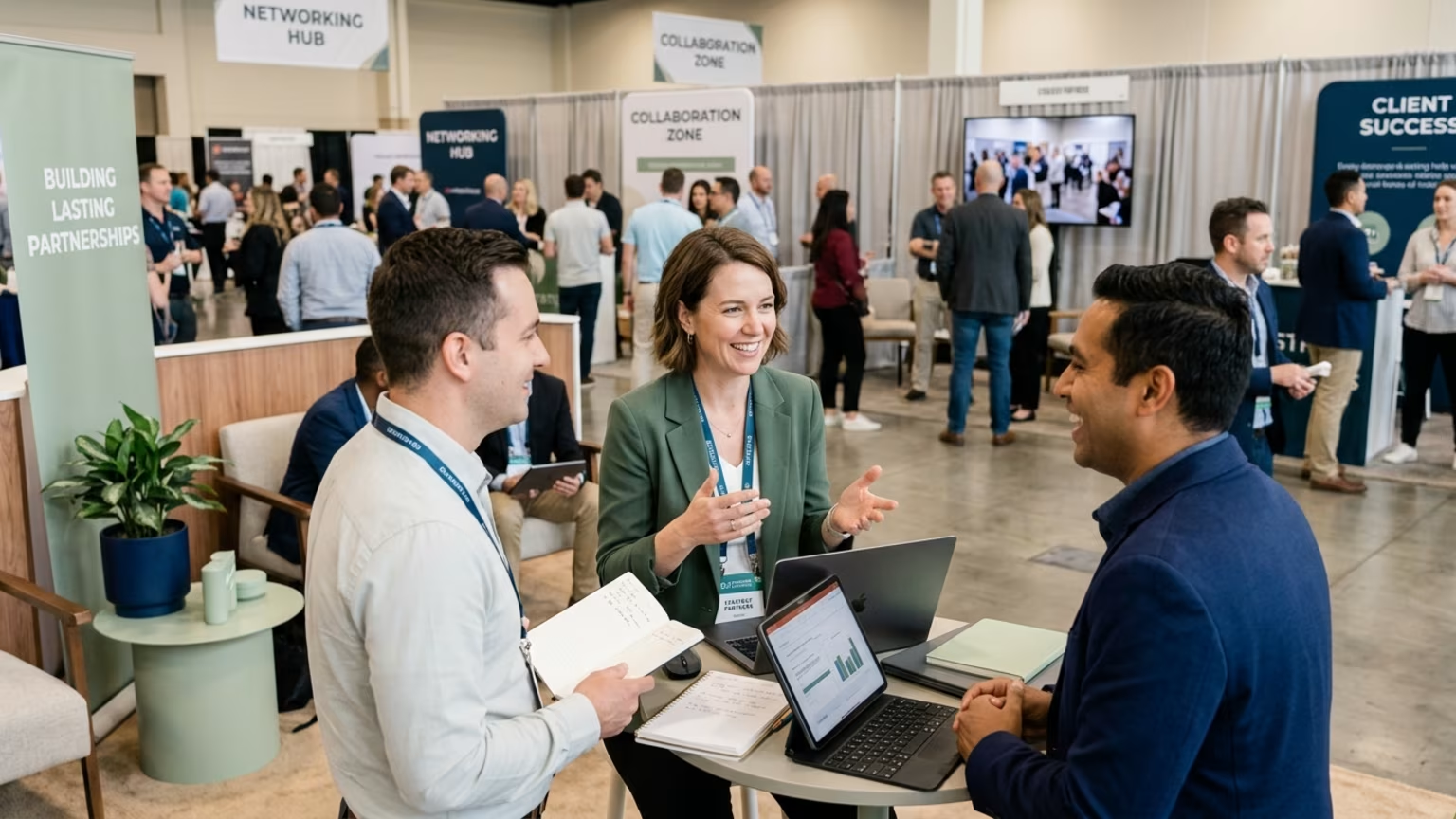
Consider the typical trade show floor or consumer sampling activation. A massive footprint sits in the center of the hall, buzzing with loud music and flashing digital displays. Brand ambassadors frantically hand out thousands of free product samples to attendees. Those attendees grab the item, nod politely, and walk away into the large crowd.
The marketing team will eventually pack up their crates, fly home, and struggle to explain what those interactions actually achieved. This is the traditional model of brand theater. It feels highly active, looks amazing in a recap video, and produces absolute fog when the finance team asks for the Return on Investment. Marketing operators find themselves overwhelmed by fragmented event logistics and completely inconsistent field staffing.
These leaders are under immense pressure to prove that physical activations lead to retailer confidence and actual sales lift. Without an underlying system to capture identity or purchase intent, the event becomes a beautiful disaster. You might give away ten thousand units of a new beverage, but you have zero idea who drank it. You do not know if they liked it, and you certainly do not know if they bought it later.
The chaotic reality of the event floor masks a massive data failure. This lack of operational infrastructure makes it nearly impossible to defend the experiential budget. When internal executives look at the balance sheet, they see a massive line item for event production with no corresponding revenue line. Marketing leaders are left trying to justify their existence with vanity metrics that no one in the boardroom respects.
Institutional investors historically viewed live events with heavy skepticism. It looked like pure consumption rather than a sustainable production asset. Coachella 2026 changed that narrative entirely by exposing the powerful infrastructure sitting directly beneath the consumer experience. The festival stacked multiple revenue layers, including tiered pass structures, integrated commerce, and advanced data capture systems.
This approach shifts activations from one-off spectacles into highly repeatable economic models. For brands in the food and beverage space, the strategic play is adopting this exact mindset. You are no longer just building a booth or a simple sampling station. You are building a powerful economic engine powered by highly predictable unit economics.
Operational excellence serves as the necessary bridge between creative design and true financial credibility. When your activation is backed by clean data and predictable logistics, you stop asking for budget based on brand awareness. You present a solid business case with clear conversion signals. According to industry analysts, this level of technical infrastructure transforms attention into repeatable revenue.
The goal is to build experiences where premium pricing or high-value engagement is easily justified. The moment must be shareable, deeply engaging, and highly measurable. Smart brands know that connecting physical activations with digital channels powers omnichannel growth rapidly. They are moving away from single-play activations and adopting models that work systematically.
We create experiential marketing programs built to connect emotion with action. Our process blends creativity, strategy, and data to guarantee every brand interaction drives measurable results. We craft experiences that engage all five senses, helping people not just see brands, but feel them, turning moments into meaningful business outcomes.
To implement this capital-grade strategy at your next live event, you must build systems that capture culture, commerce, and data simultaneously. Doing this requires strict discipline and a total departure from old event habits. Follow this step-by-step guide to build a highly defensible activation model.
Financial transparency requires shifting your focus away from basic foot traffic and estimated digital impressions. You need distinct indicators to prove true financial value to your internal leadership. Relying on concrete reporting and clean data guarantees you move past empty vanity numbers.
Tracking these exact data points provides the strict operational rigor needed to justify your experiential budget. It forces the entire marketing team to look at the activation as a performance channel rather than a sunk cost. Brands that invest in proper experiential frameworks see significantly higher returns.
Consider a national beverage brand launching a new sparkling water across major urban markets. Instead of setting up disconnected sampling tents, they approached the product launch like a true capital asset. The brand implemented a highly consistent infrastructure across every single tour stop. They used digital loyalty integration to track exactly who sampled the product in real time.
By standardizing their staffing and logistics, the execution was completely flawless from city to city. They captured valuable preference signals from thousands of qualified buyers without slowing down the consumer experience. Those signals were immediately routed into their central marketing database for rapid follow-up messaging.
Within a few short weeks, the brand could prove a definitive sales lift at regional grocery chains. The buyers who engaged with the physical activation converted at a significantly higher rate than those reached by digital ads alone. The regional retail partners noticed the product velocity increase and quickly expanded the product facings on their shelves.
This level of clarity changes the corporate conversation entirely. The brand transformed a simple tasting tour into a highly defensible data asset. Marketing leaders who adopt this model find themselves with highly credible programs that internal leadership eagerly funds year after year.
Coachella 2026 demonstrated deep visibility into critical underwriting inputs, showing exactly where demand clusters and where premium pricing is accepted. It proved that live experiences can generate serious operational data that institutional investors trust. The primary lesson is not simply to run a massive music festival to raise external funds.
The real lesson is to build your live brand moments with the same rigorous data systems and strict operational discipline. When you apply this level of structure, you completely solve the chaos of the trade show floor. You stop guessing about the value of a physical interaction and start tracking it with absolute certainty. This shift transforms marketing completely.
Experiential marketing is no longer just about handing out samples and hoping for the best possible outcome. It is about building an infrastructure that captures identity, drives commerce, and proves its own direct financial worth. This modern approach upgrades the entire marketing discipline for physical brands.
When you stop treating events like a chaotic floor of free items, you gain total control over the financial outcome. You turn fleeting consumer interactions into a highly measurable sales pipeline. If you are ready to build an infrastructure-backed program that drives retail sell-through, book a strategy call with our team.

30 Years Experiential & Retail Activation Partner for CPG & Beverage Brands | Multi-Market Demos, Roadshows & Costco/Club Programs That Actually Sell