Robbie Thain
Founder, CEO

Retail media in 2026 goes beyond sponsored listings. Learn how demos, roadshows, and live content can power in store and off site growth for CPG brands.
Retail media in 2026 is bigger than sponsored product listings and search ads. It now stretches across retailer sites, off site targeting, video, connected TV, in store screens, audio, and new shopping surfaces that sit closer to the shelf than many brand teams expected a few years ago.
That sounds like a digital story. It is not only a digital story.
The best retail media programs still need a real shopper truth. They need to know what makes someone stop, what question they ask first, what message makes the product feel clear, and what offer gets a person to move from interest to purchase. That truth usually shows up first in physical places, on the floor, in a demo, at a roadshow, during a tasting, or inside a live brand conversation.
This is where Makai has an edge. A good experiential marketing program does more than create energy. It creates language, proof points, objections, reactions, content, and conversion signals that can improve retail media across every other channel.
This guide explains what retail media looks like in 2026, why live experiences are the missing link, how to turn demos into better creative, and how to connect in store performance to broader retail media outcomes.
Retail media is the group of ad and content placements a retailer or commerce platform offers to brands. In 2026, that includes on site search and display, off site media, video, connected TV tie ins, in store screens, audio, smart cart placements, and commerce formats connected to AI shopping flows.
In store retail media is the part of retail media that happens inside the physical store. It can include digital screens, audio, smart carts, self checkout placements, interactive displays, and other formats that influence shoppers close to the shelf.
Because live programs generate the raw material that retail media needs to work better. Demos, roadshows, and pop ups show what people actually respond to, not just what a brand hopes they respond to.
They show real reactions. You see what question comes first, what flavor wins, what offer feels too weak, what packaging is confusing, and what claim makes sense in a few seconds. That is gold for creative, messaging, and offer testing.
CPG and beverage brands need fast trial, strong shelf stories, and proof that a program moved more than awareness. Retail demos and roadshows can produce trial, content, and cleaner message testing in one program.
Track more than impressions and samples served. Look at qualified interactions, scan rate, opt ins, demo to shelf movement, offer uptake, retail lift where available, and the quality of the follow up path after the live moment.
Retail media used to feel simple. You bought placements on a retailer site, pushed hard on search terms, and hoped sales showed up. That model still matters, but it is no longer the whole picture.
Retailers now want to offer a fuller media system. Brands can buy on site placements, push off site media using retailer signals, run video and streaming extensions, and show up in physical stores through screens, audio, and other high intent surfaces. For brand teams, that means retail media is starting to look less like one channel and more like a connected environment.
That shift creates a problem and an opportunity. The problem is that many brands still build retail media creative in a vacuum. The opportunity is that brands with strong live programs can feed real world shopper insight into those placements and make them smarter.
This matters even more in sectors like CPG and FMCG, food, beverage, and snacks, where the shelf is crowded, product differences can feel small, and trial still changes outcomes fast.
The best retail media creative rarely starts with a media team staring at dashboards. It starts with people watching shoppers in the real world.
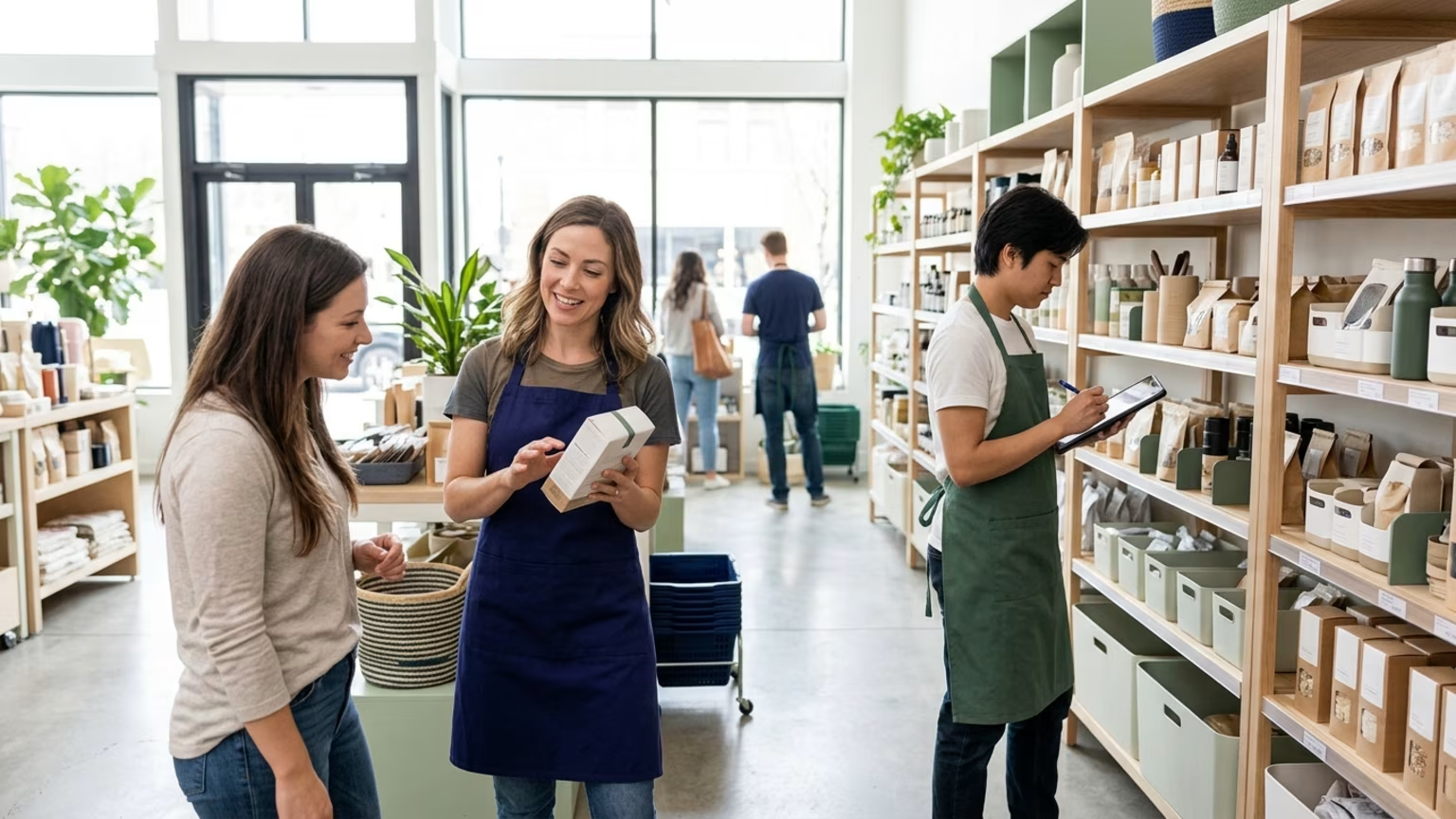
A strong retail demonstration tells you what people notice first. It tells you whether the hero message should be about flavor, convenience, quality, price, or a specific use case. It tells you if the brand is talking too much before the product proves itself.
A Costco roadshow can tell you something different. It can show which opener moves carts, which bundle makes sense, which question blocks conversion, and which product story holds up under fast traffic.
A mobile sampling tour adds another layer. It can show how different markets react to different messages, how city context changes the offer, and which stops create content worth reusing in paid placements later.
That is the bridge from aisle to algorithm. Live programs create the human signal. Retail media scales the strongest version of that signal.
One of the biggest missed chances in brand marketing is treating a live demo like a one time event instead of a content studio with real reactions built in.
A single in store program can produce a lot more than recap photos. It can produce:
This is where many retail media campaigns get sharper. The team stops guessing which line sounds persuasive and starts using the line that already worked on the floor. They stop inventing a lifestyle scene and start using footage that shows a believable product moment.
That kind of creative usually performs better because it feels true. It comes from a real interaction, not a boardroom rewrite.
If you want to cluster this with your last Makai article, this is the natural companion to AI powered personalization in experiences. That post explains the data side. This one explains how the live side can improve commerce media and creative.
In store retail media gets stronger when it does not behave like a separate campaign. The shopper should feel one clear story, not three unrelated prompts.
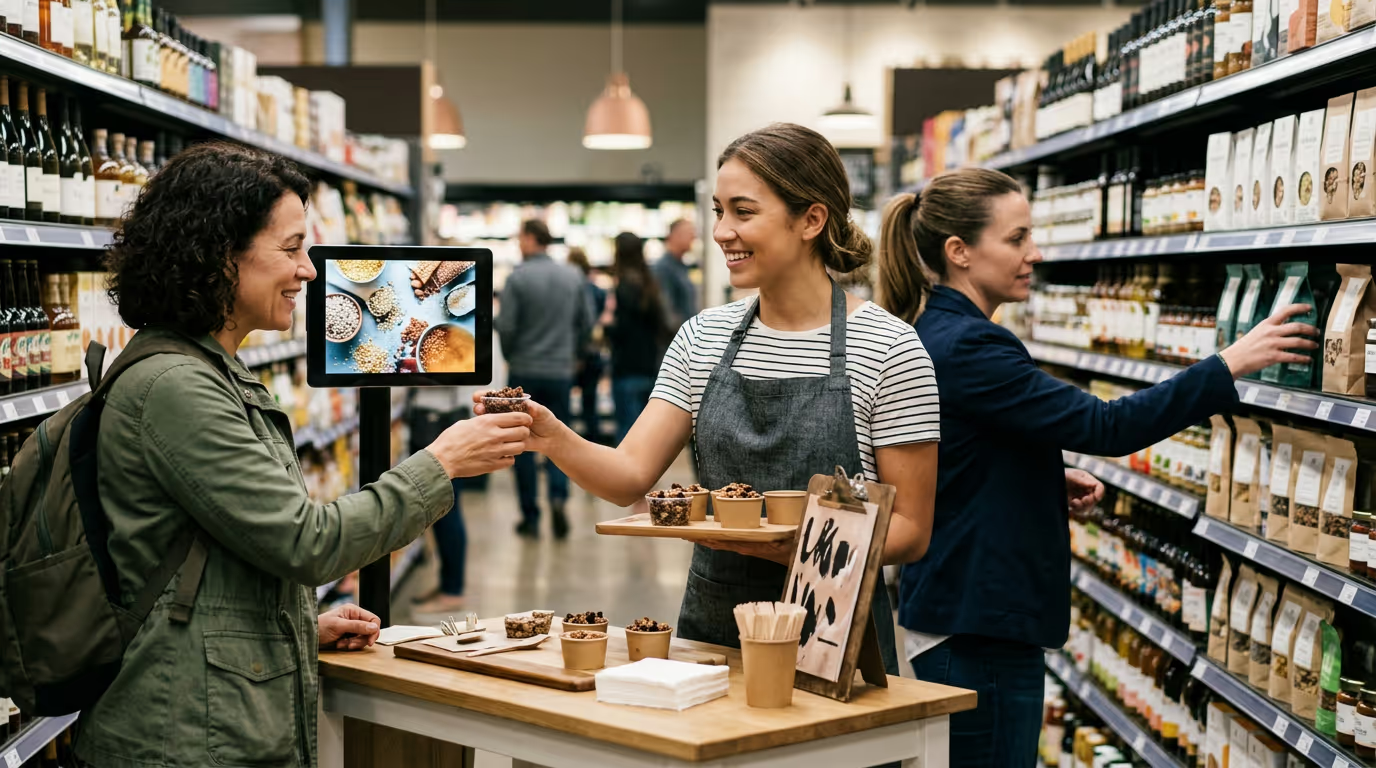
Picture a simple grocery flow. A shopper enters the aisle and sees a short screen message for a hero flavor. A few steps later they meet the live demo and try the same flavor. Right after that, a QR code offers a recipe or store offer. Then the shelf is stocked with the same hero pack the shopper just saw and tasted.
That sequence works because each touchpoint reinforces the same message.
Now picture the opposite. The screen talks about wellness. The demo lead talks about taste. The shelf sign talks about price. The shopper leaves with no clear reason to buy. That is not a media problem. That is a coordination problem.
In store digital works best when it behaves like reinforcement, not noise. Live experiences are often the fastest way to find the one product, one flavor, one message, or one bundle worth reinforcing.
Content is only one side of the opportunity. Offers matter too.
Retail media teams spend a lot of time testing price callouts, bundles, coupons, and sponsored placements. Live programs can help shape those faster than many digital only tests because the team sees response in real time.
At a tasting table, you learn whether a recipe card gets more interest than a discount. At a roadshow, you learn whether people respond more to everyday value or to special event framing. At a tour stop, you learn whether a local retailer tie in feels stronger than a broad national offer.
Those learnings should not stay trapped in a field report. They should move into retail media tests fast. That is how experiential starts to supercharge retail media instead of sitting next to it.
This is the part many teams skip. They run the demo, save the photos, then hand retail media a vague note that the activation “went well.” That is not enough.
You need a shared measurement view that connects what happened live to what happened next.
Useful experiential signals include:
Useful retail media signals include:
The key is not to merge every metric into one messy sheet. The key is to line them up so the brand can answer simple questions.
If your team needs a stronger reporting framework, pair this with experiential marketing reporting. That post helps keep the data story clear and useful.
You do not need a massive rebuild to connect experiential and retail media. Start small and keep the loop tight.
Choose a product that needs trial or clearer messaging. Pick a retailer, market, or club environment where your team can observe real shopper behavior. Define one or two questions you want the live program to answer.
Do not just run the demo. Document it well. Track questions, objections, flavor preference, winning openers, and useful offer reactions. Capture simple content that can work later in retail media, not just recap content for social.
Take the best line, best offer, best product angle, and best visual from the live program and test them inside retail media. Run them on retailer placements, off site extensions, in store screens where possible, and supporting social or email. Then compare those results against the next live wave and keep the loop moving.
If you are a CMO, brand lead, retail media lead, or field lead, ask these questions before the next launch.
If those answers are clear, the program becomes much easier to scale. If they are vague, the live work stays trapped as a nice event instead of becoming a growth tool.
If you want your retail demos, roadshows, and live programs to feed smarter retail media in 2026, start with a pilot built to do both jobs. Makai can help design the experience, capture the right learnings, and turn them into a cleaner growth loop across in store and off site channels. See services, explore where we work, or start with Request a proposal.

30 Years Experiential & Retail Activation Partner for CPG & Beverage Brands | Multi-Market Demos, Roadshows & Costco/Club Programs That Actually Sell