Robbie Thain
Founder, CEO

AI powered personalization is changing retail demos, roadshows, and events. This guide shows what it means, where it works best, what data you need, what to measure, and how to keep the experience human and on brand.
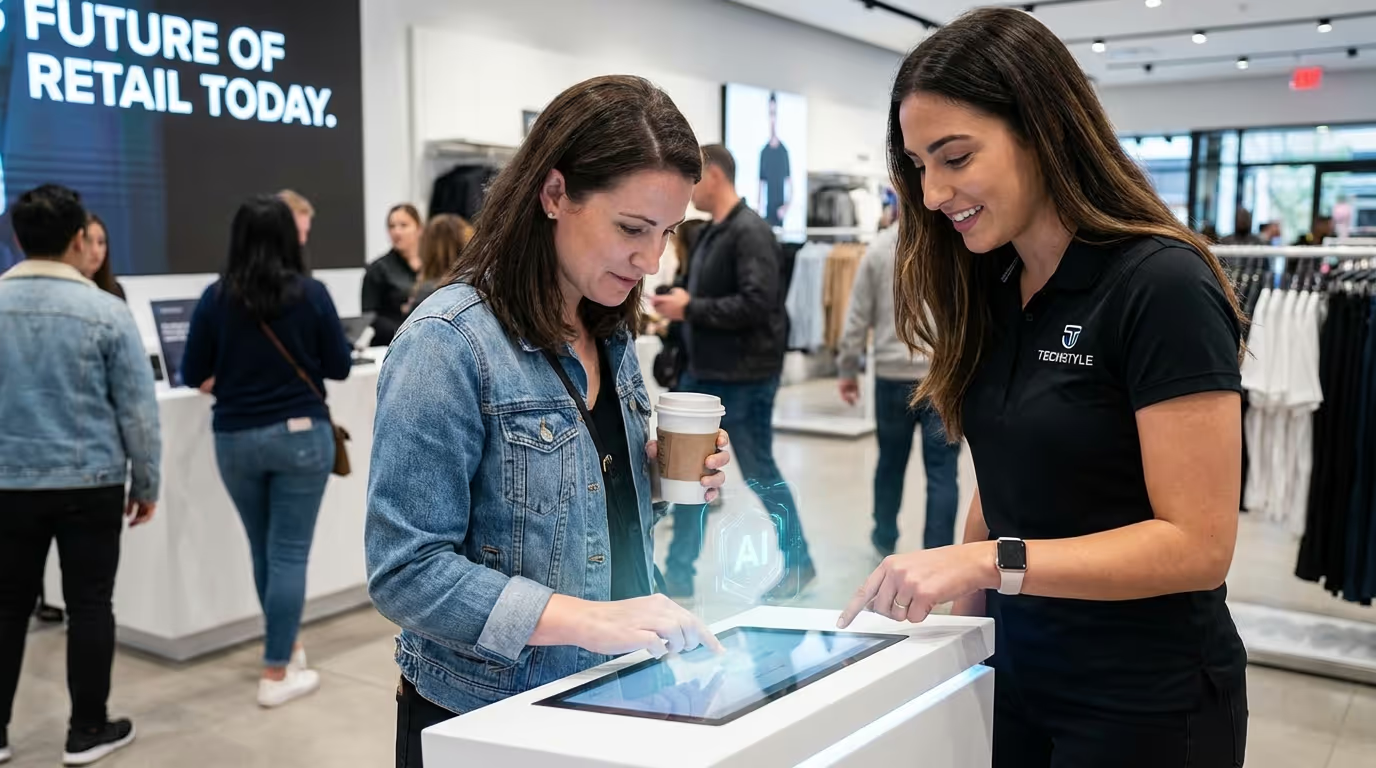
Quick answer: AI powered personalization in experiences means using behavior, context, and known preferences to adjust what a person sees and gets in real time. In retail and events, this can turn a generic demo into a guided journey, like the right sample, the right message, and the right follow up. The win is not “more data.” The win is better conversion and better repeat purchase, while still feeling human.
Retail and event teams are under pressure. Shelf space is tight, attention is short, and costs keep rising. When every brand is running offers, the brands that win are the ones that feel relevant in the moment.
That is where AI powered personalization helps. It lets brands stop guessing. Instead of one message for everyone, you can guide people based on what they care about, where they are, and what they do next.
Personalization used to mean static segments, like “health shoppers” or “parents.” AI powered personalization is different. It can use signals in the moment to change the experience while it is happening.
Here are simple examples that fit retail and experiential work:
The core idea is the same each time. The experience adapts. It does not stay the same for everyone.
In most programs, personalization has three moments. Before, during, and after. If you only personalize the invite, you miss the real value. If you only personalize follow up, you miss trial and conversion.
This is where you shape who shows up and what they expect.
This is where you win the moment. In retail demos and events, the “during” stage is the highest leverage.
This is where you turn interest into repeat purchase and long term loyalty.
AI does not need to be a big “future store.” It can be simple and still drive results. Here are practical use cases that map well to retail demos, roadshows, and event activations.
Instead of offering one sample to everyone, let shoppers self select a path in 10 seconds. A small screen, a QR code, or a short question can do it.
AI can then suggest the right SKU and the right talking points to the ambassador. This keeps the interaction fast, but more relevant.
Great ambassadors already personalize, but it varies by person. AI can support consistency. Think of it as a coaching layer.
This helps keep the brand voice tight across many markets.
At a trade show or large event, people waste time finding what matters. A simple chat experience can act like a concierge.
The concierge can route them to the right booth zone, the right meeting, or a short demo playlist.
Many shows already have apps, but they often feel noisy. AI based matching can recommend the most relevant booths or people based on profile and behavior, not just keywords.
For brands, this creates fewer wasted chats and more high fit conversations.
In retail, the challenge is speed. If something is not working in a store, you want to know fast, not at the end of the week.
This supports quick fixes during a roadshow or multi store program.
Most follow up is generic. That is why it gets ignored. Personalization after the experience should be based on what the person did, not who you assume they are.
This is where experiential and engagement work tie together. For a broader view, see What Is Engagement Marketing? A Practical Guide For CPG and Beverage Brands.
CMOs fund what they can defend. For AI personalization, they want proof that it drives business outcomes, not just new tech.
In simple terms, they want to see:
This ties closely to reporting. If you want a dashboard view that leadership trusts, see Experiential Marketing Dashboards. What Your CMO Actually Wants To See.
Many teams get stuck because they think they need perfect data. You do not. You need a small set of reliable signals.
Personalization only works if people trust it. That means consent, clarity, and control.
If you cannot explain your personalization in one sentence, it will feel creepy.
People do not want to feel like an algorithm is watching them. They want to feel understood. The difference is tone and intent.
Here are rules that keep it human:
If you want to prove impact, track both experience metrics and business metrics. Keep the list short.
If you want to test AI personalization without over building, run a small program like this.
AI personalization works best when it is tied to real world execution. Retail demos, sampling, roadshows, and events create the moments where people try, ask questions, and decide. Adding a smart personalization layer can turn those moments into a full journey with cleaner reporting and stronger follow up.
If you are planning programs across markets, start with /services/engagement-marketing-that-turns-attention-into-action or /services/experiential-marketing-that-moves-people-to-act. For planning, use /request-proposal or /contact.
AI powered personalization is not about making experiences robotic. It is about making them more relevant. When you use it to help shoppers choose the right thing, learn faster, and feel seen, it can lift trial, repeat purchase, and loyalty. Keep the data clean, keep the tone human, and build the system across before, during, and after. That is where the growth shows up.

30 Years Experiential & Retail Activation Partner for CPG & Beverage Brands | Multi-Market Demos, Roadshows & Costco/Club Programs That Actually Sell


