Robbie Thain
Founder, CEO

Transform raw trade show scans into physical roadshow appointments with this exact lead capture playbook and automated follow up sequence for experiential brands.
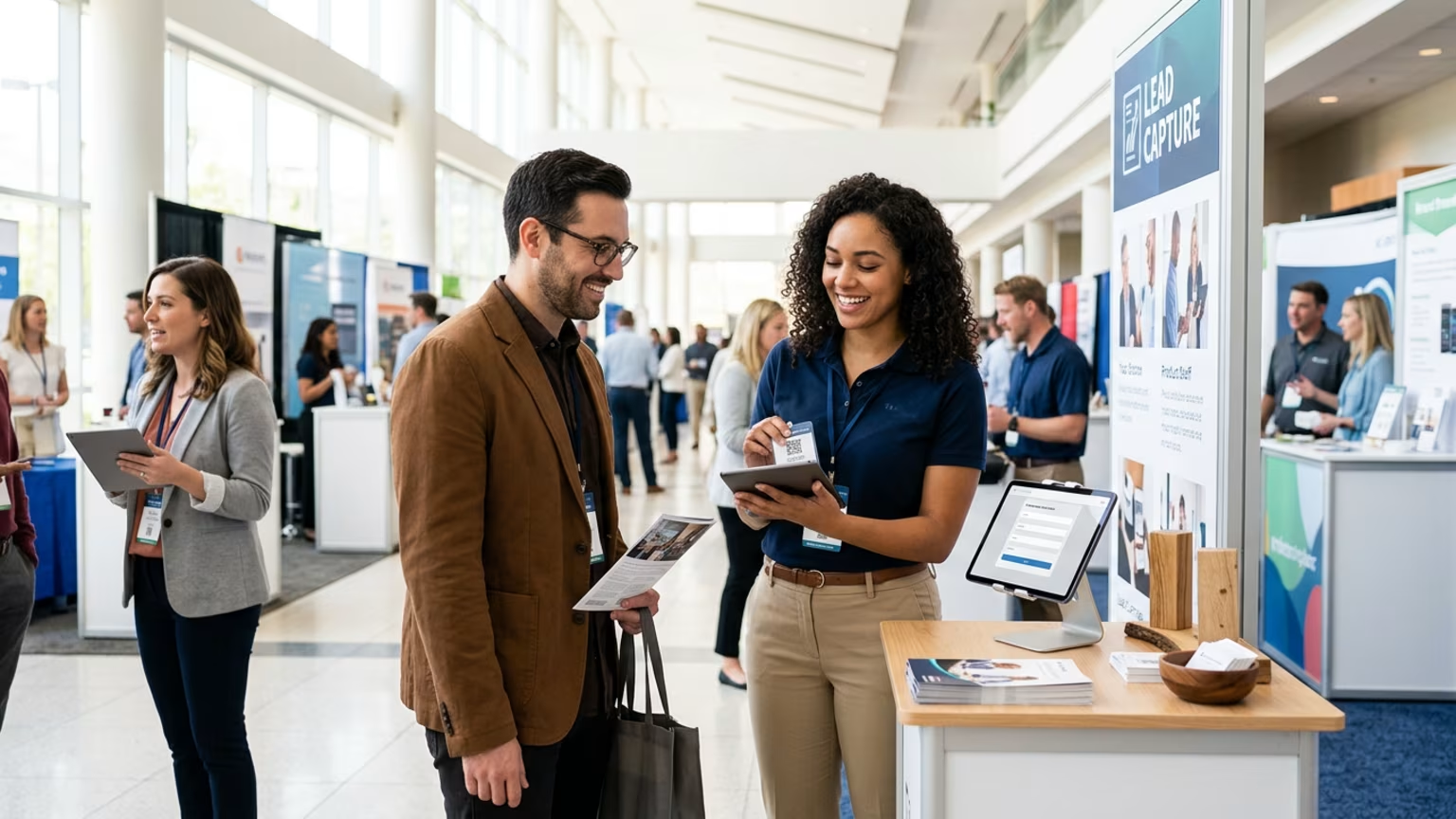
The convention hall lights hum overhead as the final attendees file out to the exits. Your team stands amid half empty sample boxes and a fishbowl stuffed with business cards. You have hundreds of raw badge scans sitting on a rented tablet. The exhaustion sets in when you realize the hardest work is just starting.
Turning raw trade show scans into measurable sales requires a disciplined playbook that moves prospects from initial awareness to physical roadshow appointments. This guide outlines the exact follow up sequences and data capture strategies needed to transform fragmented event data into clear evidence of retail sell through.
Most marketing operators face a familiar nightmare after a major expo. They bring home thousands of contacts that yield little more than radio silence. Industry platforms report that without optimization, standard trade show leads convert at a dismal three to five percent. The sheer volume of raw data often creates fog rather than actionable intelligence for the sales team.
We know exactly how this plays out on the ground. We have executed over 1000 campaigns across all 50 states, bringing brands to life in every major U.S. market. From retail demos in Seattle to roadshows in Miami and events in Honolulu, our teams activate brands wherever our clients' audiences are located. We see firsthand that up to 80 percent of basic scans are just people looking for free merchandise.
Treating a physical event as an isolated silo is a guaranteed way to waste budget. Marketing leaders often struggle to prove bottom line conversion from these expensive activations. The missing link is a clear process that turns a brief physical interaction into a scheduled roadshow visit. A coordinated approach is the only way to separate serious buyers from casual observers.
This post event void is incredibly dangerous for your yearly budget approvals. The finance department looks at the massive invoice for the physical booth and demands to see the return. If your only deliverable is a messy spreadsheet of unverified email addresses, your funding will disappear quickly. You need a rock solid method to prove that those expensive handshakes actually resulted in physical purchases.
Consumer packaged goods marketing leaders face an entirely unique set of pressures. They are constantly tasked with proving that massive booth expenditures lead directly to retail sell through. A successful event cannot just look busy or sound exciting to the executive team. The activation must generate a measurable lift in local market sales.
Physical events generate five to ten times more first party data than standard digital campaigns. The challenge is capturing that information in a way that respects privacy and signals true intent. Recent data shows that physical activations deliver much higher brand favorability scores compared to connected TV ads. You must capitalize on this neural advantage by using smart capture tools right at the booth.
According to research from Snapbar, experiential content forms memories in a fraction of a second. This biological reality means your booth interaction has incredible power to drive future action. The key is implementing compliant capture methods like interactive quizzes or quick poll QR codes. These tools feed clean zero party data directly into your customer relationship management software.
Artificial intelligence tools now offer incredible advantages for real time data collection on the floor. Creative applications like digital pet portrait generators can capture thousands of leads with incredibly high opt in rates. These tools gather subtle personality insights alongside basic contact information. This deep level of detail makes your future outreach highly personalized and impossible to ignore.
Brands that invest in consistent post event nurturing strategies see immediate improvements in pipeline velocity. Segmenting your audience based on their engagement score guarantees you only target warm prospects. Event software analysts at Zoho note that automated segmentation can yield three times faster roadshow bookings. This system replaces guesswork with a predictable timeline of targeted outreach.
Modern data privacy laws demand a completely different approach to lead collection on the floor. Relying on sneaky badge scans exposes your brand to compliance risks and yields low quality contacts. Double opt in scanning methods might slightly lower your total capture volume upfront. The resulting 95 percent data usability rate makes this trade off incredibly profitable for your follow up sequence.
Success requires a strict operating procedure that your field staff follows without fail. You need a step by step execution playbook to turn chaos into pipeline. Here is the operational sequence we recommend for consumer brands.
Your brand ambassadors are the frontline soldiers in this data collection effort. Briefing your team on the exact goals of the campaign is a mandatory step. They need to understand how to guide conversations toward the digital capture tool naturally. A well trained staff member can double your collection rate simply by asking the right qualifying questions.
Properly briefed teams are non negotiable for this playbook to function. Staff members must understand that high quality lead capture methods trump sheer volume every single time. A focused approach prevents the dreaded fragmented execution that plagues so many experiential campaigns. Your goal is quality interactions that feed directly into localized physical appointments.
Setting up the technology stack before the event is a critical requirement. Your customer relationship management tools must seamlessly connect with your on site scanning hardware. This integration eliminates the manual data entry that often delays post event communication by several days. Speed to lead is the deciding factor in converting a casual booth visitor into a confirmed roadshow attendee.
Connecting live interactions to retail performance is the primary goal for any field marketer. You must track precise data points to validate your activation spend to leadership. The days of relying on estimated foot traffic or total badge scans are completely over. You need concrete numbers that demonstrate a direct line to revenue.
Start by tracking your immediate lead capture efficiency metrics. Watch the percentage of leads that include usable zero party data alongside the basic contact info. Monitor your automated response times to confirm prospects hear from you within that critical six hour window. These early indicators tell you if your floor staff executed the playbook correctly.
It is critical to distinguish between vanity metrics and actual performance indicators. Many teams celebrate a record number of booth scans without realizing those contacts have zero buying intent. You need to identify the exact percentage of leads that show strong purchase signals. This metric acts as your early warning system for the success of the upcoming roadshow.
Next, you must focus on the lag metrics that prove true business impact. The most important figure is your roadshow appointment conversion rate. You should aim for 15 to 25 percent of your segmented trade show list to book a follow up visit. Measuring post event retail sales lift provides the final evidence that your strategy actually worked.
Consumer packaged goods brands can expect an 18 to 22 percent sales lift in retail channels within 30 days of a strong activation. Tracking this proxy metric allows you to report clear pipeline contribution. This data transforms vague awareness goals into hard evidence of consumer action. Accurate reporting is the shield that protects your experiential marketing budget from corporate cuts.
For beverage and snack brands, linking trade show data to point of sale reports is a major priority. You want to track the exact timeline from the initial scan to the final retail purchase. Integrating your event platform with local sales data provides a complete picture of consumer behavior. This closed loop reporting proves the undeniable value of physical brand experiences.
Focusing on these precise metrics completely changes the conversation with your executive leadership. You stop defending the cost of your booth build and start presenting an acquisition strategy. Clear reporting builds immense trust between the field marketing team and the core sales department. That trust translates directly into sustained budgets and greater operational freedom.
Consider a national beverage brand launching a new line of wellness drinks at a major industry expo. Instead of swiping badges blindly, the field team uses a QR code quiz to find out consumer flavor preferences. This simple interactive step captures high intent data and stays fully compliant with modern privacy laws. The brand walks away with segmented lists of ready to buy consumers.
The automation kicks in before the attendees even leave their hotel rooms. High intent buyers receive an invitation to an exclusive tasting roadshow happening in their home market. The message feels personal by referencing their exact quiz answers and flavor choices. This tailored approach dramatically outperforms a generic mass email blast.
The beverage brand in our example saw incredible returns from their automated follow up sequence. Their roadshow conversion rate hit an impressive 12 percent within just three weeks of the initial expo. These new customers became loud advocates for the product in their local communities. The resulting word of mouth marketing provided an unexpected boost to regional retail velocity.
The results of this disciplined process speak for themselves. The targeted roadshow appointments create a surge of localized product trial and trust. This concentrated physical engagement directly supports a new Costco push or regional retail expansion. The brand successfully turns a fleeting convention center interaction into a loyal retail buyer.
The most successful brands treat this entire process as a continuous loop of engagement. The data collected at the roadshow feeds back into the central customer database for future campaigns. This compounding intelligence makes every subsequent physical event more efficient and profitable. Your experiential marketing program becomes a highly tuned asset rather than a repeated logistical headache.
Building this kind of operational machinery takes serious dedication and resources. Brands that master this transition stop viewing trade shows as sunk costs and start treating them as acquisition channels. The focus shifts entirely from accumulating business cards to driving verifiable retail sell through. You stop collecting names and start building a predictable pipeline of enthusiastic product advocates.
We treat every lead as an opportunity to build a measurable relationship. It takes precise planning to orchestrate these multi touch physical campaigns across the country. We handle the logistics so your team can focus entirely on the consumer. Book a strategy call with our operations team today to build a conversion system that works.

30 Years Experiential & Retail Activation Partner for CPG & Beverage Brands | Multi-Market Demos, Roadshows & Costco/Club Programs That Actually Sell