Robbie Thain
Founder, CEO

Learn how Tinder is scaling its in-app Events feature into a multi-city physical roadshow, and read the logistical playbook for replicating live campaigns.
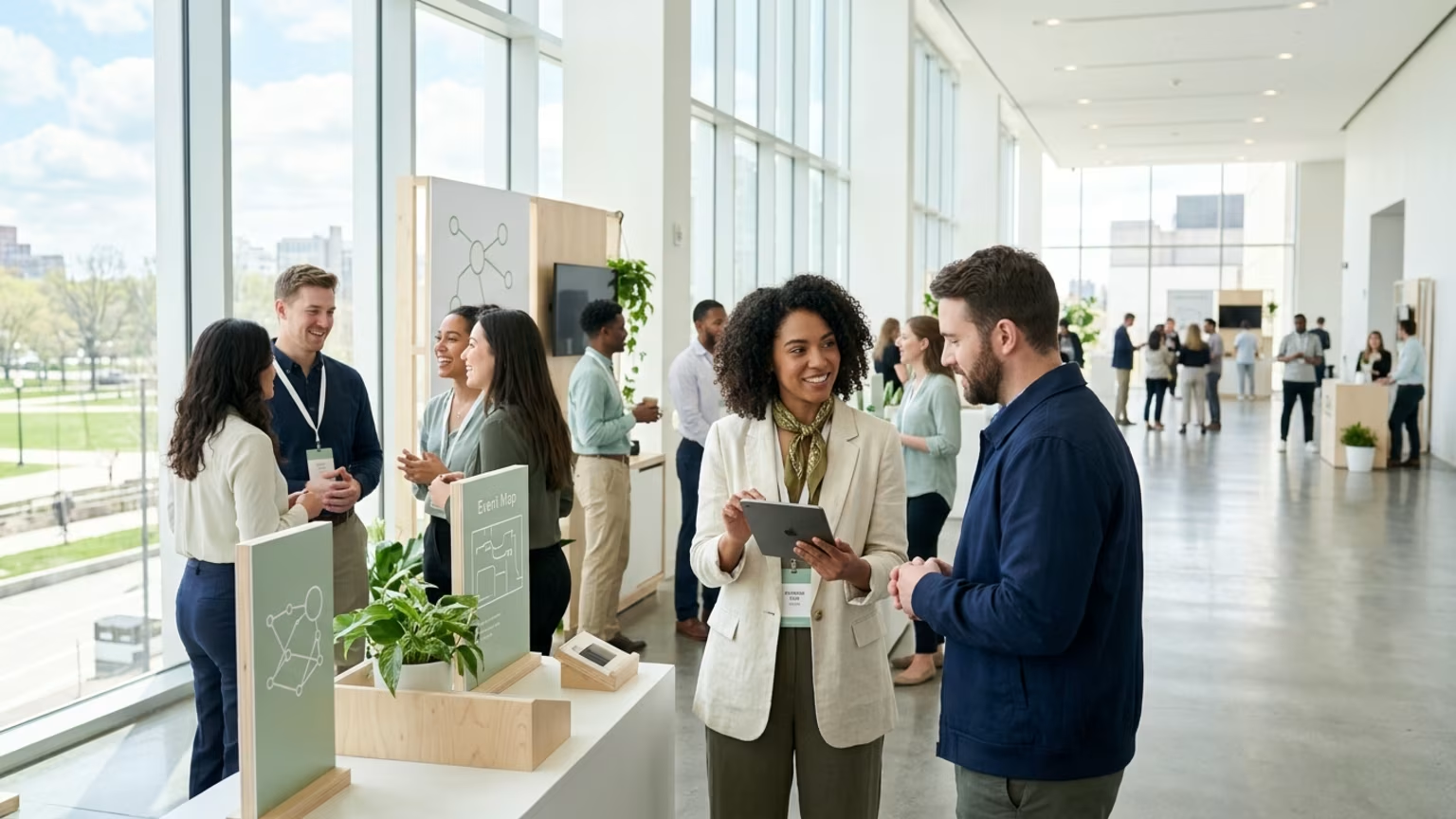
The venue doors open to a line wrapping around the block. Inside, the check-in system pings continuously as guests scan their mobile passes. A local partner hands out materials, and the floor manager radios that the first wave is flowing smoothly. This is what it looks like when Tinder scales an in-app feature into a multi-city physical footprint.
Before the first guest arrives, operators must lock down the logistics that make scale possible. Multi-city campaigns require advance permitting, venue vetting, and tight route planning. Our team knows that securing the right localized footprint takes weeks of phone calls and municipal paperwork. You must establish a CRM routing setup that captures data instantly on the floor.
Without this unglamorous prep work, a national tour quickly fractures into isolated local failures. Tinder launched its Events feature in Los Angeles in March 2026. Since then, the platform has expanded the program to nine additional U.S. and European cities. This kind of rapid deployment relies on a centralized digital system that handles the heavy lifting before the event even begins.
When brands rely on a scaled nationwide field network, they treat the digital registration platform as the operational spine of the entire campaign. We run experiential and engagement programs coast to coast with local crews, smart logistics, and permit expertise that let us launch fast and maintain quality consistency in every region, from major metros to smaller markets. Our nationwide infrastructure enables us to activate brands wherever their audiences are located. Vehicle staging must be precise, and staffing must be consistent across every market.
Operators must secure local permits early because municipal regulations vary wildly from city to city. You cannot build a scalable program if your logistics team is guessing at local compliance laws. Effective route planning for retail velocity means mapping out travel times, staging areas, and load-in schedules with extreme precision. Every minute lost to bad logistics is a minute lost to potential consumer engagement.
Vehicle staging requires finding secure parking for trailers and mobile assets near the activation site. Brands often overlook this detail, leading to delayed setups and exhausted field teams. A disciplined operator secures these locations weeks in advance to guarantee a smooth load-in process. This level of foresight separates professional agencies from amateur event planners.
The research highlights a specific operator method for turning digital interest into live participation. Brands can execute this strategy on the floor or in the street by following these structured steps. It requires moving away from massive standalone productions and leaning into localized partnerships. You can build a similar operation by following this exact playbook.
Connecting the digital app to the physical environment requires seamless technology integration. Your registration page must sync directly with the floor manager's tablet to ensure real-time capacity tracking. When consumers arrive, a fast scan of a QR code should immediately log their attendance and trigger a welcome email. This closed-loop system turns a chaotic street gathering into a measurable pipeline engine.
Recent coverage has described growing interest in face-to-face social events. Consumers are seeking alternatives to prolonged app conversations through speed dating, hobby-based meetups, and sports. Brands that master multi-city permitting and route optimization can capture that desire for physical connection seamlessly. Execution matters far more than creative theory when you reach this scale.
A common mistake brands make is confusing digital curiosity with physical attendance. Tinder noted that 71 percent of its active Los Angeles users aged 18 to 24 engaged with the Events section. The company characterized this as especially strong adoption among Gen Z users. However, clicking a tab in an app is an engagement metric rather than a guaranteed sales conversion.
Amateurs see high digital engagement and fail to prepare the physical space for actual crowd flow. When thousands of people register, operators must have the staffing and venue capacity to handle the surge. Underestimating crowd dynamics leads to long lines, frustrated attendees, and negative brand sentiment. A physical activation must be capable of processing the digital demand it generates.
Crowd flow is often the silent killer of a great creative concept. When a venue layout forces attendees into narrow bottlenecks, the entire experience grinds to a halt. Field managers must map out clear pathways for entry, participation, and exit to maintain momentum. If a brand ignores these physical realities, even the best app integration will not save the event.
Another massive failure point is losing leads on bad clipboards. When brands do not connect their field activations directly to a digital CRM, valuable consumer data simply vanishes. If your ambassadors are managing check-ins manually, you are burning Return on Investment before the event even concludes. A successful strategy requires capturing post-event data immediately through an integrated mobile platform.
Relying on disjointed systems creates blind spots in your campaign reporting. Field teams who have to switch between multiple apps to capture data will inevitably make mistakes. Brands need a unified reporting structure that feeds directly into their main corporate CRM. This ensures that field marketing managers can prove their pipeline contribution immediately after the activation ends.
Proper execution requires a solid multi-city brand events logistics playbook to keep local teams accountable. makai relies on digital check-ins and strict reporting protocols to ensure no lead gets left behind on the street.
The data reveals how aggressively a well-structured multi-city model can scale. Tinder said more than 60 events had been featured since the March launch in Los Angeles. The platform expects the Events tab to reach 26 cities globally by the end of September. Furthermore, the company expects to reach 75 cities by the end of 2026.
Internal research from the platform highlights the underlying consumer demand driving this expansion. The data showed that nearly half of singles aged 18 to 29 want to share in-person experiences with people who could become closer connections. Additionally, roughly three in five people who do not currently use Tinder believe events would make them more likely to try the app. A similar share believe these events would make connecting easier.
The 71 percent engagement rate in Los Angeles proves that the digital targeting was highly effective. However, operators must remember that engaging with an app section is just the top of the funnel. Converting that digital interest into physical foot traffic requires compelling local programming and frictionless event access. The true benchmark of success will be how many of those users actually walked through the venue doors.
This physical strategy comes during a critical operational pivot for the brand. Tinder reported that its monthly active users declined 7 percent year over year in the second quarter. However, this was an improvement from an 8 percent decline in the previous quarter. Moving from digital isolation to physical connection is clearly a calculated play to improve these core metrics.
As live programs expand across multiple cities, operators must monitor how well initial interest translates into repeat attendance. The true test of a roadshow is not the first busy weekend. Success depends on whether local partners can maintain consistent execution standards over six months of continuous operations. Track your cost per qualified interaction closely as the footprint grows. Stay disciplined, keep your data clean, and let the physical results speak for themselves.

30 Years Experiential & Retail Activation Partner for CPG & Beverage Brands | Multi-Market Demos, Roadshows & Costco/Club Programs That Actually Sell