Robbie Thain
Founder, CEO

Illycaffè announced a three-day, appointment-based experiential pop-up at Hudson Yards. Makai analyzes how scheduled sampling impacts field execution and throughput.
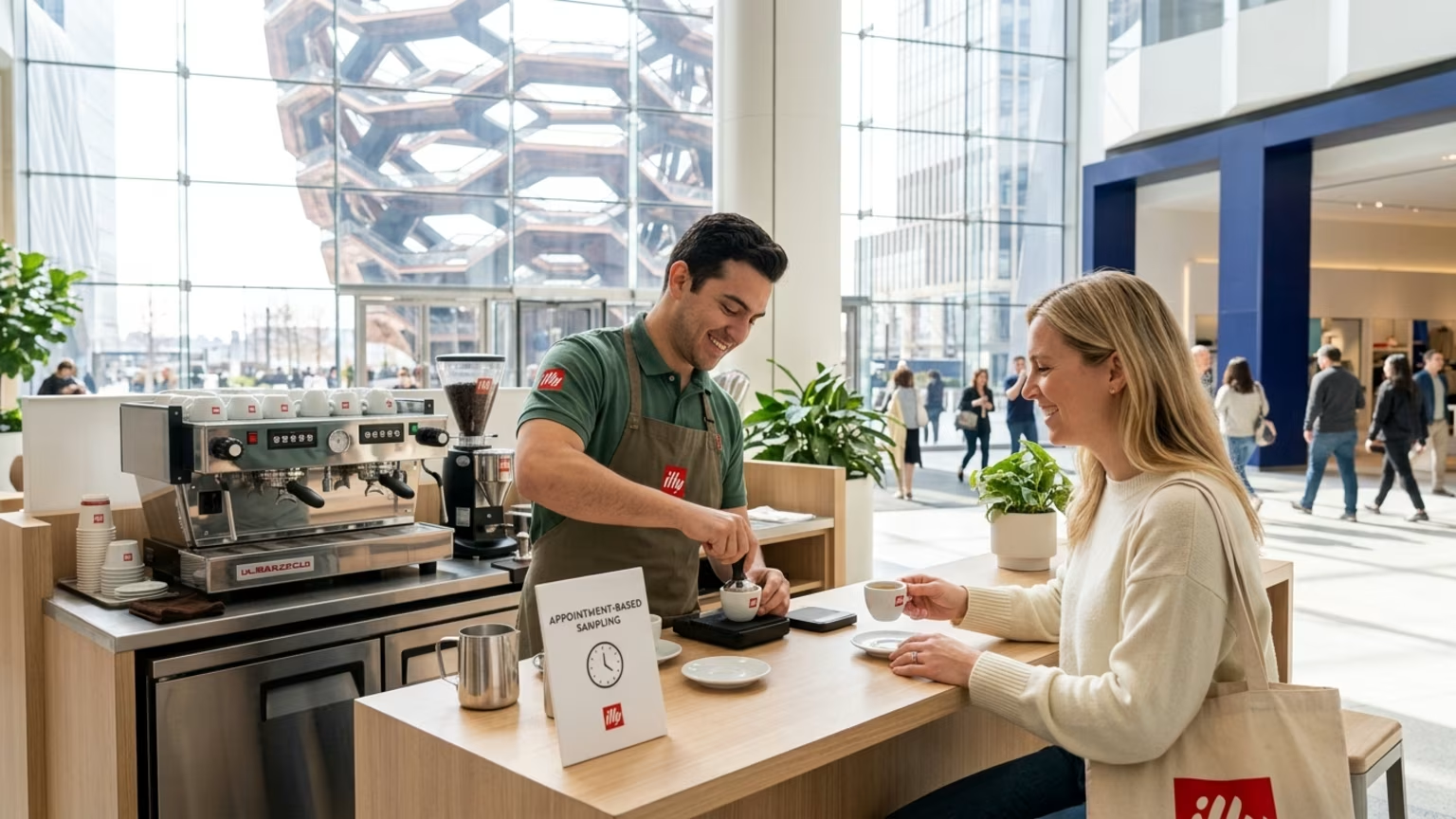
On September 17 of 2026, Illycaffè announced an upcoming experiential takeover at Hudson Yards Public Square and Gardens in New York. The three-day event is scheduled to run from September 29 through October 1 of 2026. The activation is explicitly timed to coincide with National Coffee Day on September 29 and International Coffee Day on October 1. The brand named this specific pop-up “A Cup of Love” to frame the sampling occasion around personal connection rather than standard product distribution.
The Hudson Yards event shifts away from open-access public sampling in favor of a strictly managed schedule. The pop-up will officially operate from 11 a.m. to 7 p.m. each day. Visitors must reserve their complimentary sessions through a dedicated online booking platform. These reservations are made available in 30-minute increments, with exactly four reservation slots offered every half hour.
Each scheduled reservation includes a specific coffee pairing from a rotating lineup of local pastry partners. Guests will be seated in one of two dedicated lounge areas designed specifically to encourage conversation. After receiving their coffee, visitors can write a personal message on a postcard to place on an installation wall or take home as a physical keepsake. The activation also encourages visitors to share photos or videos on social media while tagging @illy_us and using #ACupofLove.
The company says it was founded in Trieste in 1933 and operates as an Italian family-owned business. Illycaffè also states its coffee is a 100 percent Arabica blend composed of nine distinct ingredients. The business reports that more than 10 million cups of its coffee are enjoyed each day across bars, restaurants, hotels and homes in more than 135 countries. The company says it generated €700 million in consolidated revenue in 2025. Illycaffè also operates the University of Coffee, which it says offers courses in 24 countries.
We specialize in creating retail demos, product sampling programs and roadshows that bring brands face to face with their audiences. Each program is designed to drive trial, build consumer relationships and accelerate retail velocity across multiple locations. In our direct experience, open sampling events in high-traffic locations can sometimes devolve into chaotic product grabs. By enforcing a strict reservation system, this activation prioritizes engagement quality over raw attendance numbers.
Brands that test markets through short-term experiential pop-ups frequently struggle to balance dense foot traffic with adequate brand education. This appointment-based model solves that exact operational tension by locking down the number of participants per hour. The limited capacity guarantees that brand ambassadors have sufficient time to explain the product profile. It also prevents the common logistical failure of exhausting product inventory before the activation concludes.
The inclusion of a postcard activity and lounge seating adds participation layers that simple sampling counters completely lack. Guests are not merely tasting a new beverage blend. They are actively participating in a structured occasion built around connection and shared moments. This gives the marketing team multiple physical touchpoints to leave a lasting impression on the attendee.
The public announcement frames the experience around a first date or a casual catch-up. It also highlights occasions like a family reunion or a thank-you coffee. This specific thematic framing shifts the consumer mindset before they even enter the physical footprint. Attendees arrive expecting a seated social interaction rather than a quick caffeine boost on their commute. This approach aligns with brands seeking to build deep brand affinity instead of mere product awareness.
Positioning a beverage sampling event as a dedicated social gathering fundamentally changes the physical footprint requirements. A standard sampling station only requires a counter and a brand ambassador. A seated engagement requires furniture, precise traffic flow management and extended dwell times. This shifts the core metric of success from volume to duration. A longer dwell time allows the consumer to interact with the brand narrative at their own pace.
The brand clearly intends to use this physical time to drive digital amplification. Encouraging visitors to share photos or previews of their written postcards connects the live event to broader digital visibility. However, generating social media traction is only one part of the commercial equation. Brands executing similar activations must carefully track whether that digital engagement actually translates into measurable retail visits. Without a clear mechanism to measure post-event purchasing behavior, social shares remain a top-of-funnel vanity metric.
Moving to a reservation model completely changes how marketing operators handle site logistics and field staffing. Based on the published operating hours and reservation structure, the event offers a theoretical maximum of 64 reservation slots per day. That translates to exactly 192 total slots across the three-day run before accounting for cancellations or no-shows. This fixed and transparent capacity allows field teams to staff with mathematical precision instead of simply guessing peak demand.
This approach stands in sharp contrast to massive open-floor sampling environments. For context, we designed and managed a 40 by 20 foot trade show environment for Glanbia at Natural Products Expo West 2025. That footprint brought think!, Isopure, Optimum Nutrition and Amazing Grass into one coordinated space. We handled concept, operations, staffing and breakdown. Our team distributed more than 14,000 recorded product samples across the activation stations. High-volume models require relentless crowd management and rapid fulfillment. The controlled Illycaffè format trades that massive scale for predictable pacing.
Executing an activation in a premium venue like Hudson Yards requires flawless logistical oversight. We run experiential and engagement programs coast to coast with local crews. Our smart logistics and permit expertise let us launch fast and maintain quality consistency in every region. This nationwide infrastructure enables us to activate brands wherever their audiences are located. Consistent physical execution ensures that the reservation experience matches the premium brand promise.
The structured format gives the company a mechanism for forecasting attendance more accurately than an entirely open event would ever permit. Operators can prepare the exact volume of required pastry pairings for each shift. This predictability reduces product waste and keeps the physical activation space pristine. A tightly controlled environment is vital when scaling mobile roadshow tours city-to-city across multiple demanding markets.
Requiring an online booking also opens a pathway for structured campaign performance tracking. The public announcement does not report attendance targets, conversion rates, sales lift or Return on Investment for the event. However, a digital reservation system theoretically allows organizers to capture first-party data and track exact show rates. The brand can then compare actual human attendance against available session capacity to measure physical operational efficiency.
A digital reservation platform inherently requires attendees to input contact information prior to arrival. This setup creates a natural gateway for first-party data capture. Brands can request email addresses or phone numbers as part of the booking confirmation process. If the brand secures the appropriate marketing consent, this attendee list becomes a valuable pipeline for future retail promotions. The ability to follow up with participants directly is a massive advantage over anonymous public sampling.
However, marketers must handle this data collection process with transparency and discipline. Consumers expect their booking information to be used solely for event logistics unless stated otherwise. Brands must clearly communicate what data they are collecting and exactly how it will be utilized for marketing purposes. Attempting to hide marketing opt-ins within the reservation flow can damage consumer trust before the physical event even begins.
While this strategy improves crowd control, it certainly introduces friction for spontaneous consumer foot traffic. The published materials do not clarify whether walk-ins will be accepted or if unused reservations will be released to a standby queue. Brands adopting this highly controlled approach must decide how to handle interested passersby who cannot secure an immediate appointment. Failing to plan for spontaneous participants can aggressively alienate potential customers passing through busy retail hubs.
If your next field marketing program relies on heavy foot traffic in a premium retail environment, does your operational model prioritize measurable engagement over raw sampling volume?
Balancing scheduled product sampling with spontaneous public access requires absolute operational discipline. When scattered attention and poor booth flow dilute your physical activations, Makai restores control over the consumer experience. Through our Guerilla Marketing capability, we launch creative, street level ideas that surprise, delight, and generate authentic word of mouth.

30 Years Experiential & Retail Activation Partner for CPG & Beverage Brands | Multi-Market Demos, Roadshows & Costco/Club Programs That Actually Sell