Robbie Thain
Founder, CEO

Max Mara's one-day Le Parfum pop-up at Macy's Herald Square Plaza illustrates how brands can combine sensory product sampling with structured retail proximity.
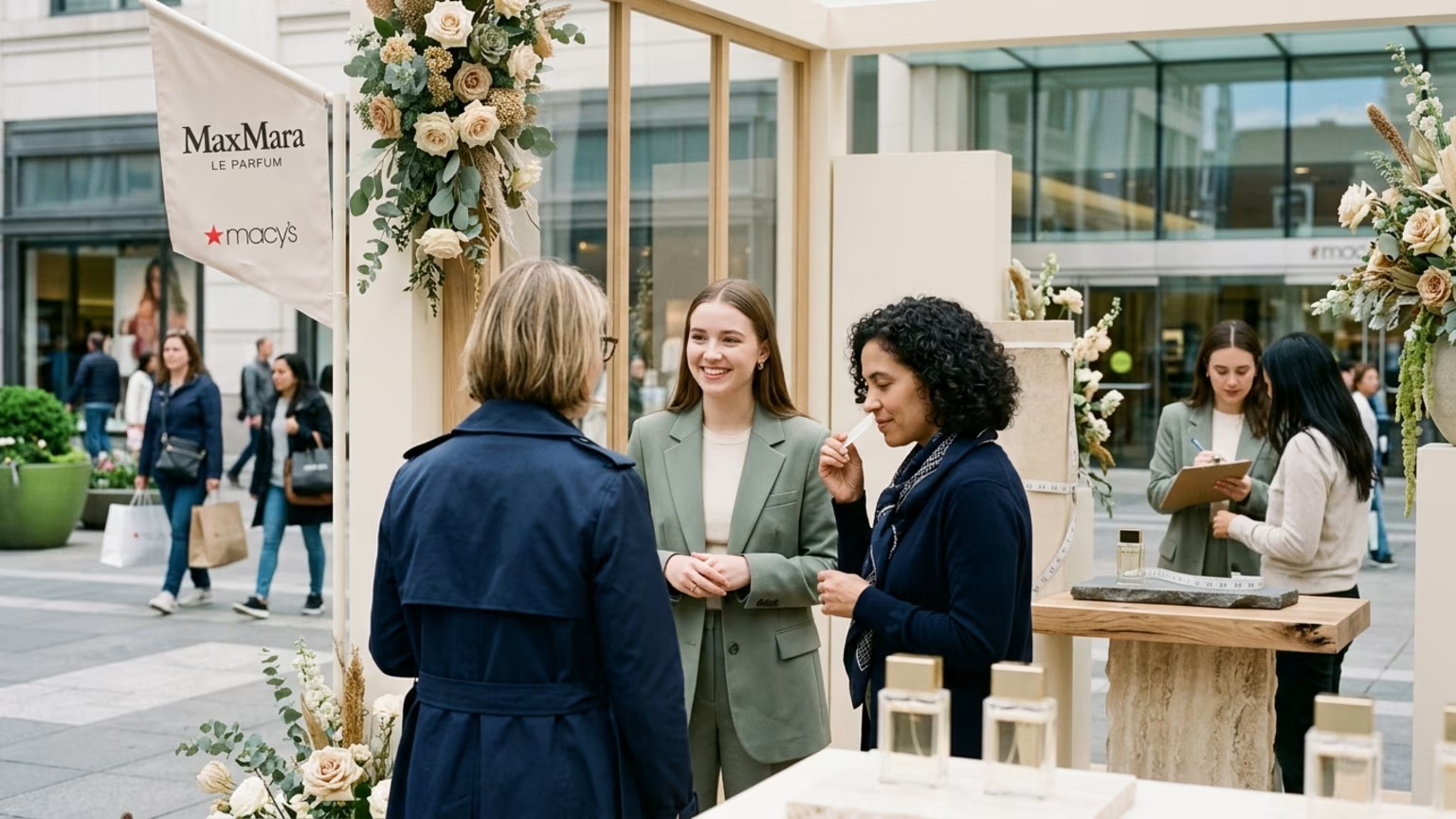
On September 19, 2026, Max Mara hosted a one-day sampling pop-up at Macy's Herald Square Plaza in New York City. The activation supported the launch of Le Parfum. The event operated from 10 a.m. to 6 p.m. at 151 West 34th Street. This outdoor plaza footprint positioned a sensory product experience directly adjacent to a major retail flagship.
The public facing offer centered on physical trial and hospitality. The activation allowed consumers to experience a new woody floral fragrance. Event listings described the product as being designed to be worn like a coat. The footprint featured complimentary gelato alongside free fragrance samples and giveaways.
These items were distributed while supplies lasted. The operation relied on a compact footprint. It placed the product trial in an outdoor retail plaza rather than a conventional department store counter. This structural choice bypassed a purely digital launch campaign.
It brought physical sampling directly to a high traffic thoroughfare. Public event details confirmed the operational mechanics. They listed the event as free to attend for passersby. However, the available public listings did not report expected attendance or staffing levels.
They also omitted sample quantities, giveaway inventory, or formal conversion targets. The core fact is a focused execution combining sensory demonstration and retail proximity.
A compact plaza pop-up provides a distinct model for brands selling physical products. It shows how a small footprint can combine hospitality and sampling without requiring a massive touring roadshow. We specialize in creating retail demos, product sampling programs, and roadshows that bring brands face to face with their audiences. Each program is designed to drive trial, build consumer relationships, and accelerate retail velocity across multiple locations.
For consumer packaged goods and beverage operators, this retail adjacent format presents a valuable test case. A busy outdoor location can produce substantial visibility. Passersby might notice the activation, take a sample, or grab complimentary gelato. However, visibility alone does not pay for the footprint.
Marketing leaders must treat the physical experience as a conversion path rather than just a visibility moment. The gap between a free sample and a tracked retail sale is where operations succeed or fail. Free samples and giveaways can attract attention and increase participation. Participation is not the same as purchase intent, conversion, or incremental sales.
When brands execute these short duration formats, they must define how a consumer progresses from noticing the activation to purchasing the product. Our team sees this operational tension frequently. We design mobile activations and roadshows that accelerate consumer trial, build trust, and boost retail velocity during 90-day product launch windows. Our structured approach transforms initial product trial into sustained consumer confidence and retail performance.
Brands must evaluate these programs through hard measurement discipline instead of just counting the crowd. When consumer packaged goods brands plan high traffic activations, they face intense pressure to deliver measurable pipeline. A fast moving beverage or food launch operates on similar principles to a fragrance launch. Both require a smart beverage sampling strategy to turn a first taste into repeat buys.
The consumer needs to experience the product physically before making a purchasing decision. This requires a shift in how marketing directors view their field budgets. A sampling pop-up is a temporary physical retail channel. Brands that treat it as a pure awareness play miss the commercial opportunity.
The goal is moving a consumer from a brief sensory interaction into a structured transaction. Our experience reinforces the need for clear conversion pathways. We managed a four-week, multi-market Costco sampling program for Pulmuone's PlantSpired line. The program delivered more than 65,000 samples and recorded an 18 percent sold-to-sale rate, giving us a concrete example of how structured retail sampling can connect trial with purchase.
Without strict measurement, a high volume event just gives away expensive inventory.
Operating an incentive based activation outside a flagship store forces downstream changes to staffing and measurement. A busy plaza setting creates immediate tracking challenges. Passersby may be exposed to the footprint without stopping. Visitors might participate in the giveaway without ever entering the adjacent retailer.
Shoppers could also purchase later through an untracked channel. These operational realities require careful upfront planning. An experiential marketing agency article recommends planning measurement before an activation begins. This practitioner guidance suggests examining multiple layers of performance.
These layers evaluate reach, participation, first-party data capture, and sales signals. A structured operation must account for all of these data points. Field managers must separate activity metrics from true business outcomes. Sample distribution and giveaway entries measure participation.
Gelato redemptions show how hospitality drives footprint dwell time. These numbers do not independently demonstrate a sales impact. Marketers should track specific interaction completion rates to gauge real consumer interest. To manage a busy footprint, field managers need reliable booth traffic blueprints to scale tactics to pop-up roadshows.
Foot traffic requires careful routing so consumers do not bottleneck around the hospitality elements. If a visitor grabs a gelato and leaves without smelling the fragrance, the interaction fails. Staffing models must place brand ambassadors at strategic interception points. Measurement frameworks separate successful field marketing from pure brand theater.
Marketers need to align on 5 key metrics to prove retail sampling Return on Investment beyond headcount at events. Experiential marketing practitioners advise looking closely at reach, participation, first-party data capture, and sales signals. A separate agency industry analysis says programs are increasingly judged on strict measurement discipline. According to the same analysis, useful indicators include dwell time, demonstration completion rates, and trade area sales movement.
These data points provide a much clearer picture than general foot traffic or earned media. While social reach has value, it is less meaningful on its own without deeper participation metrics. First-party data capture bridges this gap effectively. Digital integration is critical for capturing consumer data.
Brands must plan how to blend physical sampling with QR codes for digital pipeline extension. A simple scan can offer a wallet pass, a product registration, or a targeted follow up offer. These opt ins allow brands to measure brand recall and consideration long after the physical footprint closes. Practitioners identify opt ins, product registrations, and lead records as useful data elements.
Event logistics must accommodate sudden surges in consumer interest. When public event listings promote free giveaways, the demand can easily overwhelm untrained staff. Inventory control is paramount when supplies are limited. Field managers must monitor sample distribution rates to ensure the product lasts through the scheduled hours.
Proper sanitation and queue management keep the environment safe and presentable. Retail proximity requires close collaboration with the store itself. Macy's Herald Square represents a massive retail environment. If a pop-up sits just outside the doors, the brand must ensure store associates are prepared for a potential influx of traffic.
They need adequate stock on the floor to meet any sudden spike in demand. Without this alignment, the pop-up generates interest that the retailer cannot capture. A plaza setting next to Macy's creates a direct physical link between consumer trial and shopping behavior. Field teams should agree on tracking mechanisms long before the activation opens.
These can include unique digital offers, retailer receipt scanning programs, QR codes, or digital store entry counts. They might also track matched trade area sales to measure immediate regional lift against historical baselines. Without these mechanisms, the connection to retail sales remains a complete assumption. Operating an activation in a public plaza also demands strict logistical control over physical assets.
Sampling programs require clear staffing hierarchies, queue management plans, and rigid inventory procedures. Teams must maintain sanitation standards and brand presentation rules throughout the entire event duration. Weather, pedestrian flow, scent fatigue, and retailer compliance rules can materially affect daily performance. A brand must prepare its field staff to handle these variables while protecting the core product demonstration.
The primary objective is to let visitors experience the fragrance. The incentive should always serve the product story. Gelato and giveaways are effective tools to attract attention. The core product demonstration must remain central so the event avoids becoming a generic handout.
A structured operation keeps the focus on the product while using hospitality to increase average dwell time. The absence of published results does not indicate that a retail adjacent activation failed. It simply means performance data remains internal to the operating brand. Free samples, gelato, and giveaways definitely increase initial participation.
However, a brand must capture consented data only when it advances a defined follow up campaign. The capture process must be tied to a clear purpose, permission, and post event nurture plan.
When you look at an outdoor plaza activation outside a major flagship store, the crowds and gelato are just the surface layer. The real value lies in the invisible data capture and retail routing happening beneath the surface. As you plan your next retail adjacent footprint, ask yourself this: Are you building a structured conversion path to capture that consumer demand, or are you just funding an expensive giveaway for the passing crowd?
Converting foot traffic into verified retail performance demands absolute control over the physical activation space. When scattered attention and poor booth flow ruin your measurement frameworks, Makai stabilizes the execution. Through our Mobile Sampling Tours capability, we deliver your brand directly to audiences through on the go experiences that drive trial and awareness. Request a proposal

30 Years Experiential & Retail Activation Partner for CPG & Beverage Brands | Multi-Market Demos, Roadshows & Costco/Club Programs That Actually Sell