Robbie Thain
Founder, CEO

Scale trade show blueprints into pop-up roadshows. Learn how to design zoned layouts and gamify experiences to drive measurable sales and high ROI.
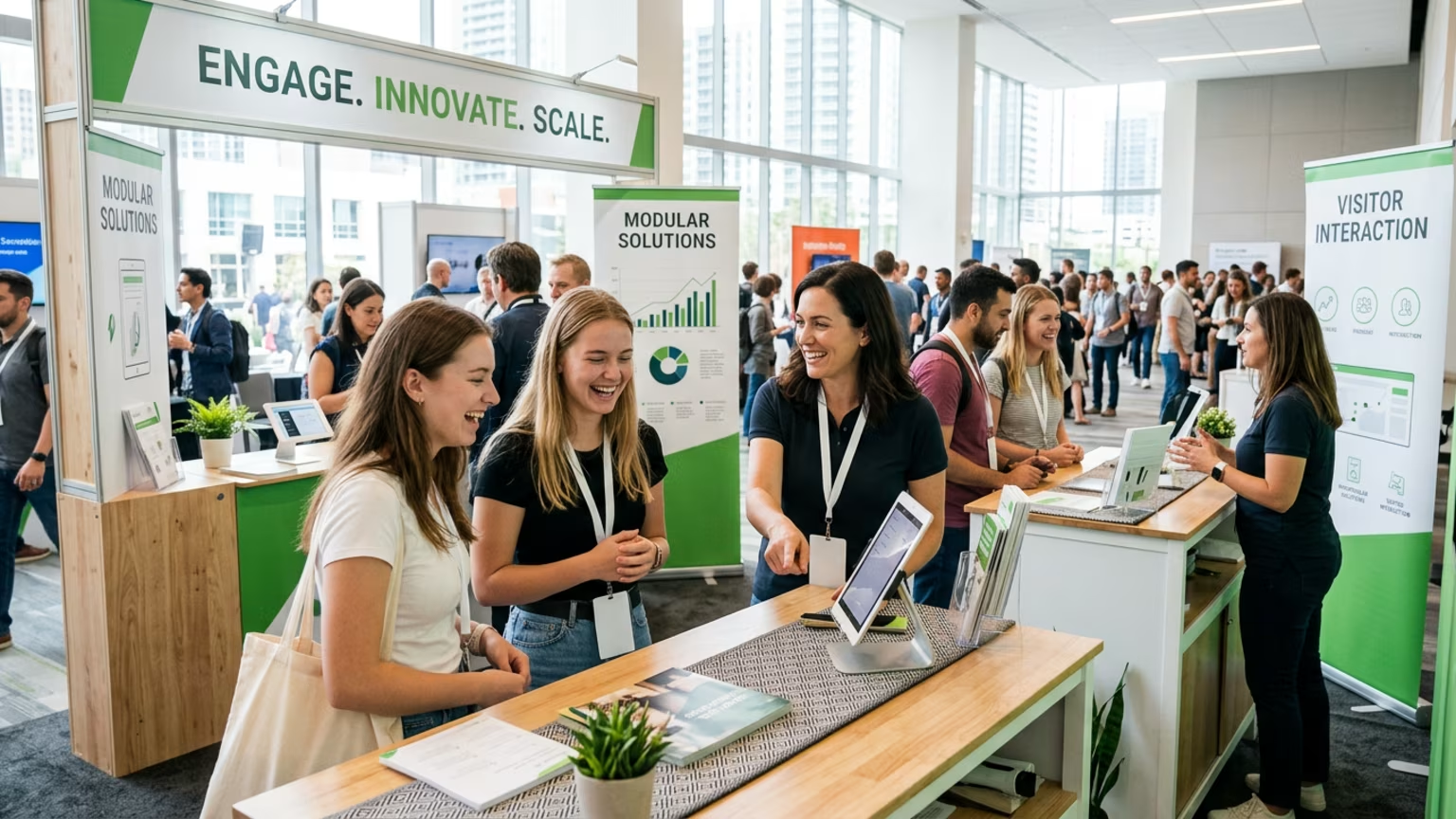
A field marketing manager stands at the edge of a massive custom footprint on day two of a major food expo. Attendees swarm the main aisles in search of caffeine and free tote bags. The brand ambassadors hand out premium product samples at a frantic pace. Yet by closing time, the central CRM shows only a handful of qualified retail buyer contacts.
Scaling successful trade show tactics into a mobile roadshow format requires a precise blueprint for traffic flow and data capture. By applying gamified zones and strict measurement protocols, marketing operators can turn fleeting interactions into predictable sales pipeline.
Brands spend massive portions of their budget on stunning physical spaces that fail to convert visitors into buyers. This creates a busy but foggy environment where engagement looks great in social media photos but dies in the sales funnel. High foot traffic does not automatically equal high conversion rates. Unstructured event spaces routinely drop lead generation numbers to single digits.
We specialize in creating retail demos, product sampling programs, and roadshows that bring brands face to face with their audiences. Each program is designed to drive trial, build consumer relationships, and accelerate retail velocity across multiple locations.
We see this exact disconnect happen across consumer packaged goods, beverage, and automotive industries alike. When a booth lacks a logical flow, temporary staff get overwhelmed by the sheer volume of bodies. Attendees grab a sample and leave without taking a meaningful action or absorbing the brand message. The chaotic reality of the trade show floor demands a systematic layout that forces focus.
Without a rigid structural plan, field teams simply pass out expensive inventory to people who will never actually buy the product.
Data shows that unstructured environments waste massive amounts of potential pipeline and marketing budget. Visitors need a compelling reason to stop, a physical reason to stay, and a clear path to follow. Leaving this progression to chance leads to fragmented execution, poor staff performance, and inconsistent brand messaging across different cities. Mid-to-senior marketing operators are under intense pressure to prove their physical activations lift sales.
They simply cannot afford to rely on beautiful design as their only strategy.
The smartest field marketing teams treat their physical footprints exactly like highly optimized retail stores. They divide the event space into distinct functional zones to carefully guide the consumer experience. A proven framework starts with a dedicated attention zone using high visibility structural elements. Industry research indicates that hanging structures can increase visual reach by 50 percent in crowded convention venues.
This initial visual hook draws distracted people out of the main aisle and into your branded footprint.
From there, the visitor moves naturally into a dedicated product demonstration area. Once the physical product is in hand, trained brand ambassadors transition the visitor to a structured conversation zone. Every successful layout must feature a dedicated closing zone equipped with modern lead capture technology. High traffic booths convert 20 to 30 percent of visitors to leads when using these clear zoned layouts.
Without strict physical zoning, conversion drops down to an abysmal 5 to 10 percent.
This modular layout approach allows brands to pack up their core trade show presence and deploy it rapidly as a pop up roadshow. Modern modular systems can often assemble from scratch in under 30 minutes. This remarkable speed allows field teams to manage four to six daily setups across different regional locations. Rapid deployment scales brand reach by 300 percent across targeted retail cities.
Consistency across these nationwide stops is absolutely mandatory for achieving scale and maintaining brand integrity. Repeatable roadshow formats reduce setup costs by 40 percent per stop. Brands report that consistent physical branding across multiple locations prevents significant execution fragmentation.
Modular pop up stands with clear graphics see 40 percent higher approach rates in under five seconds of exposure. Teams are now layering swappable digital messages via LED screens, boosting local relevance by 25 percent across different markets.
Deploying this advanced strategy in a live event setting requires strict operational discipline from your field team. Follow this step by step guide to build your mobile activation flow.
You cannot scale a marketing program that you cannot measure with absolute accuracy. To prove Return on Investment (ROI) to senior leadership, you must track specific data points at every single event. Lead metrics provide a real time pulse check on your daily activation health and staff performance. Track raw foot traffic using modern heatmapping applications or simple digital zone counters.
Measure consumer dwell time using digital beacons or smart consumer badges. The operational goal is to keep qualified visitors engaged for more than two minutes. A longer dwell time correlates directly with much higher brand recall and future purchase intent. Field leaders should constantly monitor these metrics to adjust staffing patterns throughout the busy day.
Analyzing the right numbers forms the basis of any solid 5 metrics to prove trade show ROI report.
Lag metrics tell the ultimate financial story of pipeline impact and retail success. Look closely at the trial to purchase rate after the event concludes. This key metric typically hits 15 to 25 percent for consumer packaged goods during mobile roadshows. Automotive brands often hit an 18 percent conversion rate when tying hands on demos directly to test drive sign ups.
Entertainment concepts report an impressive 32 percent sales lift from their gamified mobile setups.
Your ultimate target should be a minimum 3:1 ratio of revenue generated against total activation spend. By replacing guesswork with hard numbers, marketing leaders can easily justify their massive physical event budgets. Consistent financial tracking gives your executive team deep confidence in the overarching field strategy. If your team is tired of poor reporting, book a strategy call with our operations group today.
A recent pre-release sampling tour from a major alternative milk brand demonstrates this framework perfectly. The company completely ignored traditional static tables and built a rolling playground filled with hands on sampling. They divided their mobile pop up into clear zones strictly for trial, game play, and retailer conversation.
This gamified approach led directly to a 40 percent spike in targeted traffic compared to their standard setups. By keeping visitors highly engaged in the demo zone, they gathered high quality product feedback and warm retailer leads. The campaign completely avoided the common trap of vague, unmeasurable brand awareness.
Instead, it delivered hard empirical data and very strong retail sell through for their new product line. This brand proved that precise blueprints on the road yield undeniable results at the cash register.
Precision in the field dictates power at the register. Let us build your next great consumer connection.

30 Years Experiential & Retail Activation Partner for CPG & Beverage Brands | Multi-Market Demos, Roadshows & Costco/Club Programs That Actually Sell