Robbie Thain
Founder, CEO

Learn the step-by-step trade show debrief process to extract actionable insights and plan highly profitable experiential roadshows that drive measurable sales.
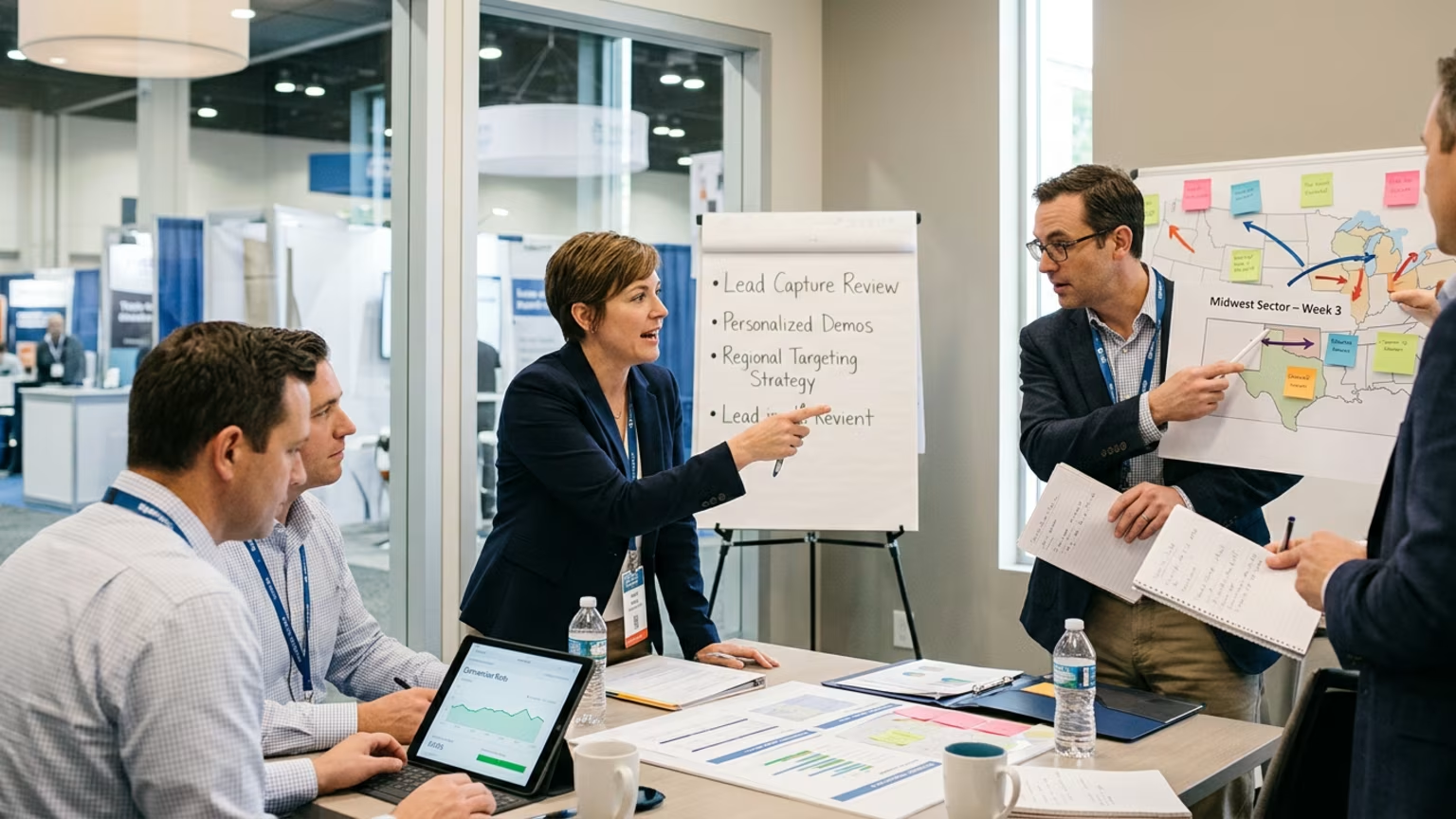
The convention center lights cut out at exactly five o'clock. Your team is exhausted, your boots are scuffed, and you have a stack of three hundred badge scans in your pocket. Everyone wants to celebrate at the hotel bar right now. You know the real work is just beginning.
Trade show debriefs are the connecting bridge between chaotic live interactions and a highly profitable field marketing pipeline. A structured analysis of your performance transforms scattered booth conversations into targeted consumer experiences that drive measurable sales.
The final day of an expo brings a very specific type of physical and mental exhaustion. Field marketing managers pack away heavy displays and ship remaining product samples back to the warehouse. Exhaustion takes over team morale very quickly. The immediate instinct is to take a long weekend and catch up on emails next week.
This exact delay destroys experiential marketing budgets across the consumer packaged goods sector. Studies show that 80 percent of exhibition contacts receive no follow-up at all. Prospects contacted within forty-eight hours are seven times more likely to convert than those contacted after a single week. The momentum built from handing a buyer your newest beverage flavor evaporates instantly with silence.
First-time exhibitors often spend 90 percent of their budget on the actual physical show space. They leave little to no financial resources for post-event strategy or secondary activations. This disproportionate spending creates a beautiful dumpster fire of missed opportunities for growing brands. You leave the floor with hundreds of names but zero operational plan to turn them into buyers.
Sales teams look at lists of raw names with intense skepticism and frustration. A badge scan without context is completely worthless 72 hours after the doors close. The prospect forgets what you promised, your staff forgets the pain point, and the opportunity vanishes. You cannot build a mobile sampling tour on foggy memories and unverified interest.
Without a formal review process, your field teams lack the necessary direction to execute properly. Unqualified names get mixed in with high-intent retail buyers. Your brand ends up wasting money chasing people who only wanted a free snack at your booth.
The goal is not to send a generic blast email to every single badge scan. A fast response is only effective if it brings deep value and clear context to the prospect. You must transition your team from gathering raw contacts to booking highly targeted retail demonstrations. This requires a systematic and uncompromising review protocol.
Your debrief acts as the logical bridge between initial brand awareness and a physical product trial. You use the data gathered at the booth to design the next phase of your live campaign. If your notes show strong interest from regional grocery buyers, you deploy your physical assets directly to those exact regions. This keeps your strategy grounded in physical reality rather than pure guesswork.
We always tell our clients to design their activation backwards from the final goal. You must start by mapping out the exact follow-up system your team can actually manage and afford. You build your booth capture strategy around that final operational goal. Every conversation must capture timeline details and specific retailer use cases to qualify for a later visit.
This strategic bridge requires an airtight timeline for your internal team to follow. Industry experts stress running a structured sales breakdown within 72 hours of the event closing. The goal is to capture the context of every major interaction before team memory fades completely.
Consumer product brands require a unique approach compared to software companies. Physical product sales depend heavily on physical trials. Your post-show strategy must focus on getting the product into the hands of the right decision-makers in their own environment. Transitioning into targeted Costco roadshows that turn sampling into sales requires meticulous planning based on your initial expo conversations.
You need a repeatable playbook to extract insights and assign follow-up tasks with total efficiency. This prevents post-show fatigue from killing your pipeline momentum. Setting a rigid agenda keeps your marketing operators focused on revenue-generating actions.
Planning multi-stop brand roadshows requires flawless timing and clear transitions from the initial expo. A strict event prep timeline for seamless transitions relies entirely on the quality of the notes your ambassadors captured on the floor. Teams that master this workflow see a massive increase in target efficiency.
A fast email blast is a terrible substitute for a well-planned secondary meeting. You want to use the insights gathered from the floor to personalize your subsequent physical touchpoints. If a prospect mentioned a specific packaging concern, your next meeting should address that exact issue directly.
Assign a single owner to manage the database upload process. This prevents duplicate entries and keeps your data clean. Track the open rates of your immediate follow-up emails to gauge initial interest. Use these early signals to prioritize your calling schedule.
You must shift your focus from tracking vanity numbers to measuring actual pipeline growth. Counting the raw number of booth visitors gives you zero insight into future revenue generation. You must define clear lead and lag indicators to prove Return on Investment to your leadership team. Experiential spending requires deep justification based on hard numbers.
Your primary lead metric is the speed-to-lead service level agreement for your sales staff. You want your hot targets receiving highly personalized outreach within 48 hours of the show. Another strong leading indicator is the percentage of contacts that include detailed contextual notes. A high note-capture rate directly correlates with better booking rates for your subsequent physical engagements.
Exhibition-originated prospects typically require fewer touches to close when handled correctly. Data shows that 54 percent of these targets require three or fewer sales calls to make a decision. This proves that high-quality, in-person interactions create a lasting trust that shortens the overall buying cycle. You must track the efficiency of these interactions to justify your experiential budget.
If your roadshow conversions drop, you can trace the failure back to poor qualification at the initial expo. This feedback loop allows you to train your field staff better for the next major event. Clear tracking stops the endless blame game between marketing and sales departments.
True success in physical marketing often takes an entire year to fully materialize. Research indicates that the majority of major closed deals happen six to nine months post-event. You must implement a 365-day tracking dashboard to accurately reflect this delayed attribution window. Executive leaders who define a sale within a nine-month window avoid unnecessary disputes between their departments.
We provide clear reporting on reach, trials, leads, and sales to guide next steps in campaign optimization. Our measurement approach tracks awareness, engagement, and conversion, turning brand moments into actionable data that demonstrates business impact. This level of tracking proves that your field marketing efforts create sustained sales lift.
You must establish how to measure ROI on mobile tours and roadshows without guesswork to validate your strategy. Comparing your total activation spend against the pipeline generated provides a crystal clear picture of your success.
A premium snack brand recently launched a new product line at a major national consumer expo. They completely shifted their focus from gathering mass scans to qualifying regional retail buyers. Their booth staff asked highly specific questions about shelf-space challenges and trial timelines. They recorded these exact details into their capture system immediately after every conversation.
Within three days of the expo closing, the marketing directors held a rigid virtual recap meeting. They used the contextual notes to prioritize a targeted list of wholesale grocery buyers. They ignored the unqualified raffle entrants and general attendees entirely. This laser focus allowed them to allocate their remaining budget toward buyers showing actual purchase intent.
The brand then deployed a targeted sampling tour directly to the regions with the highest buyer density. They referenced the exact pain points discussed at the expo during these physical visits. This created a continuous narrative that built massive trust with the regional managers. They did not have to start from scratch during their secondary meetings.
They measured closed-won deals at the 90-day, 180-day, and 365-day marks with rigorous discipline. This precise tracking validated their initial expo spend and proved their strategy worked. They successfully turned a busy convention floor into a highly measurable revenue pipeline.
Look at your calendar right now and block off a one-hour recap meeting for the Wednesday following your next exhibition. Stop letting hard-earned contacts disappear into the void of a neglected database. If you want to transform your next expo into a profitable field campaign, book a strategy call with our experiential team today.

30 Years Experiential & Retail Activation Partner for CPG & Beverage Brands | Multi-Market Demos, Roadshows & Costco/Club Programs That Actually Sell