Robbie Thain
Founder, CEO

Discover how miniaturized touchpoints and micro-spaces cut through trade show noise to capture consumer attention and drive measurable sales pipeline.
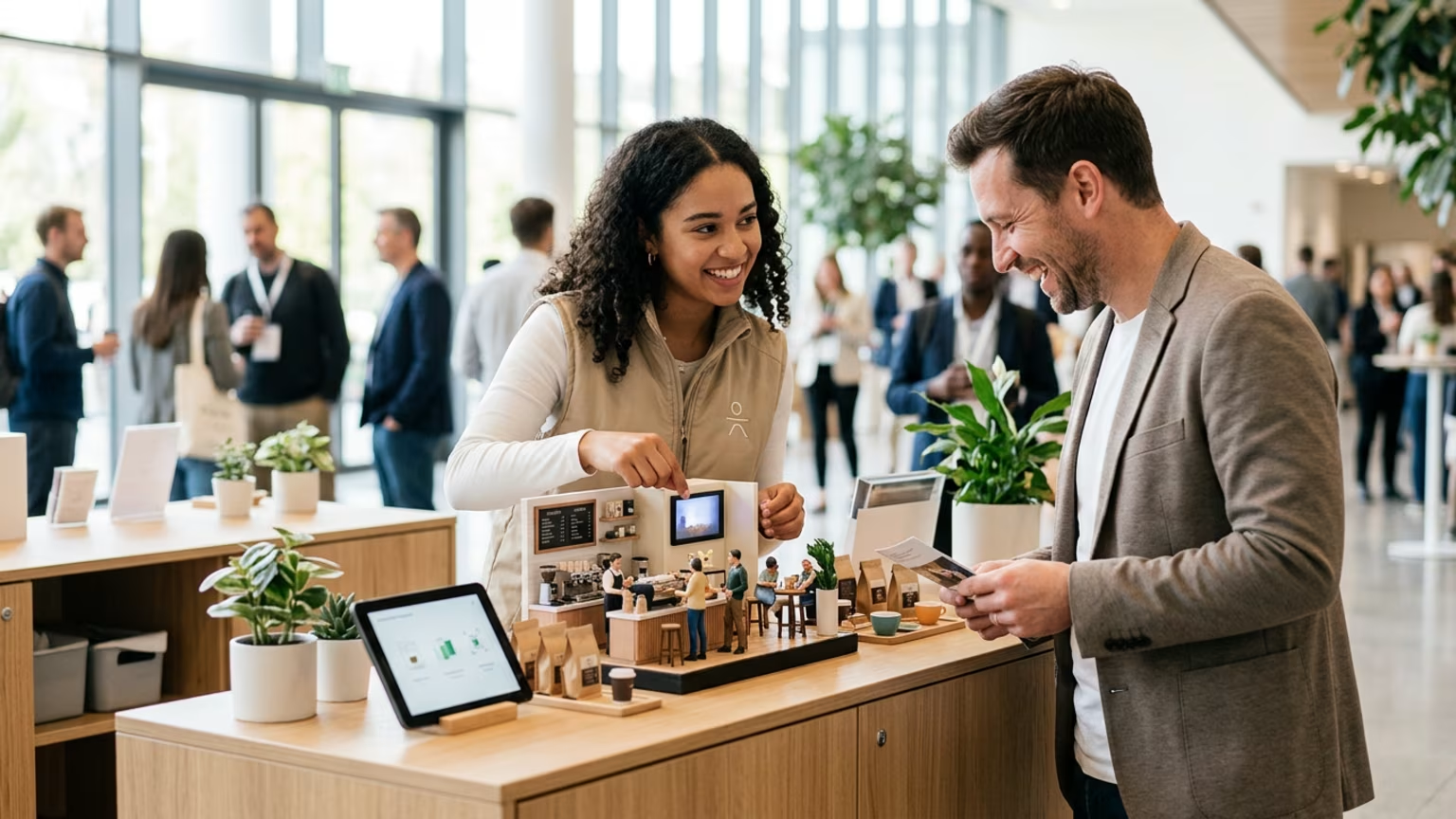
A shopper marketing director stands in the center of a loud convention hall. Neon lights flash from fifty different booths. Music blares from a nearby stage. Consumers walk past with glazed eyes and full tote bags.
Miniaturized touchpoints cut through event fatigue by offering intimate and low-stakes physical interactions. This precise approach allows brands to turn chaotic consumer attention into measurable Return on Investment (ROI).
We create experiential marketing programs built to connect emotion with action. Our process blends creativity, strategy, and data to guarantee every brand interaction drives measurable results. We craft experiences that engage all five senses, helping people not just see brands, but feel them, turning moments into meaningful business outcomes.
Trade show floors and festival grounds are notoriously chaotic. Brands compete for attention using massive builds and loud presentations. Attendees suffer from sensory overload within the first hour. They stop absorbing messages and simply try to survive the noise.
Grand gestures risk making your brand part of the blur. Consumers walk past towering displays without registering the product. Your field team struggles to hold meaningful conversations over the background noise. Leads captured in this environment lack real intent.
The result is a high-cost activation that produces weak pipeline data. Buyers drop their business cards into a bowl to win a prize. They forget your brand name before they reach the parking lot. You need a better way to stop people in their tracks.
The strategic counter to overstimulation is creating micro-spaces. Small-scale collectibles and quiet zones offer a mental break for attendees. They draw people in through curiosity rather than sheer volume. A smaller footprint forces a deliberate interaction between the consumer and the brand ambassador.
This approach requires operational discipline to work properly. You must design the space to feel intentional and highly exclusive. The touchpoints need to be tactile and shareable without requiring a massive time commitment. Lowering the barrier to entry increases the volume of qualified interactions.
This shifts the dynamic from shouting at a crowd to speaking directly with an individual. According to Event Marketer, these setups are charming and highly intriguing. They serve as a direct counter to overstimulation in brand activations. They earn big attention by using tiny tokens of engagement.
A quiet approach builds a foundation for lasting consumer memory. A shopper who feels relaxed will listen to your product pitch. You win their trust by respecting their mental bandwidth.
Executing a miniaturized strategy requires absolute precision. You need a clear process to move from concept to a live environment. Our team uses a strict framework to build these campaigns.
You must maintain strict control over the physical environment. Do not clutter the micro-space with excess signage or loud colors. Keep the visual focus entirely on the miniature interaction itself. In our experience providing brand activation services, strict control prevents the activation from feeling cheap.
Your brand ambassadors need to contrast the loud environment with a focused conversation. They should ask simple questions and let the consumer handle the physical item. This tactile engagement cements the brand into their memory.
Hard data is required to justify the investment in these campaigns. Fluffy engagement metrics will not satisfy a demanding leadership team. You must track specific lead and lag indicators.
Lead metrics focus on the immediate floor activity and volume. Track the number of physical samples distributed per hour. Monitor the scan rate of your digital data capture points. Measure the average dwell time of visitors in your micro-space.
Lag metrics prove the long-term business impact of the campaign. Track post-event sales lift in the specific activated region. Measure the redemption rate of digital offers distributed at the touchpoint. Monitor retail sell-through velocities for the featured product.
Event Marketing Institute reports show strong live events make consumers highly likely to purchase afterward. We always tie field data directly to broader revenue goals. Strong data collection turns a creative idea into a reliable sales channel. If you need a better framework, our insights on how to measure ROI with clean data provide a clear path forward.
MGA Entertainment recently proved the power of small scale at a massive festival. They activated their Miniverse brand at Coachella to engage highly stimulated attendees. They built a miniaturized replica of the festival itself.
The activation featured tiny replicas of palm trees and a small Ferris wheel. It included detailed miniature cacti to match the desert setting. This setup created a quiet and playful contrast to the massive music stages. It invited attendees to lean in and inspect the details closely.
This approach generated significant organic buzz across social platforms. Consumers naturally wanted to photograph and share the tiny festival replica. It provided a memorable brand interaction without requiring a massive structural build. The execution demonstrated how physical intimacy wins attention in crowded spaces.
Consumer packaged goods face unique challenges at large national expos. Food and beverage brands rely heavily on standard sampling tables. These tables look identical from one aisle to the next. Buyers and consumers walk past without registering the brand name.
Miniaturized touchpoints break this exhausting visual monotony. A beverage brand can create a tiny branded cafe counter instead of a standard table. A snack company can build a scaled-down grocery aisle for their samples. These details force the consumer to pause and interact differently.
This pause gives your field staff the time needed to start a real conversation. The physical novelty of the setup breaks down natural sales resistance. It turns a routine sample handoff into a memorable brand experience.
You can apply this exact logic to standard retail environments. Large stores bombard shoppers with bright endcaps and loud displays. A quiet and highly detailed micro-space stands out in an aisle. It brings a sense of calm focus to the routine shopping trip.
Cars and enterprise technology are traditionally difficult to sample in tight spaces. An automotive brand cannot fit a full vehicle inside a crowded networking lounge. A tech company struggles to make server software feel tangible and exciting. Miniaturization offers a brilliant workaround for these bulky industries.
Custom collectibles allow these brands to place physical items in the hands of buyers. An automotive sponsor can hand out heavy, premium miniature car models. A tech brand can distribute small, interactive replicas of their hardware. These items sit on the desks of decision makers long after the event ends.
The key is making sure the miniature item feels incredibly premium. It must carry the same weight and build quality as the actual product. A cheap plastic toy will instantly degrade the perception of an expensive brand. Invest heavily in the manufacturing of these small tokens.
This physical reminder fosters long-term trust and purchase intent. It keeps your brand in the visual field of the buyer for months. Paired with strong digital follow-up, these small items close massive enterprise deals.
Scaling a miniaturized concept seems contradictory at first glance. You want the experience to feel small but you need national reach. The solution lies in operational consistency and smart logistics.
You must standardize the physical footprint of the entire activation. Build modular kits that ship easily to multiple target markets. Every brand ambassador must receive the exact same training on the interaction flow. Uniformity guarantees the data you collect remains clean and comparable.
A well-planned rollout starts with a few targeted trigger moments. Test the concept at a single regional trade show or a product launch. Collect the lead metrics to validate the physical interaction design. Adjust the staffing and the flow before rolling it out nationally.
This phased approach protects your marketing budget from widespread failure. When you are ready to expand, your operations team will have a tested playbook. We discuss this process in our guide on hiring the right experiential partner to manage these complex logistics.
Going small comes with a unique set of operational risks. A tiny activation can easily be overlooked if the placement is completely wrong. You cannot rely on size to attract attention.
Location becomes the single biggest factor for foot traffic. You must secure high-traffic areas where people naturally slow down. Corners, transition zones, and lounge perimeters are highly effective spots. Avoid placing your micro-space next to the loudest booth on the floor.
Staffing is another common failure point for these campaigns. A small footprint means your brand ambassadors are constantly under a microscope. There is no large screen or massive display to hide behind. Your team must be perfectly trained and highly engaging at all times.
Poor post-event follow-up will ruin the entire campaign. Capturing attention is useless if you drop the data routing afterward. Sync your field capture tools directly to your central sales pipeline. You can review successful execution models by looking at our portfolio of regional case studies.
Big-box retailers present a completely different type of chaos. A warehouse club is an ocean of oversized products and massive pallets. Shoppers are highly focused on moving through the aisles efficiently. Traditional product demonstrations often look like temporary roadblocks.
Introducing a miniaturized touchpoint here breaks the expected shopping pattern. A small and highly detailed display demands immediate attention. It creates a physical contrast that successfully stops the shopping cart. This is highly effective for premium food brands seeking product trial.
Design a micro-space that mirrors the origin of the product. A coffee brand might display a tiny replica of a roasting facility. A snack brand could present a small-scale farm setup. These tactile elements tell a rapid brand story before the consumer tastes the product.
This tactic requires tight coordination with local store managers. Fit the entire experience within strict retail footprint guidelines. The physical elements must be durable enough to survive a high-volume weekend. When executed correctly, this approach drives immediate sales lift at the register.
The psychology behind this trend is rooted in cognitive load management. Modern consumers process an exhausting amount of digital and physical advertising daily. Their brains naturally filter out loud and aggressive marketing tactics. They are actively protecting their attention from constant demands.
Miniature items and quiet spaces do not trigger this defensive filtering. They appear harmless, playful, and completely non-threatening. They invite the consumer to control the pace of the physical interaction. This shift in control makes the consumer far more receptive to the brand message.
We see this regularly when tracking our field performance metrics. Activations demanding less physical energy from the attendee often capture more data. People are willing to engage when they do not feel trapped by a presentation. Respecting the energy levels of your audience builds immediate goodwill.
If your team is struggling to stand out at crowded trade shows, it is time to rethink your footprint. Book a strategy call with our operations team to discuss your next big event.
Start small, measure the impact, and scale the results.

30 Years Experiential & Retail Activation Partner for CPG & Beverage Brands | Multi-Market Demos, Roadshows & Costco/Club Programs That Actually Sell