Robbie Thain
Founder, CEO

7-Eleven managed its 2026 Bring Your Own Cup Day using strict operational boundaries. See how a 10-inch cutout and clear pricing rules drove product trial.
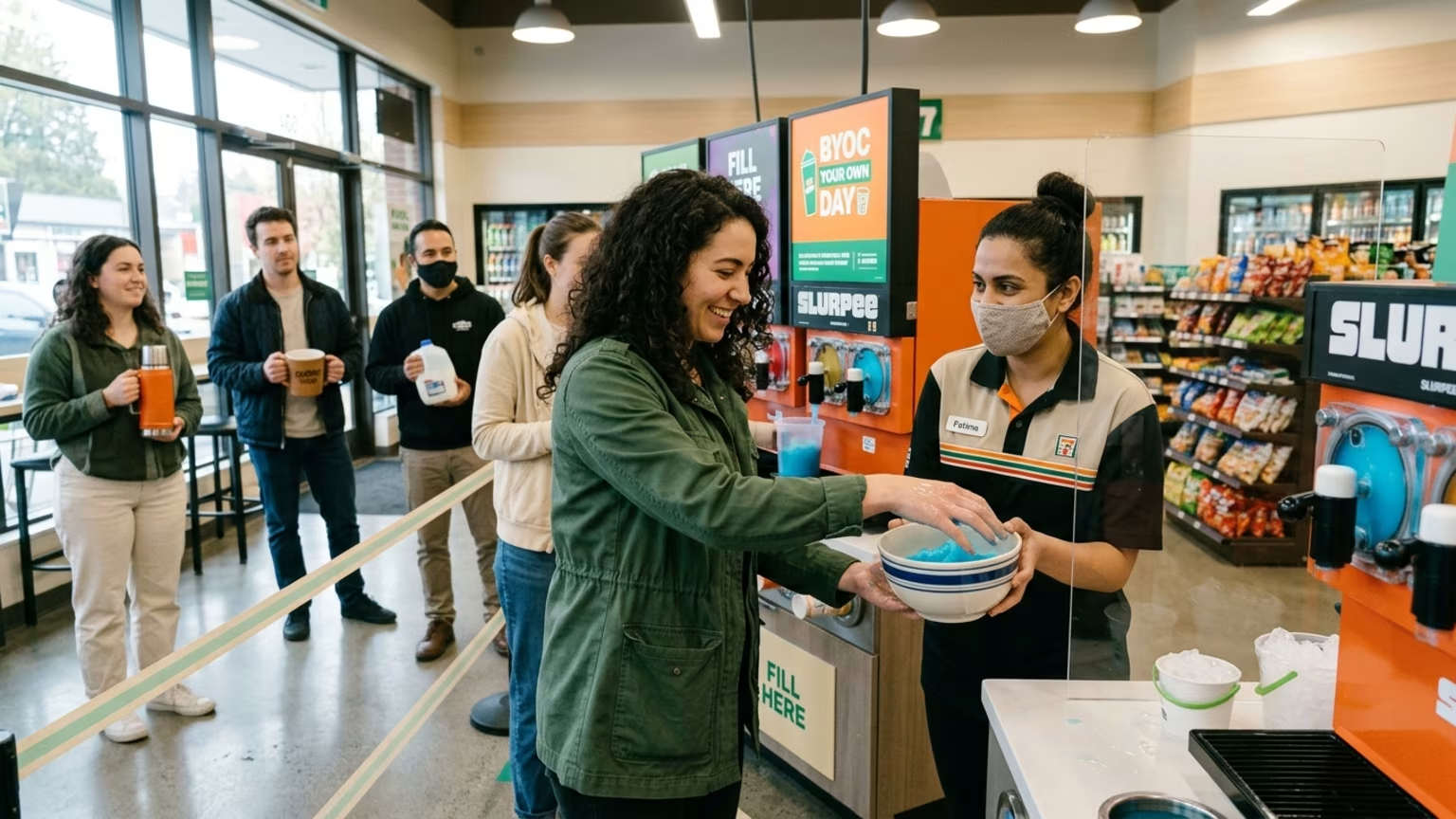
On September 19, 2026, 7-Eleven Inc. executed its annual Bring Your Own Cup Day across participating stores. This one-day promotion included 7-Eleven, Speedway, and Stripes locations. Customers could fill a qualifying personal container with any Slurpee flavor for a flat price of $1.99. The retailer encouraged shoppers to bring unconventional vessels.
Approved examples included items like bike helmets, fish bowls, and teapots. Shoppers also utilized objects like trophies and cookie jars. This event turned a routine beverage transaction into a highly visible consumer participation challenge. For experiential operators, a single-day national activation represents a massive test of retail readiness.
The promise of filling a massive trophy with a brightly colored beverage generates immediate interest. However, actual success relies entirely on local execution at the store level. If a single location fails to manage the crowd or runs out of cups, the promotion can quickly falter. 7-Eleven Inc. established a clear timeline and specific boundaries to ensure the event remained organized.
The campaign relied on strict operational rules rather than limitless creative freedom. Every participating container had to be clean, watertight, and leak-proof. These containers also had to be capable of standing upright on their own. The most critical control mechanism was a 10-inch cutout used at the beverage station.
Customers had to ensure their chosen vessel could fit within this specific clearance space. This rule allowed the container to sit securely under the store beverage dispensers. These physical parameters serve a dual purpose for the retail environment. First, they protect the store equipment from damage caused by oversized objects.
Second, they ensure a hygienic transfer of the product from the machine to the consumer. The retailer also implemented clear transaction boundaries to manage the overall event flow. The $1.99 flat price applied universally to all flavors. This pricing strategy included the limited-time return of the Mountain Dew Slurpee flavor.
The promotion was strictly limited to one container per person to prevent hoarding behavior. Finally, the offer remained valid only while supplies lasted to protect against sudden inventory depletion. Coverage noted that more than 300 7-Eleven stores operate in New Jersey alone. This figure describes the state footprint rather than the participating location count. Still, it highlights the immense physical scale of the retail operation.
For CPG and beverage brands, this promotion demonstrates how to marry high-visibility engagement with disciplined frontline execution. A creative hook generates the initial foot traffic to the store. However, operational rules dictate the actual in-store conversion and subsequent customer satisfaction. The 10-inch cutout is a perfect example of how a physical constraint protects brand assets during live events.
Store associates do not have to make subjective decisions about whether a cookie jar is appropriate. They simply apply the objective 10-inch clearance rule to every single container. We know that field execution thrives on clarity and unambiguous guidelines. A VP of Marketing in the CPG beverage category shared their experience with us.
They told us: "Robbie, your leadership and vision turned our campaign into something truly special. The Makai team brought our new drink to life with energy, creativity, and flawless execution. Thanks to you, our brand isn't just tasted, it's remembered." Structuring the physical environment ensures the experience remains memorable for the right reasons. Brands must guide consumer events that make your brand unforgettable with clear physical boundaries.
Without these boundaries, a clever promotion easily devolves into store-level chaos. The one-container limit acts as a crucial fail-safe against unusually large individual transactions. It helps standardize the offer across all participating stores while protecting profit margins. By tying the creative element directly to the physical consumption of the product, the brand ensures the gimmick serves the business goal.
A highly publicized retail event triggers immediate changes in store-level queue management. With a $1.99 flat price and a one-item limit, checkout friction drops significantly for the retail operator. Staff can process transactions quickly without navigating complex loyalty integrations or scanning multiple product codes. However, brands must account for uneven store participation when launching national promotional campaigns.
Customers were advised to contact their local stores before visiting on September 19. This requirement shifts some logistical burden back to the local operator and the consumer. This variability demands a meticulously documented rollout strategy for regional or national brand activations. Marketing leaders need accurate store lists and clear staff briefing materials.
Dedicated signage is also required to prevent customer frustration at non-participating locations. Driving sudden surges in beverage trial tests local supply chain resilience in real time. Running out of product during a limited-time flavor promotion can severely damage consumer trust. Successful retail demonstration programs demand strict inventory tracking to avoid alienating first-time participants.
Field teams must also prepare for the hygiene challenges associated with unconventional containers. Operating a high-volume beverage station requires constant cleaning and maintenance under normal conditions. Introducing objects like bike helmets and fish bowls dramatically increases the risk of spills. Local managers must allocate additional labor hours to maintain store cleanliness during the event window.
A flat $1.99 price does not automatically guarantee a successful value proposition for the retailer. Without baseline pricing data or specific margin information, the true financial impact remains complex. The unusual containers might create customer service or throughput challenges if not managed properly. The strict rules applied by 7-Eleven Inc. act as an operational shield against these exact risks.
Marketers observing this campaign must remember to separate the memorable mechanic from the actual sales reality. The promotion clearly encourages beverage trial among a wide demographic of shoppers. However, the true measure of success is whether first-time visitors become repeat buyers in the future. Brands rolling out similar campaigns need to measure flavor selection and basket attachment.
Subsequent repeat purchase behavior must also be tracked to determine accurate Return on Investment. Treating crowd size or social visibility as the sole proof of success is a common trap. When companies build student ambassador programs or large mobile tours, data hygiene must remain the priority. Operational control ensures that every interaction translates into a structured sales environment.
The promotion was deliberately designed to reshape how shoppers view a standard convenience store visit. Brandon Brown, a senior vice president at 7-Eleven Inc., noted that the event "challenges the definition of what a cup can truly be" for consumers. He added that the campaign actively invites customers to bring their "wackiest cup" for a one-day Slurpee run. By leaning into this chaotic imagery, the retailer successfully secures massive consumer attention.
Behind the scenes, the company quietly relies on rigid store logistics to maintain operational order. The tension between public creativity and internal discipline makes the campaign function effectively. The marketing team issues a broad invitation to the general public. Meanwhile, the operations team enforces a strict set of rules to keep the stores functioning.
When your marketing team finalizes the creative concept for your next physical product launch, ask yourself this. Are your frontline operators equipped with a simple, objective rule to manage unexpected consumer behavior before it derails the entire activation?
Retail marketing managers overseeing high-volume trial promotions require strict operational boundaries to prevent chaotic store experiences. When inefficient post event follow up and CRM routing block your ability to track retail conversion, Makai steps in to stabilize the data flow. Through our Brand Activations capability, we create high energy activations that turn awareness into participation and drive measurable consumer response.

30 Years Experiential & Retail Activation Partner for CPG & Beverage Brands | Multi-Market Demos, Roadshows & Costco/Club Programs That Actually Sell