Robbie Thain
Founder, CEO

Learn how frictionless lead capture turns live physical interactions into measurable sales pipeline by collecting only the exact information you actually need.
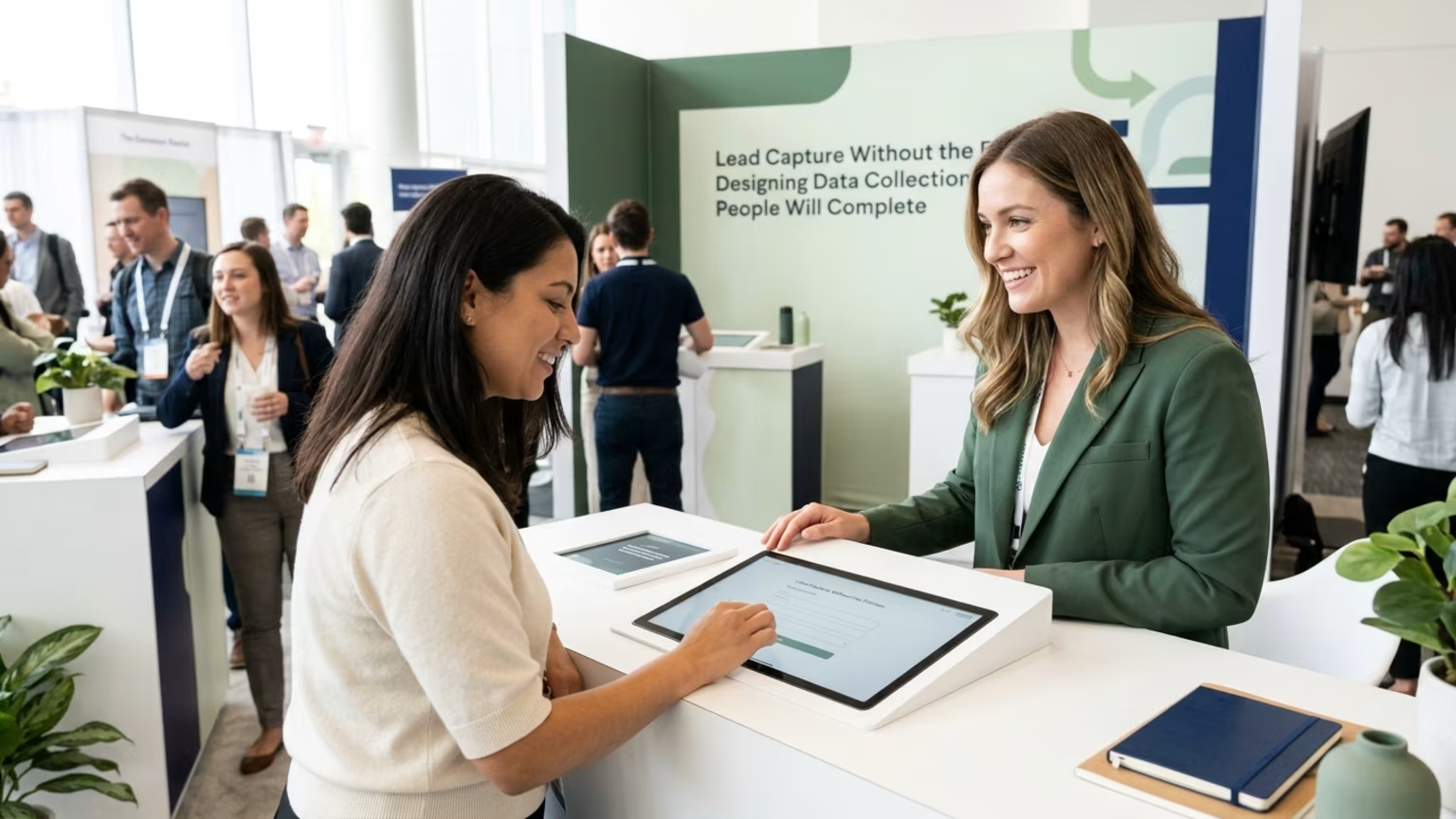
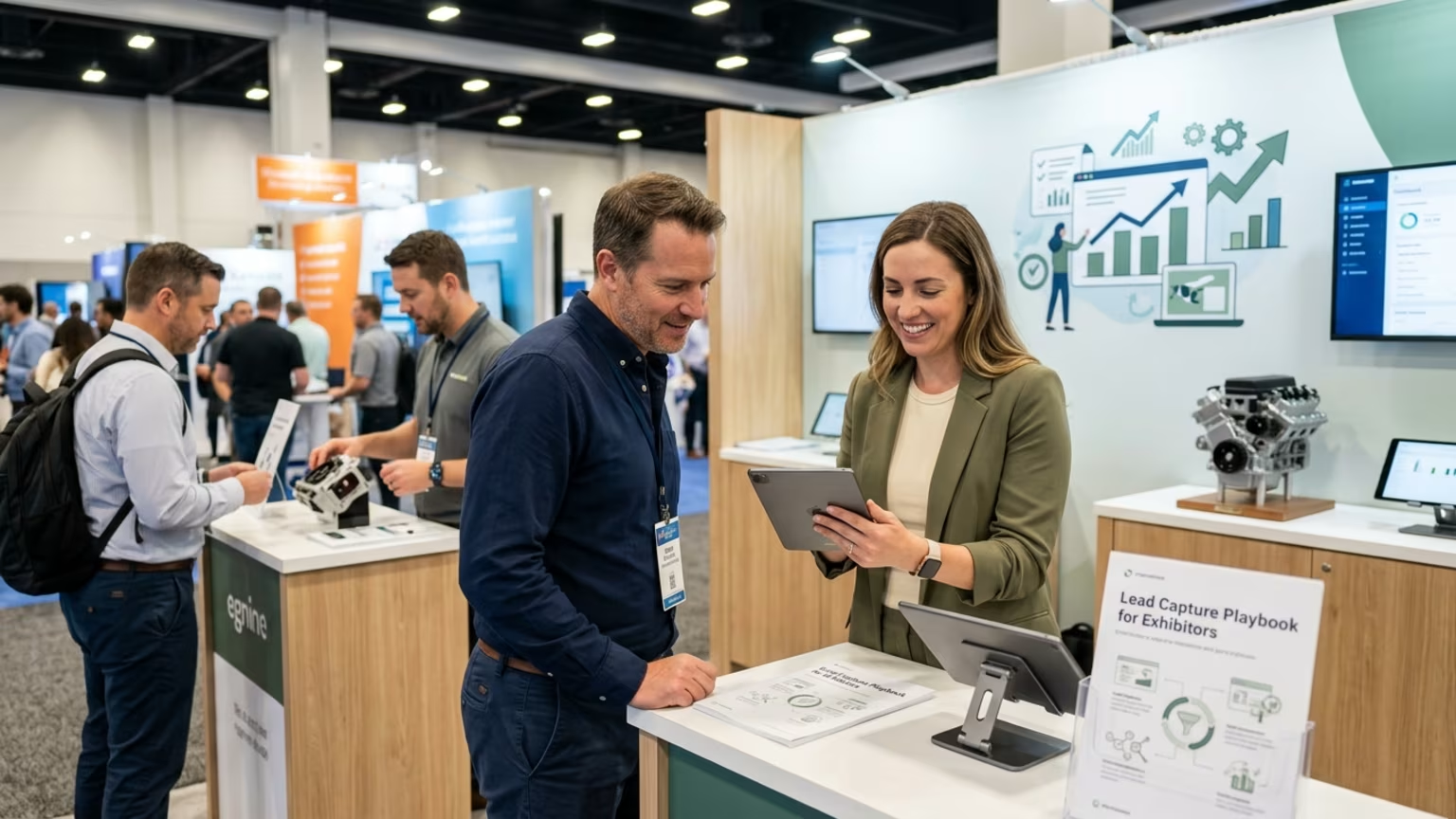
A trade show attendee stops for a beverage sample. A field representative immediately hands over a tablet with a ten field registration form. The attendee hands the sample back and walks away. Frictionless lead capture is the operational discipline of collecting only the exact data required to execute the next commercial action.
It replaces bloated consumer forms with a precise exchange that builds measurable pipeline. Many marketing teams treat physical activations like digital landing pages. They ask for names, phone numbers, and home addresses. They demand detailed purchasing timelines before handing over a single product sample.
This aggressive approach creates an unnecessary barrier between the brand and the buyer. Consumers quickly recognize when an exchange feels entirely one sided. Smart operators build their data collection strategy around the actual user experience. They understand that asking for too much information ruins the physical interaction.
Event marketing success relies on building trust quickly in a crowded physical environment. A long digital form destroys that trust before the conversation even begins. The best field teams know that data collection is a delicate negotiation. They trade immediate value for exactly one piece of actionable information.
Too many brands rely on a high volume of generic badge scans to justify event spend. They confuse a captured contact with a qualified commercial opportunity. In the physical world of consumer goods marketing, a scan does not equal a buyer. A real pipeline requires distinct context for every interaction.
Many companies assume that any email address captured on a trade show floor holds inherent value. This assumption leads to bloated CRM systems filled with useless data. A contact without context is just a name on a spreadsheet. Sales teams will simply ignore leads that lack specific operational details.
Legal and compliance frameworks provide a useful starting point for operational design. California privacy guidance says businesses should tell consumers what information they collect and how it will be used at or before collection. This is not just a regulatory compliance step. It forces marketers to clarify the exact purpose of the information exchange.
If you cannot explain why you need a home address for a beverage sample, you should not ask for it. When activations reach families, regulatory boundaries tighten further. If an activation reaches children or is directed at children under thirteen years of age, strict rules apply. The FTC COPPA rule requires covered services to obtain verifiable parental consent before collecting, using, or disclosing a child's personal information, subject to limited exceptions.
A smart operator avoids collecting this data entirely unless it serves a core business function. Different capture methods produce very different kinds of information. You must match the exact data collection tool to the specific commercial context. We rely on this mindset at makai to ensure our field programs actually deliver Return on Investment.
You need specific frameworks to turn casual booth traffic into organized data. The most effective marketing programs rely on three foundational elements. These components ensure that field teams capture valuable context without slowing down the physical activation.
Your commercial objective must dictate your data collection technology. A fast paced trade show floor requires a completely different approach than a dedicated retail demonstration. Trade show lead retrieval commonly relies on physical badge scans. This method works well when event organizers supply the baseline identity data.
It allows the field team to keep long lines moving smoothly. However, operators should always pair the quick scan with one lightweight qualification question. QR forms shift the data input work directly to the event visitor. These mobile forms work incredibly well when a digital coupon is the clear reward.
Product registration flows make sense when ownership creates an ongoing service relationship. This approach is more appropriate than a generic newsletter form when the brand must support product warranties. Sampling creates a natural moment for short feedback because the visitor just experienced the product. A compact feedback flow should prioritize product learning over massive lead volume.
Visitors will happily share their information if the benefit is obvious. You must state exactly what the visitor gets, what information is required, and what happens next. The FTC financial privacy guidance also illustrates a broader principle for data collection. Where regulated information is involved, businesses may need to provide notices and limit certain disclosures.
Even for non regulated consumer goods, giving visitors clear boundaries builds immediate trust. A transparent exchange transforms a skeptical visitor into a willing participant. You should never try to disguise a general marketing opt in as a required registration step. If you want to use the data for promotional communications, you must explain that distinction clearly.
You do not need a massive web form to qualify a lead in person. Staff should ask two or three qualifying questions during the live conversation. The representative can then record a brief contextual note before the visitor leaves. This practice keeps lines moving while ensuring that sales teams receive vital context.
A highly trained brand ambassador is far more effective than a mandatory digital form. They can read body language, interpret verbal cues, and pivot the conversation naturally. By relying on human intelligence, centralized lead capture systems can feed accurate context straight to the sales floor. This seamless handoff is what separates elite programs from amateur event marketing.
Retailer and distributor conversations often require nuance that a digital form cannot capture. The field team should document the specific account, the buyer role, and the core distribution issue. The goal is not simply to collect a random contact email. The objective is to preserve the commercial context that determines the correct trade follow up.
A scheduled meeting is the highest friction option in the operational framework. It should be reserved exclusively for visitors who have expressed a specific commercial need. The field representative should capture the minimum information needed to make the meeting useful. A meeting request without a defined subject is just a softer version of a badge scan.
Counting total contacts is a deeply flawed way to measure an experiential activation. Smart operators separate raw footfall from actual commercial progress. Measurement frameworks typically distinguish footfall and dwell time from actual sample conversion. These systems also track lead capture rates alongside brand lift and cost per engagement.
Operators use post event behavior to verify the final impact of the activation. Each metric answers a completely different business question. Footfall measures baseline opportunity, while trial measures active product interaction. Lead capture measures explicit permission for future sales follow up.
You must track how many captured contacts resulted in a booked meeting or retail transaction. A database full of unverified email addresses produces zero actual value. Brands should measure consent rates and the percentage of contacts containing actionable context. By avoiding common lead capture pitfalls, field teams can prove exactly how live interactions drive revenue.
A strong measurement strategy requires a clearly defined data contract before the activation begins. For every proposed form field, the marketing team must document the specific decision it supports. They must know exactly which team will use the information. If nobody can name the downstream action, the field must be removed entirely.
Field teams often fail because they collapse very different outcomes into one inflated lead number. An engaged consumer is simply someone who interacted with the physical experience. A product trial represents a person who actually consumed the physical sample. A feedback respondent is a visitor who provided a direct product reaction.
A sales qualified lead is a buyer who demonstrated a defined commercial need. By segmenting these audiences, marketing leaders can calculate the true cost per qualified outcome. This granularity ensures that sales teams only spend time calling real prospects. If a team cannot distinguish a booth visitor from a confirmed buyer, the data is useless.
When leaders properly design the IRL conversion path, they turn chaos into predictable outcomes. We provide clear reporting on reach, trials, leads, and sales to guide next steps in campaign optimization. Our measurement approach tracks awareness, engagement, and conversion. This turns brand moments into actionable data that demonstrates business impact.
Frictionless lead capture turns fleeting physical interactions into measurable sales pipeline by collecting only the exact information required to execute the next commercial action.

30 Years Experiential & Retail Activation Partner for CPG & Beverage Brands | Multi-Market Demos, Roadshows & Costco/Club Programs That Actually Sell