Robbie Thain
Founder, CEO

Adweek reports brands are shifting to participatory in-store experiences. Learn how to transform passive retail aisles into measurable field marketing success.
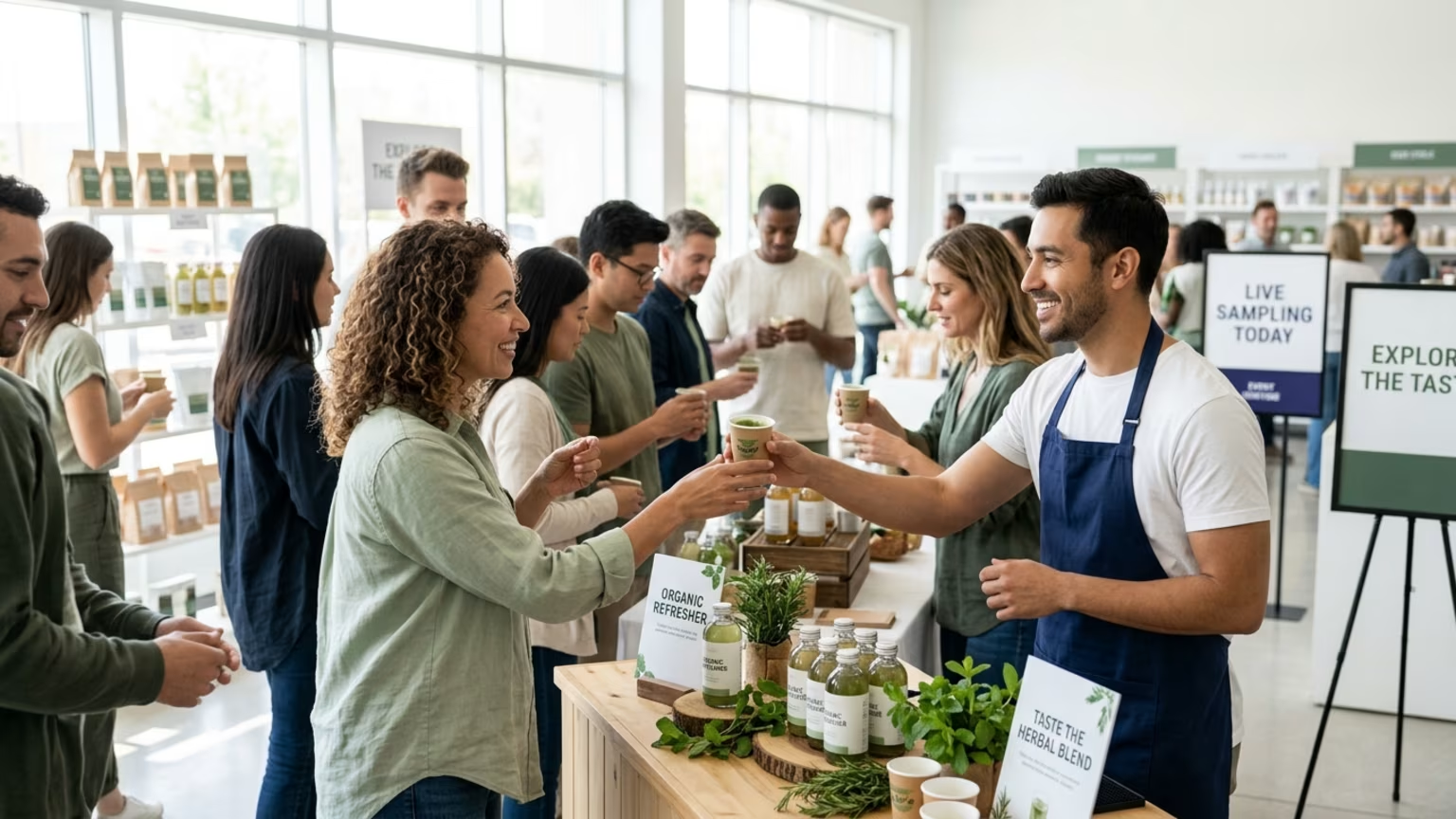
Retail environments are not just final distribution points for finished products. They are active media channels where brands win or lose the final decision. The core question for modern marketers is how to transform passive retail aisles into participatory brand environments. Shoppers are overwhelmed by digital noise, making the tangible retail aisle a rare sanctuary for focused shopping.
According to a Grocery TV study of more than 1,000 grocery shoppers cited by Adweek, 95% of respondents made at least half of their purchase decisions in-store. This staggering figure proves that the point of purchase is still a critical interaction. The same source reported that one-third of grocery shoppers entered stores without a list. This leaves significant room for product trials, promotions, substitutions, and other in-aisle influences.
Furthermore, the Adweek sponsored article cited eMarketer research finding that in-store product discovery converts at nearly twice the rate of online discovery. We at makai have been connecting brands with people through live experiences, retail programs, and national activations since 1995. Over three decades, we have built a track record of creating meaningful brand moments across the country. Brands that successfully navigate these environments prioritize meaningful in-store execution over passive signage.
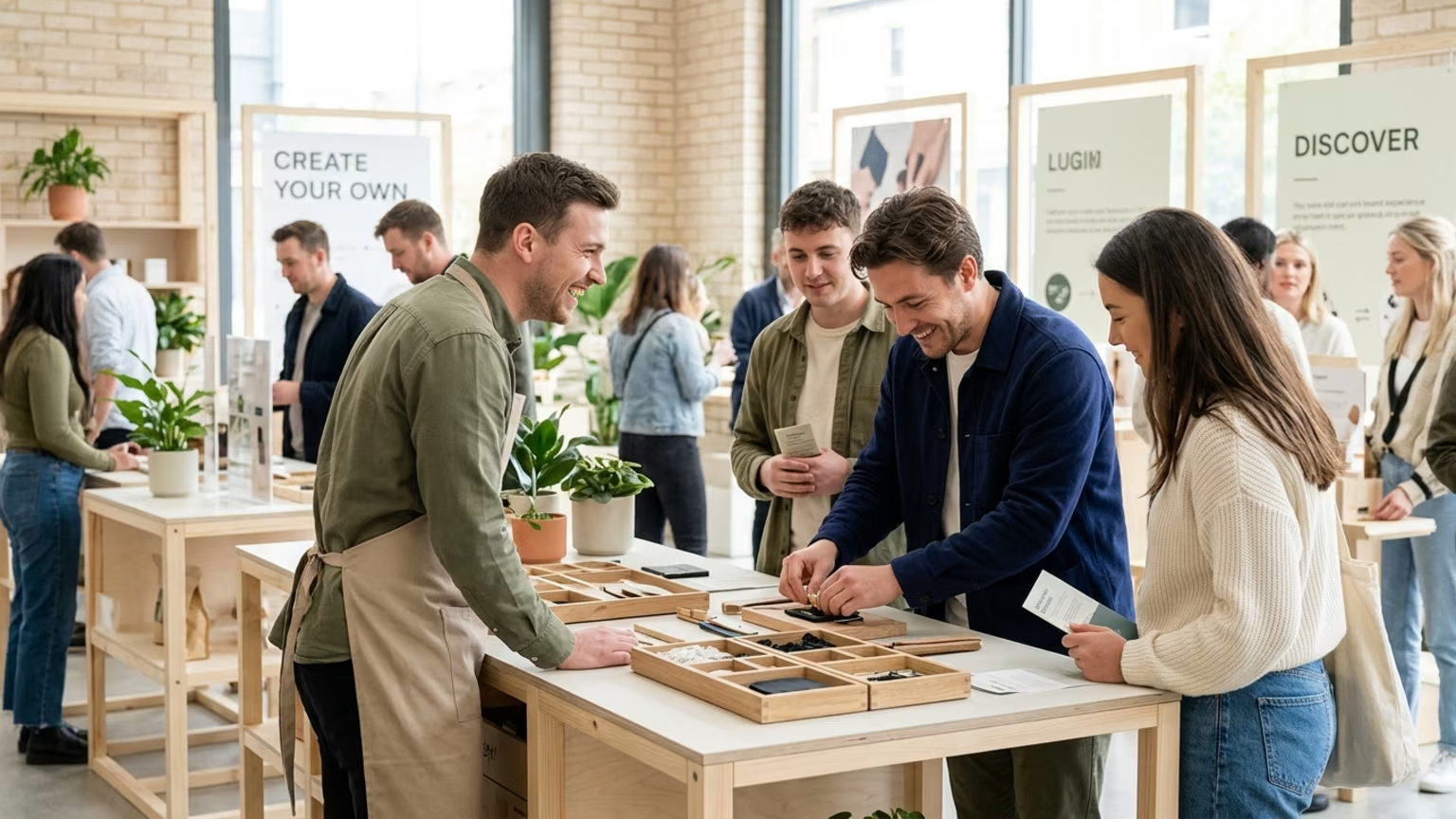
Marketers are realizing that a passive brand presence is no longer sufficient. Consumer expectations have shifted dramatically toward interactive formats where they can touch and taste the product. When an activation is designed for participation, the aisle becomes a live feedback loop for the brand. This level of interaction requires precise planning and a deep understanding of shopper psychology.
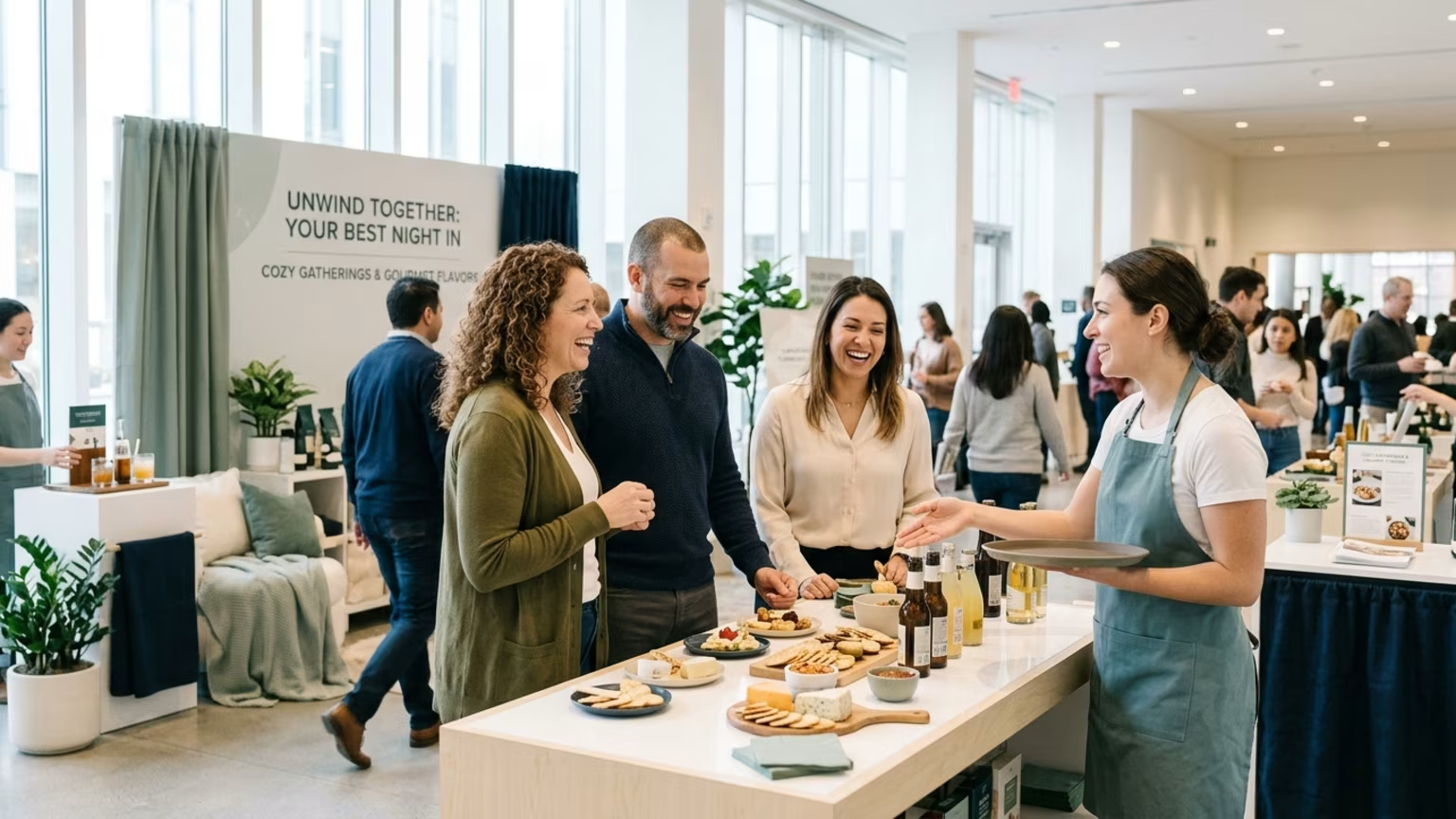
Executing an in-store experience requires strict adherence to physical retail realities. A 2025 BizBash report, based on a survey of more than 200 event professionals, highlights the operational challenges of creating live experiences. Planners must secure the right footprint, comply with retailer safety guidelines, and manage complex permitting. This crucial groundwork happens long before a single product is sampled.
Space constraints dictate everything from fixture dimensions to traffic flow on the store floor. A poorly planned footprint creates bottlenecks that frustrate shoppers and store managers alike. Permitting can stall an entire national roadshow if not handled with absolute precision. We track every piece of event gear, ship it carefully, and coordinate delivery nationwide so every activation stays on schedule.
Timing and placement determine the logistical framework for these operations. For instance, a leading soda brand executed an in-store campaign timed around peak grilling season. They strategically placed their activation above beverage coolers to intercept shoppers at the exact point of decision. Planners must integrate these spatial requirements with retailer approvals early in the planning process.
When brands coordinate these physical elements properly, they create seamless environments that invite participation. Adding in-store media to a mix that already includes television, social, and digital reportedly increased incremental reach by 49% on average in the cited analysis. Operational rigor is the silent partner of creative success.
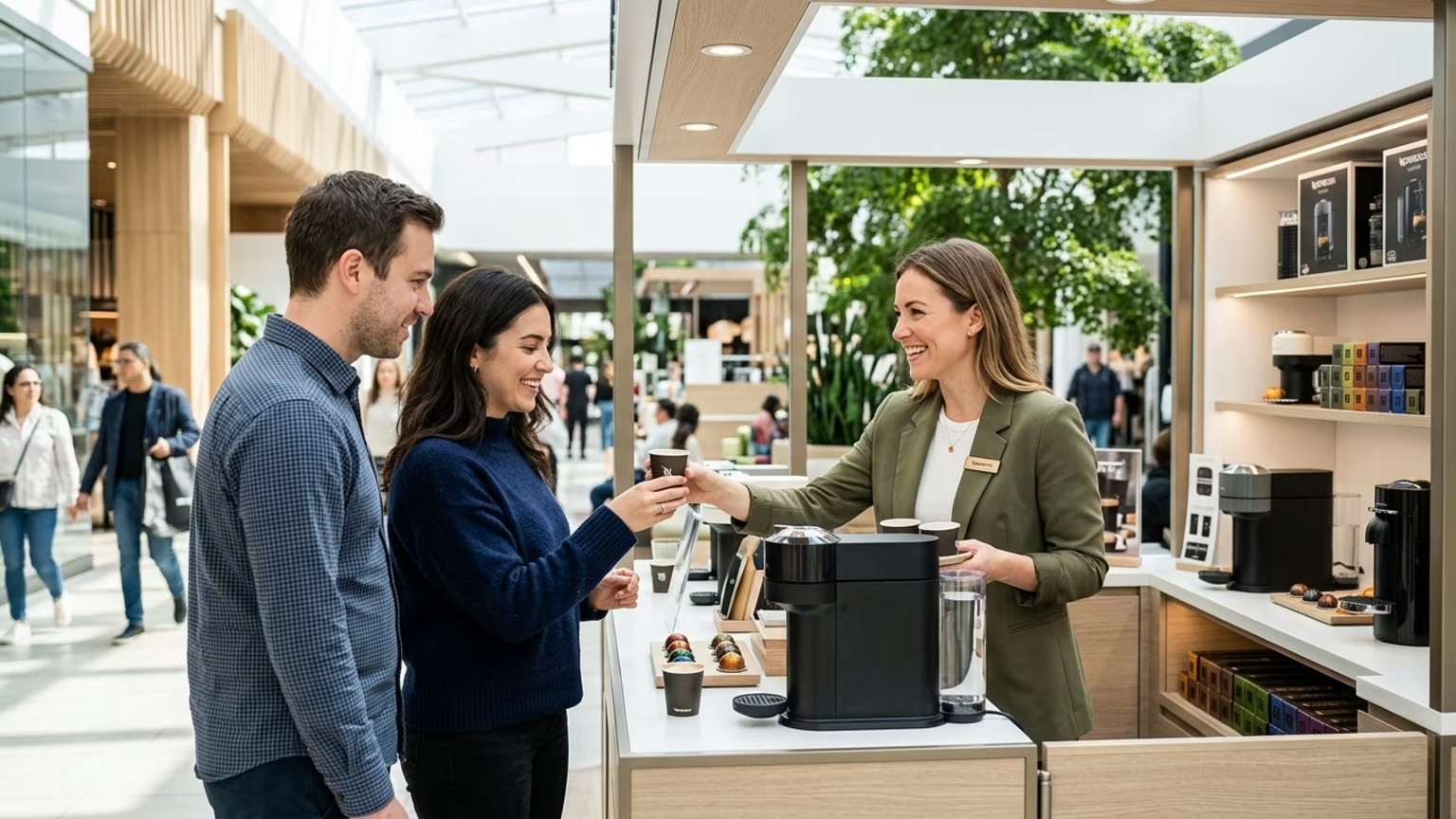
The success of any physical activation relies entirely on the people managing the interaction. In our experience at makai, highly trained brand ambassadors drive in-store sales through real conversations and product trials. We apply an aloha-style methodology that blends approachability with strict operational discipline. This ensures every interaction feels authentic while remaining focused on the core brand message.
Staffing requires more than just finding friendly faces to hand out free samples. These professionals must understand the nuances of CPG, food, and beverage sectors to answer complex consumer questions confidently. They must know how to handle objections, read shopper body language, and close a sale gracefully. Our campaigns connect digital and real-world touchpoints to boost visibility and spark authentic brand conversations.
When shoppers encounter a knowledgeable ambassador, they transition from passive observers to active participants. This human connection is critical for brands that want people to try, experience, trust, and buy their product in physical environments. A perfectly designed activation falls apart if the person running it lacks energy or product knowledge. Brands often see better results when they revamp their event staffing and training to support scaled live experiences.
The days of counting empty sample cups as a metric of success are officially over. Translating a physical handshake into a digital record is the ultimate goal of modern experiential marketing. Industry guidance from HAP Marketing details a practical measurement framework for these physical environments. This framework includes cost per meaningful engagement, sample-to-sale conversion, and QR-code redemptions.
It also highlights retailer lift and CRM-linked pipeline tracking for business-to-business events. The Adweek sponsored article identified sales-lift studies, matched-market testing, and closed-loop measurement as methods that can connect in-store activity to incremental sales. Without these systems, brands are simply guessing at their operational impact. Concrete tracking mechanisms allow brands to prove their Return on Investment clearly.
The soda brand’s in-store campaign reportedly generated a 2.1x incremental return on ad spend, 8% sales growth for core products, and a 7% increase in household penetration. This household-penetration increase was attributed primarily to new households entering the brand rather than existing buyers purchasing more frequently. Capturing this kind of first-party shopper data optimizes in-store engagement and justifies future field marketing budgets. Every sample poured must map back to a measurable business outcome.
Every field marketing dollar spent must ultimately trace back to a specific consumer action. If a brand cannot measure the lift generated by a roadshow, the budget will eventually dry up. By connecting the physical handshake to a digital CRM record, marketing teams can defend their experiential investments. Data transforms a fun event into a core business driver.
Physical retail environments are unpredictable, and digital components can fail at the worst possible moments. A missing extension cord or a dropped tablet should never pause a national brand launch. The broader experiential trend is also being discussed through the lens of personalization, audience engagement, and artificial intelligence. However, relying entirely on screens or AI-powered experiences invites risk if the network goes down or hardware malfunctions.
Technology should support the human experience rather than act as a single point of failure. In-store media acceptance has reportedly increased since Grocery TV first conducted comparable research in 2023. Entrance screens received favorable responses from more than eight in ten shoppers in that study. Grocery TV’s research also found that 62% of shoppers said they had purchased a product after seeing it featured on an in-store screen.
If those screens break, the field general's contingency plan must immediately pivot to human-led engagement. Our teams always keep physical backup materials and extra sampling stock ready to ensure the activation continues seamlessly. A strong in-store sampling program relies on adaptable staff who can maintain energy and capture data manually if technology falters. Unforeseen disruptions are inevitable, but operational paralysis is a choice.
Before launching a new retail activation, marketing leaders should audit their current measurement infrastructure. Connecting physical trials to digital sales records requires alignment between field teams, retail partners, and data analysts. Field marketing requires a balance of creative ambition and ruthless operational discipline. The physical store will always be where the most important choices happen.

30 Years Experiential & Retail Activation Partner for CPG & Beverage Brands | Multi-Market Demos, Roadshows & Costco/Club Programs That Actually Sell