Robbie Thain
Founder, CEO

Plan event lead capture around real conversations, clear consent and useful CRM handoffs, with practical guidance for sampling, demos and follow-up.
51% of consumer event marketers in the EventTrack study named leads and data collection as their most important event metrics, according to a 2026 report. That makes capture part of experience planning rather than an administrative task after the event. The challenge is getting information that supports a real next step without turning a human interaction into a form.
Capture contact information when it helps continue the interaction. Offer the product information or follow-up the visitor actually wants. Record the contact route and relevant interest alongside the agreed next action, then route that record to someone responsible for delivering it.
At Makai, we specialize in retail demos and product sampling programs that bring brands face to face with their audiences. Our roadshows are designed to drive trial and build consumer relationships across multiple locations. We believe data collection should support that connection rather than compete with it.
The available evidence is primarily practical vendor guidance. It supports this operating approach but does not rank capture moments or establish a universal attribution method.
Start with the experience and its intended continuation. Before selecting a scanner or form, define what the visitor will receive and which information the team needs to deliver it.
Makai’s integrated services span permitting through CRM reporting. For planning purposes, keep permission to operate separate from permission to contact a visitor. Review location-specific approvals within the event plan; this capture framework is not a permit checklist.
Eventdex’s practical guide recommends brief qualification questions and agreement on who will follow up and when. That supports a preparation brief organized around the interaction:
These are capture opportunities, not interchangeable lead categories. A shopper requesting product information should not automatically become a qualified business prospect.
The preparation question is practical: does each field change what happens next? Guidance from Markettailor recommends limiting fields to information that affects follow-up. A useful field brief connecting engagement with commercial goals keeps that purpose visible before the floor gets busy.
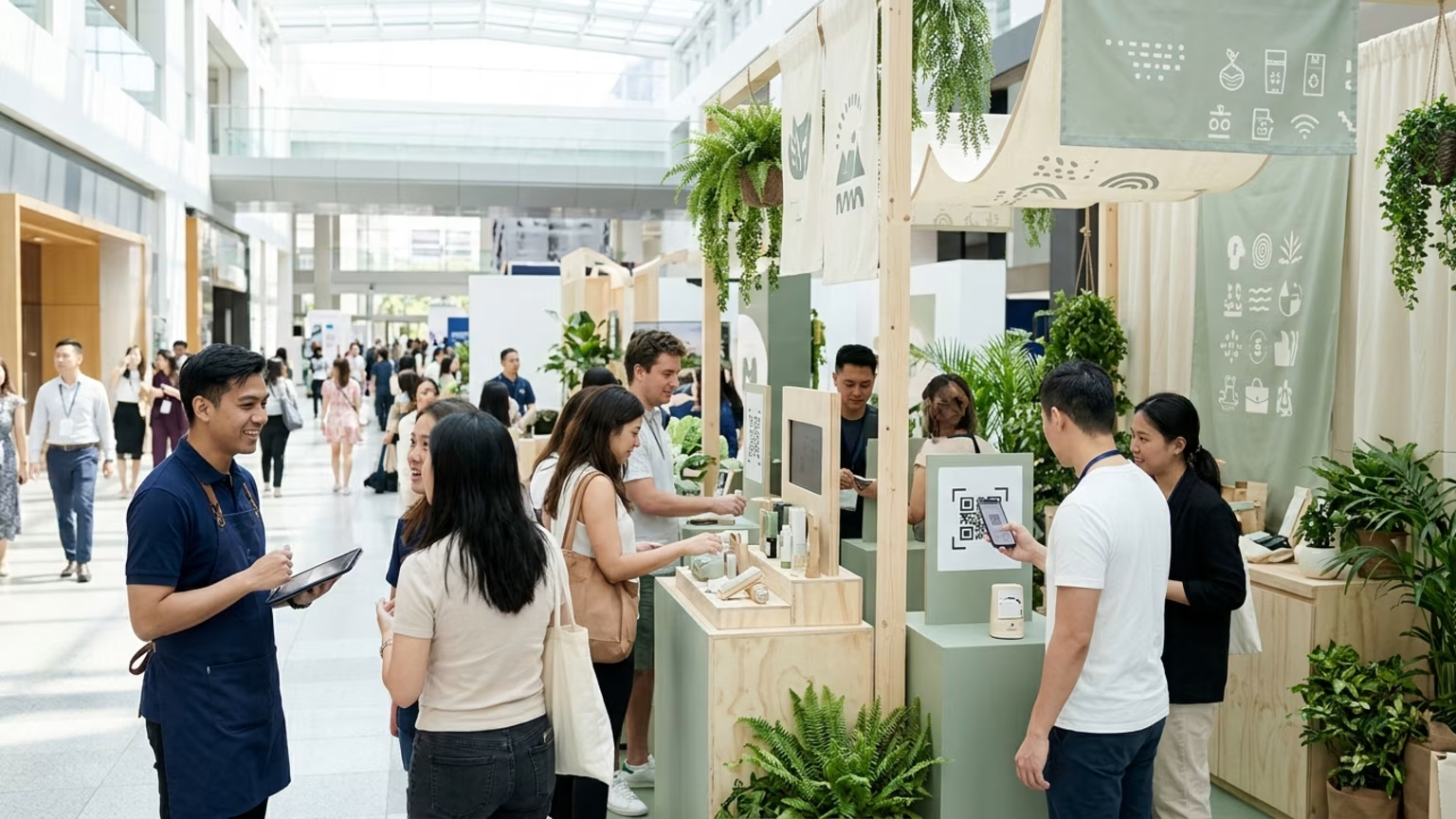
Makai’s retail demonstrations use trained brand ambassadors to support product trials and real conversations. The human interaction is the service, not a delay before data collection.
For us, aloha means warmth and respect for the person’s attention. Our view is that an ambassador should understand the visitor’s interest before asking for information. The request should make sense within the conversation already happening.
Eventdex recommends capturing interest and an agreed next action while the conversation is fresh. Applied to a training brief, that means the team needs clarity on three questions:
This keeps qualification focused on relevance rather than a long interview. A brief answer can still distinguish a product question from a request for a business discussion.
We build festival zones and pop-ups that turn viewers into fans and fans into advocates. That experience informs our view that capture should respect why someone participated. Someone enjoying a brand moment has not necessarily requested sales contact.
Incentives deserve the same discipline. Eventdex’s giveaway guidance suggests connecting the item to a demo or short conversation rather than distributing it before engagement. An incentive response should not be labeled product interest unless the conversation establishes that interest.
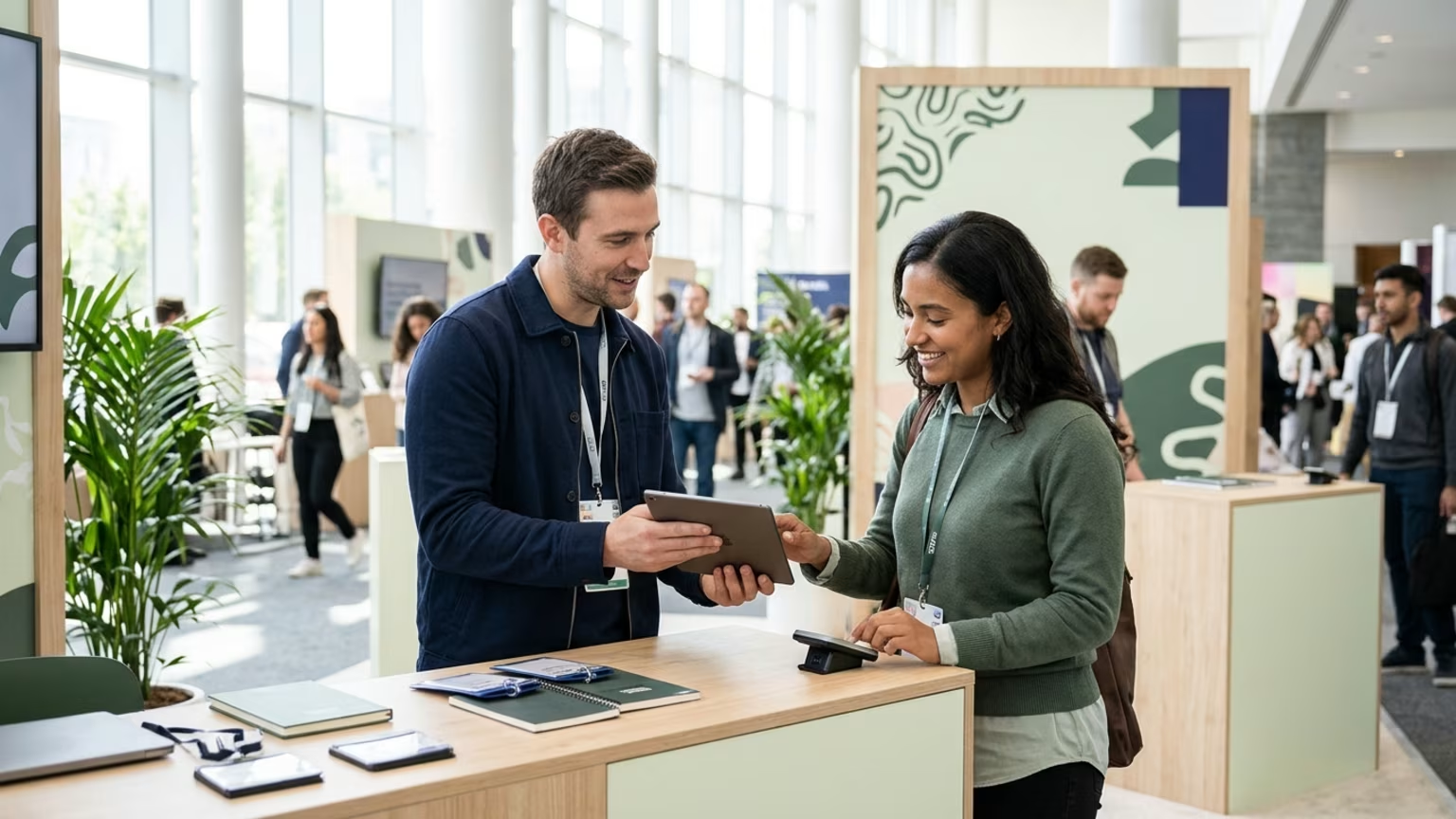
A physical handshake becomes a useful CRM record when the next person can understand the interaction and act on it. Identity alone does not accomplish that.
Markettailor warns that badge information can be incomplete or inaccurate. Its guidance also distinguishes a scan from marketing consent. Eventdex adds the operational context: capture the visitor’s interest and a short note alongside the agreed next action.
A practical handoff follows that logic:
These are the information requirements for the handoff, not a claim that every capture tool automatically transfers them. A CRM-connected capture plan should keep conversation context attached to the contact rather than leave it behind at the booth.
Markettailor’s guidance separates a specific follow-up request from broader marketing permission. Someone can request a resource or agree to a personal conversation without agreeing to a newsletter.
Treat identity, intent and permission as separate information. Record what the person requested and keep any broader marketing choice specific to that purpose. Do not infer it from a scan or participation alone.
To assess Return on Investment (ROI), distinguish participation from requested next steps and completed follow-up. Connect those records to pipeline or purchases where feasible. Keep the reporting language faithful to the evidence: a captured contact is not a sale.
We provide reporting on reach and trials alongside leads and sales. Our measurement approach tracks awareness and engagement through conversion. For us, the useful planning question is which next action each measure represents and how it informs campaign optimization.
Consumer and business outcomes should remain distinguishable. Product information requests belong in the record, but they should not be reported as qualified sales opportunities without the supporting conversation and follow-up.
The field priority is to preserve the conversation and its agreed next step. A technical failure should not become a reason to invent intent or promise something the team cannot deliver.
The capture guidance describes multiple methods but does not establish offline recovery features or replacement-staffing procedures. Those contingencies require their own event-specific operating plan.
Markettailor describes QR registration and on-site forms among the available capture methods. They are options to evaluate, not evidence that a particular system has an offline backup.
Keep the information goal consistent across methods: a usable contact route and a brief record of interest, paired with the agreed action. Avoid treating a change of capture method as permission to broaden the contact purpose.
A staffing gap should narrow commitments rather than encourage unsupported promises. Our recommendation is to protect the real conversation and offer only a next step the available team can support.
Eventdex’s ownership guidance remains relevant here. A promised follow-up needs someone responsible for it. A record without an owner is not a completed handoff.
Record whether the agreed action happened. If it did not, keep that gap visible rather than counting contact creation as fulfillment.
The same principle applies when a visitor does not respond. Preserve the original request and permission instead of rewriting silence as interest in a different campaign.
Review one planned interaction from arrival through follow-up. Identify what the person receives and which information supports that exchange. Then check who owns the next action and how completion will be recorded.
Keep the review focused on meaning before selecting more technology. A field that does not change the follow-up needs a clear reason to remain. A promised action without an owner needs attention before launch.
For programs spanning several stops, the next planning task is connecting foot traffic with a defined conversion path. The aim is a record that helps someone continue the experience, not simply a larger contact file.
CPG brand managers and trade show coordinators carry the daily burden of useful event contacts; Makai manages Costco roadshows through live demos and real shopper conversations. For teams facing low-quality trade show leads, its experiential campaigns and trade show activations are designed to turn consumer interactions into qualified leads.

30 Years Experiential & Retail Activation Partner for CPG & Beverage Brands | Multi-Market Demos, Roadshows & Costco/Club Programs That Actually Sell