Robbie Thain
Founder, CEO

eMarketer's 2026 B2B event report reveals a massive gap between booth traffic and measurable ROI. Learn how to turn live activations into reliable sales pipeline.
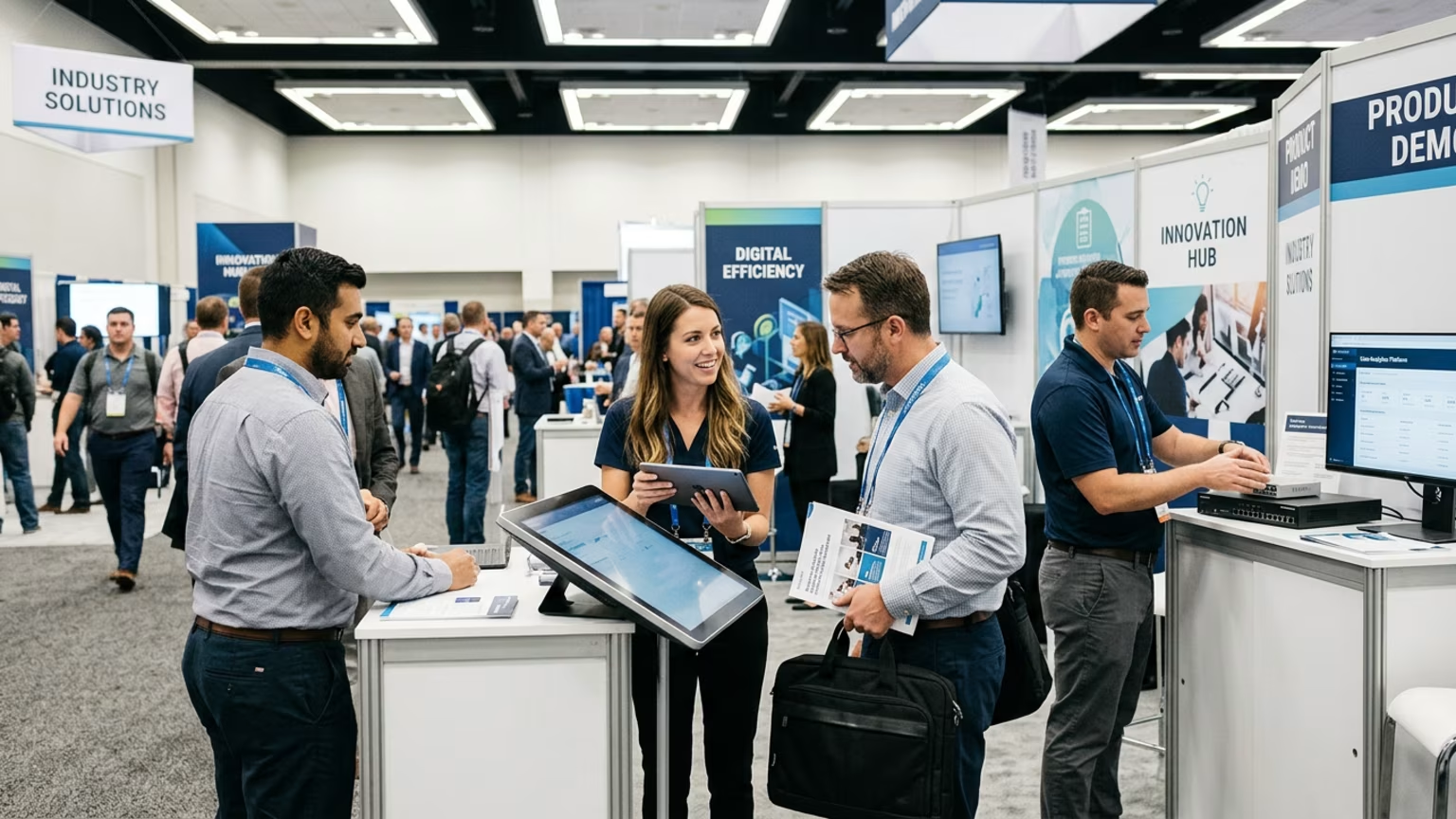
The badge scanner chimes for the hundredth time as another attendee grabs a free tote bag. Your field marketing team is exhausted from three days of constant smiling and product pitches. The booth feels like a massive win right up until the post-show sync. That is when sales looks at a spreadsheet of raw contacts and asks which ones are actually ready to buy.
According to the latest eMarketer 2026 B2B event marketing report, brands are increasing their physical footprint without building the back-end systems needed to track deal influence. To justify field marketing spend today, marketing leaders must integrate real-world interactions tightly with their CRM and sales enablement strategies.
Most experiential activations look wildly successful on the surface. People stop to taste your new beverage formulation or test your tech product on the floor. This physical activity creates a dangerous illusion of success that masks a severe lead quality problem. Sales teams end up chasing dead ends instead of qualified accounts.
The eMarketer 2026 analysis reveals that eighty-three percent of US B2B attendees actually want more networking added to their ideal event. They want curated meetings, peer exchanges, and active participation. If your entire budget goes toward a flashy structural build with passive product displays, you are actively misaligned with attendee desires. This fundamental disconnect explains why so many consumer brands struggle to connect event contacts to measurable sales outcomes.
Marketing budgets are shrinking slightly to a median of 9.1 percent of company revenue in 2026. Chief Marketing Officers are redirecting funds away from broad reach toward targeted sales enablement plays. If a trade show cannot prove its worth through clean revenue data, the finance team will cut it from the calendar. The pressure to prove a positive Return on Investment is higher than ever before.
Yet companies continue to invest heavily in physical interactions. Fifty-one percent of companies report they will increase spending on experiential marketing through 2026. Buyers are searching for authentic ways to connect beyond automated digital sequences. They want to touch, taste, and experience products in the real world before making major purchasing decisions.
The solution requires treating live activations as highly orchestrated pipeline accelerators. You must stop defining success by the sheer volume of badge scans or samples distributed. An effective strategy starts with a defined list of high-value accounts and target retailers. This intentional approach mirrors the discipline of account-based marketing programs.
Programs with this targeted approach report a massive pipeline efficiency advantage over spray-and-pray tactics. In fact, 71 percent of these targeted programs report positive financial returns within twelve months. The bar for live events has officially been raised by these high-performing campaigns. Your physical activations must operate with the same precision as your top digital channels.
To meet this standard, your field team needs clear instructions on what constitutes a qualified interaction. A badge scan means nothing if it lacks context about buying intent. The approach involves identifying exact behavioral triggers on the expo floor. You then map those triggers directly into your customer relationship management software.
Without clean CRM data to guide the process, your follow-up sequence will inevitably fall flat. A marketing operations leader must be involved in the event planning stages to map these data flows. Your team must capture the right signals without ruining the natural flow of human conversation.
This strategic shift respects the long-term value of brand building. Research indicates that brand-focused campaigns deliver four times the long-term bottom-line impact compared to performance-only campaigns. Experiential marketing builds deep emotional connections that digital ads simply cannot replicate. You need to balance these long-term brand effects with short-term lead capture mechanisms.
Translating this strategic framework to a busy expo floor takes intense operational discipline. You cannot rely on manual data entry after the show ends. Follow this exact sequence to capture demand and turn it into actionable follow-up.
A seamless technology stack is non-negotiable for modern field marketing teams. You cannot wait three days to email a prospect who expressed high buying intent. The speed of your follow-up dictates the conversion rate of your campaign. If a buyer tastes your product on Tuesday, they need a personalized digital touchpoint waiting in their inbox on Wednesday.
The execution phase requires an airtight content capture plan. You need to use events as content engines to extend their value over time. Capture short video testimonials and product walkthroughs during the activation. Sharing these real-world moments online helps capture early-stage demand effectively.
Map your captured content directly to the buyer journey. Top-of-funnel prospects respond best to hype reels and emotional brand storytelling. Mid-funnel buyers need explainer videos and retailer success stories filmed onsite. Bottom-of-funnel accounts require technical deep dives or founder interviews captured during the show.
B2B decision-makers rely heavily on search and social media during early research phases. Research indicates that 57 percent of US B2B decision-makers use search engines heavily during early research. Capturing live event content gives your brand fresh material to dominate those search results. Social media amplification remains a powerful multiplier for event content. Recent benchmarking data shows that platforms like Facebook and Instagram continue to deliver strong returns for business marketers.
To satisfy your finance team, you need a rigorous and unyielding measurement framework. Soft metrics like foot traffic and vague brand impressions are no longer sufficient. You must establish leading indicators that happen immediately alongside lagging indicators that prove long-term value.
The primary lead metrics to track onsite are total meetings booked with target accounts, percentage of leads matching your ideal customer profile, and your sample-to-scan ratio. These numbers tell you immediately if your booth placement and messaging are working. If your sample-to-scan ratio is low, your team is handing out expensive products without capturing contact data.
The most critical lag metrics to track post-event are sales cycle acceleration, percentage of leads converting to qualified opportunities, and measurable retail velocity lift. These are the numbers your Chief Financial Officer actually cares about. They prove that your experiential spend is actively moving the needle on company revenue.
By connecting physical sampling to digital tracking, you create an unbreakable chain of evidence. For example, using unique QR codes can help your team tie physical interactions directly to in-store retail sell-through and promotional redemptions. This approach bridges the massive gap between consumer engagement and retailer confidence. Over time, you build a reliable reporting dashboard to measure overall effectiveness.
We recently partnered with a major consumer packaged goods brand to launch a new beverage category. They had historically relied on massive structural booths that generated zero measurable pipeline. Their sales team dreaded the post-show lead lists filled with unqualified students and casual browsers. We knew we had to completely re-engineer their approach to the trade show floor.
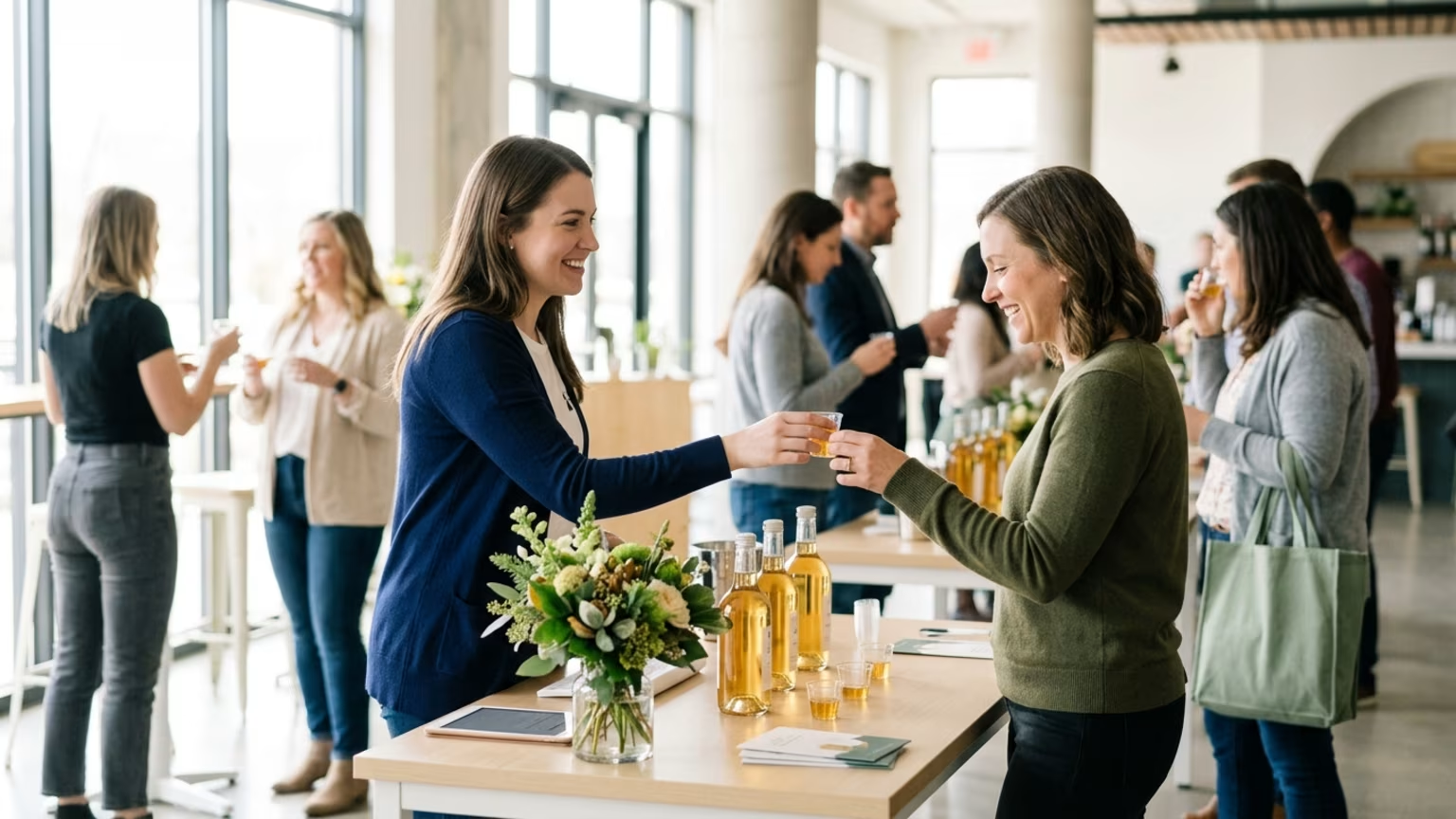
Our team designed a targeted tasting experience focused strictly on regional distributors and key grocery buyers. We required pre-registration for these VIP tasting sessions to guarantee high-intent attendance. The booth transformed from a chaotic sampling station into a high-value networking hub. Buyers finally got the focused attention they craved in a professional setting.
The results shifted their entire executive perspective on field marketing. A VP of Marketing in the CPG beverage category told us: 'Robbie, your leadership and vision turned our campaign into something truly special. The Makai team brought our new drink to life with energy, creativity, and flawless execution. Thanks to you, our brand isn't just tasted, it's remembered.' Our team's approach transformed their product launch into a memorable brand experience.
We eliminated the blind spots in their reporting by syncing every tasting session note directly to their sales software. This gave their national sales team the exact context they needed to close regional distribution deals. The sales reps knew exactly which flavor profiles each buyer preferred before they ever picked up the phone. Live experiences should never be a gamble.
Stop accepting vague engagement metrics from your most expensive and complex marketing channel. Live experiences remain a highly effective way to build trust, accelerate deals, and drive retail velocity. You simply need the operational discipline to measure them correctly from start to finish. If your current field marketing strategy feels like a beautiful disaster, book a strategy call with our team. We turn fleeting real-world attention into permanent, trackable pipeline.

30 Years Experiential & Retail Activation Partner for CPG & Beverage Brands | Multi-Market Demos, Roadshows & Costco/Club Programs That Actually Sell