Robbie Thain
Founder, CEO

Learn to navigate DOL wage and hour regulations for field teams. Compare flat headcount schedules against compliance models to protect brand operations.

Treating your field schedule like a basic roster is the fastest way to trigger a wage audit. A folding table in aisle six or a retrofitted airstream in downtown Austin demands tight operational control. The choice typically comes down to flat coverage for published event hours versus a dynamic compliance model. Staffing a live brand experience goes far beyond securing eager brand ambassadors.
Operational reality dictates that every minute of preparation carries legal implications. Field logistics include real time problem solving, crew supervision, and strict adherence to labor laws. If the team is exhausted or unable to leave a station, the consumer experience deteriorates rapidly.
The flat headcount model relies on deploying a fixed number of brand ambassadors strictly during public hours. This approach treats a published event window as the only period requiring structured management. The primary logistical constraint here is the assumption that breaks happen naturally when foot traffic slows down. Planners using this model typically ignore transition periods for mandatory training or inventory counts.
This approach often misapplies baseline staffing ratios as permanent rules. Planners might lock in one check-in representative for approximately 75 to 100 expected guests. They might strictly assign one server for approximately 20 to 30 guests in passed service environments. They may mandate exactly one bartender for approximately 50 to 75 guests for a simple beverage menu. They might also rely on one team captain for approximately 10 to 15 staff members.
These starting ratios fail when venue layouts or weather conditions shift unpredictably. A beverage sampling activation in a high traffic retail environment requires a radically different model from a controlled technology demonstration. Under a flat schedule, staff members are expected to set up their stations without scheduled relief. This rigidity leaves lead capture systems unmanned and inventory replenishment completely ignored.
A simple planning approach can expose gaps before event day if properly managed. However, flat scheduling rarely accounts for the backup needed when a product specialist steps away. The goal should not be to keep every position staffed at maximum capacity all day. The goal is to keep critical functions operational during late arrivals and supply runs.
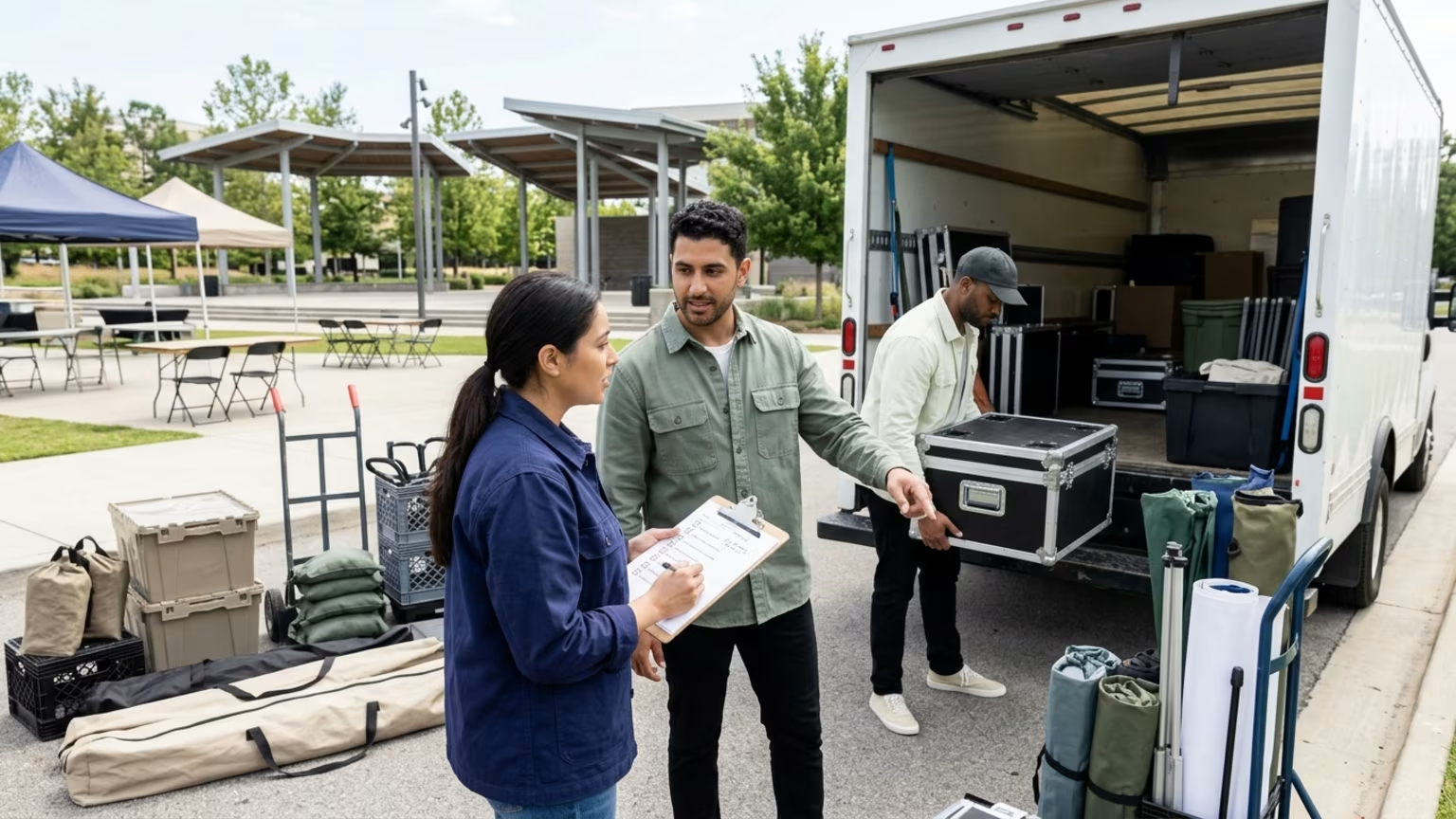
The compliance driven model builds a schedule based strictly on touchpoint coverage and legal mandates. This tactic separates the activation into paid phases for travel, setup, live service, and teardown. Call times should account for changing and grooming. They must also include setup, testing, and briefing. Because of these requirements, many activations require staff to arrive 60 to 90 minutes before doors open.
Instead of assuming uniform coverage, a base crew maintains primary stations while a surge crew handles expected peaks. A dedicated relief float guarantees critical functions remain operational during mandatory rest periods. Planners map out minimum coverage requirements for entrance queues, product demonstrations, and supervisor communications. This guarantees a brand specialist is never forced to abandon a live station for a supply run. Implementing a field team operating system allows brands to manage these distinct execution phases with absolute precision.
Proper execution of this structured model creates a measurable impact on brand perception and consumer trust. A VP of Marketing in the CPG beverage category told us: "Robbie, your leadership and vision turned our campaign into something truly special. The Makai team brought our new drink to life with energy, creativity, and flawless execution. Thanks to you, our brand isn't just tasted, it's remembered." Our team's approach transformed their product launch into a memorable brand experience.
This model also clearly defines teardown assignments and strict end times. Planners specify who is responsible for packing materials, counting inventory, and reporting damage. If teardown runs late, the team may exceed scheduled hours and create an unplanned travel problem. The schedule must show whether the same people who worked the floor are also responsible for breakdown.
The flat headcount approach works perfectly for highly predictable, low volume sampling environments. Budget constraints often force marketers to simplify their activations down to a single physical station. Single ambassador retail demonstrations thrive under this basic model because they lack complex technical setups. It is the clear winner when the activation occurs in a tightly controlled space with minimal travel requirements.
This tactic succeeds when the venue provides natural lulls that allow for legally compliant meal periods. Brands running simple passive displays without data capture requirements can safely utilize static scheduling. It works well if the staff members only perform guest interactions rather than handling heavy logistics. When physical execution requires zero cross training, a flat schedule minimizes administrative overhead and payroll complexity.
Proper alignment with retailers helps secure these low friction environments for smaller brand footprints. Marketers who understand how to coordinate field teams with retailers can accurately predict when a flat schedule is appropriate. CPG shelf proximity activations often demand less intense crowd control than festival sponsorships. This keeps costs low while still meeting basic promotional goals for new product trials.
The base-plus-surge model is absolutely mandatory for complex brand launches and multi market roadshows. Virality needs and massive crowd aggregation scenarios quickly break static schedules and overwhelm understaffed booths. Queue lengths can surge past defined thresholds within minutes during a popular sponsorship stage moment. When sampling demand exceeds replenishment capacity, a floating supervisor must reallocate resources immediately to prevent consumer frustration.
High volume activations demand explicit backup coverage to prevent missed stations during mandatory break penalties. A separate event staffing guide recommends publishing schedules two to three weeks in advance. It advises rotating difficult shifts, protecting breaks, and assigning every person both a break window and a named coverage person. This level of detail is critical to prevent exhausted staff from delivering inaccurate product messaging.
A solid backup plan should define a standby person or a local replacement pool. Planners must determine the latest time a no-show can be tolerated without damaging the activation. They must establish who authorizes a replacement and how the replacement receives the brief. For multi city programs, adapting one central staffing plan to each local market maintains consistency.
This advanced model also enables rigorous post event measurement and strategic adjustments. Teams can compare planned headcount with actual traffic, break completion, and lead quality. Tracking metrics like these transforms a basic labor roster into a true diagnostic tool. Managers can track qualified conversations, leads captured, and conversion activity directly against the staffing levels.
Financial exposure in experiential scheduling extends far beyond basic hourly wages. One agency estimates that field staffing can represent 40% to 60% of total program cost for ambassador-heavy campaigns. While this is a vendor estimate rather than an independently verified industry benchmark, the financial weight of labor is undeniable. Cutting corners on scheduled prep time creates massive financial liability for the brand and the operating agency.
Treating setup and training as invisible time directly invites federal scrutiny and massive compliance fines. The U.S. Department of Labor has treated unpaid mandatory training and off the clock work as Fair Labor Standards Act violations in an enforcement case. Planners must understand that short breaks of 20 minutes or less generally count as paid time under federal law. Furthermore, unpaid meal periods generally require workers to be fully relieved of duties.
Failing to staff for these paid transitions leads to severe back wage penalties. Conversely, properly funded shift schedules correlate directly with execution quality and commercial success. A rested team consistently captures higher quality leads and completes more qualified conversations throughout the day. Structuring compensation properly ultimately protects your Return on Investment from catastrophic legal fees and operational burnout.
The activation playbook recommends reviewing staffing within one or two business days and comparing planned headcount with actual traffic. This review should record overtime and no-shows. Managers must also track break coverage and supply shortages. Finally, leaders should document lead quality, common questions, and consumer complaints to validate the true cost of a compliant program.
The choice between flat coverage and dynamic compliance dictates the entire trajectory of a live activation. Over indexing on basic headcount leaves your brand severely exposed to unexpected traffic surges and labor violations. Under investing in structured setups and protected breaks guarantees exhausted staff. It also produces sloppy consumer interactions that damage brand equity and ruin retail partnerships.
A legally sound staffing model protects the consumer experience from the very first hour. True field operators recognize that scheduling is a diagnostic tool rather than a mere administrative chore. Proper rotation preserves energy for the interactions that actually build commercial pipeline and generate lasting loyalty. The best field marketing programs are built on a foundation of operational discipline that respects the human element.
Field marketing managers carry the heavy administrative burden of building compliant schedules while trying to drive measurable product engagement. Makai eliminates the difficulty measuring real ROI from live events by deploying our Guerilla Marketing capability. We launch creative, street level ideas that surprise, delight, and generate authentic word of mouth without compromising operational control. This disciplined framework turns fleeting street interactions into documented commercial success.

30 Years Experiential & Retail Activation Partner for CPG & Beverage Brands | Multi-Market Demos, Roadshows & Costco/Club Programs That Actually Sell