Robbie Thain
Founder, CEO

Windsor's multi-mall Homecoming campaign highlights the strategic choice between digital creator reach and an integrated physical field operating system.
Social media impressions do not automatically pay the rent for physical storefronts. A popup styling station in a crowded mall concourse forces a brand to turn raw attention into measurable action. Windsor announced a fall 360° Homecoming campaign on September 1, 2026. This announcement highlights the strategic choice between running a decentralized digital promotion or executing a tightly integrated field operation.
The first approach relies primarily on digital reach and creator content to drive campaign awareness. Windsor says its “I Am The Occasion” initiative includes more than 75 creators documenting their Homecoming journey. The announcement lists selected creators with follower counts ranging from 560,000 to more than 6.8 million. This mechanic operates almost entirely in the digital space.
The primary constraint of a digital-only approach is the inability to guarantee physical storefront traffic. Brands can generate massive theoretical reach through high follower counts alone. However, those digital numbers do not automatically translate into confirmed store visits or physical product interactions. The logistics involve managing creator contracts, content review cycles, and posting schedules.
Digital tactics also allow brands to pivot messaging quickly. If a specific creator piece underperforms, the brand can swap content without reprinting physical signage. This flexibility is a major advantage for teams operating in rapidly changing consumer markets. However, flexibility does not solve the fundamental problem of driving actual foot traffic.
Marketers often struggle to measure the exact physical impact of decentralized digital campaigns. Follower counts do not establish actual engagement quality or incremental revenue. Field operators know that digital excitement can fade before the shopper ever steps into a retail environment. This leaves local store teams waiting for traffic that never materializes.
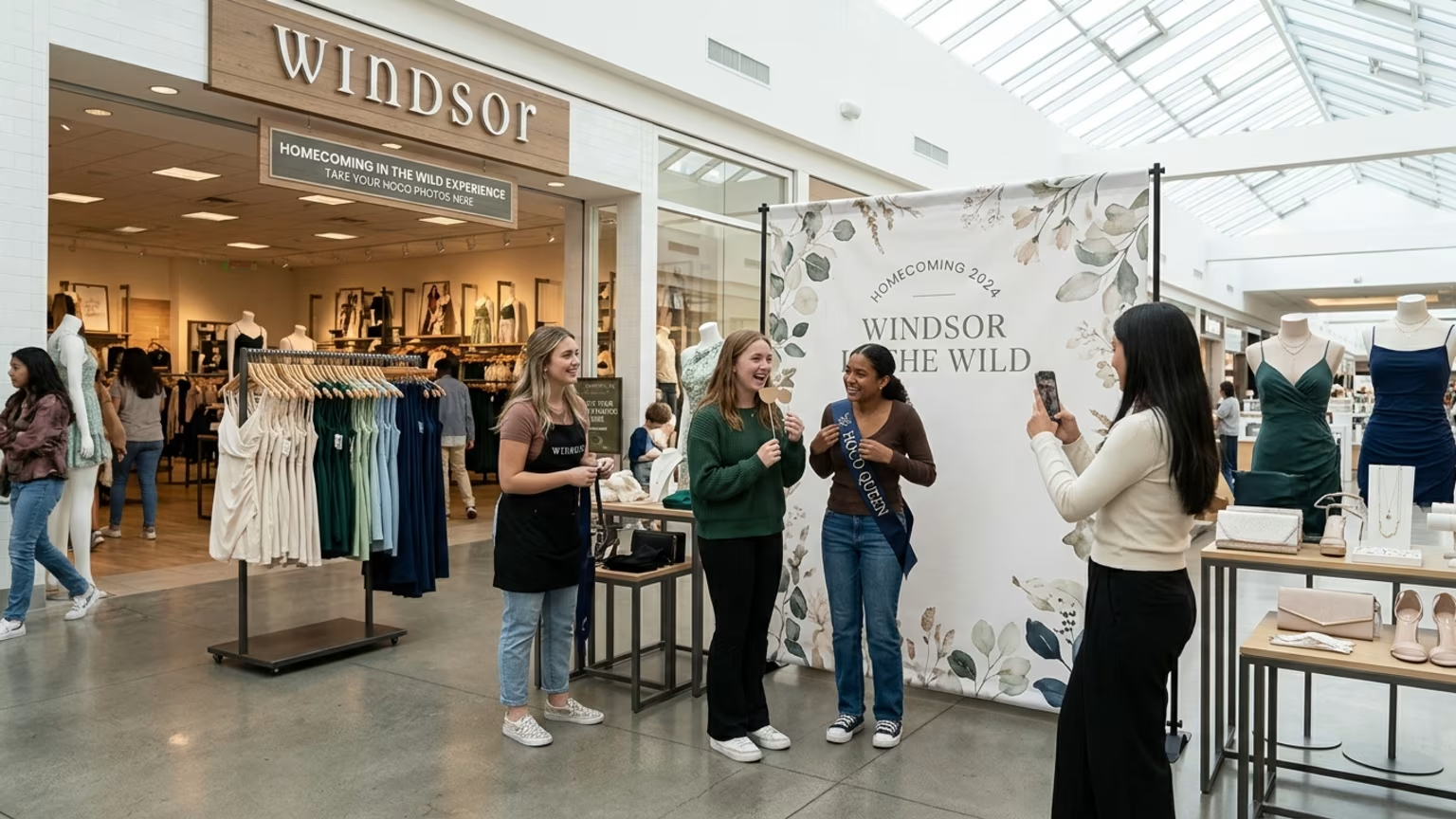
The alternative approach roots the campaign in physical retail spaces. The “Windsor In the Wild” experiences are scheduled for Windsor locations at Ontario Mills, Overland Park, Tysons Corner Center, and North Shore Mall. The retailer says the experiences will combine social coverage, customer interviews, styling, and interactive elements. This transforms a standard retail footprint into an active engagement zone.
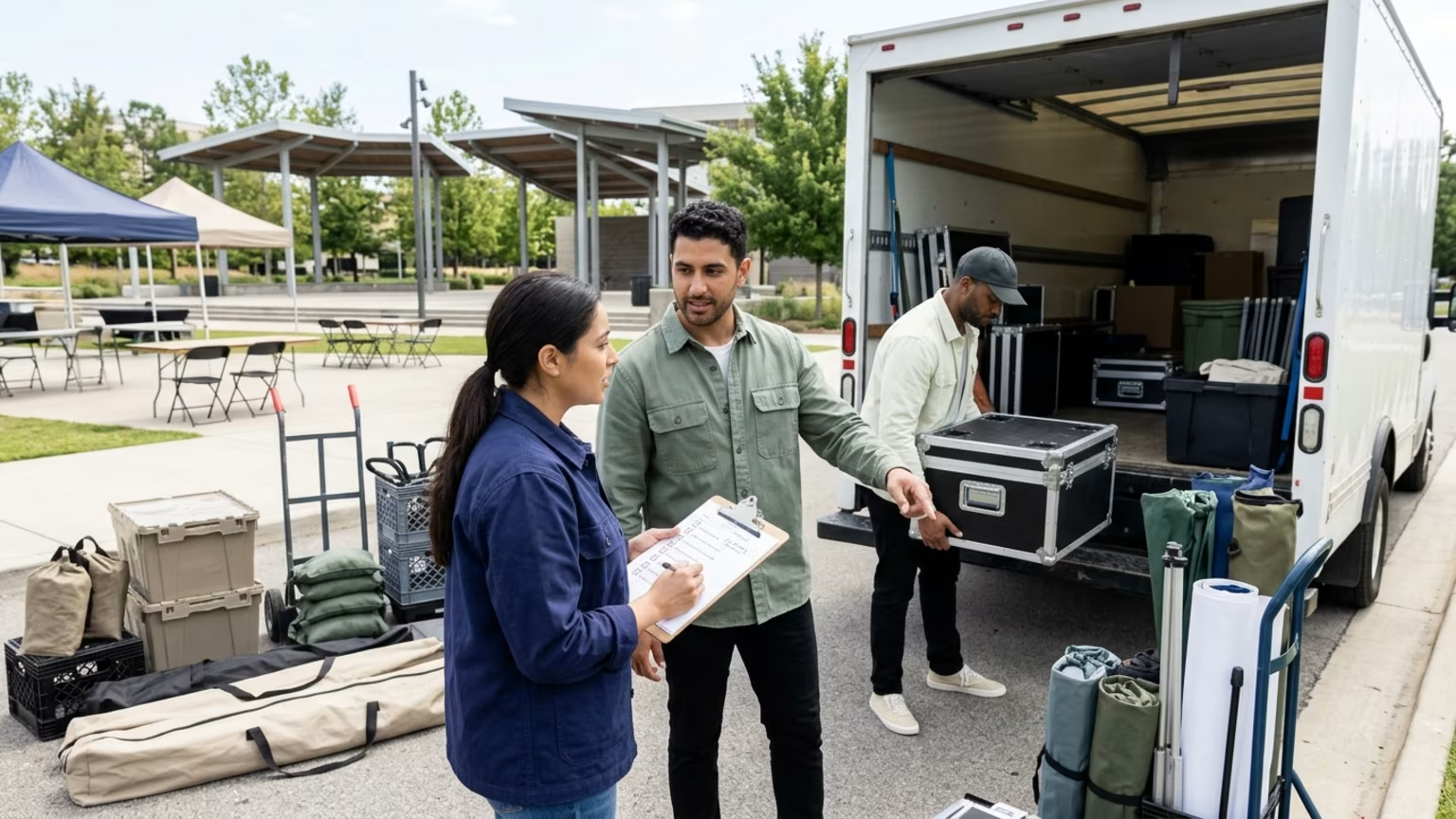
Execution differs entirely because it requires strict coordination between store teams and experiential vendors. Windsor says it operates nearly 350 stores and employs more than 4,100 team members across the United States. Activating even a fraction of those locations demands meticulous planning for staffing assignments, styling service capacity, and vendor load-in requirements. The physical footprint demands an operational plan that digital content simply does not need.
This tactic also requires managing physical brand partnerships on the ground. Windsor says DAISE Beauty will participate by surprising shoppers with lip balms during the in-store activations. Field teams must specify how much inventory is needed, who distributes it, and what happens if supplies run short. This level of physical coordination creates a much heavier logistical burden than sharing a promotional code online.
Windsor says its 360° Homecoming campaign will connect social, store, college, and community touchpoints. This requires aligning local community activity with national marketing objectives across multiple markets. The field team must ensure that every physical touchpoint reflects the broader milestone occasion accurately. Execution must be flawless to turn passive shoppers into active participants.
Activating locations like Ontario Mills or Tysons Corner Center involves strict compliance with property management guidelines. Experiential vendors must coordinate tight load-in schedules, secure proper insurance documents, and navigate specific mall rules. These operational realities make physical campaigns significantly more complex than digital content drops. The field staff must act as the crucial bridge between brand strategy and retail compliance.
There are specific scenarios where a decentralized digital tactic remains the most effective choice. A brand might lack the budget to secure mall permits, hire brand ambassadors, or manage physical production across multiple regions. In these cases, a creator-led model provides national visibility without the overhead of physical event logistics. This approach wins when the primary goal is pure top-of-funnel awareness rather than immediate physical conversion.
Digital campaigns do not care about mall operating hours or regional weather patterns. Brands can reach potential customers in rural areas or cities without a physical store presence. This tactic is highly efficient for spreading a unified message quickly. Marketers can bypass strict vendor call times and physical capacity limits easily.
Brands without a dedicated experiential team often prefer the digital route. There is no need to secure store approvals or manage complex end-of-day reporting from the field. The operational focus shifts entirely to media buying and digital performance tracking. Teams save thousands of hours by ignoring physical retail constraints.
We have been connecting brands with people through live experiences, retail programs, and national activations since 1995. Over three decades, we have built a track record of creating meaningful brand moments across the country. In our experience, conditions that demand high-touch consumer interaction absolutely require the integrated field approach. Shoppers often need to physically try on clothing or test a product before committing.
Physical activations dominate when a brand wants to produce reusable content while managing the customer experience. The in-store activations are intended to capture Homecoming shopping in a physical environment. Brands can gather customer stories and short-form social footage directly from the field. A well-executed physical event can become one of the most effective in-store experiences that improve retail sell-through.
This approach is mandatory when connecting complementary brands in a shared physical space. The partnership with DAISE Beauty requires a live environment to distribute physical surprise items. Product seeding creates a tangible moment of delight that a digital ad simply cannot replicate. The “Windsor In the Wild” concept shows how a brand can build a shared run of show successfully.
Retailers looking to build participatory in-store experiences must structure their customer sequences carefully. Field teams must welcome the shopper, invite them into styling, and capture consent for social content. They then deliver the relevant product sample and direct the shopper to checkout. This organized flow ensures that content capture does not obstruct normal retail operations.
Multi-channel campaigns cannot be evaluated solely through creator reach. The physical component creates a distinct opportunity to measure store visits, styling participation, and product interaction. Adweek commentary points to matched-market testing as a common way to evaluate incremental sales lift. Field teams can compare event participation rates against standard baseline traffic to prove real Return on Investment.
When a brand brings a partner into a physical space, the field brief must give each partner a measurable job. The team must define whether product distribution is open to all visitors or linked to a specific action. This precision prevents a partner element from becoming an unmeasured giveaway. It ensures that both brands extract real value from the shared activation.
Running an event across four different malls offers a useful template for building a repeatable field program. Brands must document what can be standardized, such as training materials, signage, and reporting formats. They must also identify what needs to be localized, like campus partnerships or specific mall traffic patterns. Scaling these multi-market events requires brands to overhaul event staffing and training continuously.
Marketing decision-makers need to know whether an event was delivered consistently across all locations. A strong post-event dashboard must track planned staffing against actual attendance and monitor inventory levels carefully. It should also capture the number of styling interactions and customer interviews completed. This data proves whether the field team successfully executed the operational playbook.
The decision between digital reach and physical execution ultimately comes down to control. Over-indexing on digital awareness might generate millions of impressions, but it rarely guarantees physical conversion at the retail shelf. Under-investing in field logistics will turn a brilliant in-store concept into a chaotic operational failure. True brand impact happens when a customer feels completely understood in a physical space.
Choosing between decentralized digital promotions and integrated physical activations forces marketers to confront severe logistical hurdles. Makai eliminates the burden of navigating complex event logistics, permits, and staffing by deploying our Guerilla Marketing capability to launch creative, street level ideas that surprise, delight, and generate authentic word of mouth.

30 Years Experiential & Retail Activation Partner for CPG & Beverage Brands | Multi-Market Demos, Roadshows & Costco/Club Programs That Actually Sell