Robbie Thain
Founder, CEO

Build an event KPI framework around business decisions, with practical steps for trial measurement, qualified conversations, data capture and follow-up.

Start the pre-brief with a decision statement. The activation might inform whether to expand a product-trial program, continue retailer outreach or repeat the experience in another market. Choose the question that matters to the campaign rather than asking one event to prove everything.
According to Event Marketer, GPJ recommends stakeholder discovery and objective alignment before selecting KPIs and planning data capture. That sequence is useful because it puts agreement ahead of reporting design. These are reported practitioner approaches, not universal KPI benchmarks.
For CPG teams, the working brief should connect the commercial question to the live interaction. If the decision concerns retailer outreach, define the relevant attendee or company profile. If it concerns product trial, agree what activity will be counted and what subsequent outcome will be reviewed.
Makai's integrated services span permitting through CRM reporting. We also store sampling product and event gear, with nationwide coordination of shipping, tracking and delivery. That operational scope matters when the measurement plan must work within an actual activation.
For mobile work, include vehicle staging in the logistics brief alongside product delivery. This KPI framework does not prescribe staging arrangements or permit conditions; those belong to the activation-specific operating plan. A reporting checklist is not permission to operate.
Before doors open, agree which interactions matter and who records them. Identify the team that needs the results and how the information will reach it. This is where CRM routing belongs, not in a discussion after the event.
A useful starting point is to connect the measurement brief to the business question. Creative development and field planning can then work toward the same decision.
Use a short measurement chain: the decision, the leading signal and the later business outcome. Then define how each part will be recorded. The following steps apply GPJ's reported planning sequence to the trial and lead-capture work Makai supports.
Our retail demonstrations use trained brand ambassadors to drive in-store sales through conversations and product trials. Our measurement approach tracks awareness, engagement and conversion. Those are connected stages, but they should remain distinct in the reporting.
For product trial, report the trial activity as the leading signal. Review subsequent purchase separately if that is part of the agreed plan. Do not rename product distribution as purchase intent.
For qualified retailer conversations, use the agreed participant profile to define the interaction. Then review subsequent sales progress as a different measure. That preserves the distinction between reaching a relevant person and advancing an opportunity.
For store sell-through, identify the sales outcome under review before launch. Sampling volume can describe what the team delivered, but it should not carry a sales-lift label by itself.
For a broader planning view, separate field activity from revenue-facing outcomes. The goal is a readable chain rather than a longer KPI list.
Two failures deserve particular attention: counting contacts without qualification and separating data capture from field execution.
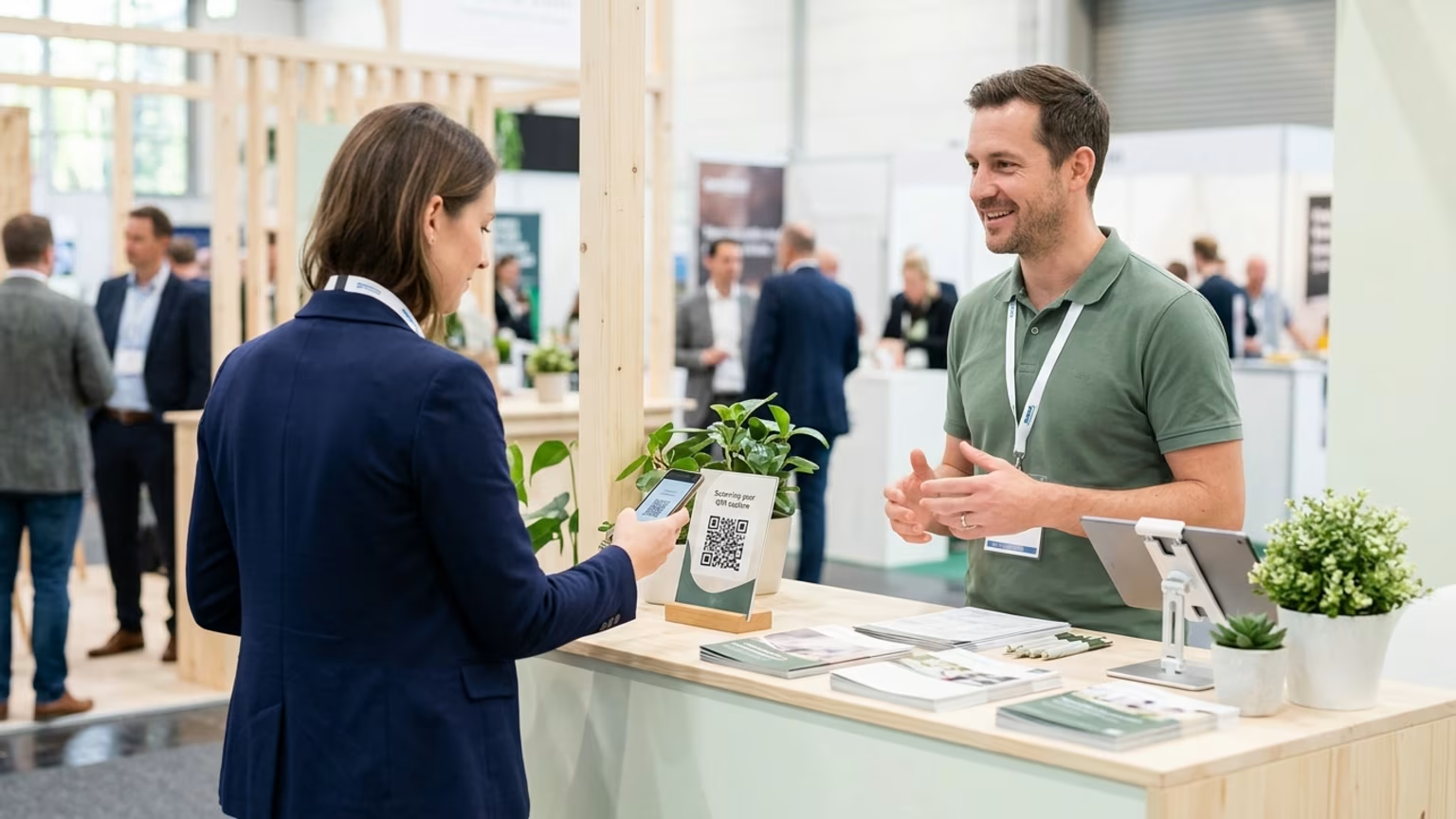
A scan total answers how many scans were recorded. It does not answer whether those people matched the campaign's target profile. GPJ's warning about arbitrary scan targets addresses this distinction directly.
The correction is to define the relevant interaction before the event. Keep raw contact volume available, but do not present it as qualified pipeline. If qualification was never recorded, leave that category unresolved rather than assigning it afterward.
Do not judge a capture process by whether it uses a clipboard or a screen. Judge it by whether the agreed information reaches the team that needs it. A digital record still needs a clear purpose and a receiving team.
The same discipline applies to crowd flow and staffing. Treat the capture task as part of the planned interaction rather than an extra duty that somehow happens between conversations. Keep the proposed process grounded in what the activation is intended to deliver.
Makai provides reporting on reach, trials, leads and sales to guide campaign optimization. For us, the practical standard is whether those categories help clarify the next action. A useful field staffing plan connects interaction responsibilities with campaign outcomes.
At Natural Products Expo West 2025, we designed and managed a 40 by 20 foot trade show environment for Glanbia. We brought think!, Isopure, Optimum Nutrition and Amazing Grass into one coordinated space. Our scope covered concept, operations, staffing and breakdown.
More than 14,000 recorded product samples were distributed across the activation stations. That is a documented delivery outcome for the sampling program. It is not a qualified-retailer-conversion figure or a retail-sales-lift result.
The lesson for a multi-station activation is to give each reported measure a clear job. Sampling volume describes delivery. The business decision still needs the separate outcome selected in the pre-event brief.
Watch the next unanswered point in the measurement chain. If completed trials are known but purchase outcomes are not yet available, the next task is outcome review rather than another attendance recap. If qualified conversations are recorded, follow the sales progress identified in the plan.
Event Marketer reports that IBM evaluates experiences through audience participation, brand sentiment and business impact. IBM's Sarah Meron also describes measurement as a learning loop that should inform future experiences across a portfolio.
Carry that distinction into the next review. Ask what the activation delivered and which business outcome is now visible. Then identify the change the evidence supports before repeating the program. The useful finish is a better next decision, not simply a completed dashboard.
A product-trial count does not answer the same question as a qualified buyer conversation. For CPG teams dealing with weak lead quality at crowded trade shows, Makai builds activations aimed at qualified leads and runs retail demonstrations where trained ambassadors support in-store sales through product trials and shopper dialogue.

30 Years Experiential & Retail Activation Partner for CPG & Beverage Brands | Multi-Market Demos, Roadshows & Costco/Club Programs That Actually Sell