Robbie Thain
Founder, CEO

Cvent’s accessibility argument puts the event brief first. Makai examines staffing, booth flow and measurement without claiming a pipeline lift.

On 2026-10-13, Cvent published The Brand Case for Accessible Events, arguing that accessibility belongs in event strategy rather than only in compliance discussions. The article recommended bringing accessibility into the brief before venue sourcing, registration and content delivery take shape.
For food and beverage marketers, the operational point is the timing of the decision. Accessibility enters while the experience can still be defined, not after the activation has been produced. Cvent's argument gives marketing leaders a reason to review the brief before reviewing the crowd.
Cvent's article makes an editorial case for changing planning priorities. Its recommendation is to make accessibility an explicit requirement before execution begins and carry it through the attendee experience.
The logistical implications are direct:
Cvent supports that argument with findings from its 2026 Planner Sourcing Report. As summarized by the company, 74% of planners prioritize accessibility more than in prior years. It also reports that 50% of Gen Z planners consider accessibility very important when sourcing a venue.
The commercial context comes from separate research. Cvent cites Spiro's Experiential Marketing Impact Report, reporting that 68% of attendees say a live event clarifies brand differentiation. It also reports purchase intent as 264% higher among attendees whose trust increased.
Those findings need a clear boundary. Cvent does not report an accessibility-specific causal test or quantified pipeline lift, and the planner and attendee findings come from different reports. Its article also omits sample sizes, field dates and detailed research methodology. This supports a planning argument, not a validated accessibility-specific Return on Investment benchmark.
Makai's stance is straightforward: a warm welcome should be backed by disciplined execution. We believe accessibility belongs in the experience brief because participation is part of the brand encounter. A friendly greeting does not complete the job if the intended experience remains difficult to follow or navigate.
Our Consumer Events work brings brands and people together through interaction, emotion and engagement. Our retail demonstrations use trained brand ambassadors to drive in-store sales through real conversations and product trials. For those services, the planning question is not simply whether the activation looks inviting. It is whether the intended interaction has been thought through.
Across our history, we have delivered more than 1,000 campaigns in all 50 states for more than 200 brands. That range has given us experience across different products and audiences as well as retail settings and market conditions. For us, that breadth is a reason to evaluate each experience on its own terms rather than assume one format fits every setting.
We also build festival zones, premieres and pop-ups that turn viewers into fans and fans into advocates. We use music tie-ins, screenings and live stunts to bring stories to life. Our crews manage execution and track reach and response metrics. In those formats, our view is that participation deserves the same planning attention as the creative moment itself.
For CPG and beverage brands, physical marketing has a specific job: create an encounter that supports trial and a meaningful next step. Accessibility should sit alongside that purpose rather than compete with it. The brief can describe both the experience people are invited into and the response the brand hopes to earn.
That is why planning a clear path from interaction to follow-up belongs in the same discussion. An accessible experience and a qualified lead are different planning objectives. Our position is that both deserve explicit attention before the activation reaches the field.
The downstream work is not an abstract brand exercise. Cvent's recommendation reaches the people delivering the experience and the physical space where it happens. Makai's practical reading is to translate the brief into visible planning decisions.
Cvent gives concrete examples of accessible design: captioned presentations, thoughtful wayfinding and inclusive seating. It also calls out accessible seating with a comparable view and registration that signals different attendee needs have been considered.
Those examples support a focused review of the proposed experience:
These are observable features rather than a general statement that an event will be welcoming. In our view, that distinction makes the brief more useful to venues and production partners. The discussion moves from an intention to the experience being planned.
The same review belongs in product-launch and sponsorship planning when those formats include the elements Cvent describes. The evidence supports checking the relevant features of the actual program. It does not require every activation to use the same creative format.
Cvent specifically recommends briefing agencies and production partners early. The practical staffing implication is that the attendee-facing team needs a brief that reflects the experience being offered. Navigation and presentation access should not exist only in a separate planning document.
For brand ambassadors, the product conversation remains central. Makai's retail demonstrations are built around trained ambassadors, real conversations and product trials. Our view is that the surrounding experience should be defined clearly enough for that conversation to happen within the agreed plan.
A useful field staffing discussion connects labor to the activation's purpose. Here, that discussion includes how the team understands the planned attendee experience. An ambassador should not have to improvise an explanation of a feature that the brief never defined.
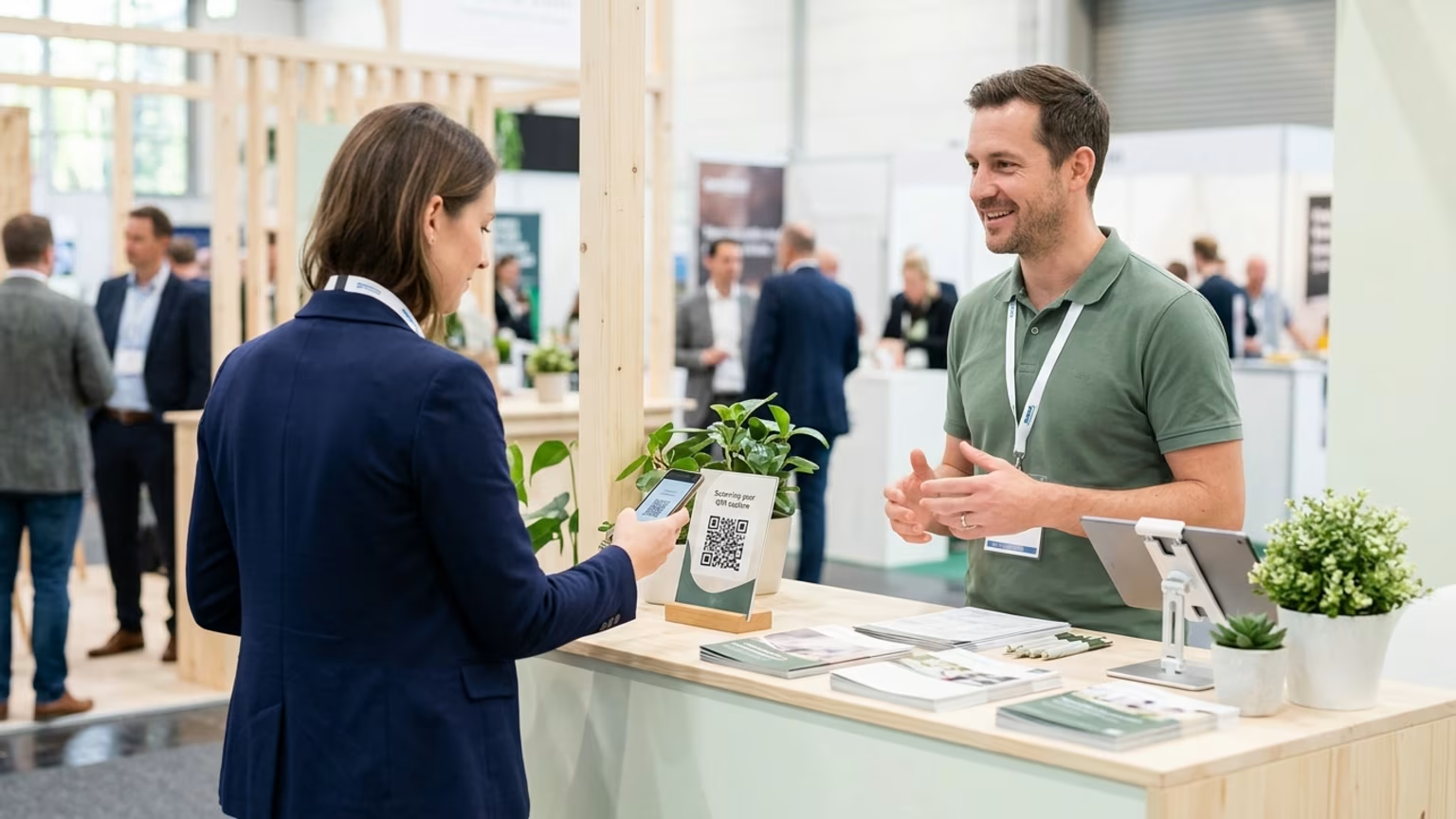
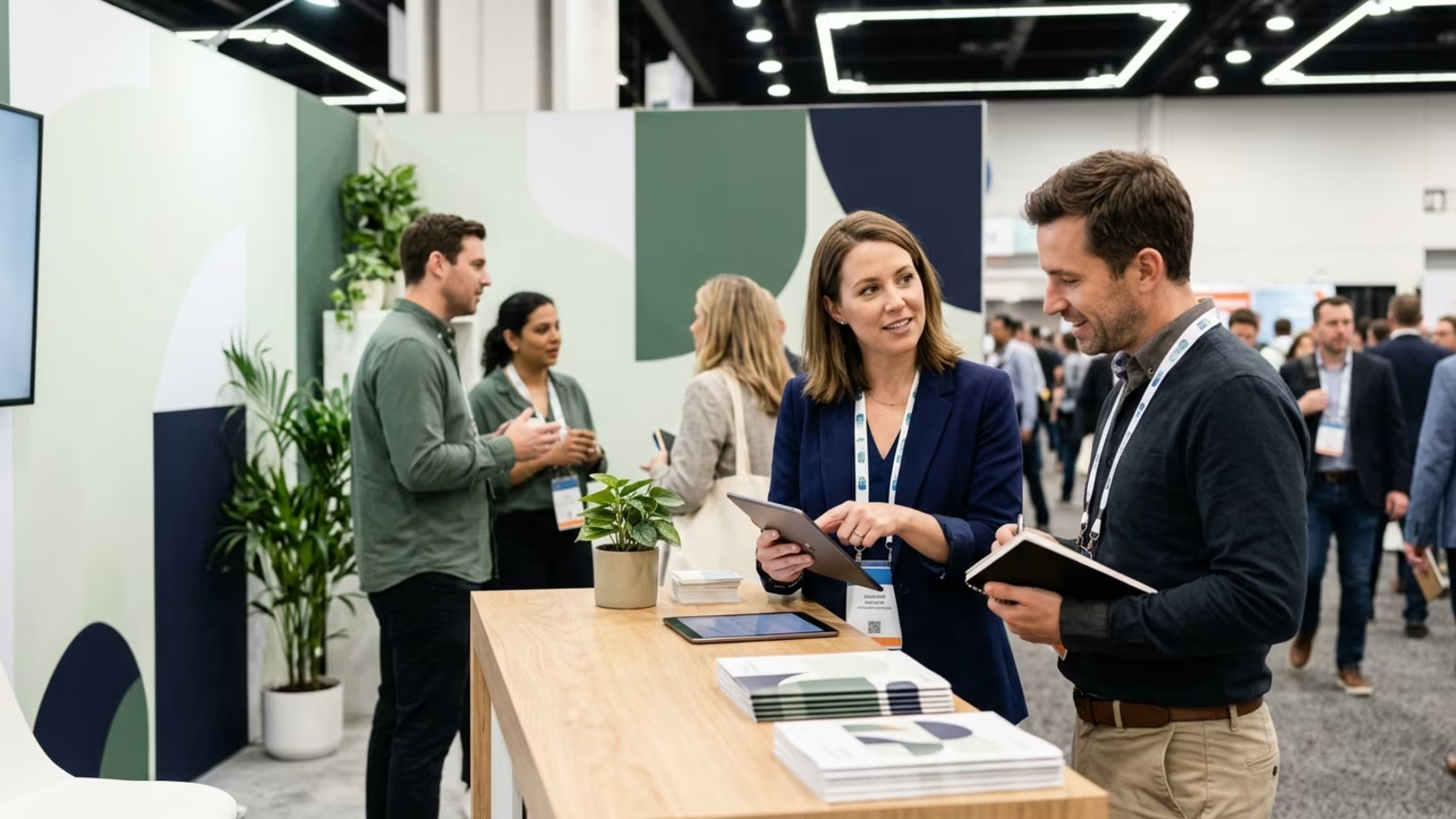
Makai plans trade show spaces to attract attention, start conversations and convert visitors into customers. In our view, accessibility belongs in that footprint review because the intended conversation depends on how the space and its content are presented.
Cvent's examples suggest separating navigation through the space from participation in the program. Wayfinding addresses movement and orientation. Captioned presentations address following content. Inclusive seating with comparable views addresses the experience of the program itself.
A crowded footprint is not a complete description of success. For a CPG marketer, the review should also examine whether the intended product interaction and next step are clear. The goal is to avoid treating a layout or content barrier as evidence of weak product interest.
That does not call for a larger booth by default. It calls for a more precise discussion of the footprint already under consideration. The relevant question for the planning team is how the proposed arrangement serves participation and the brand's commercial purpose.
Business impact is also the subject of Event Marketer's article Experience Intelligence: 3 Insights on Measuring Business Impact. For this accessibility brief, our recommendation is to keep implementation evidence and business outcomes distinct in the reporting plan.
Makai provides reporting on reach, trials, leads and sales to guide campaign optimization. Our measurement approach tracks awareness, engagement and conversion. That gives the commercial discussion a defined structure without reducing every aspect of the experience to one result.
The research supports tracking two separate categories:
A measurement plan tied to business goals can hold both categories without treating them as interchangeable. Delivered features describe execution. Qualified follow-up and sales describe downstream response. The reporting should preserve that distinction.
For marketing leaders, this creates a clearer debrief. The team can examine whether the experience matched the brief and whether the activation generated useful demand. Each finding then has a defined place in the next planning discussion rather than being folded into one broad claim of success.
Cvent's 2026-10-13 argument starts before the doors open: accessibility belongs where the experience is first defined. For CMOs and VPs of Marketing, the next brief is the opportunity to connect that participation decision with an equally clear measurement plan.
When your next activation brief lands on your desk, will it show how people can participate and how qualified demand will be measured, or only how the event will look?
Deciding how people will participate in an activation is where Makai's Consumer Events work takes shape through interaction, emotion and engagement. For CPG marketers facing low quality leads from crowded trade shows, Makai also plans spaces that attract attention and start conversations, with activations designed to turn consumer interactions into qualified leads.

30 Years Experiential & Retail Activation Partner for CPG & Beverage Brands | Multi-Market Demos, Roadshows & Costco/Club Programs That Actually Sell