Robbie Thain
Founder, CEO

Learn how emotion-led event logistics and proactive hospitality drive measurable experiential ROI. Discover strategies for field staffing and CRM data routing.
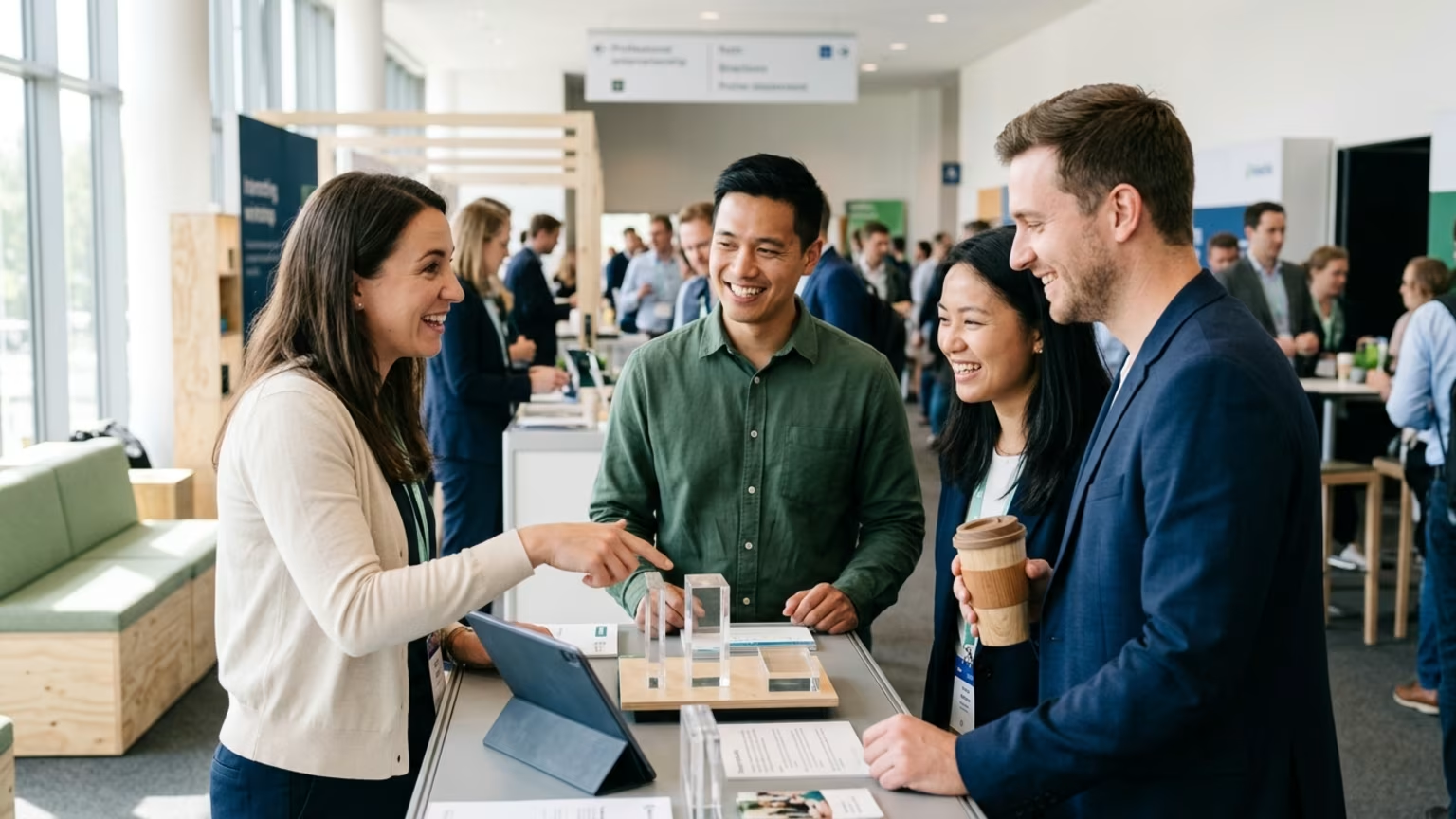
The field manager checked her watch as the line for the sampling booth stopped moving. Attendees were staring at their phones instead of the brand display. The physical setup was beautiful but the emotional connection was entirely absent.
An Irish Times advertising feature published on August 28, 2026, highlights this exact tension. Jonny Boyle, director of brand experience at Fuel, argues that experiential briefs should begin by defining how people should feel. He suggests this focus matters more than just how the activation should look. This emotion-led approach changes everything about on-site operations.
When your primary goal is shaping a specific emotional response, field operations and logistics must be orchestrated to support that journey. The feature frames the attendee experience across the period before, during, and after the activation. The strategy requires flawless execution across all three phases. Treating the live event as just one piece of the puzzle changes how budgets are allocated. The article compares this sequence with a holiday where the buildup and recollection can be nearly as meaningful as the central event.
Venue logistics dictate the attendee experience long before the creative elements take over. The article argues that headline spectacle and practical details such as queue management both shape the attendee experience. If the physical system is frustrating, even the most expensive aesthetic treatment will fail. Field teams must plan queue length, throughput, and exit flow during the early creative stages.
Major festival moments might deliver a big visual impact, but basics like toilet queues must remain ruthlessly efficient. Proper planning guarantees that mundane operational details never derail the intended emotional outcome. We run experiential and engagement programs coast to coast with local crews, smart logistics, and permit expertise that let us launch fast and maintain quality consistency in every region. This operational discipline is what separates memorable activations from chaotic ones.
Careful planning allows brands to focus on moving people rather than just managing them. For example, in coverage of the 2026 Experiential Marketing Summit, US Foods chief marketing officer Diane Hund described an exhibit strategy focused on helping customers shop effectively. This buyer-first floor design proves that practical utility creates a better emotional connection.
By prioritizing the visitor task over visual impact, brands can build consistent event marketing logistics that actually convert. The layout must support the exact feeling you want the attendee to leave with. When the physical space is intuitive, the brand message lands much harder.
Staff members protect or damage the emotional journey through the way they manage queues and answer questions. The Irish Times feature frames this approach as proactive hospitality. It uses an example where Sat Bains designed a wooden cutlery box for each diner so guests could change cutlery themselves without staff repeatedly interrupting their conversations. Another hospitality anecdote involves front-of-house employees buying a New York hot dog for diners who had not tried one.
While these are hospitality examples, the operational lesson applies directly to brand activations. Staff need guidance on tone and improvisation to protect the flow of the physical environment. Our nationwide infrastructure allows us to activate brands wherever their audiences are located. We rely on a human-centric methodology to guarantee ambassadors deliver the feeling of the brand.
This requires a staffing model focused on talent that understands the emotional objective. The Irish Times feature says Dublin-based Fuel employs more than 70 people and stages events and activations across 55 countries. This scale shows that prioritizing human connection works globally for brands seeking deeper engagement.
Emotion-led work is not restricted to brands with large budgets. The article cites an anniversary film for Irish knitting company Inis Meáin as an example of work that Boyle found emotionally powerful. Whether fielding a massive street team or a targeted boutique activation, the focus remains on human impact.
Emotional resonance must translate into measurable commercial outcomes. According to Event Marketer, event measurement is increasingly being organized around experience, emotion or sentiment, and Return on Investment. Evolio president and chief strategist Joe Federbush recommends that marketers measure what stood out, how attendees felt, and what actions they intend to take after the experience. For U.S. brand leaders, the strongest business case requires trackable operational evidence.
Event Marketer recommends comparing an activation with a control or holdout market. They also suggest using post-event brand-lift surveys to track sentiment. Connecting the experience to a downstream action such as a promo code or point-of-sale transaction proves that the emotion drove a result. Proper CRM routing turns these physical handshakes into reliable pipeline data.
Integrating a robust field operations KPI dashboard early allows you to measure both sentiment and sales. Capturing these signals requires flawless digital handoffs on the event floor. You cannot rely on broad foot traffic estimates to validate an expensive campaign.
The operational setup must funnel excited attendees directly into a seamless data capture flow. When the technology works quietly in the background, the human connection stays front and center. This data validates the initial emotion-led strategy.
The most critical phase of event management happens when the original plan encounters friction. Managing transitions, sudden weather shifts, and inventory shortages requires a precise contingency framework. The attendee experience spans the period before, during, and after the activation. If a venue technology failure creates a bottleneck, your field team must pivot instantly to protect that timeline.
Additional staff discretion and inventory buffers can improve the experience during a crisis. However, these operational details can increase cost and complexity if not strictly managed. A seasoned field general anticipates what guests need instead of waiting for them to complain. This proactive approach guarantees that minor logistical hiccups do not ruin the carefully planned attendee journey.
Swift troubleshooting protects the emotional connection from logistical failures. It requires well-trained managers who understand the broader objective. When the floor team knows the emotional goal, they can improvise solutions that keep attendees happy. This is why weather-proof experiential marketing frameworks are non-negotiable for serious brands.
The best operational plans fail if they are disconnected from a clear human objective. Fuel owns and operates WellFest, Kaleidoscope, and Beyond the Pale end to end. According to The Irish Times feature, this model allows them to own the complete attendee experience. Freeman reports that 84% of surveyed attendees were open to disclosed sponsored learning, and 66% would attend when the topic interested them.
Visitors will engage with your brand if the experience is genuinely valuable and well-executed. Emotion and logistics are not opposing forces. They are the twin engines of a profitable field marketing strategy. When you align how attendees should feel with how the floor actually operates, you generate real pipeline momentum.
Your next step is to audit your upcoming activation brief. Confirm it defines the exact emotional outcome before you approve a single vendor contract or floor plan. Build your logistics around that feeling to guarantee a measurable return.
Treating event logistics as an afterthought often creates frustrating physical bottlenecks that destroy your emotional brand impact, which is why precision planning is critical. Makai eliminates the problem of low quality leads from crowded trade shows by deploying our Consumer Events capability to design memorable live experiences that bring brands and people together through interaction, emotion, and engagement.

30 Years Experiential & Retail Activation Partner for CPG & Beverage Brands | Multi-Market Demos, Roadshows & Costco/Club Programs That Actually Sell


