Robbie Thain
Founder, CEO

Four-part risk models safeguard outdoor activations through microclimate site planning, strict hazard thresholds, asset protection.
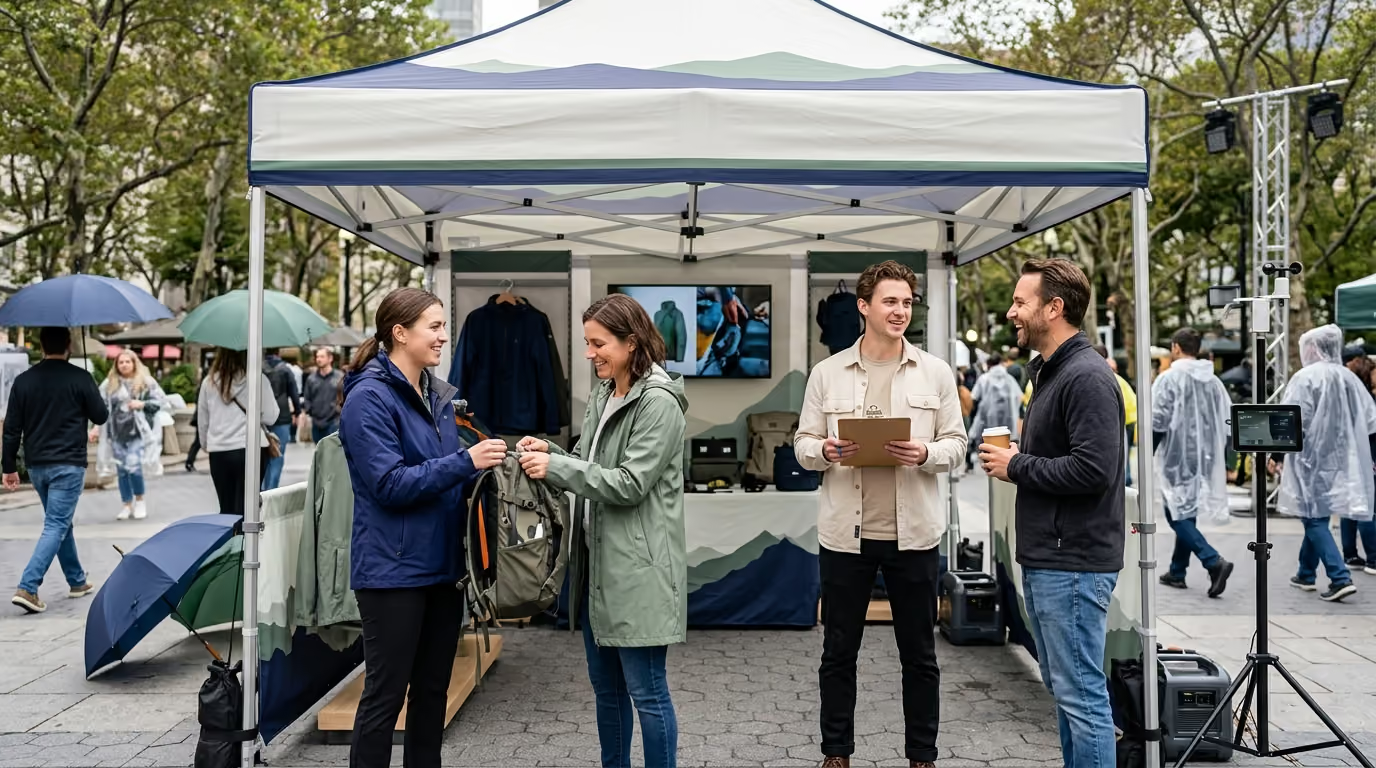
Outdoor brand activations fail when weather is treated as an unexpected disruption rather than a core operating condition. This comprehensive guide outlines the operational frameworks, safety thresholds, asset protection protocols, and go or no-go decision models required to safeguard your live experiential campaigns against environmental hazards.
How to plan an outdoor brand activation for bad weather is a question every field marketer searches for after their first ruined setup. This guide delivers a definitive operational system to protect your brand equity, ensure attendee safety, and guarantee campaign performance under extreme heat, rain, high winds, lightning, and hazardous air quality.
A luxury beverage brand spends six months planning a marquee outdoor product sampling experience at a high-profile summer festival. By noon, ambient temperatures cross ninety-five degrees on unshaded asphalt. The branded shade canopy acts like an oven, trapping heat directly over the product refrigeration units. Point-of-sale tablets overheat and shut down, ice melts faster than suppliers can restock, and brand ambassadors suffer heat exhaustion in heavy polyester uniforms. Meanwhile, attendees avoid the sweltering activation footprint entirely, walking past melting sampling bars straight toward indoor sponsor lounges. The campaign generates zero qualified leads, damages staff morale, and wastes hundreds of thousands of dollars in experiential marketing budget.
A weather-resilient activation is not simply an event equipped with pop-up tents, promotional umbrellas, and a tentative rain date. It represents a systematic risk-management model that connects site design, attendee welfare, production engineering, staffing, communications, and explicit decision authority. When brands execute field activations, resilience operates across two distinct domains: safety resilience and experience resilience. Safety resilience protects attendees, field staff, production contractors, and the general public from physical injury or environmental illness. Experience resilience preserves the core brand interaction and emotional engagement, ensuring the campaign achieves its business goals despite deteriorating weather conditions.
An outdoor activation may remain technically open while failing completely as a marketing asset. If consumers are soaked, shivering, overheated, or fighting wind gusts to hear a brand message, the activation yields negative brand equity. Effective planning begins by evaluating risk through a four-part operational model: hazard, exposure, vulnerability, and consequence.
(Assess every field footprint against these four pillars during site selection.)
The hazard represents the physical condition, such as convective storms, high wind gusts, excessive heat, wildfire smoke, or flash flooding. Exposure measures the number of attendees, brand ambassadors, high-value technical assets, and operating hours exposed to that condition. Vulnerability identifies which specific components cannot tolerate the hazard, such as uncovered electrical junctions, unanchored truss structures, or heat-sensitive consumer goods. Consequence defines the practical outcome if the condition occurs, ranging from minor dwell-time reduction to structural failure or medical emergencies.
Differentiating these elements prevents teams from mistaking a basic meteorological forecast for a comprehensive operational risk assessment. A forecast of eighty-five degrees Fahrenheit with high humidity represents an acceptable condition for a shaded beverage sampling footprint. The exact same forecast becomes hazardous for a dense, unshaded queue where consumers wait forty-five minutes on asphalt.
To govern this architecture, every outdoor campaign must designate a dedicated weather watcher. National Weather Service guidance recommends establishing an individual who maintains continuous situational awareness and operates with direct access to incident leadership. The weather watcher cannot be an event lead who is also managing guest flow, restocking product samples, or coordinating VIP talent. Monitoring must begin at least three full days before load-in, allowing operations teams to track barometric trends and convective outlooks well before physical structures arrive on site.
Field planning requires a comprehensive understanding of the physical ground and local microclimates. The general municipal forecast from an airport weather station miles away rarely reflects the microclimates of urban plazas, open fields, or waterfront parks. Urban canyons create wind tunnel effects between high-rise buildings, while asphalt parking lots produce radiant surface temperatures twenty degrees hotter than surrounding turf.
A rigorous site assessment begins by evaluating physical geography, drainage paths, surface composition, and emergency access corridors. Operations teams must map high ground, low collection basins, natural shade canopies, overhead utility lines, and decaying tree limbs that present falling hazards during wind events. National Oceanic and Atmospheric Administration guidance stresses that outdoor personnel must seek higher ground immediately when standing water rises, making pre-event flood mapping critical.
Shelter infrastructure must be evaluated based on the specific hazard present. A common operational error is treating a standard pop-up canopy or tension tent as universal weather protection. While a marquee tent provides effective shade and basic rain shelter, it offers zero protection against lightning strikes, severe convective wind gusts, or tornadic activity. In high-wind environments, poorly ballasted tents transform from protective covers into hazardous airborne projectiles.
Each designated shelter structure must be documented with structural wind load certifications, lightning grounding status, verified occupancy capacity, and accessible entry paths. Field leads must establish clear access rights, verify who holds physical keys to indoor venues, and confirm operational emergency lighting.
Evacuation time calculations determine your actual operational safety buffers. The planning team must calculate the total time required to detect a hazard, verify data, communicate instructions, direct crowd movement, and secure critical assets. The National Weather Service evacuation and sheltering decision guidance emphasizes calculating these exact transit times during the initial site design phase.
If an approaching convective cell travels at forty miles per hour, lightning danger can cover ten miles in fifteen minutes. If your venue requires twenty-five minutes to move five hundred attendees into an indoor arena, relying on a ten-mile alert radius will result in crowd movement during peak danger. Your operational triggers must account for site-specific evacuation physics rather than generic distance rules.
Predictable safety depends on clear, measurable thresholds that trigger specific operational actions. Field teams cannot rely on subjective assessments such as calling a delay when it looks like rain. Using the National Weather Service Event Ready guidelines, brand activations must implement clear operational matrices for each major environmental hazard.
Extreme heat impacts consumer dwell time, product integrity, and worker physiology. High ambient temperatures combined with solar radiation create thermal stress that causes heat cramps, heat exhaustion, and life-threatening heat stroke. The Centers for Disease Control and Prevention recommends establishing active hydration stations, physical shade canopies, cooling mist systems, and scheduled rest rotations during high thermal stress periods.
Enclosed branded structures frequently become heat traps. Dark vinyl roof panels, clear PVC side walls, generator exhausts, interior display lighting, and crowded floor footprints generate dangerous internal temperatures. Field teams must monitor temperatures inside activation structures, increasing mechanical airflow and air conditioning tonnage when interior readings exceed outdoor ambient levels.
Mitigation controls for extreme heat include:
For additional workforce planning methodologies under harsh operating conditions, review our guide to experiential marketing staffing and workforce planning.
High winds represent the primary cause of catastrophic structural failure at outdoor brand activations. Pop-up canopies, inflatable product replicas, truss arches, modular staging, projection screens, and perimeter signage act as massive sails in shifting winds. Guidelines from Florida State University outdoor event management protocols emphasize strict tiered operational thresholds for temporary structures.
Wind loading calculations must account for sudden gusts rather than sustained speeds alone. A site experiencing a steady fifteen-mile-per-hour breeze can experience sudden downdrafts exceeding thirty-five miles per hour during thunderstorm outflow boundaries. Every temporary structure must meet certified engineering ballast requirements using water barrels, concrete blocks, or heavy earth anchors. Standard sandbags placed loosely over tent baseplates are rarely sufficient to prevent uplift during high-velocity wind events.
Lightning poses an immediate life-safety hazard that requires non-negotiable operational discipline. Lightning can strike ground targets more than ten miles away from rainfall cores. University safety protocols from Coastal Carolina University state that event teams must never wait for rain to fall before suspending outdoor operations when lightning is present in the area.
Once suspended, operations must remain fully halted until a complete thirty-minute clear window has passed following the last detected lightning strike within the eight-mile radius. Every flash resets the thirty-minute countdown timer to zero. Brand managers must resist pressure from sponsors or event producers to resume demonstrations early when skies brighten, as trailing stratiform lightning strikes often occur behind departing convective cells.
Wildfire smoke containing particulate matter smaller than 2.5 microns presents an increasing threat to outdoor activations across North America. The Environmental Protection Agency and AirNow publish Air Quality Index standards that dictate physical activity modifications for outdoor environments.
Air quality mitigation requires active monitoring of local reporting stations and satellite smoke projections. If particulate levels cross the unhealthful threshold, physical activities such as interactive fitness challenges, dance competitions, or athletic sampling games must be cancelled. Moving an activation indoors only provides safety if the target facility features commercial-grade air filtration systems capable of removing fine particulate matter.
Cold weather creates severe mechanical, physiological, and commercial obstacles. Freezing temperatures cause liquids to freeze in sampling equipment, crack digital touchscreens, and drain lithium battery packs at accelerated rates. When ambient temperatures drop below forty degrees Fahrenheit with accompanying rain, attendees face rapid hypothermia risks.
The National Institute for Occupational Safety and Health provides cold stress guidelines recommending heated rest stations, warm liquid replenishment, and insulated work wear for field personnel. From an experiential perspective, cold weather reduces consumer dwell time to seconds. Consumers wearing heavy gloves cannot handle intricate product packaging, navigate mobile tablets, or sign digital waivers. Brand activations operating in cold conditions must redesign touchpoints for frictionless, rapid engagement while offering heated lounges that draw foot traffic naturally.
Field logistics require rigorous technical engineering to protect physical infrastructure, digital systems, and product inventory from environmental degradation. In our experience, high-impact experiential marketing programs succeed because operational planning accounts for the physical realities of the site. We create experiences that connect emotion with action, blending creative design with strict operator discipline. When rain hits an outdoor site, production engineering determines whether the activation remains operational or suffers an expensive electrical outage.
Water and temporary electrical distribution systems create severe fire and shock hazards. All power drops, temporary generators, and distribution boxes must be rated for outdoor use, utilizing National Electrical Manufacturers Association 3R rainproof enclosures. Ground Fault Circuit Interrupter protection must be installed across all individual circuits feeding consumer-facing technology, lighting fixtures, and culinary appliances.
Cabling runs must cross walkways inside heavy-duty rubber cable ramps to prevent water immersion and eliminate trip hazards. Generators must be positioned downwind on elevated, level surfaces, protected from standing water basins without restricting cooling intake vents. Critical power supplies for audio gear, lighting processors, and registration servers should connect through uninterrupted power supply battery backups to prevent system crashes during sudden voltage sags.
For food, beverage, and consumer packaged goods brands, weather risks threaten product safety and brand reputation. High ambient temperatures degrade product consistency, melt confections, spoil dairy-based beverages, and compromise carbonation levels. Outdoor activations must establish strict cold-chain management procedures, including insulated transit coolers, certified commercial refrigeration units, and digital temperature data loggers.
Sampling inventory must be stored off bare ground on plastic pallets inside temperature-controlled storage trailers. Product displays placed on front counters should feature non-consumable aesthetic display models, keeping actual edible samples stored in sealed, sanitized, refrigerated enclosures until the exact moment of consumer handoff. When severe weather hits, operations teams must execute an asset triage protocol to secure physical materials safely.
Teams seeking advanced frameworks for safeguarding high-value roadshow and tour assets should read our analysis on contingency planning frameworks for bulletproof field logistics.
Field personnel are exposed to environmental stressors far longer than casual event attendees. Production crews and brand ambassadors arrive hours before opening for physical load-in and remain long after closing for teardown. A failure in staff welfare planning creates operational breakdowns, high turnover, safety incidents, and uninspired consumer interactions.
National Institute for Occupational Safety and Health worker safety standards emphasize engineering controls, administrative work-rest schedules, active acclimatization, and comprehensive training. Brand ambassadors standing on hot concrete in direct sun experience rapid cognitive and physical fatigue. Fatigued staff stop engaging consumers, abandon sanitation protocols, and project poor brand representation.
To maintain workforce performance during harsh weather activations:
For more on preventing operational breakdowns during high-pressure field execution, explore our resource on preventing field operations from becoming dumpster fires.
Clear communication prevents confusion when adverse weather forces an activation to modify, pause, or evacuate. When severe storms approach, attendees experience uncertainty. If instructions are delayed, vague, or contradictory, crowd movement slows down, increasing vulnerability to hazards.
Field teams must build direct public communication templates addressing four questions: what is happening, what action to take, where to seek safety, and when updates will follow.
Never issue ambiguous statements like "weather permitting" once guests are on site. Maintain unified operational messaging across all communication channels:
To understand how structured operational planning drives flawless onsite event execution, review our operational guide on contingency planning essentials for onsite logistics.
A structured go or no-go decision model prevents emotional or financial bias from overriding life-safety standards. The decision to modify, pause, relocate, or cancel an activation must follow a clear hierarchy of authority established during pre-production planning.
The live event execution workflow operates through five phases.
Weather disruptions directly impact live campaign Return on Investment. Calculating real performance requires tracking both operational lead metrics and business lag metrics during adverse weather events.
When adverse weather strikes, tracking these figures enables marketing operators to calculate the economic value of business continuity. A well-engineered activation that pivots to an indoor alternative preserves pipeline generation, while unprotected competitors suffer total campaign write-offs.
For comprehensive methodologies on measuring live activation financial performance, read our guide to Return on Investment frameworks for field marketing planning and reporting.
A national beverage brand launched an eight-city outdoor sampling tour to drive retail trial for a new ready-to-drink organic cold brew coffee. During a three-day festival stop in Chicago, ambient temperatures reached ninety-eight degrees Fahrenheit with eighty percent relative humidity, creating a heat index of one hundred twelve degrees. On day two, a severe convective thunderstorm produced forty-mile-per-hour outflow wind gusts and lightning strikes six miles from the park footprint.
The brand operations team executed a comprehensive weather contingency plan:
While competing unshaded vendor booths suffered equipment damage and collapsed canopies, the beverage brand sustained zero asset losses and zero medical incidents. The brand resumed operations forty-five minutes later following the mandatory thirty-minute all-clear window, capturing sixty-five percent of all festival foot traffic and delivering an eighty-four percent increase in retail coupon redemptions compared to dry tour stops.
Use this operational checklist to prepare your field teams and agency partners before launching your next outdoor brand activation.

30 Years Experiential & Retail Activation Partner for CPG & Beverage Brands | Multi-Market Demos, Roadshows & Costco/Club Programs That Actually Sell