Robbie Thain
Founder, CEO

Verity Score's 105-store benchmark reveals why missing AI-commerce structured data ruins retail demo performance and how to protect your sampling pipeline.
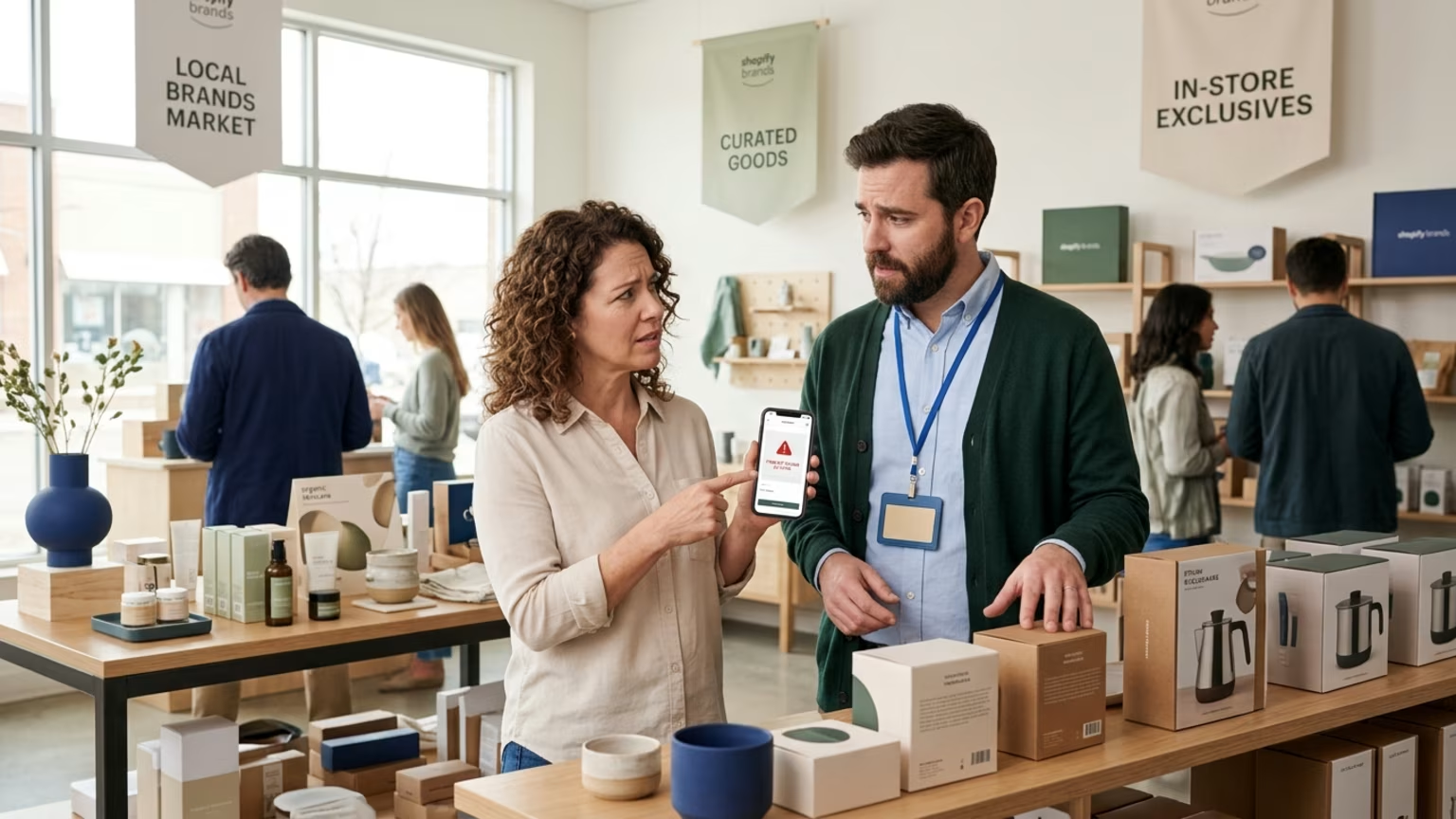
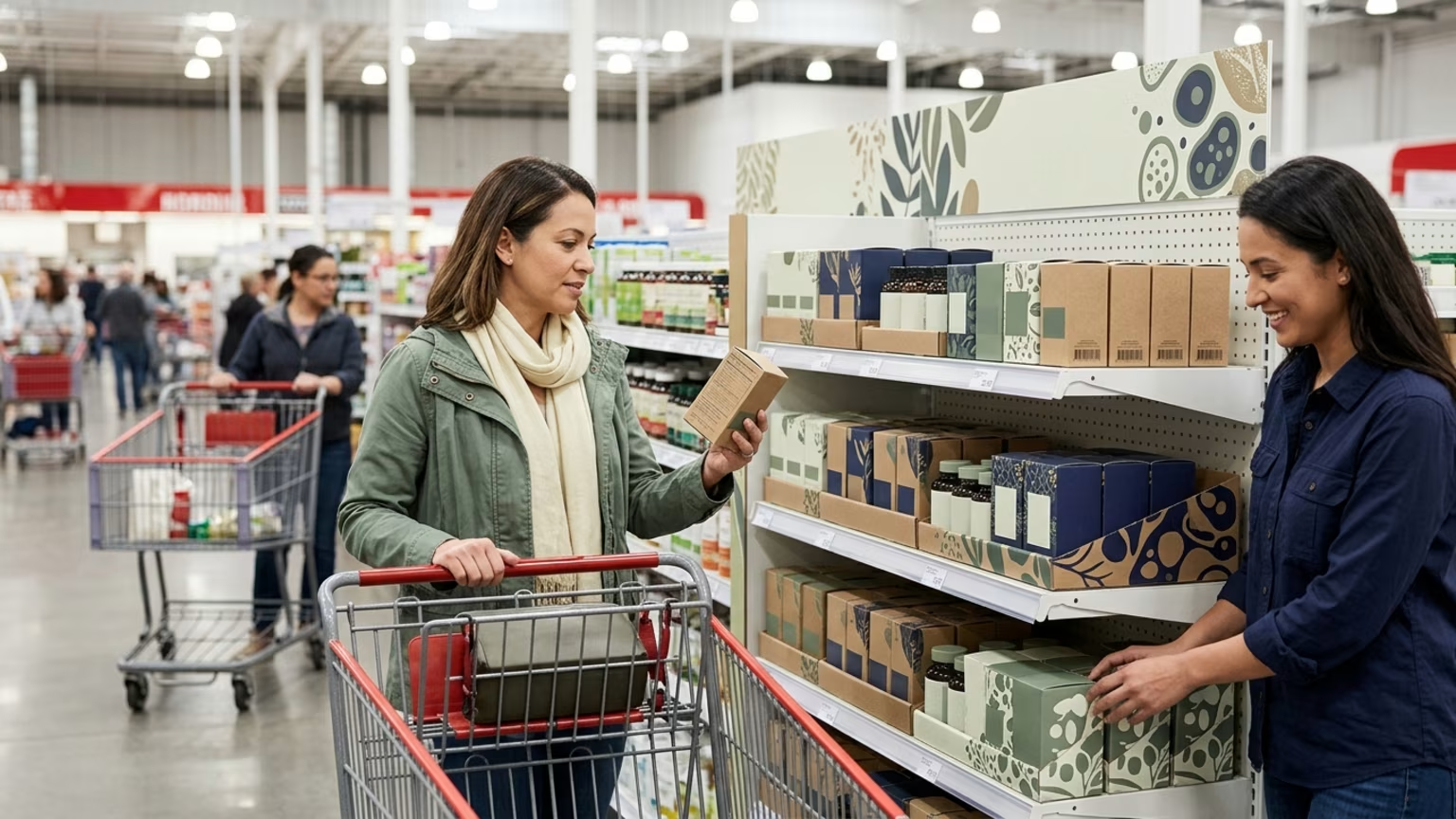
A shopper tests a premium skincare sample at a crowded retail endcap and scans a promotional table tent. They expect their digital assistant to pull up ingredient details and return policies instantly. Instead, they hit a digital wall of broken data while the field team celebrates a high interaction count. Verity Score released its State of AI-Commerce benchmark on August 24, 2026, revealing exactly why this disconnect ruins retail performance.
Myth: You can judge the success of a retail demo entirely by physical interactions and samples distributed.
Truth: The physical interaction fails to convert if your digital product data cannot be read by the AI systems shoppers use to verify their purchase.
Field marketing leaders operate under intense pressure to justify their activation budgets quickly. They often direct their funding toward outgoing brand ambassadors, premium booth spaces, and eye-catching retail displays. The immediate goal is always capturing attention in a crowded aisle. This focus creates a bias toward metrics you can easily see and touch on the floor.
It makes complete sense to prioritize live conversations when managing a national product launch. Brands hire agencies that promise massive foot traffic and high sample distribution rates. Leaders assume that a positive human interaction naturally translates to a completed sale at the register. The urgency of live event logistics leaves little time to audit the underlying digital infrastructure.
When field teams evaluate success, they usually look at daily tracker sheets and raw scan counts. A busy activation space feels like a victory because it looks like high demand. Operators mistakenly believe that a persuasive ambassador can overcome any friction in the shopping journey. They forget that the modern consumer validates physical experiences through independent digital research.
Without precise measurement, field managers rely on anecdotal feedback from the retail floor. They listen to stories about smiling customers instead of looking at velocity reports. This creates a false sense of security regarding campaign performance. The brand celebrates a successful weekend while the actual sales lift remains completely flat.
The assumption that physical momentum guarantees a sale falls apart the moment a shopper steps away. Beautiful packaging and a flawless sampling script cannot compensate for missing machine-readable product data. Kamil Kaderbay, the CEO of Verity Score, explicitly stated that AI does not read your design. He warned that it reads your code instead.
If a shopper asks their AI assistant to check a product for specific allergens, the system needs verifiable structured data to answer them. Verity Score published its benchmark to measure how clearly Shopify storefronts expose information to these AI systems. The benchmark combines 242 audits across 105 real Shopify stores. It reports an average AI-commerce readiness score of 33 out of 100.
This score is not a ranking of retail sales performance or physical store execution. The data simply highlights severe gaps in digital information accessibility across the audited locations. The published sample is primarily composed of French beauty and cosmetics stores. It includes 13 industries in total, featuring 47 beauty stores and 12 food stores.
In an issue-analysis subset of 94 stores, Verity Score found incomplete Schema.org coverage in all 94 stores. Furthermore, structured shipping information was missing in 71 of those 94 stores. The benchmark evaluates more than 39 areas of a Shopify store. These areas include structured data, trust signals, conversational content, and AI-crawler accessibility.
These technical blind spots directly impact experiential marketing outcomes. One published axis, AI Visibility, has an average score of 45 out of 100 and covers basic items like sitemaps and robots.txt. Verity Score noted that 72 percent of the 105 stores scored below 40 overall. Absolutely zero stores scored 80 or higher in the published sample.
The Verity Score GEO app has been live on the Shopify App Store since June 3, 2026. The app allows merchants to see exactly how ChatGPT, Perplexity, Gemini, and Claude answer questions about their stores. It also identifies buyer questions that product pages currently fail to answer. The system previews proposed fixes for merchant approval and permits approved changes to be undone for 30 days.
This level of technical oversight is essential for capturing post-demo interest from consumers. For beauty, wellness, food, and beverage brands, teams should translate common live-event questions into durable digital content. Shoppers frequently ask what a product tastes like, how to use it, or what allergens it contains. They also want to know where they can buy it today or what happens if they need to return it.
Those exact questions must be answered consistently across brand sites, retailer pages, and packaging destinations. If your ambassador answers a question flawlessly but your code hides the answer, the sale is lost. Activation teams should track a specific set of metrics to build a complete picture of campaign success. You need to log the store location, department, date, and staffing levels for every activation.
Teams must track meaningful product interactions, QR scans, and coupon redemptions alongside traditional sample counts. You should also monitor product page visits, sales velocity, and same day purchases. Verity Score says its app can track identifiable visits and orders associated with AI assistant referral sources. This information complements retailer point-of-sale data to prove true incrementality.
Brands must treat digital readiness as a mandatory step before launching any physical campaign. Activation teams need to build a unified measurement spine across their field and digital channels. You should link your in-store interactions directly to accurate online product data. The QR code on a sampling table must lead to clear usage instructions and shipping policies.
One of our clients, a Brand Manager in the alcohol beverage space, shared their experience: "Working with Makai was a game-changer. The activation blew past all our KPIs and created a lasting emotional connection with our customers. Simply outstanding work." This client saw their activation exceed all key performance indicators while building deep emotional connections with their audience.
Teams should combine execution quality checks with robust data analytics. Verity Score offers a free plan that audits up to 25 products to identify digital information gaps. Brands can use diagnostic tools to fix missing policies before their field teams hand out a single sample. You must ensure that AI systems can retrieve product details just as easily as a shopper can taste a sample.
Shopify developers recently expanded the capabilities of AI shopping agents through new tool updates. Documentation describes how AI agents can use WebMCP tools to search catalogs, retrieve product details, and manage carts. These advancements mean shoppers will increasingly rely on AI to verify what they learn at a retail demo. If your digital catalog lacks structured data, those AI agents cannot move the shopper toward a purchase.
To truly validate your field marketing investments, you must run controlled comparisons. AnyRoad describes brand-lift studies as comparisons between an exposed group and a matched control group. This methodology helps brands estimate the actual changes attributable to a live experience. You must focus on connecting trade show performance to retail sales lift by matching activation data with baseline sales.
Smart operators stop chasing unverified foot traffic and start measuring actual incrementality. Practitioners commonly recommend comparing activation stores against similar control stores. This allows marketers to control for variables like pricing, seasonality, and local retailer promotions. When you combine strict control models with a fully readable digital catalog, you build a resilient pipeline.
Furthermore, brands must adapt to the new reality of omnichannel discovery. Physical retail metrics are just one piece of a much larger commerce puzzle. When a consumer experiences a product live, their next step is often a digital verification search. Optimizing your digital assets for AI retrieval prevents that momentum from stalling.
You can build stronger campaigns by deploying hybrid retail demos blending QR codes with hands on trials. This helps guarantee that every physical touchpoint captures digital interest. You can also read more about integrating physical trials with digital touchpoints by linking in store sampling to retail media Return on Investment.
A flawless retail demonstration only generates pipeline if your digital infrastructure can successfully catch and convert the shopper's momentum.
Fixing the disconnect between physical sampling and machine readable product data requires immense operational precision, which is where Makai takes command. Makai solves the problem of inefficient post event follow up and CRM routing by deploying our Engagement Marketing capability to turn audiences into participants with live and digital experiences that invite people to try, share, and act.

30 Years Experiential & Retail Activation Partner for CPG & Beverage Brands | Multi-Market Demos, Roadshows & Costco/Club Programs That Actually Sell