Robbie Thain
Founder, CEO

Decathlon Malaysia’s sub-zero trial zones offer lessons in local promotion, field staffing and measuring physical product experiences.

On 7 October 2026, Decathlon Malaysia opened winter-experience zones at Shah Alam, Batu Kawan and Toppen, according to Marketing-Interactive. Shoppers could try cold-weather products in spaces cooled to as low as −5°C.
On 10 October 2026, zones followed at Bandar Sri Damansara and Petaling Jaya, the outlet reported. These openings established five named locations where shoppers could experience selected winter gear before deciding whether to buy.
The change was specific: shoppers could put on winter clothing in a simulated cold environment rather than assess it only through a display or product description. Marketing-Interactive identified base layers and thermal jackets among the products available to try. The intended audience was Malaysians preparing for year-end travel to colder destinations.
The promotion also pointed toward particular stores. According to Marketing-Interactive, Decathlon used videos on location-specific Instagram accounts to direct shoppers to the respective outlets. Media and influencer activity supported awareness of the activation and winter range.
Separate October 2026 coverage described Decathlon Singapore’s Winter[proof] campaign as adding pop-ups at ION Orchard and Centrepoint alongside capsules at four Decathlon stores. That related activity presents another footprint for the concept: a product experience can sit within a store or appear through a pop-up.
The evidence has a clear boundary. Marketing-Interactive published no attendance or commercial outcome data for the Malaysian zones. The coverage also does not establish staffing arrangements or validate clothing performance over a full trip. This is a documented product-trial format, not a demonstrated conversion result.
Our view at Makai is that a warm welcome and a disciplined operating plan belong in the same experience. People should feel comfortable participating. The brand should also know what that participation is meant to accomplish.
The useful feature here is not cold air by itself. It is the connection between the environment and the product attribute shoppers are assessing. The setting gives the trial a purpose that relates directly to the purchase under consideration.
For CPG and beverage brands, that distinction matters. A tasting can serve a shopper who is deciding whether to purchase. A product demonstration can serve a retail buyer evaluating a potential listing. Those interactions may involve the same product, but we believe they deserve different commercial objectives and different follow-up.
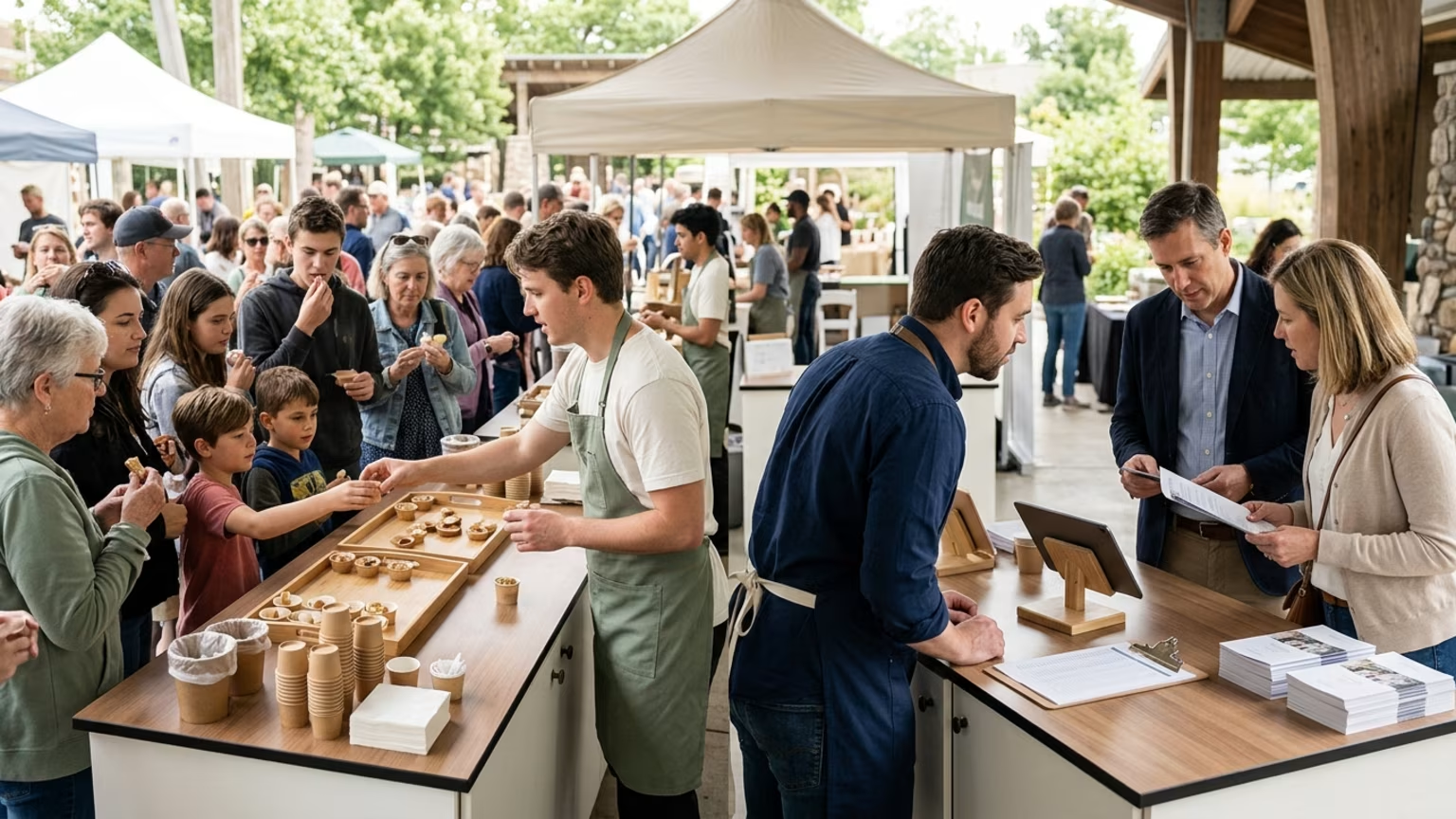
We specialize in retail demos, product sampling programs and roadshows that bring brands face to face with their audiences. Those programs are designed to drive trial and support retail velocity across multiple locations. From that perspective, the Malaysian activation offers a useful planning principle: make the product benefit tangible without confusing participation with pipeline.
Our team also designs mobile activations and roadshows for 90-day product launch windows. A defined launch window makes the relationship between the experience and participating retail locations especially relevant to us. The physical encounter needs a clear role within the launch, rather than becoming a separate attraction with its own disconnected success story.
That is the thinking behind creating space for meaningful product trial. The setting should help someone assess the product. Its visual appeal should support that job rather than replace it.
For a U.S. CPG team evaluating a comparable concept, our recommendation is to translate the product question into an execution brief. Staffing and footprint decisions should support the intended interaction. Local promotion and measurement should connect that interaction to its commercial purpose.
The transferable staffing question is what a participant needs to understand during the trial. For us, a useful conversation starts with the product rather than the attraction surrounding it.
Makai’s retail demonstrations use trained brand ambassadors to support in-store sales through real conversations and product trials. That capability is relevant to this story because physical participation and product understanding are different objectives. A person can take part in an experience without having the conversation that helps them evaluate a purchase.
Our recommendation is to treat informed conversation as a design hypothesis to test. The staffing brief should identify the product attribute being assessed and the commercial purpose of the interaction. At a trade show, that purpose might be a qualified buyer conversation. In retail, it might be helping a shopper judge whether the product fits their preferences.
Applied to a trade show, the concept raises a practical layout issue. The product experience and the commercial conversation need to coexist without competing for the same attention.
We believe the footprint should reflect those distinct jobs. A visitor trying a product is not necessarily ready for the same interaction as a buyer discussing retail distribution. Treating both as a single stream of traffic can obscure the purpose of the space.
Our approach to planning room for trials and buyer conversations starts from that distinction. Makai plans and manages trade show spaces intended to attract attention and turn visitor conversations into customer opportunities. The design objective is therefore more specific than keeping the footprint occupied.
Makai’s integrated services span permitting through CRM reporting. For us, that scope reflects a basic operating principle: the physical setting is part of the execution plan, not a substitute for one.
Decathlon Malaysia’s outlet-specific videos are a useful detail for multi-location planning. Marketing-Interactive reported that those videos directed shoppers toward the respective stores. The message connected the experience to somewhere a shopper could actually visit.
Our recommendation is to preserve that connection in a regional or national CPG program. Local promotion should identify the participating location and the product interaction available there. A campaign promise should match the experience being offered at that destination.
This matters to the operating brief because promotion and field execution describe the same encounter from different sides. The message creates an expectation. The location must be planned around delivering that particular product experience.
For a launch roadshow, we see local relevance as more than a change of city name. It is clarity about where the trial happens and how that stop relates to the wider retail objective.
The research supports a straightforward measurement recommendation: define participation and product engagement alongside store-level sales and an appropriate baseline or comparison. Those are evaluation choices for a future program, not reported Decathlon methods.
For CPG marketers, the useful distinction is between evidence that an experience happened and evidence that it contributed to the intended outcome. A trial count answers a participation question. Store-level sales address a different commercial question. A qualified buyer conversation belongs to another part of the pipeline.
Our recommendation is to keep those categories visible rather than compress them into a single activity total. That creates a clearer basis for evaluating Return on Investment (ROI) without treating every encounter as an equivalent business result.
The same discipline applies to connecting physical trial with later follow-up. Makai’s positioning centers on face-to-face experiences designed to generate measurable sales pipeline. For us, measurement belongs in the campaign’s purpose from the beginning, not only in the recap after the equipment comes down.
The cold setting is the memorable feature of Decathlon Malaysia’s activation. The more useful strategic detail is the connection between a relevant product attribute and a named retail destination.
For a CMO or VP, the quieter question sits behind the spectacle: as your next launch takes shape, how clearly will your field operation connect what people try with what your team can measure?
A memorable trial setting still leaves a commercial job to do; Makai plans trade show activations and manages end-to-end Costco roadshows. For CPG marketers facing low-quality leads at crowded shows, Makai designs experiential campaigns for qualified leads while its roadshows bring brands to shoppers through live demos and conversations with a focus on measurable sales impact.

30 Years Experiential & Retail Activation Partner for CPG & Beverage Brands | Multi-Market Demos, Roadshows & Costco/Club Programs That Actually Sell