Robbie Thain
Founder, CEO

Learn how to execute field marketing operations by mastering retailer rules, venue logistics, and event partner coordination for measurable return.
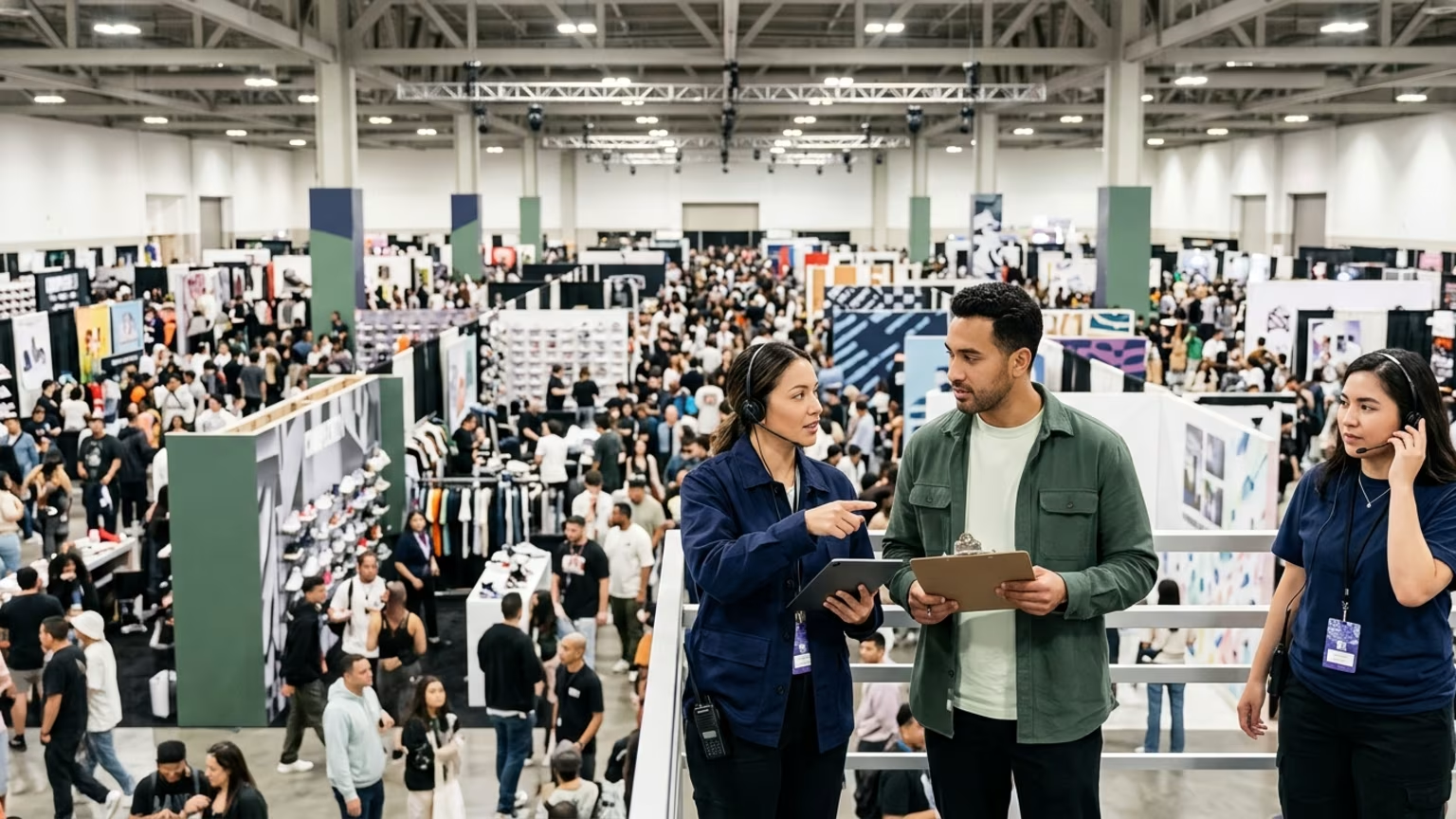
The physical activation environment cares nothing about your creative concept. Trade show floors and retail aisles operate on rigid rules that consume unprepared ideas instantly. Brand marketers often assume their brilliant designs will automatically translate into perfect physical experiences. If you want pipeline instead of chaos, you must build your strategy around partner realities.
Successful field marketing relies on unglamorous preparation long before a brand ambassador arrives on site. Our team knows that securing permits, mapping CRM routing, and staging vehicles will dictate the success of any campaign. We have executed over 1000 campaigns across all 50 states, bringing brands to life in every major U.S. market. From retail demos in Seattle to roadshows in Miami and events in Honolulu, our teams activate brands wherever our clients' audiences are located.
This massive scale requires precise coordination with specific venue requirements and local retailer rules. One practitioner source recommends scheduling in-store demonstrations three to four weeks ahead to allow time for store approval, staffing, and product delivery. A convention-center exhibitor guide identifies a standard floor-load capacity of approximately 250 pounds per square foot, and heavy machinery may require advance venue approval. Planning for these exact physical constraints is far better than simply hoping for smooth field operations.
Evaluating floor loading capacity remains just as critical for heavy promotional setups. Brands bringing vehicles, large product displays, or heavy demonstration assets should always confirm loading access before shipping. Ignoring these facility guidelines creates extreme operational friction and ruins retailer relationships. The field lead should know exactly which tasks the brand team may perform themselves and which require venue labor.
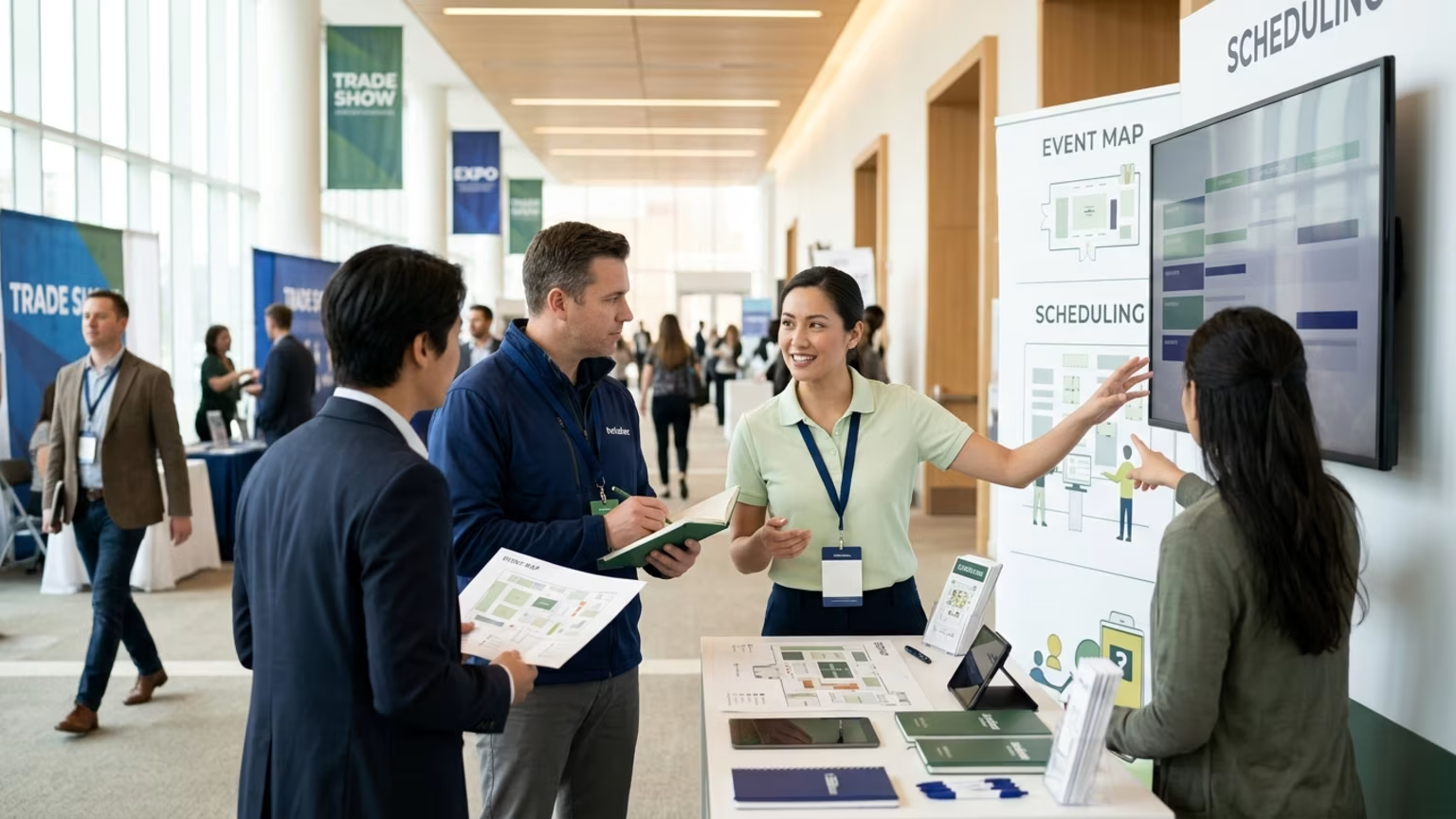
Trade show environments introduce another complex layer of strict facility regulations. For example, Electric Expo lists an eight-foot standard booth-height limit and specific self-move-in windows. Groceryshop sets a 16-foot maximum height for large island booths measuring 20 by 20 feet or larger. Your pre-brief must define the approved activation area, product-delivery process, and escalation path for any on-site disputes.
Retail activation programs require retailer approval, scheduling coordination, compliance with vendor standards, and necessary insurance documents. A brand cannot assume that a successful event plan will transfer unchanged from one retail chain to another. Building a rigid operational framework protects your brand when operating in unfamiliar spaces.
Executing a live brand experience requires a structured operational rhythm. Field teams must follow specific steps to satisfy both internal brand standards and strict retailer expectations. The following protocols outline the exact sequence needed to maintain control on the floor.
Following this highly structured sequence protects the brand reputation and keeps local retail partners happy. It turns a chaotic physical footprint into a highly measured conversion engine.
Many brands struggle because they treat complex retail spaces like their own private stages. One massive error is ignoring local labor regulations during load-in or teardown. At the Las Vegas Convention Center, installation and dismantling involving tools or ladders is identified strictly as carpenter work. Field personnel who grab a ladder to adjust hanging signage can trigger union grievances and halt the entire activation.
Amateur programs also fail by waiting for weekly batch reports to verify execution. For retailer programs, photo proof, geotagged check-ins, and same-day submission are recommended as ways to identify execution problems quickly. Finding out on Friday that your promotional display was hidden in a backroom on Monday means you lost a whole week of sales. Relying on outdated manual reporting creates a dangerous blind spot for regional marketing directors.
Another common failure point is treating every badge scan as equal to a qualified sales lead. Collecting contact details without conversation context creates a massive administrative burden for the sales team later. A simple scan cannot communicate the customer purchase timeline or specific product use case. Without proper lead qualification criteria, sales representatives waste hours chasing uninterested booth visitors.
Retail activation agencies also describe the work as involving approved vendors, insurance documentation, conduct standards, and strict food-safety protocols. Brands expanding into new markets often view these compliance requirements as minor administrative details. Failing to secure the right paperwork early will prevent your physical footprint from opening at all.
The ultimate value of any field marketing campaign depends heavily on rigorous post-event tracking. Your team must connect physical delivery to concrete business outcomes like referral traffic, retailer orders, or qualified appointments. Event lead-management guidance recommends cleaning records, assigning ownership, capturing conversation context, and setting a clear next action. Follow-up ownership must transition smoothly from the field staff to the internal sales team.
The most valuable follow-up strategy is usually specific to the actual conversation. Giving partners tracked referral links and counting registrations against that link provides actionable proof of your work. You must record a short voice note or written summary immediately after the conversation while details remain fresh. The field team's job is not merely to collect names but to create records that your partners can act on without having to reconstruct the interaction.
Proper tracking prevents warm opportunities from going entirely cold in a messy CRM system. Data hygiene steps include deduplicating records, correcting errors, and applying the correct event source tags. Practitioner guidance recommends pairing exposure and engagement reporting with attributable actions such as tracked registrations, referral links, or promo codes. You need proper event metrics and immediate reporting to fix issues fast and prove your return value.
The physical activation environment remains unforgiving to those who only plan for the ideal scenario. By mastering the strict rules of trade show floors and retail aisles, you protect your Return on Investment. Your creative concepts will only succeed when they are supported by precise operational logistics and flawless partner coordination.
Losing qualified leads in a chaotic spreadsheet makes calculating live event return nearly impossible. Makai solves the problem of difficulty measuring real Return on Investment from live events by carefully structuring your lead capture workflows. We deploy our Experiential Marketing capability to create hands on brand moments that connect emotionally and turn customers into ambassadors.

30 Years Experiential & Retail Activation Partner for CPG & Beverage Brands | Multi-Market Demos, Roadshows & Costco/Club Programs That Actually Sell