Robbie Thain
Founder, CEO

Event-day traffic cannot prove true business value. Read how to connect audience qualification, intent capture, and CRM routing to measure live marketing ROI.
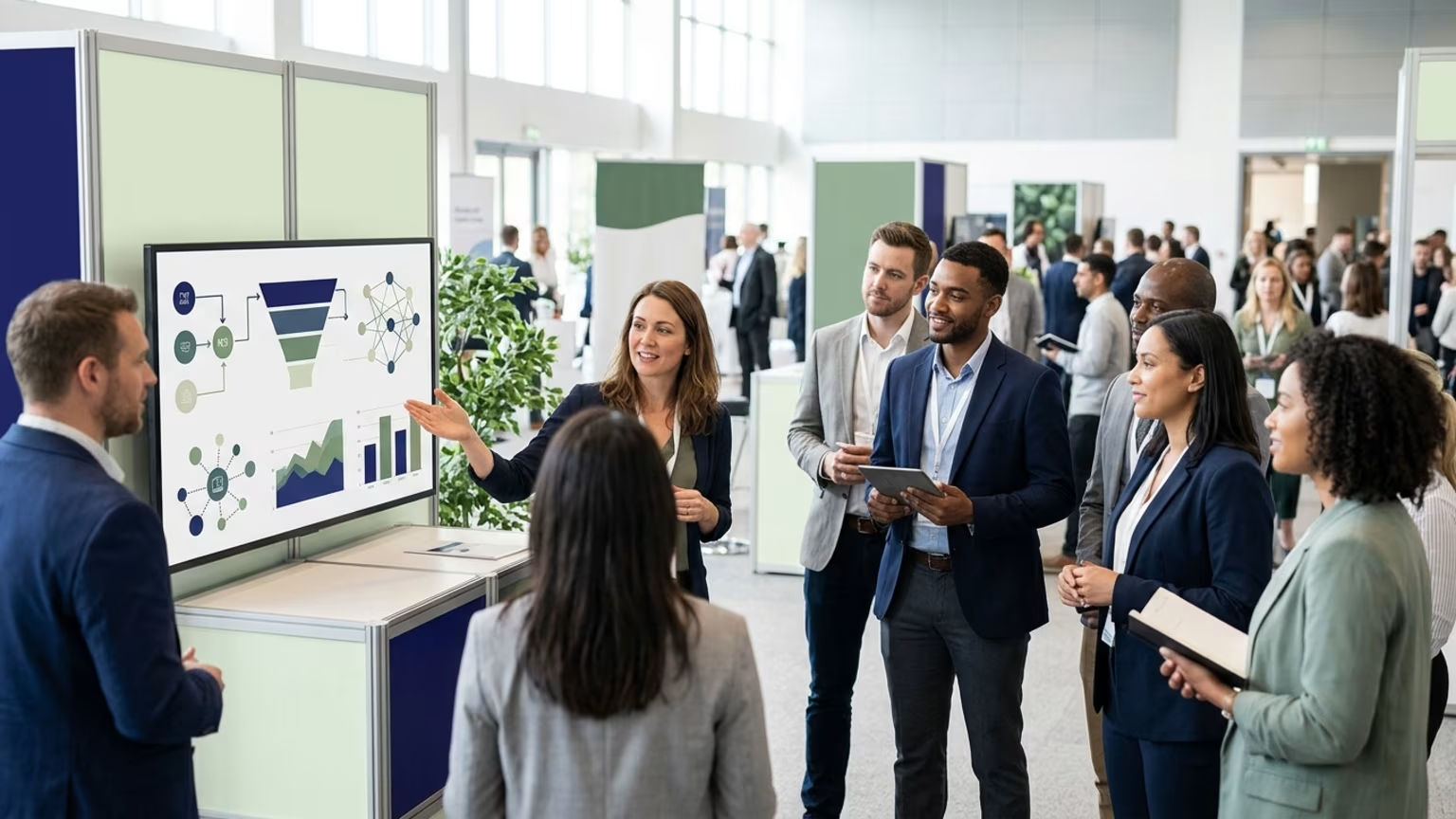
On October 6, 2026, a Forbes Brasil BrandVoice article outlined a new Return on Investment (ROI) measurement framework for live marketing. The piece identifies Igor Tobias as MCI Latam’s director general in its photo caption. It explicitly argues for shifting event evaluation away from simple event-day reach. Instead, the model focuses on attributable revenue and continuing business value.
The proposal appeared as Forbes Brasil BrandVoice content. The publication page notes that BrandVoice content is the responsibility of its authors. This means the article represents MCI's attributed perspective rather than independent reporting. It outlines how physical investments should connect to longer commercial outcomes.
MCI’s proposed measurement model spans three distinct logistical phases. Before the event, the focus is strictly on qualifying the intended audience. During the activation, teams are instructed to capture data and clear intent signals. After the event, teams turn the physical experience into content and community.
They use this ongoing engagement to drive brand influence and measurable pipeline. This approach fundamentally changes how field marketing is measured. MCI’s proposed measurement discipline is to connect audience data directly with CRM. The model requires marketing teams to compare sales cycles.
Finally, it demands that brands distinguish outcomes generated by the event from those that would have occurred anyway. These changes force a logistical reset for experiential marketing teams. You can no longer judge a consumer event solely by badge scans or foot traffic. The new standard requires building a secure data pipeline straight from the trade show floor.
Planning must specify which consented data points will be captured before the first booth is built. This approach requires heavy coordination across departments. Marketing teams must define their ideal participant profiles weeks before any physical build begins. MCI suggests that this early audience qualification may help reduce overall acquisition costs.
During the event, capturing intent means moving beyond passive observation. Every interaction needs to be logged in a way that respects consumer privacy. MCI suggests that capturing this in-event intent may help shorten subsequent sales cycles. Building a post-event community may support repeat business and reduce churn over time.
If you are building the data-driven business case for roadshow investments, this framework provides a clear structural outline. However, the Forbes article supplies no case study, event budget, or independent validation. It serves as a strategic roadmap for operations rather than a guaranteed performance metric.
Retail demo programs get judged on cups poured rather than incremental pipeline. That mismatch is why field operations often struggle to prove their true value to leadership. We see this tension constantly when coordinating multi-regional promotional campaigns. Measuring the true sales impact of a physical roadshow requires precise tracking and coordinated field execution.
At Makai, we treat live events as the beginning of a measurable business process. We provide clear reporting on reach, trials, and leads to guide campaign optimization. Our measurement approach tracks awareness, engagement, and conversion. This turns brand moments into actionable data that demonstrates business impact.
We have executed over 1000 campaigns across all 50 states. From retail demos in Seattle to roadshows in Miami, our teams activate brands wherever audiences are located. We know firsthand that data-led experiential marketing campaigns can optimize retail engagement. MCI's call to isolate event impact aligns perfectly with the need for rigorous operational control.
This operational discipline has been part of our DNA for decades. By 2009, our work covered event and sponsorship activation alongside mobile tours and sampling. We also managed event production and logistics at national scale. Makai was included in the 2009 PROMO 100 ranking published by PROMO and Chief Marketer.
This recognition reflected the breadth of our promotional marketing work at that time. We have watched the industry transition from counting attendees to tracking verified pipeline. We create experiential marketing programs built to connect emotion with action. Our process blends creativity, strategy, and data to guarantee every brand interaction drives measurable results.
Transitioning to a pipeline-based measurement model changes everything about how field teams operate on the ground. Staffing is no longer just about hiring friendly faces to hand out product samples. Data-driven field staffing ensures your brand ambassadors are trained to navigate conversations that capture compliant intent signals. They must drive in-store sales through real conversations while actively qualifying leads.
The physical footprint of a trade show booth must also be redesigned around data capture. You must guide consumers toward specific engagement points to log their interest properly. Poor booth flow will actively destroy your return on investment by preventing staff from capturing usable CRM records. Executing a multi-brand footprint requires stringent flow control before consumer attention turns into floor congestion.
Permitting and logistics become significantly more complex under this operational model. You are no longer just securing retail floor space or parking a sampling vehicle. You are setting up secure network environments to sync field data to your CRM in real time. We manage end to end Costco roadshows that bring brands to shoppers through live demos and measurable sales impact.
The downstream effects impact every vendor and partner involved in an activation. Storage and logistics teams must now prioritize the safe transport of sensitive digital lead-capture kiosks. We store your sampling product and event gear. We then ship, track, and coordinate delivery nationwide so every activation stays on schedule.
If you are executing a national sampling tour, your hardware must be foolproof. Tablets and lead capture devices require persistent cellular connections to function properly. Without reliable network access, your field staff will be forced to use manual workarounds. Those workarounds inevitably lead to data loss and broken sales processes.
Failing to update your field operations will directly impact your backend systems. If your on-site team captures incomplete information, bad CRM data undermines marketing ROI across your entire organization. Inefficient post event follow up and CRM routing is a massive operational failure. You must build your live events to support your digital infrastructure flawlessly.
The Forbes Brasil piece states the core premise of this shift very clearly. MCI’s article states: “O verdadeiro ROI do live corporate marketing não está no impacto do dia do evento” (“The true ROI of live corporate marketing is not in the impact of the event day”). This statement reinforces the reality that live interactions are merely the catalyst for business growth. The actual value is realized through diligent post-event follow up and pipeline generation.
The Forbes Brasil article correctly identifies that the era of simply counting event-day foot traffic is ending. The real measurement begins the moment an attendee leaves your footprint. As you evaluate your upcoming experiential marketing calendar, ask yourself a simple question: Are your live activations built to capture measurable intent, or are you still just counting the crowd on the floor?
Food and beverage brand managers frequently battle inefficient post event follow up and CRM routing after large retail activations. Makai steps in to solve this gap through comprehensive Retail Demonstrations. Our trained brand ambassadors drive in store sales through real conversations and product trials to ensure field data moves seamlessly into your pipeline.

30 Years Experiential & Retail Activation Partner for CPG & Beverage Brands | Multi-Market Demos, Roadshows & Costco/Club Programs That Actually Sell