Robbie Thain
Founder, CEO

LEGO connects its physical F1 experience to downstream retail store traffic using QR codes and digital passes. Learn how to design a measured field framework.
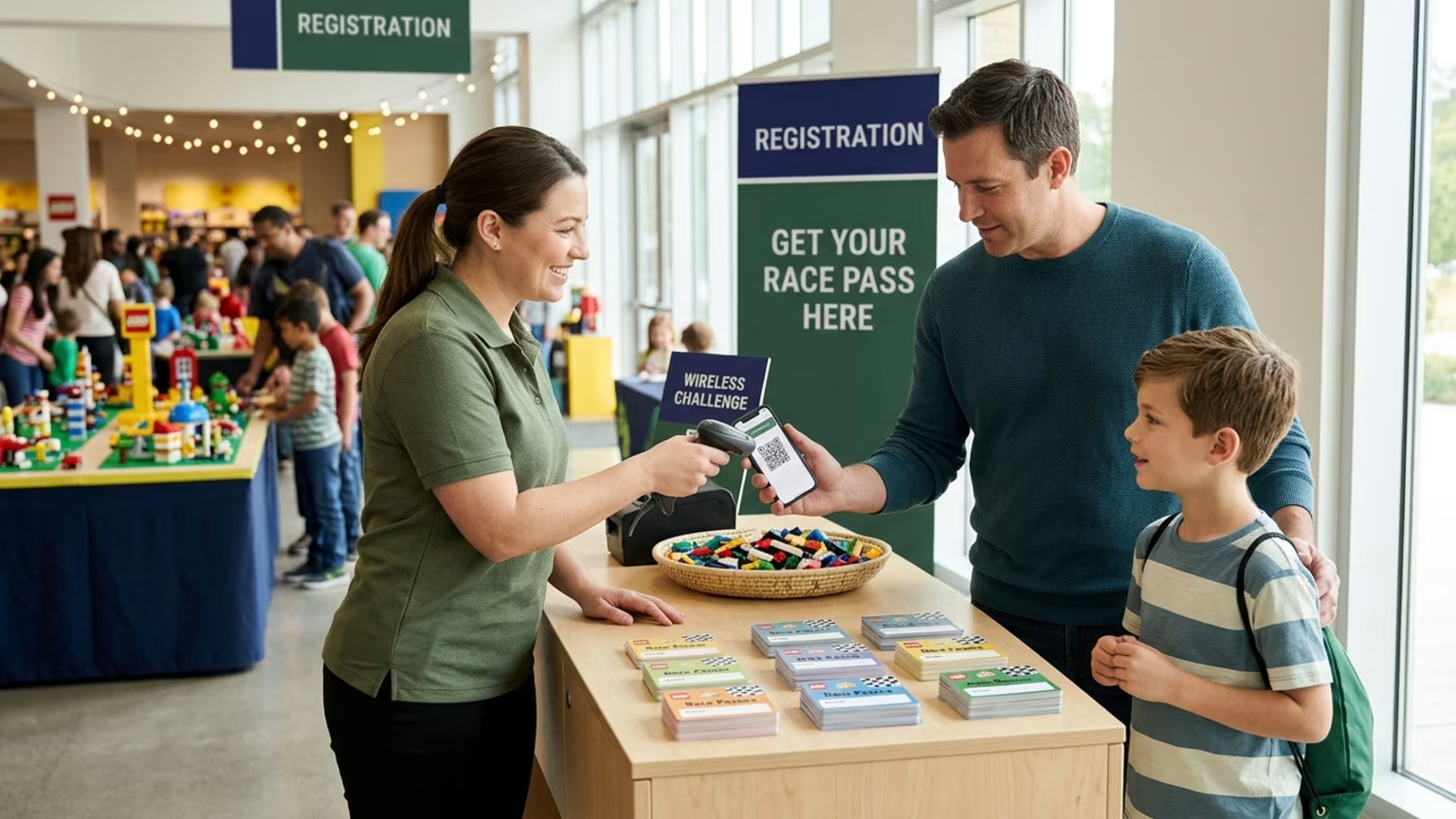
On October 1, 2026, LEGO launched its F1-themed activation at Suntec City in Singapore. Scheduled to run through October 18, the event combines interactive racing challenges with a precinct-wide QR code hunt. This setup actively links physical event participation with promotions at nearby LEGO Certified Stores. The strategy attempts to measure experiential performance far beyond basic foot traffic. Marketers can observe how a major brand connects local event engagement directly to retail behavior.
This activation operates within a broader multi-year partnership between the brand and Formula 1. Reports indicate this partnership spans the Technic, City, Speed Champions and Editions product collections. The goal is creating multiple entry points into racing fandom through building and physical community participation. Similar physical campaigns have rolled out recently in other global markets.
For instance, the brand brought an experience to Ombak KLCC in Kuala Lumpur. That event featured a life-sized Mercedes-AMG vehicle to anchor the physical space. Industry coverage notes that more than four million children aged 8 to 12 actively follow the racing series globally. Furthermore, 40% of the sport's Instagram followers are reportedly under the age of 25.
The Suntec City activation functions as a heavily tracked physical circuit. Its central draw is a life-sized VCARB F1 vehicle build. Industry coverage notes the model uses nearly 400,000 elements and required more than 1,800 hours of craftsmanship. Visitors register for a digital Race Pass to attempt four specific challenges on the event floor.
These interactive tasks include building a steering wheel against a timer and testing reaction speeds. Participants also complete a virtual race and pose with a specialized racer minifigure. Completing three of the four challenges earns physical rewards and exclusive vouchers. Visitors can then redeem these specific vouchers at the participating retail location nearby.
The physical footprint extends far beyond a single event square. Organizers placed ten life-sized racer minifigures across the wider shopping center. Visitors hunt for these figures to find and scan attached QR codes. Meanwhile, the retail stores host distinct Make & Take sessions and reaction challenges to capture incoming foot traffic.
This structural design allows the organizers to monitor a wide array of engagement signals. The tracking framework monitors completed digital passes, QR scans, and resulting user-generated content. Teams are tracking whether event rewards actually drive traffic into the retail stores. These deeper participation metrics are measured alongside traditional baselines like total footfall and overall sales.
The public reporting describes these extensive monitoring efforts but does not publish the final resulting values. Marketers should view this structure as a strategic measurement framework rather than a proven performance case. Footfall and sales remain the stated baseline for the brand. However, the company is actively broadening its data collection approach to measure wider ecosystem impacts.
We have been connecting brands with people through live experiences and national activations since 1995. Over three decades, we have built a track record of creating meaningful brand moments across the country. In our experience, counting casual booth walk-bys does not justify a modern field marketing budget. Brands must prove that physical activations actively move consumers into a buying environment.
The precinct-wide tracking model demonstrates how to build a measurable bridge to the retail checkout line. This operational discipline matters heavily for consumer packaged goods and beverage companies. When a brand parks a mobile tour outside a major retailer, the primary goal is driving inside purchases. Rewarding participants only when they visit the retailer creates a clear and verifiable data trail.
We build festival zones, premieres, and pop-ups that turn viewers into fans and fans into advocates. We design moments people want to share using music tie-ins and live stunts to bring stories to life. Our crews manage the complex execution while tracking reach and response metrics for the brand. This strategy requires strict logistical alignment between the field activation crew and local store managers.
Experiential campaigns fail when the event footprint is entirely disconnected from retail reality. Designing a clear path from a sampling interaction to the shelf prevents scattered attention. Brands must track specific metrics that prove their retail Return on Investment to justify ongoing field expenditures. Capturing deep engagement data ensures the field team generates qualified leads rather than empty awareness.
Shifting an activation from a single static booth to a precinct-wide tracking system changes field operations completely. Staffing requirements multiply immediately when a brand tracks multiple touchpoints across a large property. You need trained ambassadors managing the central footprint and guiding the interactive challenges. Additional personnel must oversee the handoff between the event space and the retail storefront.
Every station must function perfectly to keep the incoming data clean and reliable. If a QR code fails to scan, the entire tracking mechanism loses valuable visibility. This model also complicates venue negotiations and local permitting requirements. Spreading physical assets across a shopping center requires different operational clearances than a standard booth setup.
Field teams must physically map the venue flow to ensure visitors navigate naturally toward the retail location. We provide clear reporting on reach, trials, leads, and sales to guide next steps in campaign optimization. Our measurement approach tracks awareness and conversion, turning brand moments into actionable data that demonstrates business impact. Setting up interconnected tracking points requires rigorous pre-event testing to prevent technical failures.
Organizing this influx of consumer data requires a unified technology platform. When an attendee scans a code or redeems a voucher, that action must sync with a central database. Teams that build a modern retail measurement approach can connect these physical touchpoints directly to their main customer relationship systems. Relying on manual tallies or disconnected spreadsheets creates severe reporting delays for brand directors.
Linking live trials to retail tracking demands constant communication with store personnel. Marketers must ensure that the retail staff understands how to process event vouchers efficiently. Brands focused on designing better retail storefront models know that checkout friction ruins the entire engagement strategy. Operational success requires precise synchronization across every single step of the consumer journey.
The strategy behind this specific tracking framework reflects a broader push for better experiential data. Nina Patricia Da Costa serves as the LEGO Group general manager for Singapore, Malaysia, and Travel Retail APAC. She recently described the brand campaign approach as a connected ecosystem linking product discovery with retail engagement. Da Costa stated that experiences need to offer active participation and scale beyond mere digital access.
She noted that while footfall and commercial conversion remain essential baselines, measurement strategies must evolve. Da Costa argued that reporting should capture the depth of active engagement and earned social advocacy. She also emphasized the importance of measuring ecosystem synergies between the event footprint and the physical retail space. This executive perspective highlights how major brands are rethinking the value of live marketing data.
Other global activations demonstrate a similar focus on active consumer participation. According to Wallpaper, the LEGO House in Billund recently introduced a distinct "Ready, Set, Build" experience. That installation allows visitors to design and test race cars through interactive challenges. Active participation generates more valuable behavioral data than passive observation ever could.
A life-sized race car built from thousands of bricks will always command attention in a busy shopping center. However, the true business value of that spectacle lies in moving a consumer directly into the retail aisle. Capturing that movement requires marketing teams to design their events with the final tracking metric in mind. Does your next field activation map a clear path from the initial physical interaction to a verified retail purchase?
Designing a physical activation that tracks consumer movement from an event space into a retail store requires flawless execution. Makai takes over this complex operational management once marketing leaders finalize their overarching campaign strategy. We solve the difficulty measuring real ROI from live events that frustrates brand teams. Through our Retail Demonstrations service, trained brand ambassadors drive in store sales through real conversations and product trials.

30 Years Experiential & Retail Activation Partner for CPG & Beverage Brands | Multi-Market Demos, Roadshows & Costco/Club Programs That Actually Sell