Robbie Thain
Founder, CEO

NRF's 2026 back-to-school report shows how shoppers use AI tools for deal discovery while relying on physical store visits for final purchase conversion.
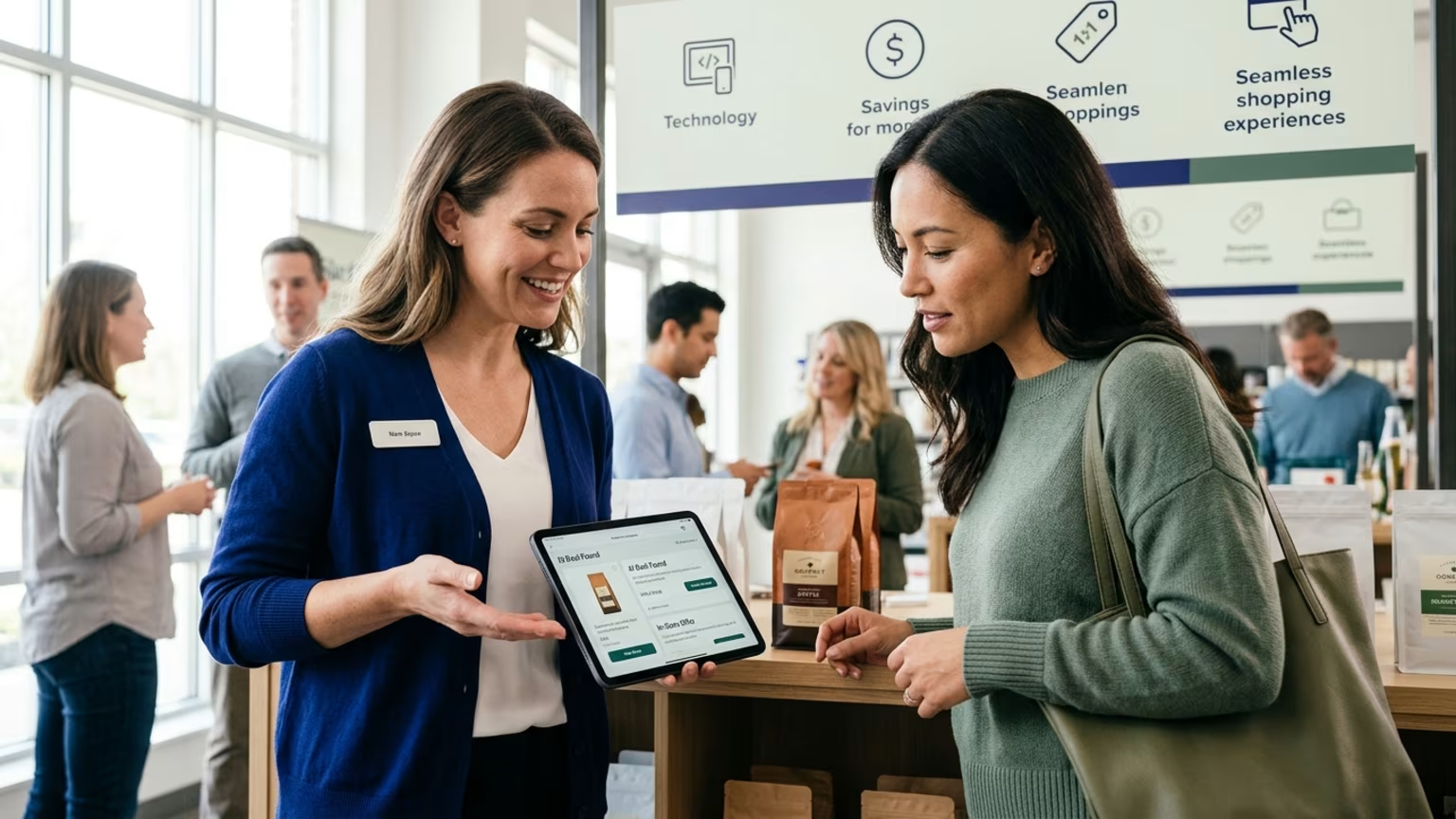
A shopper stands in aisle six, scanning a phone screen for digital coupons while holding a physical product bundle. The brand ambassador waits just a few feet away, ready to explain the value of a larger pack size. This exact moment defines modern retail conversion. The strategic choice for field marketers is no longer just about showing up in stores or running digital ads, but about synchronizing digital discovery with a tangible physical experience.
The first approach relies heavily on digital pre-planning and algorithmic discovery. Shoppers are increasingly leaning on digital assistants to stretch their budgets before they ever touch a shopping cart. The National Retail Federation reports that 61% of back-to-school shoppers used generative AI or other AI-powered shopping tools in 2026 to find prices, discounts, recommendations or ideas. This tactic focuses entirely on capturing the consumer during the initial research phase.
According to a summary from Retail Customer Experience, parents use AI mainly for price discovery, product comparison and budget planning. The primary logistical constraint here is a complete lack of final conversion control. While digital tools surface competitive price points and bundle options, they do not guarantee a closed sale. Consumers are using these systems to hunt for value, but they are doing so selectively as they evaluate all their options.
Because parents use AI primarily to find lower prices and stay within budget, experiential staff should be equipped to understand these digital triggers. The data confirms that AI is functioning primarily as a research, comparison and deal-discovery layer. It is not necessarily operating as a replacement for the physical shopping experience. This interpretation aligns perfectly with the reality that shoppers use technology to identify value while completing purchases through traditional channels.
Brands deploying this digital-first approach must contend with drastically shifting timelines. NRF found that shoppers had completed an average of 44% of their lists by early August. NRF reported that 62% of households had begun shopping by early July, while other 2026 reporting indicates that many shoppers were still waiting for better offers before completing their lists. This elongated consideration window means marketers must sustain digital spend for months before seeing actual retail sell-through.
The second approach centers strictly on physical retail execution and live brand interactions. Instead of trying to win the digital search algorithm, this tactic focuses on capturing the shopper directly at the shelf. Despite the rapid rise of digital tools, physical stores remain the central arena for final purchase decisions. An ICSC survey found that 91% of respondents spent or expected to spend in a physical store, while 51% planned to use buy-online, pick-up-in-store.
In-store activations rely on trained personnel, tangible product displays, and immediate gratification. A Mall of America-commissioned survey similarly found that 97% of respondents planned to shop exclusively in stores or combine in-store and online shopping, while only 10% planned to use AI tools. The footprint here requires coordinating physical space, product inventory, and promotional compliance directly within the retailer environment. This physical strategy ensures that the brand remains highly visible when the final choice is made.
Retail operators must guarantee that visible value communication directly aligns with what shoppers have researched online. For CPG brands, bundles can make the value calculation much easier at the shelf. A snack-and-beverage pairing or a family-size pack gives shoppers a clear reason to choose the branded solution over a generic alternative. The goal is to connect trial with the exact economic trigger that brought the shopper into the store.
Digital comparison tactics are the clear winner when shoppers are managing tight budgets and actively exploring substitute products. Shoppers rely on digital channels to find alternative options that protect their wallets from rising costs. NRF reports that 32% of K-12 shoppers and 47% of college shoppers purchased or planned to purchase secondhand or refurbished items. When consumers are actively looking to replace new items with used alternatives, digital search holds the undisputed advantage.
The secondhand trend is particularly relevant to specific durable goods where refurbished products substitute for new purchases. College shoppers show a particularly strong shift toward pre-owned or refurbished products as they furnish dorms and secure technology. Brands facing this specific substitution risk must aggressively communicate total cost of ownership in their digital channels. This digital defense is required to compete on confidence and value before the shopper ever visits a physical store.
Digital tools also dominate when consumers are validating seasonal sales events across multiple retailers. NRF found that 73% of shoppers viewed sales and promotions as the same or better than last year, while an average 48% of purchases were driven by coupons, sales or promotions. When the primary objective is distributing a discount code or communicating a mass market coupon, algorithmic distribution is highly efficient. This digital engine can rapidly match specific household budgets to the exact promotional offers they need.
This approach is absolutely necessary for getting a product onto the initial consideration list early in the summer. For brands that need to broadcast a price drop across millions of households simultaneously, digital promotion engines offer unmatched scale. AI tools filter through massive product catalogs to present the lowest baseline cost. Without this digital visibility, many brands would never even make it onto the preliminary shopping list.
Live retail activation dominates when it is time to force a final decision. Digital tools might generate a useful shortlist, but physical intervention is required to actually convert the sale at the register. The data strongly supports the need for human judgment at the point of purchase. Retail Customer Experience notes that only 5% of parents said they would use AI to make purchases directly, while 27% said they would not trust AI for shopping.
In-store execution is completely non-negotiable during the final deadline push. NRF says 52% of K-12 shoppers and 48% of college shoppers planned to finish shopping during the week or two before classes began. During this concentrated window, shoppers are not casually browsing for ideas, they are filling physical carts to meet a hard deadline. Brands that rely solely on digital awareness often lose out to competitors who secure a physical presence during these final days.
Physical activation also wins when brands need to justify a premium price or explain a bundle. Experiential staff can quickly answer comparison questions, explain pack-size economics, and offer a hands-on demonstration that an algorithm cannot replicate. When a shopper is choosing between a cheaper generic item and a premium branded bundle, a trained ambassador provides the trust needed to secure the transaction.
A Director of Brand Strategy in the CPG snack division shared: "The Makai team turned our product launch into a sensory event that shoppers still talk about. From creative storytelling to flawless in-store execution, they made snack time unforgettable. We couldn't have asked for a stronger partner." Our team created an in-store experience that left a lasting impression on consumers and became a memorable brand moment.
Experiential programs reinforce shopper confidence by offering knowledgeable staff, transparent comparisons, and no-pressure trial. AI might successfully generate the initial store visit or shortlist the specific product, but the physical experience provides the final push. Marketing teams should therefore align product information, promotional language, and retailer availability across every single touchpoint. If an AI tool surfaces one specific price but the shopper encounters a different offer in the store, the resulting friction undermines conversion.
The back-to-school season requires a balanced deployment of both digital discovery and physical validation. Relying purely on digital tools creates awareness but leaves final conversion vulnerable to in-store substitution. Conversely, deploying in-store programs without aligning them to the digital offers shoppers have already researched creates operational friction. The most defensible evaluation is whether exposed stores or markets outperformed an appropriate baseline or control.
With NRF's 2026 projections putting combined back-to-school and back-to-college spending at $146.8 billion, including $43.3 billion for K-12 households and $103.5 billion for college households, the stakes for execution are massive. Marketers must treat physical retail not as an isolated channel, but as the final conversion layer for digitally informed shoppers. Shoppers are actively combining coupons, promotions, AI comparison tools and store visits to manage their total spending. Brands win when they use digital channels to broadcast value and physical retail experiences to prove it.
Once digital AI tools have generated product consideration, field marketing teams must capture those shoppers before they default to cheaper substitutes at the shelf. Makai resolves the risk of scattered attention and poor booth flow by deploying our Retail Demonstrations capability. Trained brand ambassadors drive in store sales through real conversations and product trials, ensuring that early digital discovery seamlessly converts into actual retail sell-through. Request a proposal

30 Years Experiential & Retail Activation Partner for CPG & Beverage Brands | Multi-Market Demos, Roadshows & Costco/Club Programs That Actually Sell