Robbie Thain
Founder, CEO

Retailers are transforming physical stores into experience-oriented destinations. Learn how real-time contextual intelligence drives measurable retail conversion.
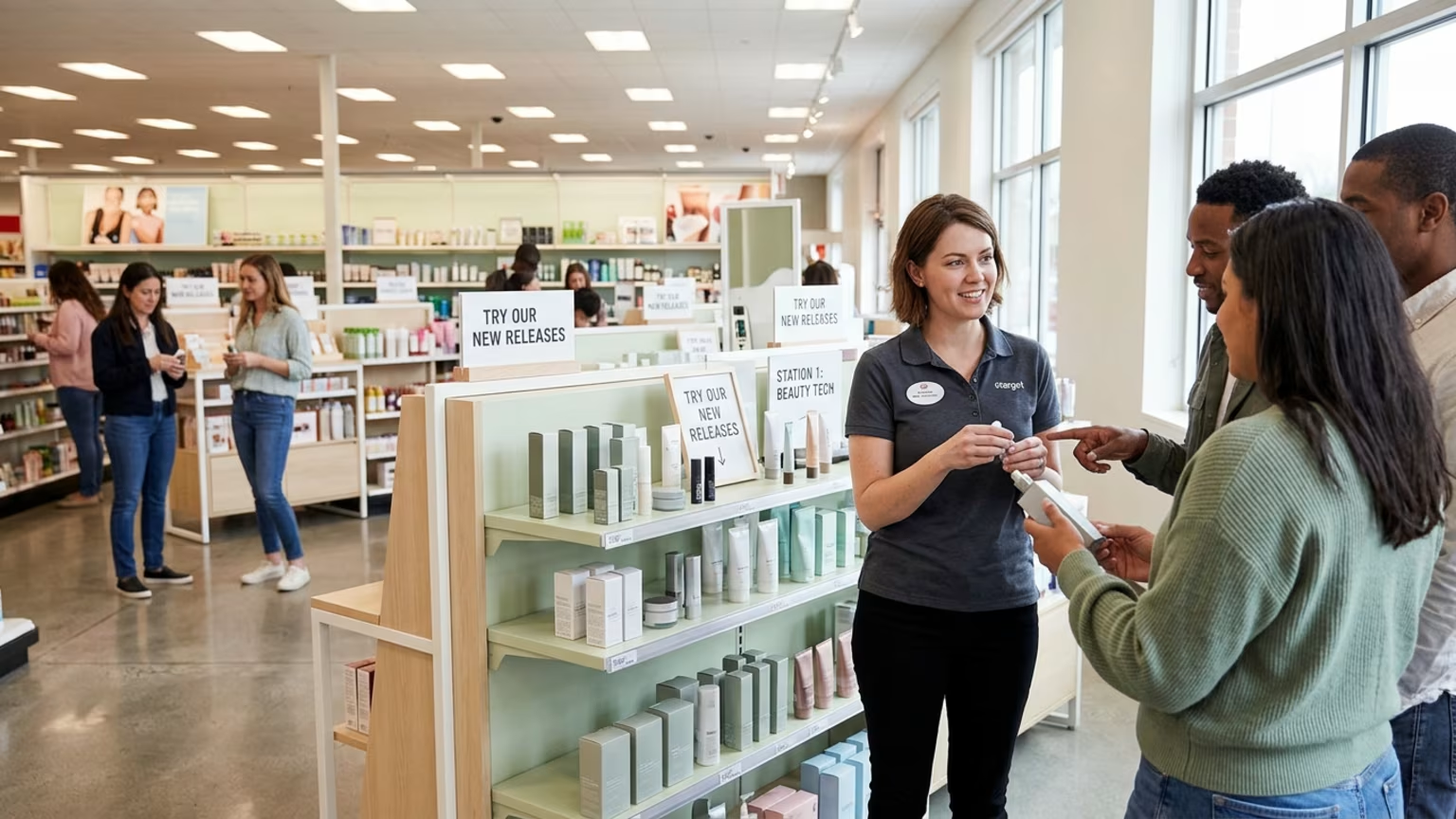
A shopper stands in the beauty aisle at Target (the retailer), staring at a wall of new serums. They pick up two boxes, compare the conflicting claims, and pull out their phone to search for reviews. This split second of hesitation is where a product launch either secures a basket or dies on the shelf. Winning that moment requires physical intervention.
Retailers are transforming their physical footprints from simple purchasing locations into experience-oriented destinations. By intercepting shoppers with interactive storytelling at key decision points, brands can clear purchase friction and drive measurable retail conversion. This transition forces marketers to rethink how they show up on the floor.
Marketers routinely ship expensive promotional displays to hundreds of stores while hoping for massive sales lift. Instead, field teams face a chaotic retail environment where passive endcaps blend into the background noise. Store aisles are crowded, shoppers are distracted, and standard shelf tags do nothing to capture fractured attention. Brands invest heavily in product development but often leave the final mile of consumer conversion to chance.
This disconnect creates a massive operational challenge for field marketers. A retail technology executive writing in Forbes Japan contends that hyper-personalization and real-time contextual intelligence are necessary to fix this issue. Retailers must close the gap between what they assume customers want and what actually happens in the aisle. Right now, too many brands push generic promotions that fail to help customers make faster, more confident decisions.
Mid-to-senior marketing operators face immense pressure to prove that physical activations generate true retail sell-through. They worry about fragmented execution, inconsistent staffing, and poor in-store presentation ruining a carefully planned launch. When an activation fails to connect, it often damages retailer confidence in the brand. This reality forces marketers to seek out methodologies that guarantee measurable outcomes rather than empty spectacle.
When activations lack a cohesive strategy, they often devolve into busy work. Field teams pour samples without capturing data, leaving directors unable to prove any impact on sell-through. The core issue is treating stores purely as points of transaction rather than environments for active shopper support. Overcoming this requires a shift in how brands view operationalizing in-store experiences.
New product launches face an incredibly high failure rate on the retail floor. Brands spend millions developing innovative formulations and striking packaging, only to watch sales stagnate during the first critical weeks. When a shopper sees an unfamiliar item, their default reaction is caution rather than curiosity. Overcoming this ingrained caution requires a physical intervention that breaks their routine and forces active engagement.
The global retail market provides clear evidence for the effectiveness of a more engaging store environment. Coverage of experiential retail from Segye in Korea describes a shift toward "retailtainment," where offline stores become experience-oriented destinations. This model mixes retail and entertainment to give consumers compelling reasons to visit physical locations instead of shopping online. It proves that physical stores still command massive consumer attention when they offer more than just inventory.
The core strategic objective is to build targeted interventions around specific shopper decision points. These are the critical moments in the purchasing path when customers hesitate, compare competing options, or look for additional product information. By anticipating these exact moments, brands can deploy real-time contextual intelligence to offer relevant support right when it matters most. The primary goal is to clear away decision friction so shoppers feel entirely confident placing the item in their carts.
Adding layers of interactivity transforms the store environment from a static warehouse into a highly active brand stage. SmilControl notes that storytelling and interactive digital content can create highly memorable shopping experiences. Small events pull shoppers out of their auto-pilot routines, forcing them to notice and interact with a new product line. This approach builds deeper product identification, turning a routine errand into a lasting brand connection.
This approach directly addresses the needs of modern consumers who crave tactile validation before purchasing. Shoppers want to smell a new beauty serum, taste a new snack, and feel the product texture before committing their dollars. Engaging their senses through well-planned retailtainment bypasses the skepticism that often plagues new product launches. Brands that master this multi-sensory approach consistently win outsized market share on the retail floor.
Retailtainment transforms standard aisles into highly anticipated brand destinations. Instead of rushing through their shopping list, consumers actively seek out these interactive zones for entertainment and discovery. This psychological shift lowers their natural resistance to new marketing messages and opens the door for authentic conversations. When the store itself becomes a form of entertainment, shoppers stay longer, spend more, and remember the brand long after they leave.
Executing this shift requires rigorous operational discipline and a structured field marketing playbook. Brands must replace passive merchandising with active, targeted engagement strategies. A well-designed playbook turns unpredictable retail environments into highly controlled conversion engines. Here is the operational framework required to launch successful in-store activations.
Brands must demand operational excellence and concrete evidence that their field campaigns actually worked. Securing a strong Return on Investment for retail experiences comes down to tracking both lead and lag indicators. Without precise measurement, experiential activations are easily dismissed as unmeasurable brand theater. Marketers need hard data to defend their budgets and secure future retail placements.
Tracking lead metrics provides real-time visibility into the immediate health of the live activation. You must closely monitor total shopper interactions, active product trials, and average dwell time at the experiential zone. These leading indicators reveal whether your bold signage and high-traffic placements are effectively stopping busy shoppers. If interaction rates drop unexpectedly, field managers can rapidly adjust the setup, staffing, or messaging on the fly.
Lag metrics focus heavily on point-of-sale conversion and regional sales momentum. The most critical numbers to measure are the immediate sales lift during the activation period and the repeat purchase rate in the weeks following. By tracking these figures, marketing leaders can definitively prove that their in-store events move inventory and support category growth. This closed-loop reporting guarantees that every experiential dollar spent translates directly into measurable commercial outcomes.
Providing timely data to retail partners is just as important as capturing the numbers. Buyers want to see immediate proof that your activation is driving foot traffic and moving units. Marketing operators should deliver a concise post-event report within forty-eight hours of the campaign wrap. This rapid reporting cadence builds immense trust with retailers and often secures better shelf placement for future product rollouts.
We put these principles to work when launching a new product in a highly competitive snack category. The brand needed to stand out on a crowded retail shelf, intercept distracted shoppers, and drive immediate trial. Our strategy relied heavily on interactive storytelling and precise field execution to cut through the heavy in-store noise. We designed a mobile sampling footprint that placed the product directly in the path of high-intent shoppers.
A Director of Brand Strategy in the CPG snack division shared: "The Makai team turned our product launch into a sensory event that shoppers still talk about. From creative storytelling to flawless in-store execution, they made snack time unforgettable. We couldn't have asked for a stronger partner." Our team created an in-store experience that left a lasting impression on consumers and became a memorable brand moment.
The campaign provided the exact decision support shoppers needed right at the point of sale. By replacing passive cardboard displays with an active, sensory-driven brand activation, we turned passing foot traffic into engaged, confident buyers. The resulting program not only drove significant immediate trial but also strengthened the brand's relationship with key retail partners. It proved that linking experiential touchpoints to sales lift is entirely achievable with the right field operator.
Next time you plan a retail product launch, identify the one specific question your shopper asks before buying, and build your entire in-store experience around answering it. If your brand needs to turn fleeting store visits into measurable sales, book a strategy call with makai today.

30 Years Experiential & Retail Activation Partner for CPG & Beverage Brands | Multi-Market Demos, Roadshows & Costco/Club Programs That Actually Sell