Robbie Thain
Founder, CEO

Learn how targeted in-store sampling campaigns drive trial and velocity gains. See how controlled retail demos build category share and justify event spend.
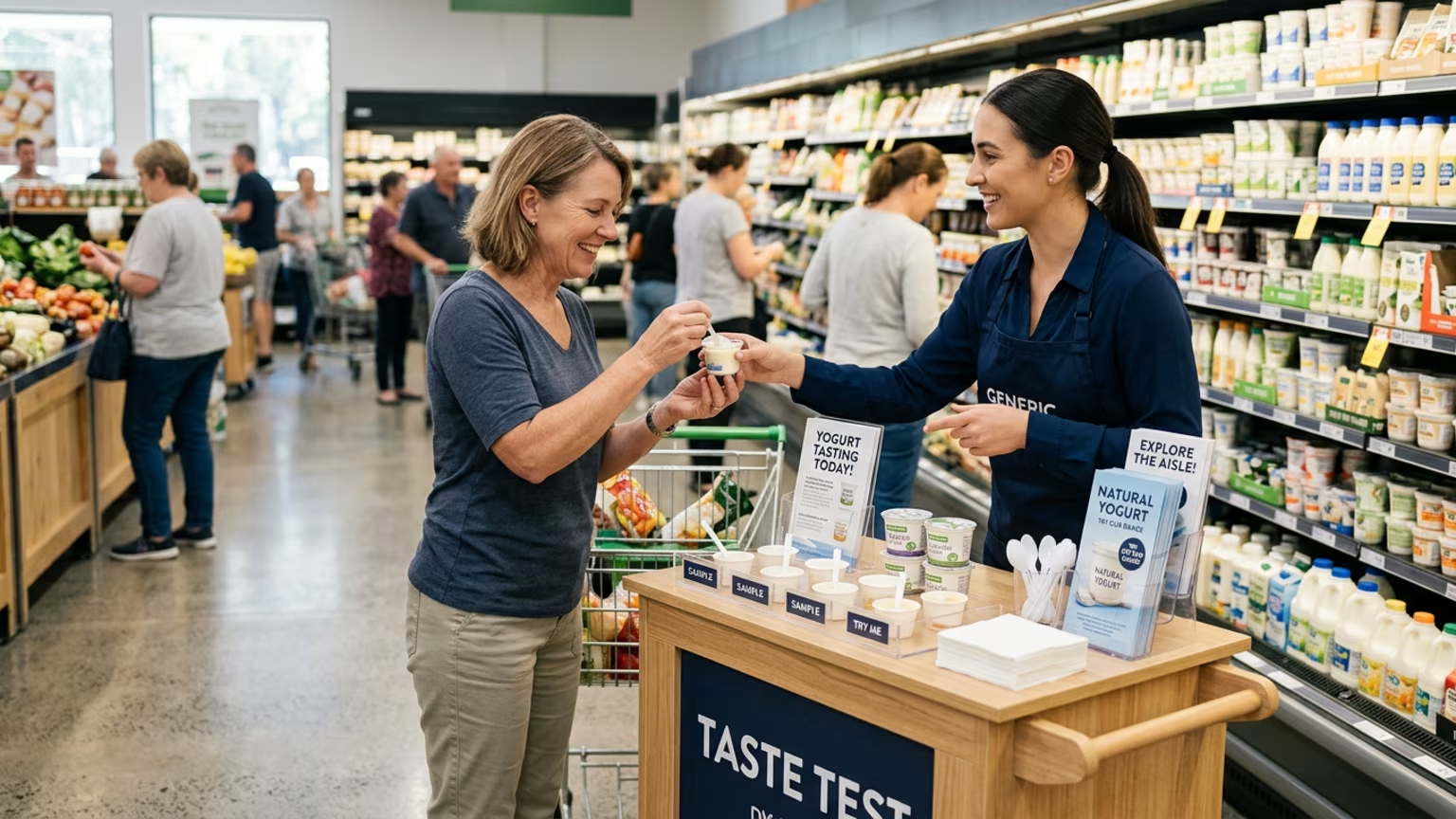
Consumer insight data shows that over 70 percent of shoppers make final purchase decisions directly at the retail shelf. This reality makes the last three feet of the buying path the most critical battleground for consumer packaged goods companies. Without a physical intervention at that exact moment, premium products simply blend into a crowded aisle.
Controlled retail sampling programs give marketing leaders the exact performance data they need to justify their experiential budgets. Strategic product demonstrations consistently turn passive store traffic into immediate trial and sustained category share.
Most retail product launches suffer from an execution gap that destroys potential Return on Investment. Brands spend millions on slotting fees and endcap displays to win premium retail placement. The product arrives at the store, sits quietly on a shelf, and gathers dust alongside dozens of identical competitors. Regional managers eventually look at flat sales data and question the entire market expansion strategy.
To fix this, field marketing teams often deploy hasty product sampling programs. They hire random brand ambassadors who set up folding tables and hand out lukewarm yogurt to distracted shoppers. These representatives stare at their phones, fail to articulate the brand value, and return illegible paper timesheets at the end of the shift. This operational fog makes it impossible for marketing leaders to prove any connection between live events and retail sell-through.
The disconnect between headquarters and the store floor creates massive waste. Brokers sell a compelling vision to retail buyers, but the localized field execution falls completely flat. Without rigorous management, expensive trial programs devolve into unmeasured liabilities. Marketing operators desperately need a better way to translate brand awareness into actual physical consumption.
Retail buyers are increasingly impatient with new products that fail to generate immediate traction. If a new beverage or snack does not hit its velocity targets within the first ninety days, it faces immediate discontinuation. This pressure forces brand directors to scramble for fast solutions to artificially inflate their numbers. Deploying a poorly planned sampling tour often does more damage to the brand reputation than doing nothing at all. The entire industry needs a dramatic shift toward accountable field operations.
The industry is shifting away from random acts of sampling toward highly controlled and retailer-aligned demonstration programs. This systematic method treats physical trial as a precision channel rather than a generic promotional tactic. Marketers must build a framework that aligns directly with buyer category goals and exact store-level inventory data. When field operations run with this level of discipline, physical interactions transform into measurable pipeline.
We have executed over 1000 campaigns across all 50 states, bringing brands to life in every major U.S. market. From retail demos in Seattle to roadshows in Miami and events in Honolulu, our teams activate brands wherever our client audiences operate. This extensive field experience proves that operational excellence dictates the final outcome. Teams must prioritize rigorous staffing standards, precise supply chain controls, and immediate digital reporting to capture real value.
A precise framework removes the guesswork from field execution. For example, adding market development roles for retail execution gives brands dedicated oversight over these in-store programs. Dedicated managers can align national strategy with regional store requirements to prevent common logistical failures. This alignment guarantees that the physical event supports the broader corporate sales objectives.
This evolution in field marketing requires a complete mindset shift from the top down. Executives must stop viewing retail demonstrations as a cheap promotional expense and start treating them as strategic brand investments. Every physical touchpoint represents a critical opportunity to educate the consumer, overcome purchasing hesitation, and steal market share directly from entrenched competitors. A disciplined framework guarantees that every single dollar spent on the floor yields a measurable return for the company.
Turning an ambitious retail strategy into flawless physical execution requires a strict operational playbook. Success relies on removing ambiguity from every single step of the field program. Implement these exact steps to execute high-performing retail activations.
Marketing operators need cold hard data to defend their budgets and prove their business impact. Relying on vanity metrics like total impressions will instantly ruin credibility with senior leadership. Leaders must track specific lead indicators during the event and lag indicators after the activation concludes. Marketing leaders who ignore these metrics often find themselves repeating the biggest mistakes brands make after entering retail.
Lead metrics provide an immediate snapshot of daily operational success on the floor. Teams should measure total samples distributed, direct conversational interactions, and same-day unit sales at the designated location. These numbers confirm that the brand ambassadors actually engaged shoppers and moved physical inventory. A high volume of direct interactions signals a healthy event with strong local foot traffic.
Lag metrics demonstrate the long-term structural impact on the overarching business model. Marketers need to evaluate four-week post-event velocity, sustained category share lift, and regional repeat purchase rates. When these data points trend upward, executives can mathematically justify the expense of a physical program. Measuring both timelines creates a highly defensible strategy for future budget requests.
Retail buyers are highly analytical and they expect consumer brands to bring hard performance data to every quarterly review. Presenting a buyer with qualitative anecdotes about happy shoppers will not secure additional shelf space. You must present a clear dashboard that shows exactly how your sampling program drove incremental sales lift during the activation period. When you provide this level of transparency, retail partners view you as a sophisticated operator rather than a temporary vendor.
Integrating these exact numbers creates a complete picture of customer experience performance across all channels. Industry experts recognize that connecting physical and digital retail data builds a unified view of actual shopper behavior. This comprehensive reporting structure gives chief marketing officers the exact ammunition they need for board meetings.
Recent market updates from Danone offer a perfect blueprint for this systematic approach. The company reported that its yogurt and plant-based lines gained measurable category share in North America. This success was directly tied to highly targeted in-store sampling campaigns that supported new product innovation launches. Danone used disciplined physical activations to validate their new offerings directly with the end consumer.
Danone focused its field efforts on key retail accounts to drive trial and immediate velocity gains. Their operational discipline proves that controlled demonstration programs actively shift consumer behavior at the retail shelf. For other consumer packaged goods marketers, this serves as definitive evidence that well-executed physical sampling drives revenue. The strategy requires intent, focus, and strict alignment with retail partners to succeed.
The Danone example highlights a critical lesson about timing and market momentum. They strategically paired their physical sampling events with the introduction of new plant-based innovations. Shoppers are naturally curious about new product formulations, making them far more receptive to an in-store trial. By striking when consumer interest was at its peak, Danone maximized the return on their field marketing investment and accelerated their retail penetration.
When brands execute trial programs with high standards, they secure stronger retailer confidence and expanded shelf space. The physical demonstration proves to the store manager that the product moves when given proper support. Many companies are now realizing that designing precise product trials accelerates their ongoing conversations with major retail buyers. This level of focus turns an ordinary store visit into a lasting business relationship.
That opening statistic about shoppers making final decisions at the shelf remains the absolute truth in retail marketing. If a brand cannot win that exact moment, all other advertising efforts fail to convert into lasting revenue. Controlled in-store demonstrations bridge the gap between initial product awareness and actual physical consumption. The strategy turns a static product placement into an active and engaging retail environment.
Winning the retail aisle requires far more than just showing up with free samples. It demands strict operational discipline, highly trained brand ambassadors, and irrefutable digital measurement standards. Stop leaving your retail sell-through to chance and start treating physical trials as a core revenue channel. Book a strategy call with our field execution experts to turn your next product launch into measurable pipeline.

30 Years Experiential & Retail Activation Partner for CPG & Beverage Brands | Multi-Market Demos, Roadshows & Costco/Club Programs That Actually Sell