Robbie Thain
Founder, CEO

Learn how CPG brands use strategic retail demos and sampling to secure permanent shelf space, generate velocity data, and win buyer trust during market expansion.
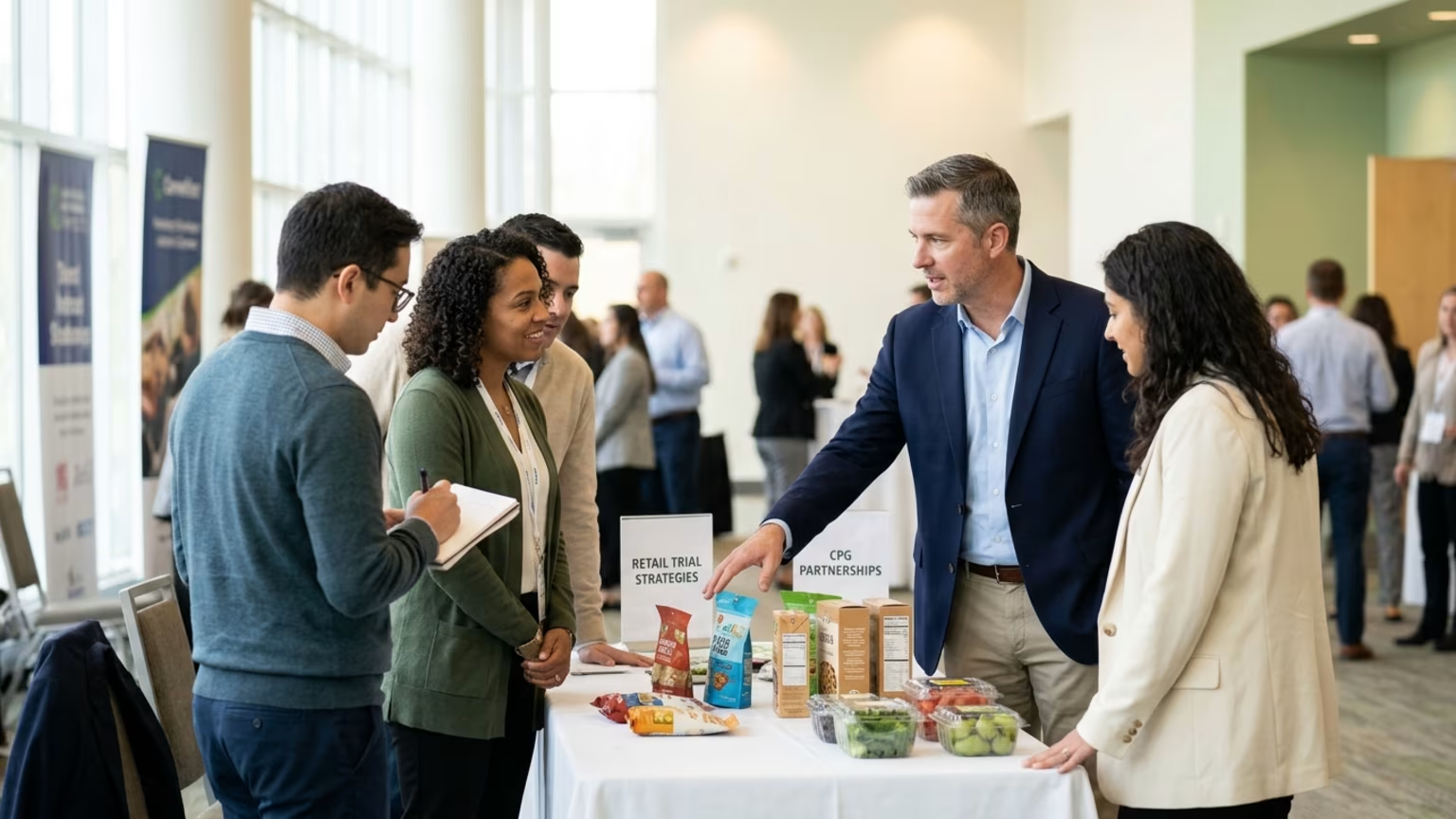
Retail expansion comes with a hidden threat for growing CPG brands. Winning the initial buyer meeting means nothing if your product fails the floor test. Marketing leaders constantly ask how to secure permanent shelf space in highly competitive environments. The solution requires using strategic sampling as a rigorous data collection tool.
Brands entering club stores face intense scrutiny regarding their inventory movement. According to experienced Costco channel partners, products must hit a specific threshold. Achieving 25 or more club-pack units per location per week generates strong buyer enthusiasm for national expansion. Products falling between 15 and 24 units are considered nuanced and may require additional roadshow events or pricing adjustments before expansion.
Mid-to-senior marketing operators carry the burden of making field execution actually work. Chief Marketing Officers and Brand Directors know that vanity metrics will not satisfy retail buyers. These decision-makers worry about inconsistent staffing and poor reporting ruining their launch campaigns. They need operational excellence to turn fleeting interactions into concrete pipeline.
Marketing operators face immense pressure to prove that physical activations lead to measurable sales lift. Buyers prioritize consistent sell-through rates over temporary spikes. A sharp decline in sales after a promotion suggests a novelty purchase that will not retain shelf space. Therefore, brands must rely on documented velocity data to defend their retail presence.
Fragmented execution often leads to events that look busy but fail to produce hard evidence. Companies cannot afford poor in-store presentation when margins are tight. The difference between a failed pilot and a national rollout is operational excellence. Strategic retail demos bridge this gap by forcing product trials in real time.
Retail demos offer the most direct path to winning shopper trust. Shoppers face an overwhelming amount of digital advertising every single day. Stepping into a physical store provides a rare opportunity to capture focused attention. Experiential marketing campaigns turn that brief attention into a measurable commercial transaction.
Getting a product accepted by a major retailer is only the first hurdle. Brands must clearly demonstrate they can physically handle the required transaction volume. Experts note this often requires showing annual revenue exceeding $500,000 and a supply chain capable of handling large initial orders. A capable supply chain must manage these large orders without disruption.
Executing a 7- to 14-day Costco roadshow demands meticulous operational preparation. Submitting products to these buyers requires presenting the item in the exact proposed club-pack format. This mandate allows buyers to experience the item exactly as the retail member would. You cannot present standard packaging and expect a club store approval.
We have executed over 1000 campaigns across all 50 states. Bringing brands to life in every major U.S. market requires strict logistical discipline. From retail demos in Seattle to roadshows in Miami and events in Honolulu, our teams activate brands wherever our clients' audiences are located. This national footprint helps makai scale programs without losing execution quality.
Navigating the complex maze of event permits and retail regulations requires deep experience. Managing multi-city tours means dealing with scattered attention and fragmented local rules. A single missed permit can completely derail an expensive promotional weekend. By centralizing storage and logistics, brands guarantee every activation stays firmly on schedule.
The execution phase demands absolute precision from every team member involved. Brands going through a retail expansion trigger cannot afford amateur logistical mistakes. Shipping event gear and sampling products nationwide requires a dedicated tracking system. When equipment arrives on time, the field team can focus entirely on selling.
Regional tests serve as a highly effective laboratory to generate vital velocity data. Successful performance at 10 or more roadshows is often the catalyst for a buying decision for permanent placement. Teams must coordinate space approvals and negotiate store logistics long before the activation begins. Storage and freight coordination must stay strictly on schedule to prevent empty tables.
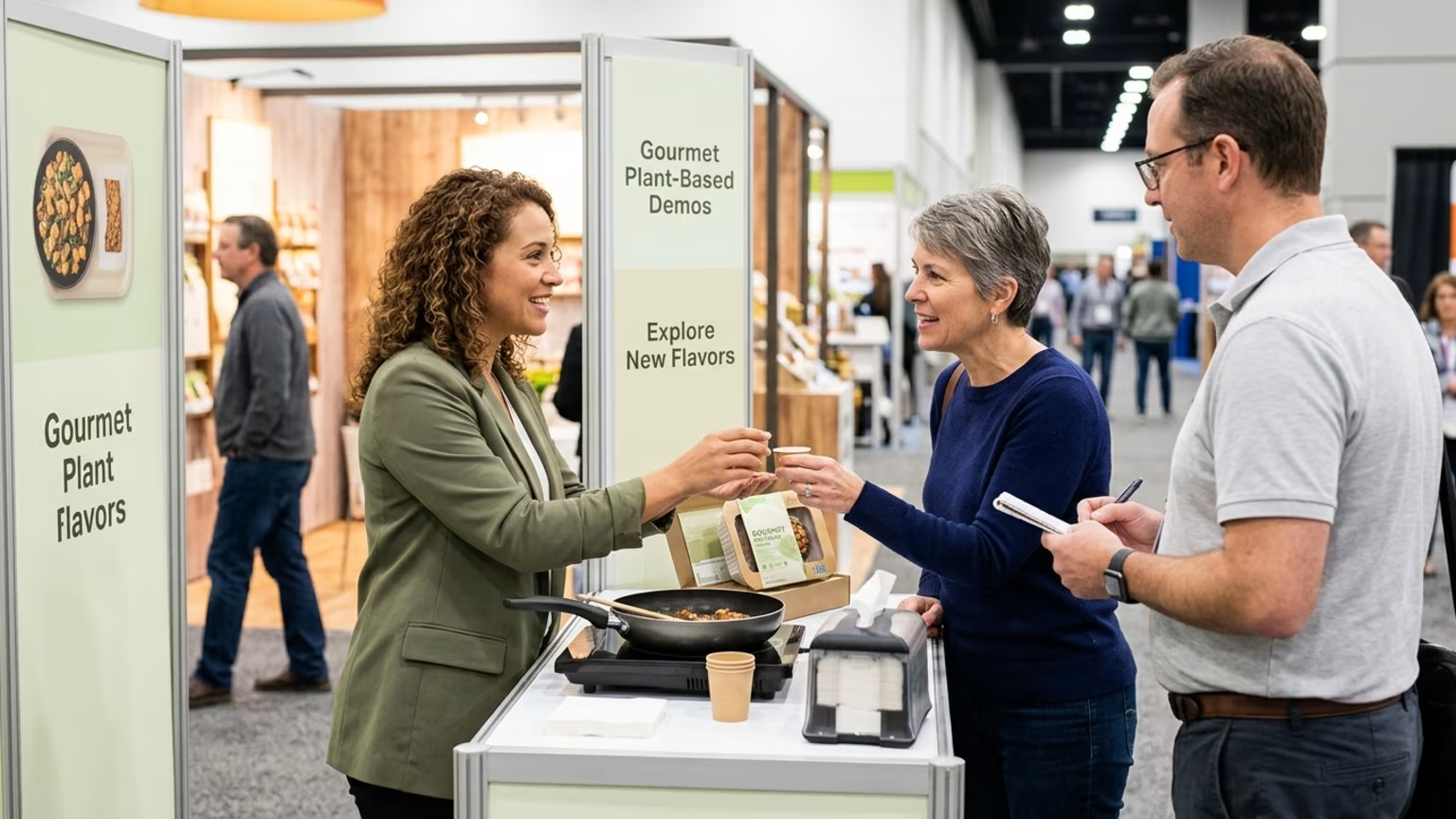
Having the right product on the pallet is only half the battle. The people handing out the product dictate the actual sales outcome. Trained brand ambassadors turn passive foot traffic into measurable trial and trust. At makai, our aloha-style approachability blends with operator-grade discipline to win attention.
Free trials create a measurable psychological impact on retail shoppers. Neil Saunders from GlobalData Retail notes that free samples are a staple of the cardholder experience. He observes they create a halo effect that shows the retailer is looking after its customers while simultaneously goosing sales and driving member loyalty.
The numbers validate this heavily human-centric methodology. Industry sources show that approximately 73% of consumers report they are more likely to purchase a product after trying a sample. Furthermore, shoppers who engage with a sample typically show a 2x to 3x higher conversion rate compared to those who do not.
Shopper marketing leads often struggle to find reliable talent for local activations. Inconsistent representation harms the brand image and depresses the final sales data. We deploy professionals who understand the nuances of the food and beverage sectors. This specialization guarantees that every customer interaction feels authentic and highly informed.
Brands in beverage, food, and health wellness sectors rely heavily on these physical touchpoints. Consumers want to taste a new snack before committing to a bulk purchase. Premium consumer packaged goods require hands-on brand moments to build real trust. When a product tastes great, a trained ambassador simply guides the transaction.
A friendly greeting and a well-timed product fact build immediate credibility. Shoppers ignore digital noise but they stop for a genuine conversation. This approach is fundamental to bridging the gap between street activations and retail velocity. When teams prioritize authentic interactions over forced sales pitches, the product sells itself.
A live event must translate into a measurable Return on Investment. The industry is rapidly moving away from mass distribution toward targeted and data-driven interactions. Brands now use unique digital touchpoints like QR codes and unique discount codes to track exact performance. These digital tools link physical trials directly to measurable online activity or repeat purchases.
Tracking the immediate sales spike provides essential baseline data for marketing managers. During a 7- to 14-day Costco roadshow, a product's weekly sell-through typically accelerates two to five times above its baseline rate. This massive surge proves that consumers want the product when prompted. Proving this demand is critical for securing retailer buy in with data during Costco roadshows.
However, retail buyers care far more about the long game. The true prize of these activations is the post-roadshow legacy. When done correctly, baseline velocity remains 20% to 40% higher than pre-activation levels due to repeat purchases from newly converted members. This sustained sales lift proves the product deserves a permanent spot on the shelf.
Proving immediate return requires tight integration with store reporting systems. Modern activations prioritize linking the exact hours of a demo to Point of Sale register receipts. This precision allows brands to prove immediate sell-through and ROI directly to the retailer. Without this exact data, a successful weekend might look like a random sales fluctuation.
Post-event follow up relies entirely on the accuracy of the floor data. Inefficient reporting leaves corporate marketing teams guessing about their true performance. By utilizing CRM routing, we eliminate the fog that usually surrounds field marketing. Clear evidence of sell-through gives brands immense leverage during their next buyer meeting.
Field teams must route this vital data quickly from the floor to the CRM. Modern marketing teams require clean spreadsheets to justify their activation spend. A physical handshake means nothing if it does not become a tracked lead. Connecting these data points helps brands in refining a comprehensive CPG sampling strategy across multiple locations.
Even the most heavily funded campaigns face sudden friction on the retail floor. Inventory gets delayed on loading docks, tech fails, or store managers push back on table positioning. A seasoned field general never expects perfect conditions on a busy weekend morning. The team must possess a contingency plan for every single possible failure.
High initial velocity can sometimes create a false sense of security. Buyers actively watch for post-promo decay profiles to evaluate product longevity. If sales drop significantly after the sampling ends, the product may be viewed as a bad fit for the permanent assortment. This novelty trap ruins many promising retail expansion efforts.
When foot traffic inevitably drops, passive waiting is a critical mistake. Ambassadors must actively intercept shoppers instead of standing behind the sampling table. If a roadshow underperforms early, vendors must know exactly when to pivot their approach. Proper field training stops a slow morning from becoming a ruined weekend.
Guerilla marketing tactics can sometimes supplement a structured retail demo. If an in-store event faces restrictions, street-level ideas can surprise and delight nearby audiences. However, these backup plans require quick thinking and rapid deployment capabilities. The best experiential operators always prepare an alternative route to the customer.
Retailers also impose strict financial constraints that vendors must navigate carefully. Vendors entering Costco are generally expected to provide a price that is at least 15% below other retail channels. This margin sacrifice is a mandatory cost of entry for this high-volume environment. Brands must account for this discount when calculating their total campaign ROI.
Risk management extends to total revenue concentration as well. Costco generally avoids representing more than 20% of a vendor brand’s total annual revenue to mitigate risk for the brand. Managing these operational realities keeps the campaign running smoothly when external obstacles arise. Field teams must act decisively to protect the brand reputation at all costs.
Stop treating in-store sampling as a simple brand awareness exercise. Your next action should be isolating your promotional data to prove actual store velocity. Set up a pilot program with strict control stores to accurately track your baseline sales. Measure the legacy lift over a full quarter to finally secure your permanent shelf placement.

30 Years Experiential & Retail Activation Partner for CPG & Beverage Brands | Multi-Market Demos, Roadshows & Costco/Club Programs That Actually Sell