Robbie Thain
Founder, CEO

Learn how to win retailer buy in using demo specific codes and unit lift tracking. Prove experiential ROI to secure premium retail slots and pop up locations.

Retail buyers do not care how beautiful your booth is. They only care if your product moves off their physical shelves. When you pitch a massive retail expansion or a premium pop up slot, verifiable data is the only currency that matters.
Activating a brand in a massive retail environment requires operational discipline and exact measurement to secure repeat placements. By tracking unit lift and connecting physical foot traffic to clear sales data, brands can prove their exact value to wary retail buyers.
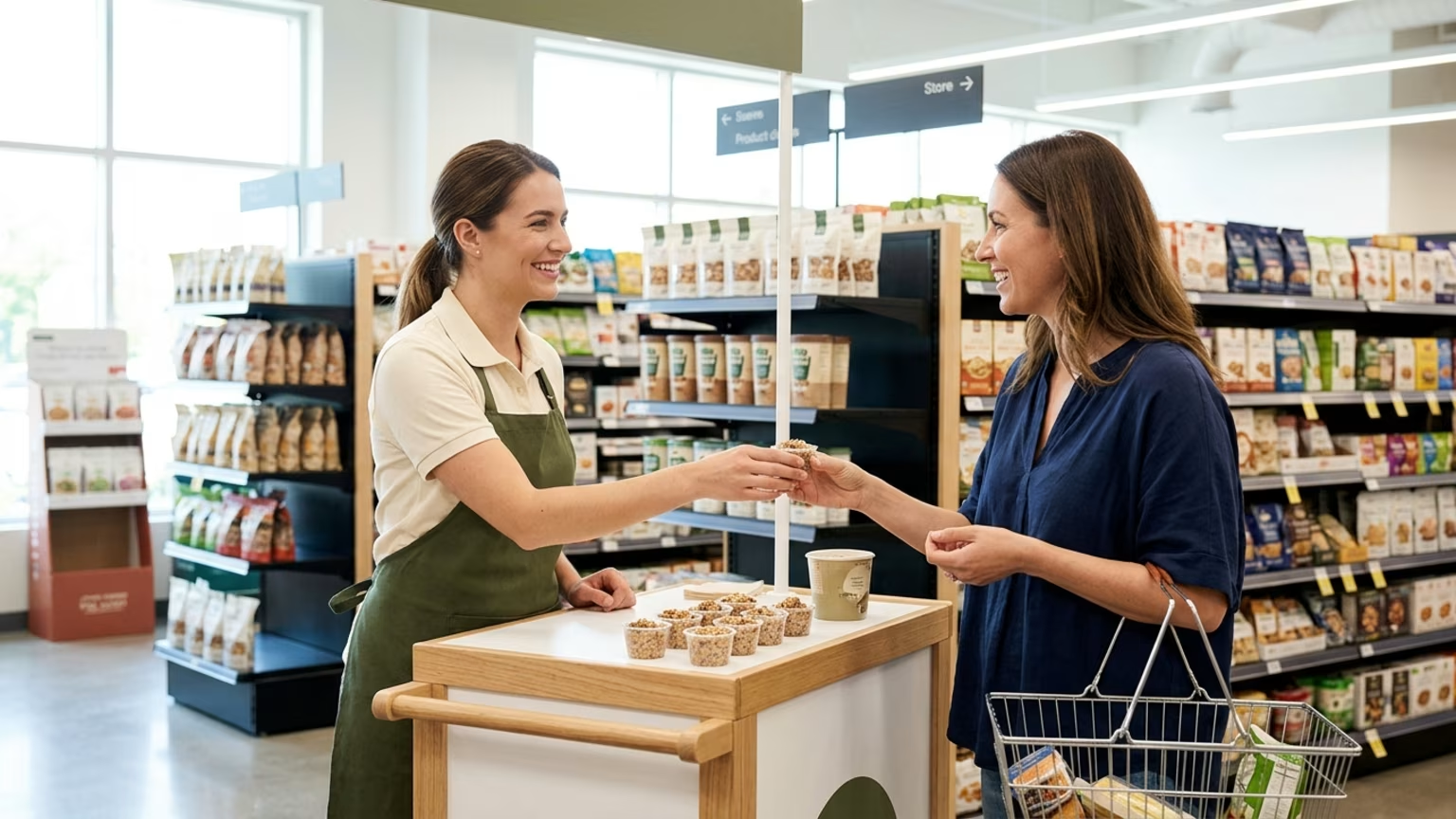
Imagine the typical scene at a large warehouse store on a busy Saturday. A brand sets up a folding table with a colorful banner and piles of free samples. Hundreds of shoppers take a bite, smile politely, and walk away without ever looking at the actual product on the shelf. The field team reports a massive number of interactions to the home office.
Yet, when the buyer checks the register data the following Monday, the sales lift is zero. This scenario creates fog instead of evidence for marketing operators. A high volume of traffic means nothing without a clear mechanism to turn samplers into buyers. Without operational rigor, your expensive event becomes an unmeasured expense.
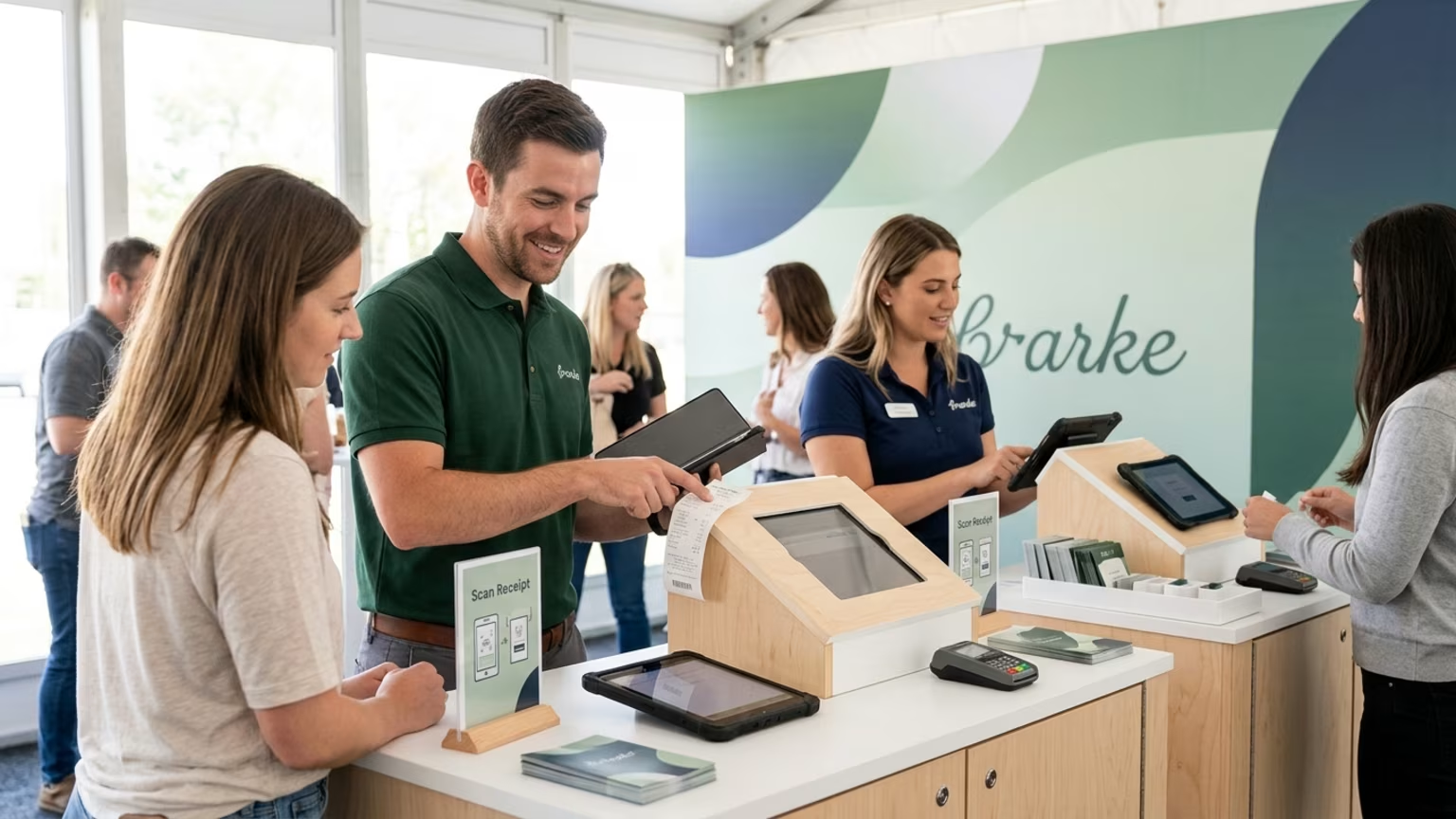
The strategy for winning retail confidence relies on absolute operational transparency. You must connect every physical interaction to a tracked digital footprint. This approach strips away the guesswork from live marketing. By deploying demo specific codes and point of sale tracking, brands create undeniable proof of sell through.
Retailers want to see proof that your presence drives their overall store revenue. A structured framework shifts the focus from vanity interactions to actual cart additions. You must show the exact correlation between a sample handed out and a barcode scanned at the register.
A great strategy requires flawless execution on the warehouse floor. Follow these exact steps to build a high converting campaign.
Proving your worth requires tracking the right numbers. Consumer packaged goods brands cannot survive on vanity metrics alone. According to research from Makai Insights, you must define clear lead and lag indicators before your event begins. Lead indicators show immediate event health.
Track your sample distribution rate, physical dwell time, and total digital opt ins. Research from Makai shows that experiential sampling achieves a 28 percent trial rate compared to just a 9 percent rate for digital ads. Tracking these initial behaviors proves that your floor presence actually commands human attention. A massive crowd means nothing if people refuse to interact with the display.
Lag metrics tell the final story of your Return on Investment. If you are struggling with proving the financial impact of your physical events, focusing on seven day repurchase rates is a perfect starting point. Studies show that sampling events can yield a 57 percent purchase rate within seven days among actual participants. Industry benchmarks reveal a 4:1 Return on Investment on beverage samplings when connected to clean data.
Tracking these exact data points gives you the power to secure future retail slots. Buyers respond to hard math over emotional pitches. You must present the cost per scan and the overall uplift in brand consideration. When you combine strong lead indicators with undeniable lag metrics, you win the retail argument.
The shift toward data fed retail expansion is already happening across the industry. Plant based snack brand Day Out recently expanded to 47 Costco stores in the San Francisco Bay Area. They achieved this scale by proving their concept in smaller markets and providing undeniable sell through data. This expansion highlights the power of verifiable testing.
Beverage brands take the exact same approach for new functional drinks and packaging tests. According to industry coverage from BevNET, these brands use targeted roadshows to prove consumer demand before asking for permanent shelf space. Testing physical products in high traffic environments removes the risk for the retail buyer. The brand absorbs the initial testing cost and presents the final proof.
Other operators use targeted promotions to build massive digital lists. During a recent holiday campaign, Smirnoff Ice handed out 15,000 samples across 20 physical locations. This focused effort generated 50,000 digital entries and achieved a 50 percent opt in rate for future marketing. They built a closed loop system that turned anonymous samplers into tracked leads.
This exact tactic demonstrates how smart operators connect live brand moments to lasting customer loyalty across multiple markets. Capturing an email address at a physical pop up costs money upfront but pays off repeatedly. Once a shopper opts in, you can guide them to specific retailers for future purchases. This directs targeted foot traffic right back to your retail partners.
Jumping straight into a national tour carries massive financial risk. Smart operators test their concepts in hyper local micro events before scaling. Activating in five to ten carefully selected neighborhoods allows brands to test messaging and product variations. These smaller tests build fan clusters around specific target retailers.
You can measure dwell time and content creation rates in a controlled environment. If the local test fails to produce a positive sales lift, you pivot before spending the national budget. This method provides the exact proof buyers need for a wider rollout. It removes the guesswork from national expansions.
Physical events no longer exist in a vacuum. A modern activation must serve as a physical portal to a digital ecosystem. When a shopper approaches a booth, they should encounter immediate digital triggers. QR codes linked to exclusive discounts drive immediate action on the floor.
Offering a premium gift box in exchange for a direct phone number builds your SMS marketing list. These digital touchpoints create a permanent connection with a shopper who might otherwise just walk away. The activation becomes an engine for long term digital growth. Data capture transforms a fleeting moment into a measurable asset.
Retail buyers face immense pressure to maximize the revenue of every square foot. They view unproven brands as a massive liability to their floor space. Bringing clear historical sales data to your pitch changes the entire dynamic of the conversation. You position your brand as a strategic partner rather than a hopeful vendor.
Sharing your first party consumer data with the retailer demonstrates a mutual commitment to growth. This level of transparency separates true operators from amateur marketers. Data driven confidence wins the permanent endcap display. It proves that your marketing team understands the mechanics of physical retail.
Taking a successful local pilot and expanding it nationally presents a severe logistical challenge. A process that works in ten stores might break down completely across four hundred locations. Rapid iteration and strict standardization keep the campaign intact during expansion. Every single brand ambassador must use the exact same script and data capture tools.
The reporting dashboard must aggregate information from hundreds of locations in real time. A fragmented reporting system will destroy the retailer confidence you worked so hard to build. Operational excellence demands uniform execution across every single touchpoint. Your regional tests mean nothing if your national rollout looks like a beautiful dumpster fire.
Collecting consumer information requires absolute transparency. If the data path feels sneaky to the consumer, trust disappears fast. Brands must clearly disclose what they will do with the collected emails or phone numbers. Offering a clear value exchange like a digital coupon or a chance to win a gift box helps ease friction.
Consumers gladly share their details when they understand the immediate benefit. Respecting privacy builds long term loyalty and prevents unwanted backlash. A clean data collection process protects your brand reputation. It guarantees that your digital lists contain high quality contacts.
Many brands fail to measure success simply out of a refusal to pay for the right tools. Allocating ten percent of your total budget to measurement technology is a non negotiable rule. Point of sale attribution apps cost roughly fifty cents per scan. This minor cost pales in comparison to the value of proving a positive sales lift.
Clean data justifies the cost of the entire physical activation. A failure to invest in tracking turns your event into an unverified expense. Executives will always cut budgets that lack clear financial justification. Investing in measurement software protects your marketing initiatives from corporate budget cuts.
A brilliant data strategy falls apart if the people scanning the codes fail to engage the public. Polished and highly trained staff represent the frontline of your entire campaign. They must understand the technology and the product with equal depth. An untrained ambassador will easily forget to ask for the email opt in during a rush of customers.
Consistent presentation prevents the activation from devolving into a chaotic mess. You need operators who execute the playbook flawlessly under pressure. A strong field team captures the data and delivers the brand message simultaneously. Execution on the floor dictates the numbers on the final report.
The most successful physical interactions fade from memory shortly after the customer leaves the store. What remains is the mathematical certainty of the transaction and the quiet reality of a product finding its permanent place on the shelf. The numbers simply tell the story of a connection that actually worked.

30 Years Experiential & Retail Activation Partner for CPG & Beverage Brands | Multi-Market Demos, Roadshows & Costco/Club Programs That Actually Sell