Robbie Thain
Founder, CEO

Molson Coors uses modular roadshows to drive retail volume. Learn how the Blue Moon Taproom on Tour turns live brand experiences into measurable sales lift.

A field marketing manager stands in a sweltering festival lot watching a local crew struggle with a complex tent build. The point of sale system is completely offline. The activation looks beautiful but lacks any connection to the nearby grocery chains. This single weekend just burned half the quarterly budget without generating a single trackable sale.
Molson Coors recently launched a flexible touring taproom for Blue Moon to drive consumer trial and immediate retail pull-through across multiple cities. This campaign proves that modular mobile roadshows turn physical brand interactions into measurable pipeline when managed with strict operational discipline.
Many beverage and consumer brands pour massive budgets into physical activations that look great online but fail in reality. The typical scenario involves a fragmented approach where each market features a different setup and unfamiliar temporary staff. Brand leaders often arrive at a large festival only to find poor crowd flow and zero data capture strategy. The result is a beautiful display that produces fog instead of hard evidence.
When marketing teams treat each tour stop as an isolated stunt, they lose the ability to scale their success. Freight costs multiply out of control when physical assets are not designed for rapid movement. Brand ambassadors without proper training fail to tell a cohesive story to the consumer. This leaves the core marketing team overwhelmed by event logistics and desperate for a measurable return.
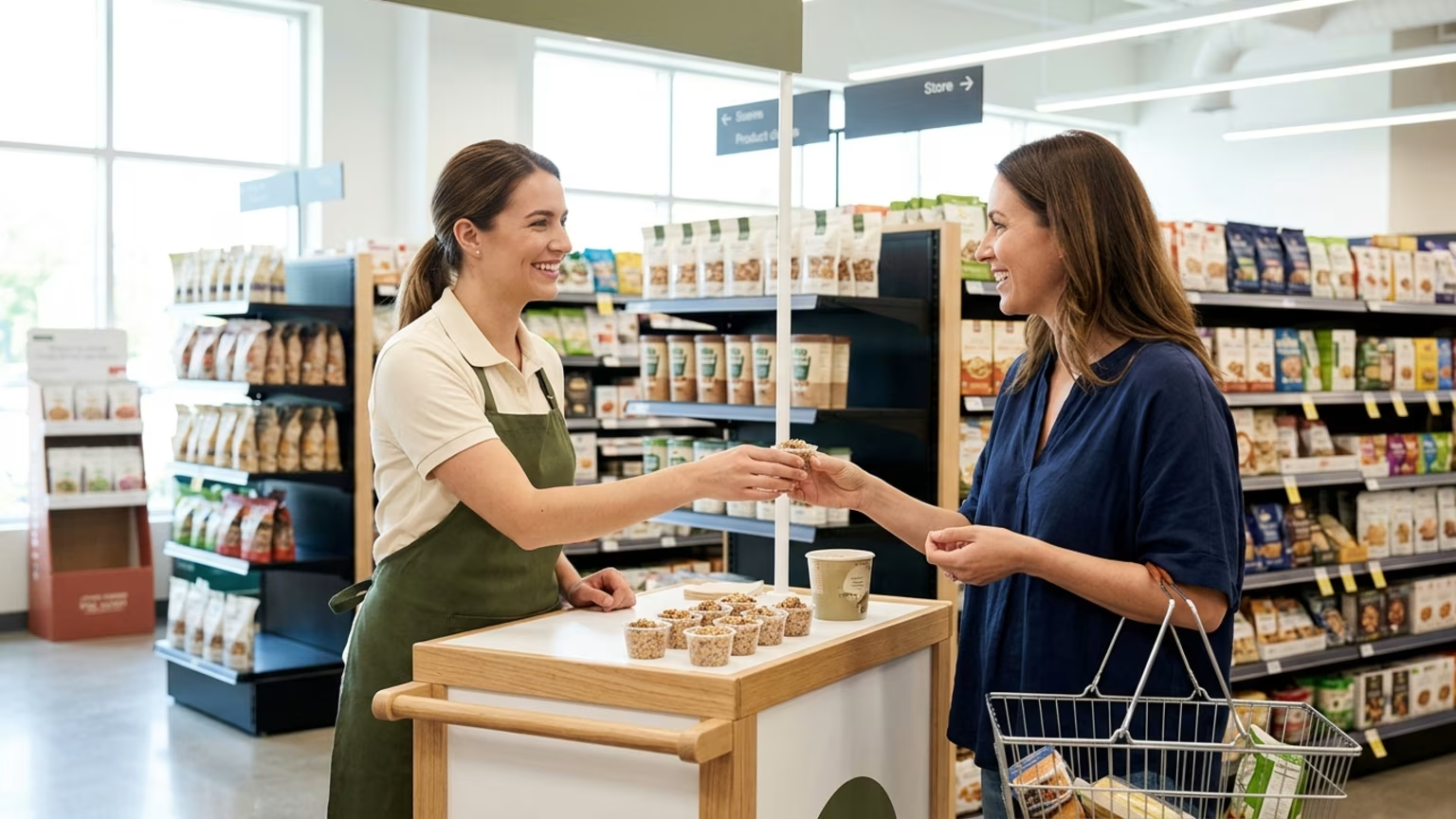
Local retail integration is usually the first casualty in these chaotic setups. A pop-up might hand out thousands of free samples over a weekend without pushing a single consumer toward a nearby cash register. Attendees leave with a free drink but zero incentive to find the product in a local grocery aisle. The entire exercise becomes an expensive branding theater rather than a disciplined sales channel.
Chief marketing officers are facing intense pressure from finance teams to justify every dollar spent on live events. A decade ago, brand awareness alone was enough to validate a massive custom booth build. Today, those loose reporting standards will get an entire experiential budget slashed. Finance teams demand a clear line of sight between field marketing dollars and hard revenue generation.
The smartest brands replace isolated stunts with a systematic touring platform. They build a modular environment that can adapt to different footprints like retail parking lots or large downtown festivals. This strategy amortizes the initial production costs across dozens of tour dates in multiple regions. The cost per impression drops significantly when a single physical asset runs for thirty weeks instead of three isolated weekends.
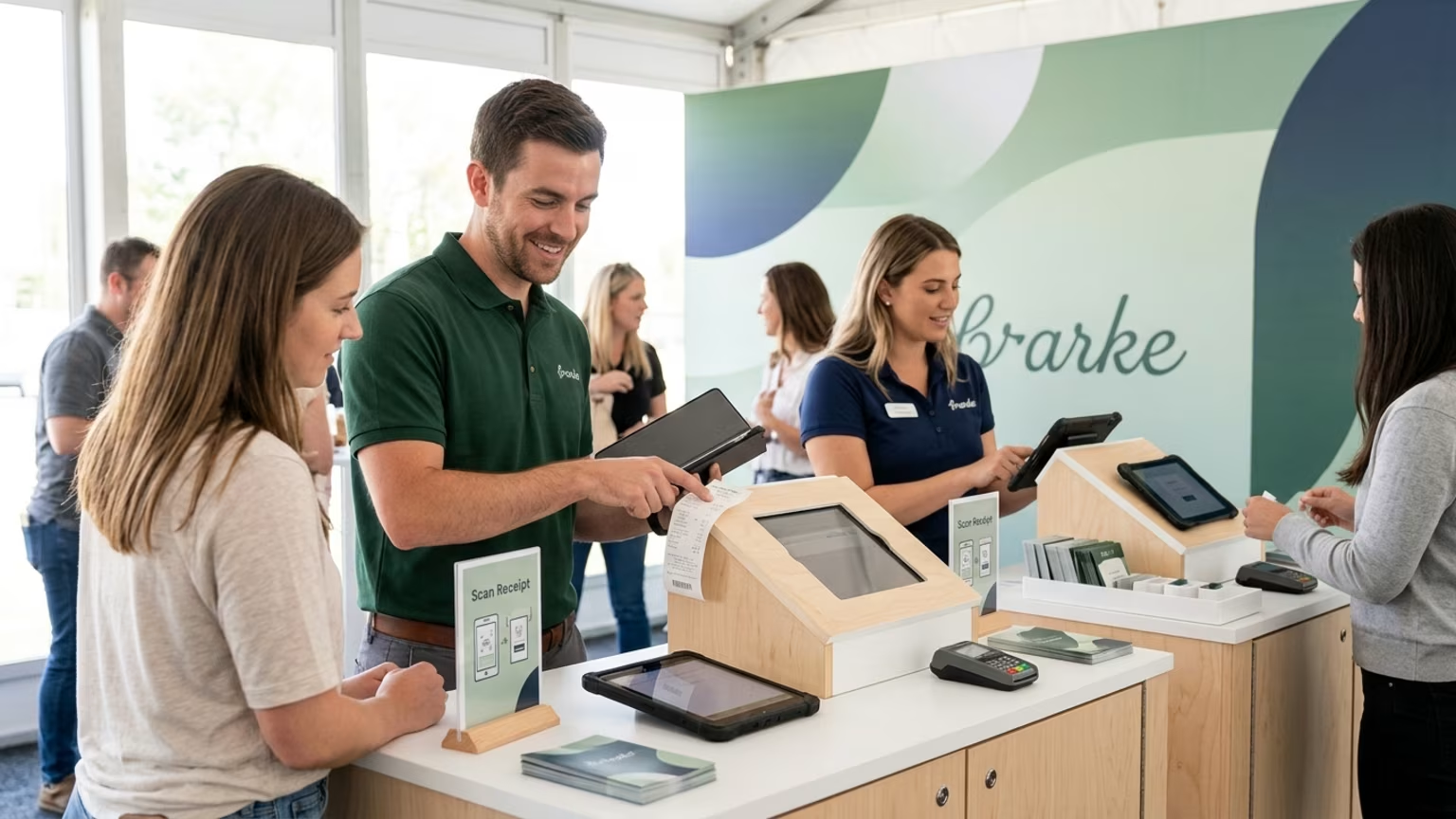
Success requires treating the physical space as a data capture engine rather than a passive sampling station. We blend physical and digital experiences by integrating QR codes, mobile technology, and real-world activations into a cohesive layer across retail, event, and tour experiences. This connected approach captures valuable zero-party data like flavor preferences and links consumer interactions directly to local retail offers. It transforms a simple tasting moment into a targeted customer acquisition channel.
Integrating the tour with retail media networks multiplies your overall impact. Many top tier grocery chains now expect supplier activations to feed into their own digital advertising platforms. A smart brand will deploy programmatic ads targeting the exact zip codes surrounding their mobile pop-up stop. This creates a surround sound effect where the consumer sees the ad online, tries the product in the parking lot, and buys it inside the store.
Tourable infrastructure relies on heavy upfront planning to keep operations running smoothly. Teams must lock in state permits and secure retailer buy-in months before the trucks hit the highway. You eliminate the friction of starting from scratch in every single city. Your field marketing budget goes toward consumer engagement rather than endless structural fabrication. If you want a deeper look at scalable field tactics, review our strategies for designing booth traffic models that work for high volume roadshows.
Turning a strategy into flawless field execution requires an operator mindset and strict discipline. You need a step-by-step approach to keep the moving parts aligned.
For a real look at managing this alignment successfully, see how top tier brands approach connecting mobile activations to retail distribution.
You must define exact performance indicators before the trucks ever leave the warehouse. A clear measurement plan is the only way to prove true Return on Investment to your leadership team. Impressions and crowd photos are vanity metrics that do not satisfy a performance driven executive. Real data proves that your field execution is driving actual retail volume.
Your leading indicators should focus on immediate physical engagement on the ground. Track the total number of verified product samples distributed per hour by your ambassadors. Measure the cost per engagement and the precise volume of digital coupon redemptions generated on-site. These numbers tell you immediately if your local staff is actively pulling the right people into the footprint.
Your lagging indicators must tie back directly to actual revenue and regional pipeline. Monitor the retail sales lift within a five mile radius of the activation over the following four weeks. Compare this data against a matched control market to isolate the true impact of the pop-up tour. You can read more about tracking trial and retail lift across multiple tour markets to refine your reporting process.
Tracking these metrics requires advanced preparation and clear communication with your retail partners. You must establish data sharing agreements with distributors long before the first event kicks off. Gathering point of sale data allows your team to measure specific SKU velocity during and after the activation window. Every dollar spent on the road must tie back to regional depletion reports. Without this proof, your next mobile activation budget is always at risk.
The Blue Moon Taproom on Tour offers a masterclass in applying this exact operational framework. Molson Coors recognized that their above premium brands account for a massive twenty-eight percent share of their global volume. Financial reports proved that live sampling historically drove strong volume growth in targeted local channels. The marketing team built a custom mobile taproom to capture that momentum on a national scale.
This brewery inspired experience was designed to visit urban districts and high traffic events throughout the summer. It offers immersive food pairings and targeted product sampling to drive immediate consumer trial. Most importantly, the physical structure was engineered as a flexible touring build. This modularity allows the brand to adapt the footprint for different city layouts and local retail integrations.
For beverage alcohol brands, the liquid to lips philosophy remains the single most reliable lever to drive trial. Consumers increasingly expect brands to show them exactly how to consume the product through guided flavor pairings. Blue Moon leaned into this trend by matching their signature wheat beer with premium food options inside the mobile taproom. This educational approach justifies a premium price point and builds lasting brand loyalty.
Industry research shows that a massive majority of consumers are more likely to buy after participating in a brand experience. A Nielsen study found that sixty-four percent of craft beer drinkers frequently buy beers at retail that they first tasted in bars. By linking this mobile taproom directly to local retail availability, Molson Coors created a reliable local sales engine. This strategy effectively turned empty festival lots into high converting extensions of the local bar scene. The brand removed the guesswork from their event marketing strategy.
Before you approve another custom build for a single trade show, audit your design to see if it can tour multiple retail markets to multiply your return. Book a strategy call with our team to map out your next profitable mobile campaign.

30 Years Experiential & Retail Activation Partner for CPG & Beverage Brands | Multi-Market Demos, Roadshows & Costco/Club Programs That Actually Sell