Robbie Thain
Founder, CEO

Master the late-June 2026 trade show rush with proven operational frameworks. Learn how to drive pipeline and secure ROI without new strategic guidance.

Recent data from the Trade Show Network lists over thirty major industry events scheduled for the last two weeks of June 2026 in Las Vegas alone. This sudden calendar compression forces marketing teams to stretch their resources across multiple simultaneous show floors. Without updated tactical guidance from industry media, operators must rely entirely on internal discipline to generate pipeline.
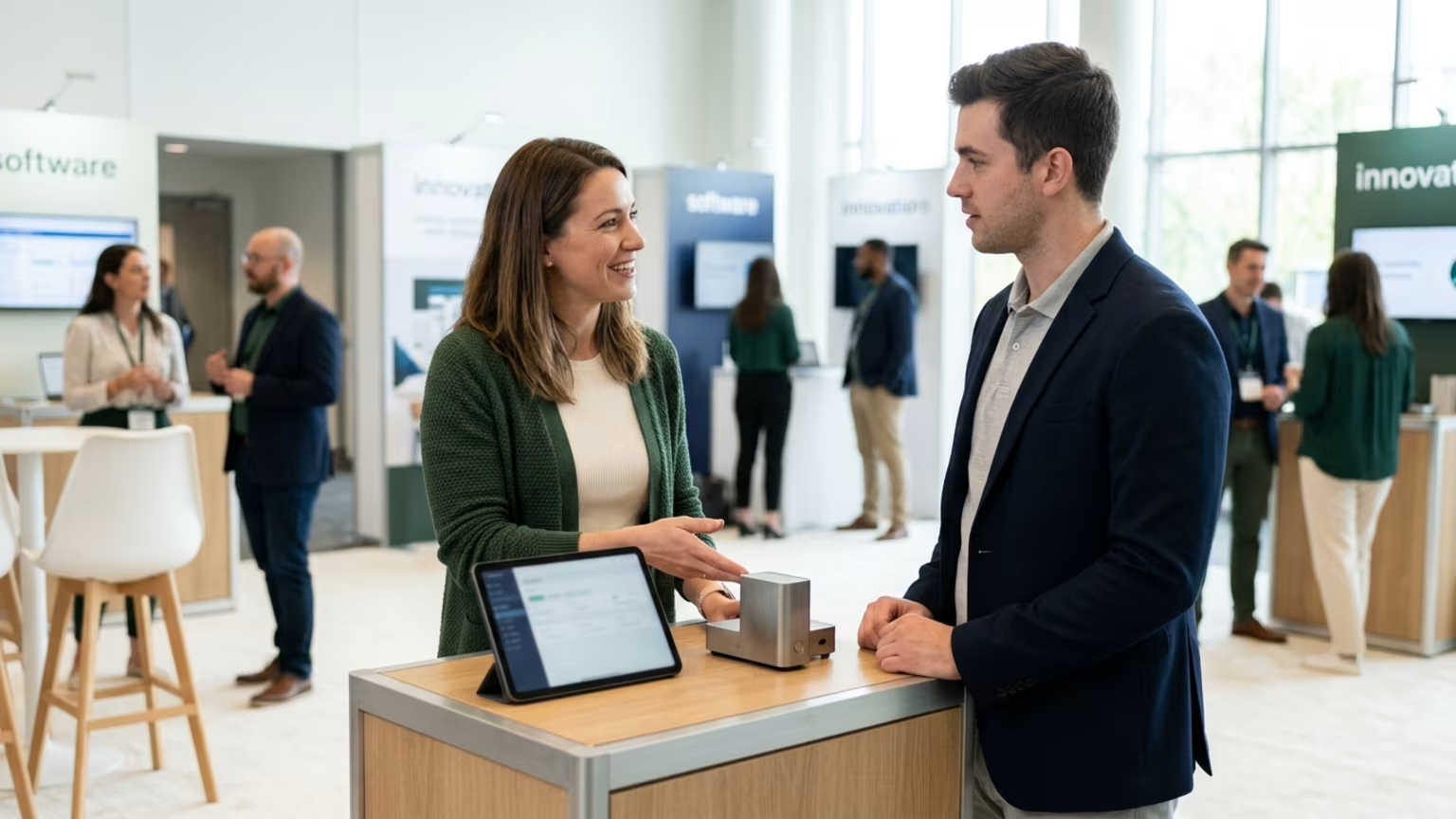
The reality on the convention center floor during a compressed event season is unforgiving. Your field marketing team arrives at a massive venue where the loading docks are jammed with crates for multiple overlapping expos. Exhausted union crews rush to assemble aluminum framing under harsh fluorescent lighting. In the panic to secure floor space, most brands simply ordered standard booth properties and shipped their latest product samples.
They hope attendees will naturally wander into their footprint and initiate a meaningful business conversation. The sales team stands behind a folding table holding a rented badge scanner. They check their phones constantly and wait for a familiar face to walk past. Competitors are blasting loud music and handing out cheap plastic promotional items into the crowded aisles.
It is loud, expensive, and completely devoid of a clear conversion strategy. Attendees walk past hundreds of booths in a state of sensory overload. They are actively ignoring brands that fail to communicate immediate value. Many marketing leaders stare at this chaotic environment and realize their internal plans are woefully inadequate.
The pressure to prove a massive Return on Investment on the physical build begins to weigh heavily on the entire organization. Executives walking the floor demand to know why the space looks empty. The gap between corporate expectations and field reality widens with every passing hour. Without a clear plan, the physical activation becomes a giant financial liability.
When the industry calendar fills up with dates instead of strategies, operators must rely on proven frameworks. We call our core approach the Precision Activation Methodology. It strips away vanity theater and focuses purely on high volume qualification. You do not need a new trend piece to win a crowded expo.
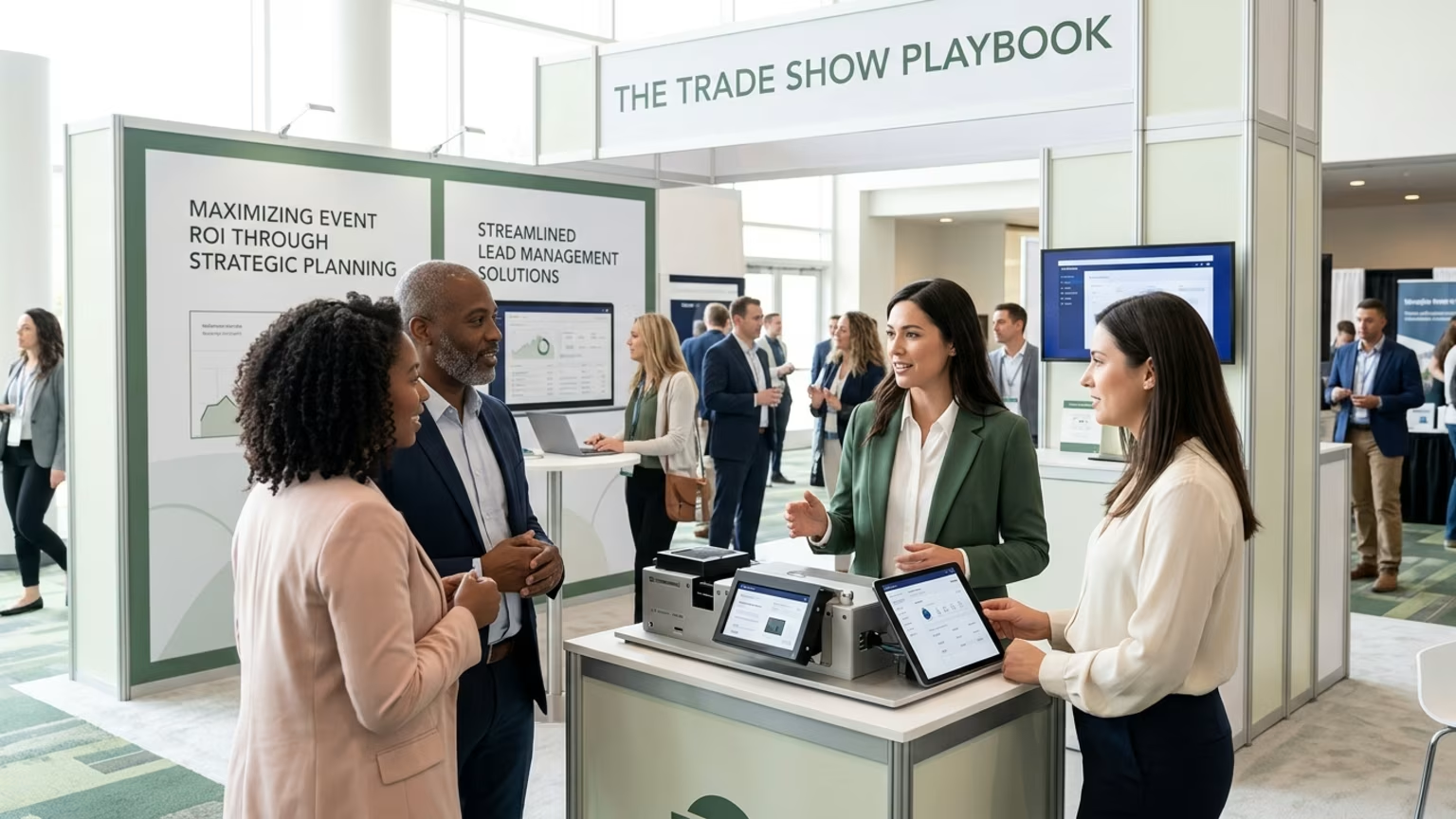
You need a disciplined system that forces engagement, filters out unqualified walkers, and drives the right buyers into meaningful product trials. This requires aligning your physical footprint entirely with your sales pipeline. Every square foot of your booth must serve a specific operational purpose. We recommend dividing your space into distinct zones for attraction, qualification, and deep business discussion.
You must stop treating the trade show floor like a billboard and start treating it like a physical sales funnel. Brands that succeed in this environment view their booth as a machine built for capturing verified intent. Our team focuses heavily on maximizing live events as a growth engine for premium brands. This approach requires taking full control of the physical environment and the human interactions within it.
Attendees at these late-June shows are often exhausted and overwhelmed by the sheer volume of vendors. They actively avoid eye contact with aggressive booth staff who attempt to force a badge scan. Your approach must respect their time by offering a clear and immediate solution to their specific problems. A calm and professional environment builds trust much faster than a loud and chaotic display.
You have exactly three seconds to stop a prospect from walking past your exhibit. If your message is confusing, they will keep moving toward your competitor. When you implement a strict framework, the noise of the convention center fades away. Your team operates with military precision.
Competitors scramble for attention. Every interaction is measured, categorized, and moved to the next step of the sales process. This operational discipline is the only reliable way to generate revenue from live events.
Creating order from this chaos requires a strict sequence of field actions. You must train your staff and arrange your space for maximum efficiency long before the venue doors open. Here is the exact playbook to follow.
Measuring success requires moving beyond simple badge scans and looking at actual business impact. To prove return on your event spend, you must track specific data points during and after the exhibition. Vanity metrics like the number of branded pens distributed offer absolutely no business value. First, you need to establish your lead metrics to gauge immediate operational health on the floor.
You should monitor the ratio of total booth visitors to qualified conversations. Track the average time a target buyer spends interacting with your product trial or demonstration. Measure the number of pre booked meetings that actually occur on the show floor. If your lead metrics are poor, your team can adjust their approach on the second day of the show.
Lag metrics tell the true story of revenue impact and long term success. Measure the percentage of show leads that convert to formal meetings within thirty days. Track the total closed pipeline value directly attributed to your late-June trade show schedule. Calculate the true cost per acquisition by factoring in floor space, travel, and material handling fees.
These numbers separate the seasoned operators from those who merely rent space and hope for luck. When you present these specific figures to your executive team, you change the conversation entirely. Live events transform from an unexplained marketing expense into a predictable revenue channel.
A national snack brand recently faced a similar mid-year calendar crunch across multiple regions. They were scheduled to appear at a major packaging expo and two regional food shows within ten days. Event schedules published by groups like the Flexible Packaging Association confirm just how crowded the June window can become. The industry media provided zero updated guidance on how to manage this overlapping schedule.
Instead of panicking over the lack of new tactical advice, they deployed our standard operational framework. We design mobile activations and roadshows that accelerate consumer trial, build trust, and boost retail velocity during 90-day product launch windows. Our structured approach transforms initial product trial into sustained consumer confidence and retail performance. The brand focused on highly trained ambassadors and strict software integration.
They captured over three hundred qualified retail buyers across the three events. Their disciplined approach completely outperformed competitors who simply showed up with flashy banners and no plan. They successfully managed the complex logistics of moving materials between the major venue complexes and the regional shows.
Since the data was already categorized by purchase intent, the sales team wasted no time calling unqualified prospects. This level of operational clarity allowed them to close several major retail distribution deals within a month. Their success proves that solid execution always beats chasing the latest event marketing trend.
The true measure of an event is not the size of the crowd. It is the clarity of the conversation that lingers long after the hall goes dark.

30 Years Experiential & Retail Activation Partner for CPG & Beverage Brands | Multi-Market Demos, Roadshows & Costco/Club Programs That Actually Sell