Robbie Thain
Founder, CEO

Learn how the Miller Lite Great Taste Tour turns on-premise festival traffic into measurable retail sales lift using data capture and strict field operations.
Most beverage brands waste millions paying for empty crowds. Foot traffic alone does not pay the bills. You need an operational engine to turn those warm bodies into verified retail buyers.
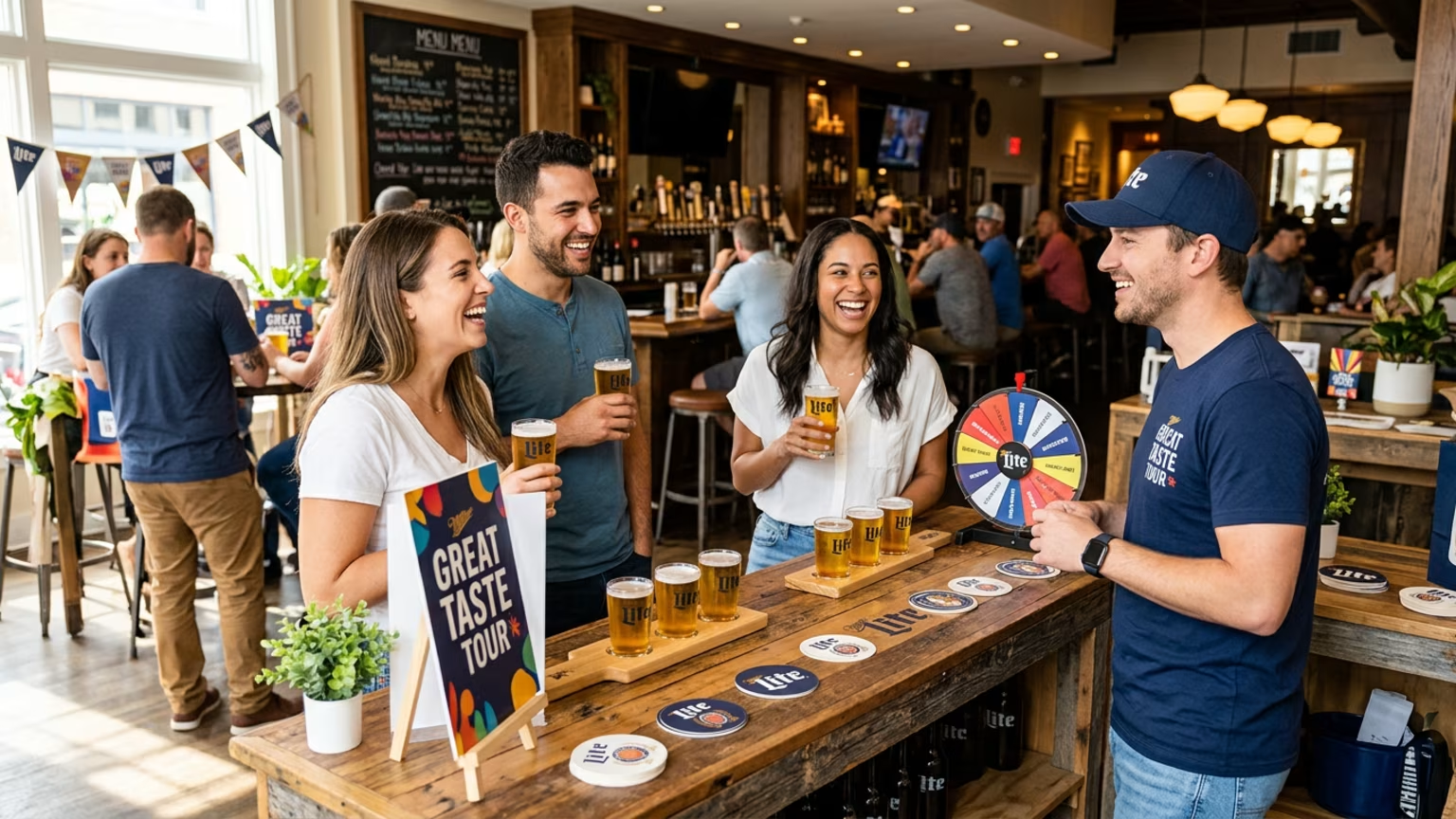
The Miller Lite Great Taste Tour proves that on-premise activations scale effectively with verifiable data capture and local retailer integration. This piece maps the exact operational framework required to translate high volume festival traffic into measurable off-premise sales.
It is Saturday night at a massive summer music festival. The beer lines stretch for miles, the heat is oppressive, and your expensive brand footprint looks like a disorganized mess. Field staff are handing out warm samples to people who just want free merchandise. Nobody is collecting data, scanning codes, or giving attendees a reason to visit the grocery store later.
This is the trap of live event marketing. Brands buy expensive sponsorships hoping for magic. They get fog instead of evidence. You write a massive check for the festival space, and the execution falls apart the moment the gates open.
A tent and a logo cannot drive sales lift if the operational reality is broken. Planners worry about fragmented execution, inconsistent staffing, and poor in-store presentation. The result is a campaign that looks incredibly busy but produces zero traceable revenue. When the dust settles, the marketing director has no hard numbers to show the chief financial officer.
Industry analysts report that measurement anxiety remains a top concern among consumer packaged goods leaders. Many marketers admit they struggle to connect event engagement to actual pipeline growth. They lack unique offer codes, geo matched sell through analysis, and direct connections to retail point of sale systems.
You need a replicable system to fix this mess. The approach requires moving away from massive single night stunts. Instead, build a templated activation kit that scales across multiple markets with mechanical precision. Every touchpoint must force a measurable action from the consumer.
We create experiential marketing programs built to connect emotion with action. Our process blends creativity, strategy, and data to guarantee every brand interaction drives measurable results. We craft experiences that engage all five senses, helping people not just see brands, but feel them, turning moments into meaningful business outcomes. Treating live events as a performance channel is the only path forward.
This framework demands a clear connection between the local bar and the grocery store. A brand cannot survive on single night consumption alone. You must identify priority retail accounts within a strict three mile radius. Every on-premise sample should push consumers toward those specific store locations for their next purchase.
Brands that invest in consistent field staffing models see higher returns. They run on-premise events within a tight radius of target off-premise accounts. They guarantee co-promotional displays are ready at nearby stores. If your team needs to stop burning cash and fix a broken field program, you should book a strategy call.
Running a multi city tour requires discipline and a strict playbook. If you want to maximize your Return on Investment, follow this step by step guide.
The best physical footprint fails if the people running it lack operational discipline. You cannot rely on untrained temporary workers to communicate complex brand messaging. Every brand ambassador must act like an extension of your sales team. They need to understand the product flavor profile, the local retail promotions, and the exact data capture mechanics.
When you staff your activation with genuine product experts, consumer interactions change instantly. Conversations shift from simple giveaways to meaningful brand education. Your team stops handing out free drinks and starts acquiring loyal customers. This rigorous approach to field staffing separates amateur pop-up events from highly profitable retail drivers.
Footfall is a vanity metric that hides poor performance. You must track lead metrics during the event and lag metrics in the weeks following. Lead metrics include total samples served, dwell time, and the number of verified contacts collected. These early indicators tell you if the field team is actually working.
Lag metrics prove the financial value of the campaign. Measure the incremental volume lift in stores surrounding the event zones. Compare these test locations against a control group of stores outside the activation radius. When you measure experiential marketing Return on Investment with hard data, the conversation with your finance team gets much easier.
Recent studies show that in-store experiences and sampling dramatically increase purchase intent. Programs that utilize a radius based lift analysis demonstrate measurable volume lifts in surrounding outlets. Tracking offer based attribution proves that field activity leads directly to pipeline growth.
Redemption rates for highly targeted offers are strong indicators of success. Scannable codes and mobile wallet passes create a traceable link between the physical activation and the retail purchase. You can finally attribute field activity directly to sales lift in surrounding outlets.
Field programs fail when teams rely on clipboards and guesswork. A rigorous activation demands an integrated measurement stack. You must deploy unique scannable codes at every single activation point. These entry gates force attendees to join an SMS list or provide an email address before they grab a sample.
This exchange of value transforms a simple drink into a measurable consumer profile. You build a first party database of verified adults in priority markets. The data flows directly into your central reporting system. Your regional sales managers can then take this hard evidence straight to their retail buyers.
This real time visibility changes how marketing teams operate on the floor. You can monitor the exact number of scans happening at a specific music festival from your phone. If the numbers dip below the target benchmark, you can instantly text the field manager to adjust the layout. This proactive adjustment process saves campaigns from failing quietly.
Advanced teams take this measurement process a step further. They use a single event platform to connect live engagement with ongoing remarketing campaigns. The verified contact lists get fed directly into regional advertising campaigns for the next fiscal quarter. Every dollar spent on the physical activation continues generating revenue long after the event ends.
A successful multi city tour operates on a tight geographic leash. You draw a three mile ring around every festival or bar activation. Every grocery store and liquor outlet inside that ring becomes a priority target. Your sales team secures off-premise displays in those specific locations the week of the event.
The execution links the live experience directly to the retail floor. You run co-branded point of sale materials that reference the local festival. Attendees leave the concert and immediately see the same branding in their neighborhood store. This proximity creates a seamless transition from product trial to product purchase.
To prove the model works, compare the sales velocity inside the ring against a control group outside the ring. Tracking this incremental lift validates the entire strategy. You stop hoping for a halo effect and start reporting on actual financial impact. Reviewing our experiential marketing case studies shows the clear difference between amateur setups and professional executions.
Miller Lite provides a textbook example of this model in action. The brand consistently uses live music and sports to fuel its sampling engine. For example, their footprint at the Indianapolis Motor Speedway offers fans hospitality packages that integrate food, drinks, and branded spaces.
They apply a similar strategy at massive music gatherings. The brand sponsors specific viewing areas for major acts at Summerfest. These dedicated zones allow the brand to control the environment, capture participant data, and pour thousands of samples. By standardizing the setup, they replicate this success across different venues all summer long.
This approach builds cumulative brand memory and generates valuable consumer insights. The strategy connects the energy of a live show with the operational rigor of a data capture campaign. It proves that a legacy brand can maintain relevance by treating on-premise exposure as a retail trial engine.
When evaluating brand activation services, operators need partners who understand local compliance. Running a national sampling program requires managing strict alcohol regulations, securing proper permits, and handling complex logistics. A standardized tour playbook keeps the brand safe and drives massive consumer participation.
The empty cups will eventually be swept away. The stage lights will go dark. What remains is the silent, steady shift of a consumer walking into a store, reaching for a familiar label, and choosing a brand they now remember.

30 Years Experiential & Retail Activation Partner for CPG & Beverage Brands | Multi-Market Demos, Roadshows & Costco/Club Programs That Actually Sell