Robbie Thain
Founder, CEO

Learn how standardized staffing models and AI forecasting reduce execution chaos by 80%. Build scalable experiential activations that drive clear ROI.
Industry analysts report that standardized staffing models reduce multi market execution chaos by up to 80 percent through global field mapping. This guide provides the predictive forecasting and repeatable training frameworks you require to turn unpredictable live brand events into reliable drivers of Return on Investment.
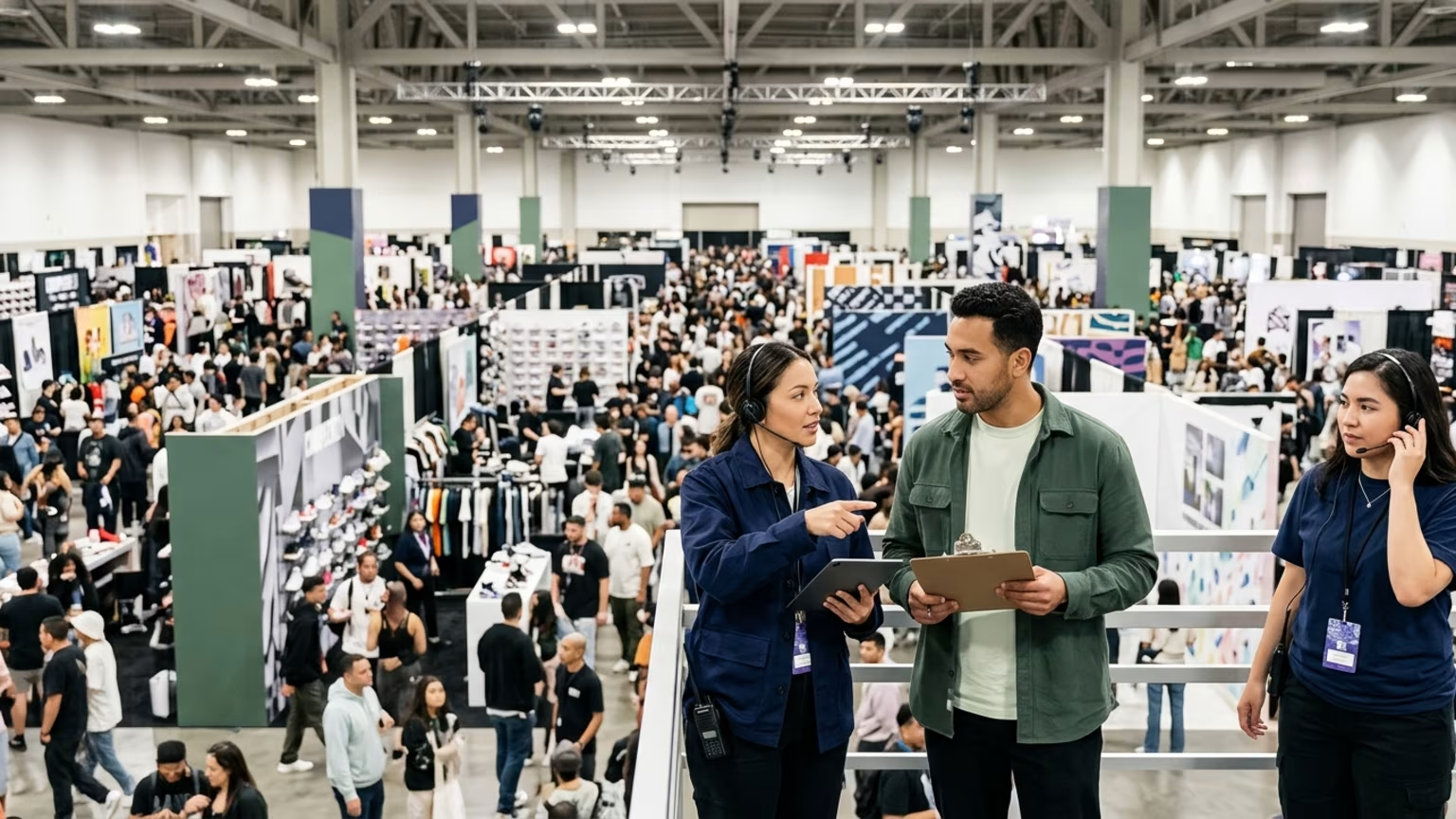
Let us look at a typical morning at a major retail expansion roadshow. Your brand pavilion opens in exactly ten minutes. Half your promotional team is missing in action, and the local agency contact is unresponsive. The staff who did arrive look completely lost.
They have no idea how to explain the participation rules to the gathering crowd. When peak foot traffic hits at noon, your team runs out of sample product entirely. The line grows long, frustrated shoppers walk away, and you lose major sales momentum. You spent six months planning this expensive activation.
The physical execution falls apart right before your eyes. Marketing operators face this exact nightmare when they treat event staffing as an afterthought. It is impossible to generate high quality leads from crowded trade shows without a disciplined field operation. You cannot expect high converting campaigns without tight local control.
Success requires a clear distribution of roles across global planners and local operators. You must move past fragmented hiring and adopt a unified staffing model. A standardized approach provides a baseline for multi market execution. Research indicates that marketing operators must implement these models to turn chaotic field events into reliable revenue drivers.
For U.S. brands in the food and beverage sectors, multi market execution amplifies turnover risks. You must define local role variations early to maintain consistency. We recommend mapping 80 percent of your team requirements to global lanes. You can then leave room for two to three unique local fields per market.
We blend physical and digital experiences by integrating QR codes, mobile technology, and real-world activations into a cohesive layer across retail, event, and tour experiences. This blended approach is not a standalone service but an upgrade we apply to many types of experiential work to drive connected results. Modern campaigns demand this integration to succeed.
Modern field staffing requires advanced forecasting to prevent costly overstaffing. Legacy models rely on basic spreadsheets and blind guesswork. Today, adaptive AI models forecast workload and capacity needs with incredible precision. This intelligence allows you to deploy the exact right number of staff for specific hours.
These systems analyze historical execution data to predict busy periods. They identify the optimal balance between cost management and consumer engagement. According to BCG experts, AI first approaches transform field staffing with predictive asset management and task allocation. These systems continuously learn from execution data to cut major inefficiencies.
Using digital twins for network planning is highly effective in automotive and tech activations. This technology maps out the physical space and simulates crowd flow before the event begins. Your logistics team can adjust staffing positions based on these detailed digital models. It takes the guesswork out of complex floor plans.
You need a sequential plan that defines roles early and eliminates guesswork. Follow these exact steps to build a scalable staffing pipeline. This operational framework protects your brand reputation. It stops messy execution in its tracks.
Analyze historical point of sale data from activation zip codes. Use these figures to set clear baselines for peak hour product needs. This prevents stock shortages during massive seasonal rushes.
Assign a dedicated process owner for every local team. Regional managers must handle logistics, permitting, and daily supply audits. Hiring and training brand ambassadors to act as true hosts builds authentic excitement for the product.
Stop handing out simple fact sheets to your temporary staff. Train your field teams to explain participation rules clearly. They must know how to manage high volume crowds with absolute confidence.
Establish strict standards for uniform presentation, setup times, and daily inventory reporting. These clear metrics enable early error detection across multiple markets. You can fix local problems before they ruin the national tour.
Integrate real time CRM routing via mobile queues and digital kiosks. This technology sends instant lead data to your sales representatives during the event. It turns passive foot traffic into immediate business pipeline.
Crowded environments frustrate modern consumers quickly. Use digital wait predictors and mobile queues to manage high foot traffic. Gamified formats scale beautifully via this automation.
Event technology provides the ultimate safety net for your field operations. Manual check in sheets and paper lead forms belong in the past. You need digital systems that track attendance and engagement without slowing down the consumer experience. Modern consumers expect seamless interactions from the moment they step into your footprint.
Deploying localized promo codes gives you an immediate performance baseline. You can track exactly which brand ambassador generated the most scans. This real time data allows regional managers to reward top performers instantly. It creates a culture of accountability across your entire promotional staff.
This tech forward approach reduces the friction between physical trial and digital purchase. Shoppers can scan a code, sample the product, and order a case online within seconds. This immediate conversion path justifies the upfront cost of your live event. It proves that experiential marketing drives hard retail sales.
High turnover destroys experiential campaign consistency. You spend weeks training event staff, only to lose them halfway through a multi market tour. Unclear expectations and chaotic management usually drive these sudden departures. You can prevent this mass exit by establishing rigorous field support structures.
Assign a dedicated process owner for each specific local team. This person acts as the central hub for problem solving and schedule adjustments. They prevent the fragmentation that frustrates hourly event staff. Clear communication keeps your team motivated and focused on consumer engagement.
You must pair this leadership with on-site mechanical support. Equip your staff with working digital tools, localized promo codes, and clear escalation paths for inventory issues. When brand ambassadors feel supported by corporate logistics, they deliver a far superior consumer experience. They stay through the entire campaign duration.
A beautiful booth means nothing if you cannot prove its value to your leadership team. You must measure both early warning signals and final conversion numbers. Lead metrics track the health of your live operation in real time. Monitor setup time compliance, hourly inventory turnover, and peak hour engagement rates.
These early indicators help you catch local errors before they damage your national campaign. Lag metrics prove your financial impact and justify your experiential budget. Track overall sales lift, pipeline velocity, and total qualified leads generated from the event. We recommend using localized promo codes and real time CRM routing to attribute revenue directly to specific activations.
Brands that scale their sampling operations efficiently turn busy events into evidenced conversions. This exact reporting structure gives marketing executives the hard data they require for future budget approvals. You can stop relying on estimated impressions. You start reporting on actual sales velocity and dealer confidence.
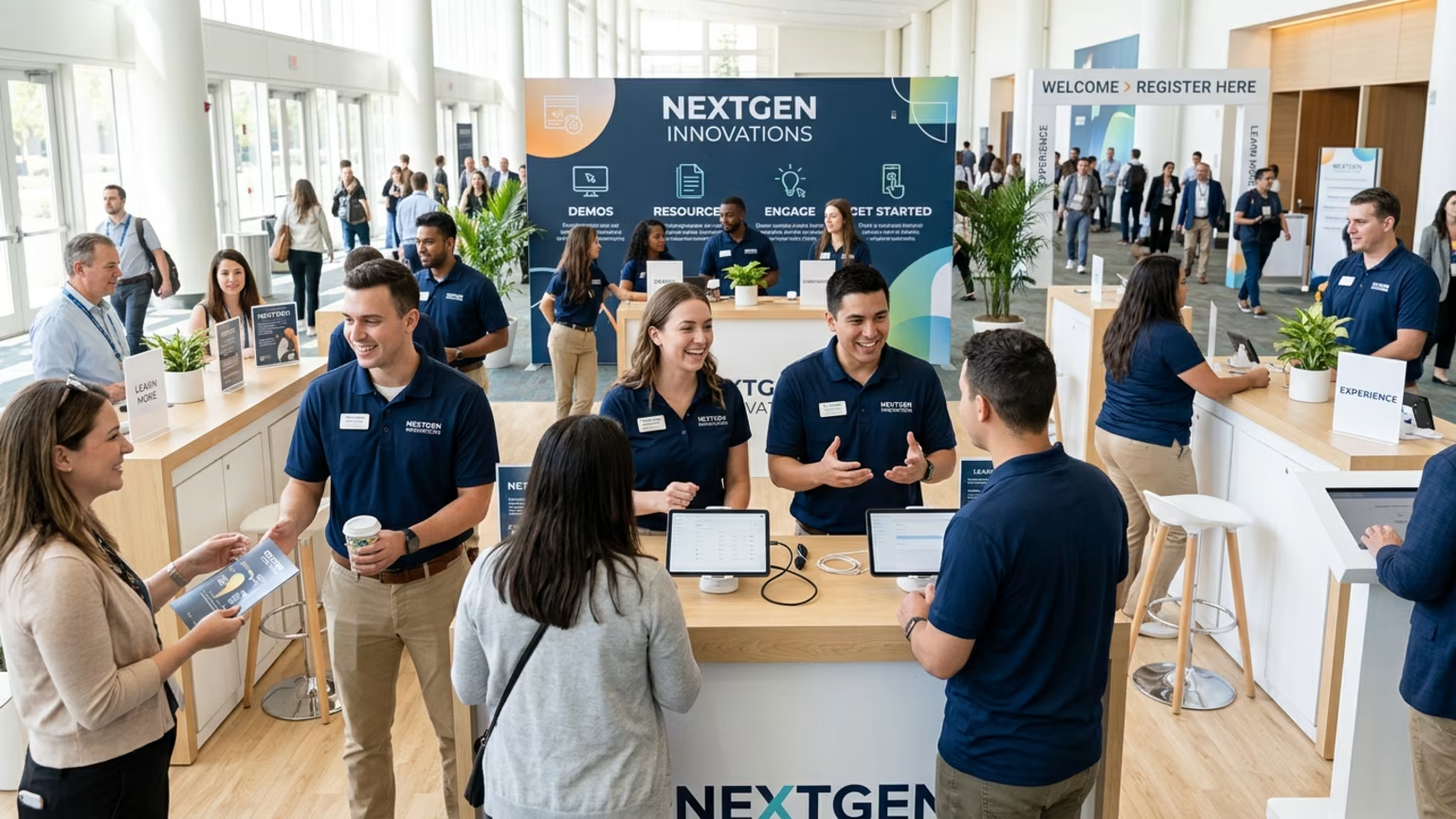
Consider a recent multi market retail expansion roadshow for a major consumer packaged goods brand. The company needed to run consistent tasting demos across fifty retail locations simultaneously. A fragmented approach would have created massive inventory shortages and weak customer interactions. The brand needed absolute uniformity across every single state.
The regional team audited the supply chain and used historical point of sale data to predict peak demand. They mapped 80 percent of the staffing requirements to a global standard and allowed local managers to handle the remaining adjustments. Automated digital wait predictors and mobile queues managed the massive crowds smoothly. This kept the consumer experience pristine.
Trained hosts kept the energy high and prevented stock shortages during the busiest hours. This standardized staffing model produced a massive sales lift and zero out of stock incidents. You can plan your field marketing and experiential campaigns with the exact same rigor. A disciplined system always beats temporary enthusiasm.
Live brand activations demand massive operational oversight. You cannot depend on luck to get your product into the hands of target consumers. Your staffing models must evolve to handle multi market complexities. Every new product launch or regional expansion tests your logistical readiness.
Many brands struggle with scattered attention and poor booth flow. They suffer from inefficient post event follow up and CRM routing. This happens when companies prioritize flashy aesthetics over solid operational foundations. You must build an infrastructure that supports your creative vision.
Leaders in the food, beverage, and tech sectors demand reliable frameworks. They want a clear path from consumer trial to retail purchase. Implementing strict training protocols protects your investment. Predictive resource balancing keeps your budget under control.
Let us look back at that disastrous morning on the trade show floor. Imagine replacing that panic with a perfectly orchestrated activation team. Every brand ambassador knows their exact role, and your inventory aligns perfectly with peak foot traffic. Digital tools capture every lead instantly.
Consistent planning turns a potential disaster into a predictable pipeline engine. You do not have to guess about headcount or worry about midday stockouts anymore. The right operational playbook transforms fleeting consumer interactions into qualified pipeline. Book a strategy call with our team to build a repeatable staffing model for your next campaign.

30 Years Experiential & Retail Activation Partner for CPG & Beverage Brands | Multi-Market Demos, Roadshows & Costco/Club Programs That Actually Sell