Robbie Thain
Founder, CEO

Discover how Kura Sushi uses gamification to drive 8.6% sales growth without discounts, and how CPG brands can adapt this for higher trade show conversions.

Kura Sushi recently drove an 8.6 percent same store sales growth by replacing passive discounts with interactive dining games. This model proves that participatory food marketing turns consumer engagement into measurable pipeline without eroding profit margins.
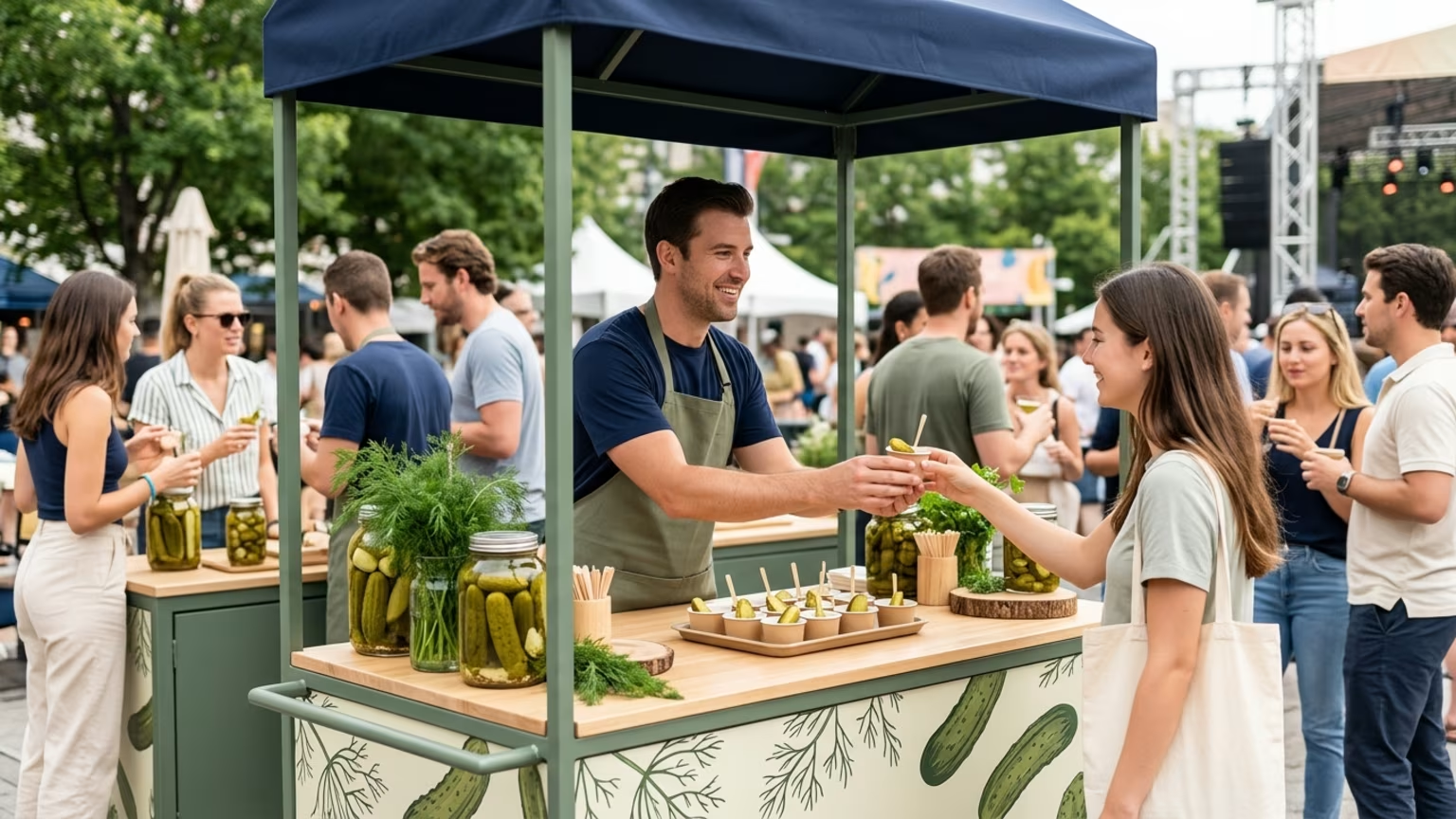
Field marketing teams know the chaotic drill on a crowded trade show floor or during a busy Costco roadshow. You set up a beautifully branded booth with high expectations. You offer free samples of your new premium beverage to anyone walking past your footprint. Passersby take the tiny cup, nod politely, and keep walking without a second thought.
Trade shows feature miles of identical booths, blinding fluorescent lights, and hundreds of competing brand representatives. The sensory overload paralyzes attendees. Shoppers at massive warehouse clubs walk through crowded endcaps with a singular focus on their grocery list. Breaking through this intense visual noise asks for more than just a friendly smile and a tray of room temperature product.
Brands try to fix this consumer indifference by aggressively slashing prices. They throw more freebies at the problem to artificially inflate their engagement numbers. This approach creates high foot traffic volume but zero actual brand loyalty. Teams return to headquarters with empty product boxes and zero usable data to prove their Return on Investment.
It is a vicious cycle of hope and frustration that burns through quarterly budgets rapidly. We see firsthand how constant discounting trains retail shoppers to look for the absolute cheapest option. It completely strips away the perceived value of premium food and beverage brands. The real challenge is making the distracted customer actually care about the physical interaction.
A VP of Marketing in the CPG beverage category told us: 'Robbie, your leadership and vision turned our campaign into something truly special, and the Makai team brought our new drink to life with energy, creativity, and flawless execution. Thanks to you, our brand isn't just tasted, it's remembered.' Our team's approach transformed their product launch into a memorable brand experience.
The solution requires replacing simple handouts with structured participatory food marketing campaigns. The modern restaurant industry is rapidly moving beyond simple transactions and into interactive food experiences. Gamification demands that the consumer completes a minor action to earn a clear reward. This behavioral design shifts the power dynamic from begging for attention to inviting active participation.
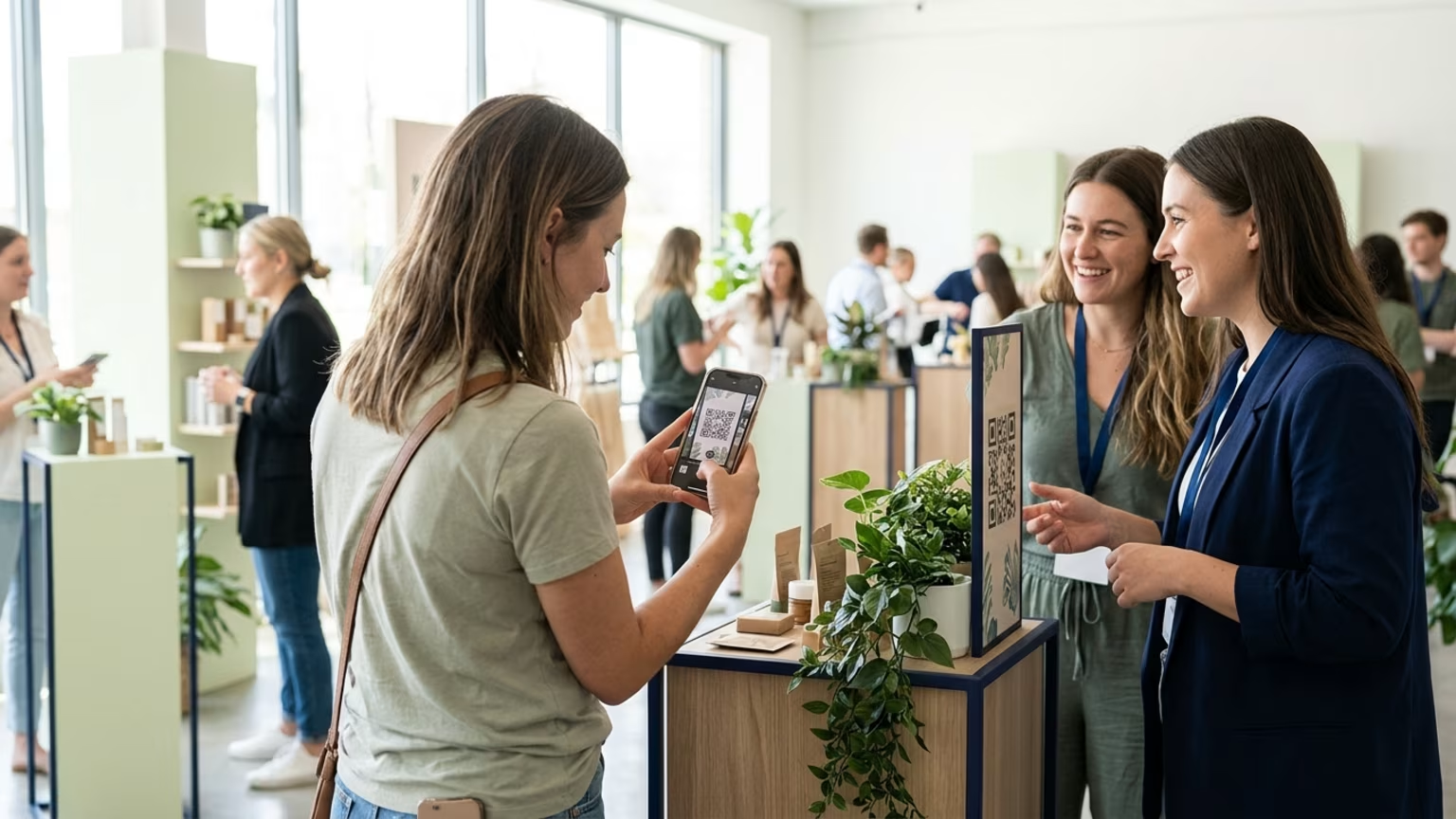
The customer drives their own upsell through active and willing involvement. Brands can seamlessly replicate this mechanic in any retail environment or physical activation. You ask the shopper to play a simple digital game, spin a physical prize wheel, or interact with a product display. The reward is no longer a given right.
It becomes a prize earned through direct and meaningful engagement. This builds massive anticipation and psychological investment before the physical product even touches their hands. We create experiential marketing programs built to connect emotion with action. Our process blends creativity, strategy, and data to guarantee every brand interaction drives measurable results.
We craft experiences that engage all five senses. This helps people feel brands rather than just see them. It turns fleeting moments into meaningful business outcomes. When people physically participate, they internalize the core brand message much faster.
They transition from passive consumers into active and vocal brand participants. When brands focus on engagement marketing that turns attention into action, they build lasting loyalty.
Moving from passive sampling to a gamified activation requires strict operational discipline. You need a clear and repeatable system to execute this effectively in a live event setting.
Gamification only matters if it creates measurable financial performance for the brand. Marketing leaders must meticulously track exact data points to justify the live activation expense. Restaurant operators often use plate velocity as a core measurement of success. CPG brands can easily adapt this metric to track sample velocity at a physical retail activation.
A high sample velocity paired with high retail sell through indicates a wildly successful campaign. Lead metrics show the immediate engagement and attraction on the physical floor. Track the participation rate of your interactive game compared to the total booth traffic. Measure the average time spent interacting with the gamified activation setup.
High dwell time indicates strong behavioral design and excellent brand retention. You must rigidly monitor the completion rate of the entire gamified loop. If consumers abandon the game halfway, your mechanics are clearly too complicated. Drop off rates signal a immediate need to simplify the required user action.
Adjusting these lead metrics in real time prevents massive budget waste during multiday events. Lag metrics prove the actual long term business impact to the executive team. Look closely at your average check size or retail basket size increase. Track the verified same store sales lift during the specific activation period.
Measure the redemption rate of earned digital discounts or physical prizes at the retail register. Connecting live engagement directly to clean data reporting provides the hard proof your CFO demands. You track the exact cost per acquisition against the total lifetime value of the new customer. This shift in measurement turns experiential marketing from a vague art into a predictable science.
Kura Sushi USA demonstrates how this exact methodology scales beautifully in the physical world. The brand uses a patented and highly effective gamification system called Bikkura Pon. Diners receive a short animated video and a physical prize after disposing of 15 empty plates into a table slot according to industry data. This system directly drives higher plate consumption without relying on any price promotions.
According to recent fiscal Q2 reports, Kura achieved an impressive 8.6 percent same store sales growth. The chain experienced a 4.3 percent traffic increase alongside a 4.5 percent menu pricing uplift. The company masterfully merges table entertainment with backend efficiency to build a deeply loyal following. They aggressively rolled out automated robotic dishwashers in 2025 to dramatically streamline back of house operations.
In early 2026, they launched an AI table management system that boasts 95 percent wait time accuracy. These smart tech integrations minimize labor costs and keep the gamified experience running smoothly during peak hours. Kura partners strategically with major anime properties like Demon Slayer to create limited edition prizes. These exclusive IP collaborations turn simple family meals into massive social media events.
The customer willingly pushes their own check average higher just to win another collectible toy. A VP of Marketing reflected on our partnership: 'Robbie, it was a pleasure working with you and your team, and you turned our launch into an experience that connected with shoppers and built lasting excitement for our brand. We're already looking forward to the next project together.' Our team created a launch experience that resonated with retail shoppers and generated incredible momentum for future collaborations.
The Kura model faces massive external pressures like inflation and rising labor costs today. Gamification boosts plate volume consistently, but scalability heavily relies on flawless technological execution. Delays in rolling out robotics or AI systems can rapidly erode the Return on Investment. Recent market struggles highlight the intense vulnerability in the American casual dining sector.
A recent CFO departure adds operational risk to the execution of these complex gamified experiences. Success skews heavily toward families and younger diners actively chasing the latest collectible prizes. This limits the broad appeal to older demographics seeking a traditional premium dining atmosphere.
People completely forget what they are simply handed in a crowded retail aisle. They deeply remember what they actively work to earn and win. True brand loyalty forms in the quiet space between anticipation and final reward. A well designed interactive game turns a fleeting physical transaction into a permanent memory.

30 Years Experiential & Retail Activation Partner for CPG & Beverage Brands | Multi-Market Demos, Roadshows & Costco/Club Programs That Actually Sell