Robbie Thain
Founder, CEO

Learn how to connect mobile roadshows with retailers, distributors, and local sales teams to turn street activation excitement into measurable store sell-through.
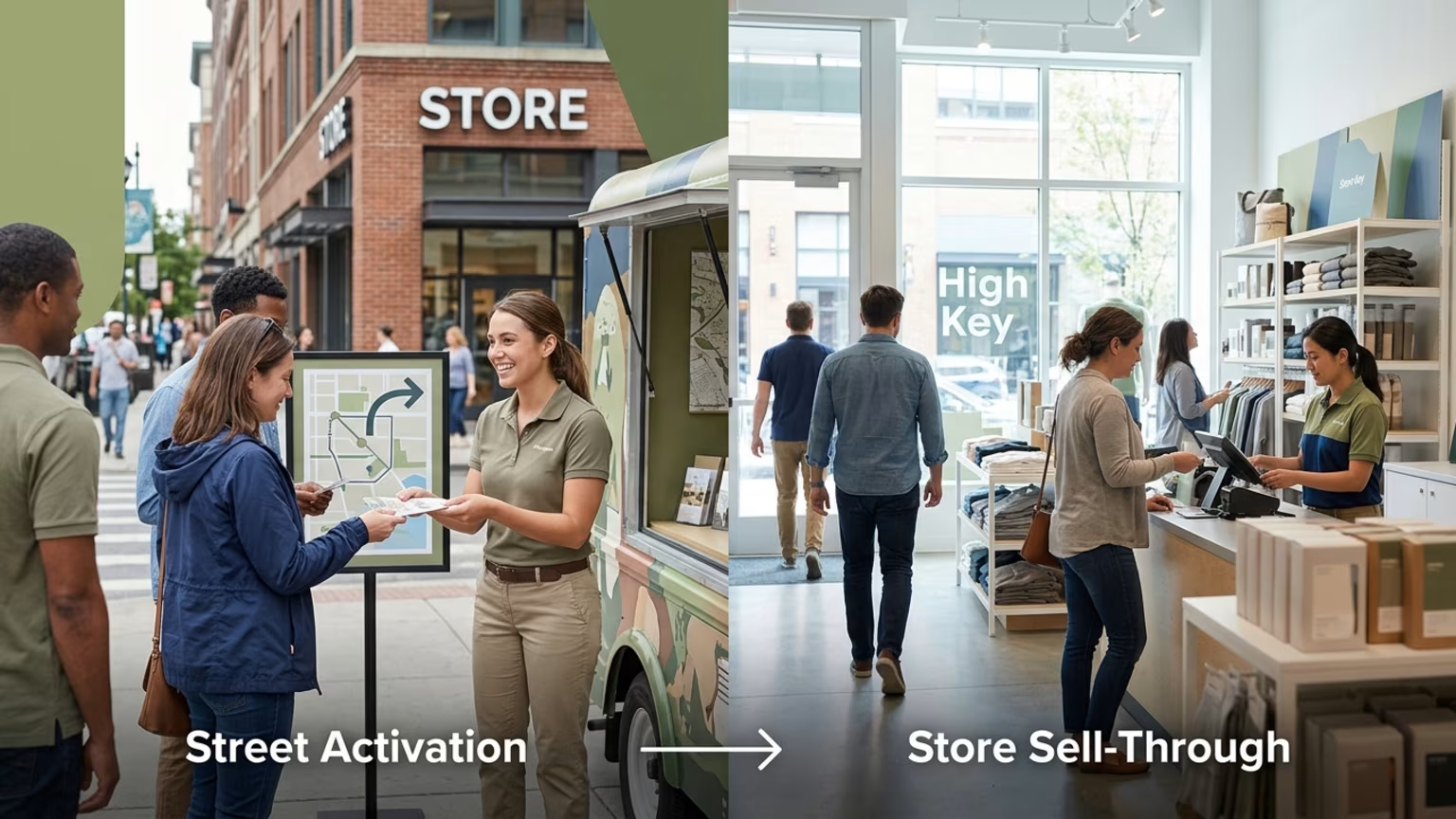
Retail demo programs get judged on cups poured, but field marketing should be judged on inventory depleted. A visually impressive street activation creates friction if it lacks a convenient purchase path. Connecting mobile tours to local sales teams ensures consumer excitement converts at the register.
Executing a successful roadshow requires accepting four harsh operational truths:
Evaluating a roadshow stop requires two distinct maps. The first is the audience map showing where desired consumers gather. The second is the commerce map showing where the product is stocked. You must identify the nearest participating stores before signing any venue permits.
Makai operators know that setting up proximity alerts is mandatory. You must evaluate store hours and calculate the exact distance from the activation. It is also crucial to verify whether the retailer has a loyalty or coupon capability. Coordinating with the local broker rep ensures shelves are fully stocked.
A visually impressive event creates intense friction if purchase paths remain unclear. Consumers want to buy immediately when product interest peaks. If the nearest retailer lacks inventory, the entire market stop wastes money. Proper street to shelf pop-ups rely on this precise proximity planning.
You must evaluate the specific route consumers will take from the activation to the store. A three block walk might sound reasonable, but heavy traffic can kill the conversion. Field generals walk this exact path before finalizing the event layout. This physical walkthrough ensures that the retail journey remains entirely frictionless.
You must establish the specific call to action before the brief is finalized. This mechanic moves a participant from the live experience directly to the checkout line. Without this connective tissue, your mobile tour is just expensive street theater. True operational discipline forces brands to prioritize store proximity over sheer audience density.
Gradient Experience recommends defining your measurement approach around the business job. [7] For consumer packaged goods programs, they suggest tracking pre-activation and post-activation sales data. [7] Other recommended commercial measures include sampling-to-purchase conversion and retailer engagement. [7] You should also monitor sell-through, reorder frequency, and first-party data capture. [7]
A measurement approach should strictly align with distributor reporting. [7] This requires using unique tracking codes and structured market segmentation. [7] Industry sources identify unique tracking codes and SMS rebates as highly effective methods. [7] QR engagement and purchase conversion also connect experiential interactions with retail outcomes. [7]
Executing this properly requires a step-by-step methodology on the floor. First, create a shared stop packet before the launch sequence begins. This packet must go to the activation team, the retailer, and the distributor. It should contain store lists, product assortment details, and shelf locations.
Second, mandate inventory confirmation and distribute clear offer terms to all partners. Third, issue different tracking codes by city, event stop, and retailer. You should also segment these tracking codes by date and field team. This granularity allows you to answer precise questions about local market performance.
The stop packet should also include clear point of sale display instructions. Retail partners need to know exactly how to feature the product during the event window. Providing a post-event recap template ensures that store managers know what data to collect. This standardized reporting structure eliminates confusion when the activation concludes.
Finally, the handoff must occur in both directions to work effectively. Field teams should inform stores about expected attendance and sampling volume. In return, store teams must report out of stock incidents back to the brand. This bidirectional flow turns your field team into a valuable commercial sensor.
Amateurs treat live events like isolated awareness campaigns. They rely on bad clipboards and consistently underestimate actual crowd flow. They focus heavily on total attendance while ignoring critical retail velocity metrics. Without structured post-campaign analysis, brands cannot prove their financial impact. [7]
Failing to measure baseline sales makes it impossible to demonstrate real lift. Another common mistake is issuing generic coupons across an entire national tour. When brands do this, they lose the ability to track local market performance. You must issue different tracking codes to isolate which locations actually convert.
Implementing specific codes is essential for connecting event leads to retail sell-through. A weak handoff process creates demand faster than a local store can absorb. If the product is poorly merchandised, the activation fails as a retail program. Your field marketing should always prioritize inventory depletion over mere activity counts.
Another fatal flaw is waiting until the post event report to align with retail partners. Coordination must happen before the roadshow begins, not after the sampling tents are packed up. When field teams operate in a silo, local store managers get blindsided by unexpected foot traffic. This lack of alignment turns a successful marketing event into a localized retail disaster.
Amateurs also fail to provide a simple redemption mechanic for consumers. A rebate offer must be easy to explain and easy to use on a phone. Complex receipt upload processes frustrate shoppers and destroy your sample to purchase conversion rates. Keep the mechanics simple to ensure that event excitement translates into register rings.
GLOBE France notes that Fleury Michon used a nationwide roadshow for its Tranches Végé range. [1] The brand had an objective of reaching nearly two million people across France. [1] This massive consumer engagement push took place over a three month period. [1] The activation appeared in train stations and major city centers. [1]
The brand also placed sampling in shopping districts, festivals, concerts, and leisure venues. [1] This strategy placed the product in everyday environments where consumers live and work. [1] Brand ambassadors distributed samples during these high traffic public stops. [1] They used one-to-one conversations to introduce consumers to the product range. [1]
These targeted conversations were specifically designed to address barriers to trial. [1] The agency describes the program as a dedicated drive-to-store initiative. [1] It was intended to increase awareness, purchase intent, and retail adoption. [1] However, the case study does not publish a verified retailer sales lift figure. [1]
The Tranches Végé campaign proves that scale requires meticulous geographic targeting. By selecting environments like the Paris Plages summer event, the brand maximized its visibility. [1] However, visibility alone does not satisfy the demands of modern commercial partners. Marketers must pair this level of ambition with rigorous tracking systems.
The Fleury Michon case study highlights a critical reality for U.S. marketers. Programs can generate massive trial while leaving commercial partners without concrete evidence. Brands must bridge this reporting gap to connect trade show performance to real-world sales. Verified sell-through data proves that consumer excitement actually moved the needle.
Evaluating performance demands a strict Return on Investment framework. Makai recommends comparing an activated store with a matched control store. [2] This strategy helps isolate the sales lift generated by the event team. [2] Testing against matched markets reduces reliance on vague foot traffic estimates.
A robust design defines test markets, baseline sales periods, and activation windows. You must closely monitor product and category measures alongside promotion effects. Pay careful attention to distribution and inventory differences across your participating locations. This ongoing vigilance separates professional operators from amateur event planners.
You must also report operational failures alongside your big wins. Commercial partners need to know which specific stores ran out of product. They also need to know which codes failed or which stops had weak attendance. Sharing this data makes the activation useful to your sales and operations teams.
Your post event report should cleanly separate consumer response from actual retail behavior. Activity counts like samples distributed belong in a completely different category than units sold. Grouping these metrics together confuses the narrative and frustrates analytical buyers. Clear segmentation allows you to prove exactly how live engagement drives the path to purchase.
True retail velocity happens in the quiet moments after the tents come down. It occurs when a single shopper returns to the aisle to buy again. Operational precision ensures that this shopper finds exactly what they want.

30 Years Experiential & Retail Activation Partner for CPG & Beverage Brands | Multi-Market Demos, Roadshows & Costco/Club Programs That Actually Sell