Robbie Thain
Founder, CEO

Meat N' Bone's new advisory board signals how premium CPG brands are combining experiential marketing, field events, and hospitality to drive retail growth.
On September 10, 2026, Meat N' Bone announced a strategic advisory committee to support its expansion in the premium protein sector. The company is actively raising $4 million in Pre-Series A equity to fund national expansion, marketing, logistics and franchising infrastructure. This move positions the brand for a rapid physical rollout across multiple channels. The strategy deliberately connects direct-to-consumer fulfillment, physical boutiques, hospitality concepts and broader CPG distribution.
The core operational shift is the integration of high-level field experience into the corporate governance structure. The company describes itself as pursuing a position in a more than $400 billion protein market. They state this specific market lacks a clear national premium leader. To capture this space, the company currently operates eight boutiques and one central fulfillment center.
The leadership team says it is on track for $13.5 million in revenue in 2026. Meat N' Bone is targeting more than 40 company-owned and franchised locations while aiming for more than $70 million in revenue by 2029. The new advisory group brings background experience from major operations like Durham Meat and Seafood. The announcement describes Durham Meat and Seafood as a $180 million protein platform. This scale illustrates the heavy operational requirements of scaling physical brand presence. Roberto Lopez is identified as CEO of RRA Group, a director of SINSA and Meat N' Bone's first institutional investor. This addition shows the brand's focus on capital discipline alongside physical growth.
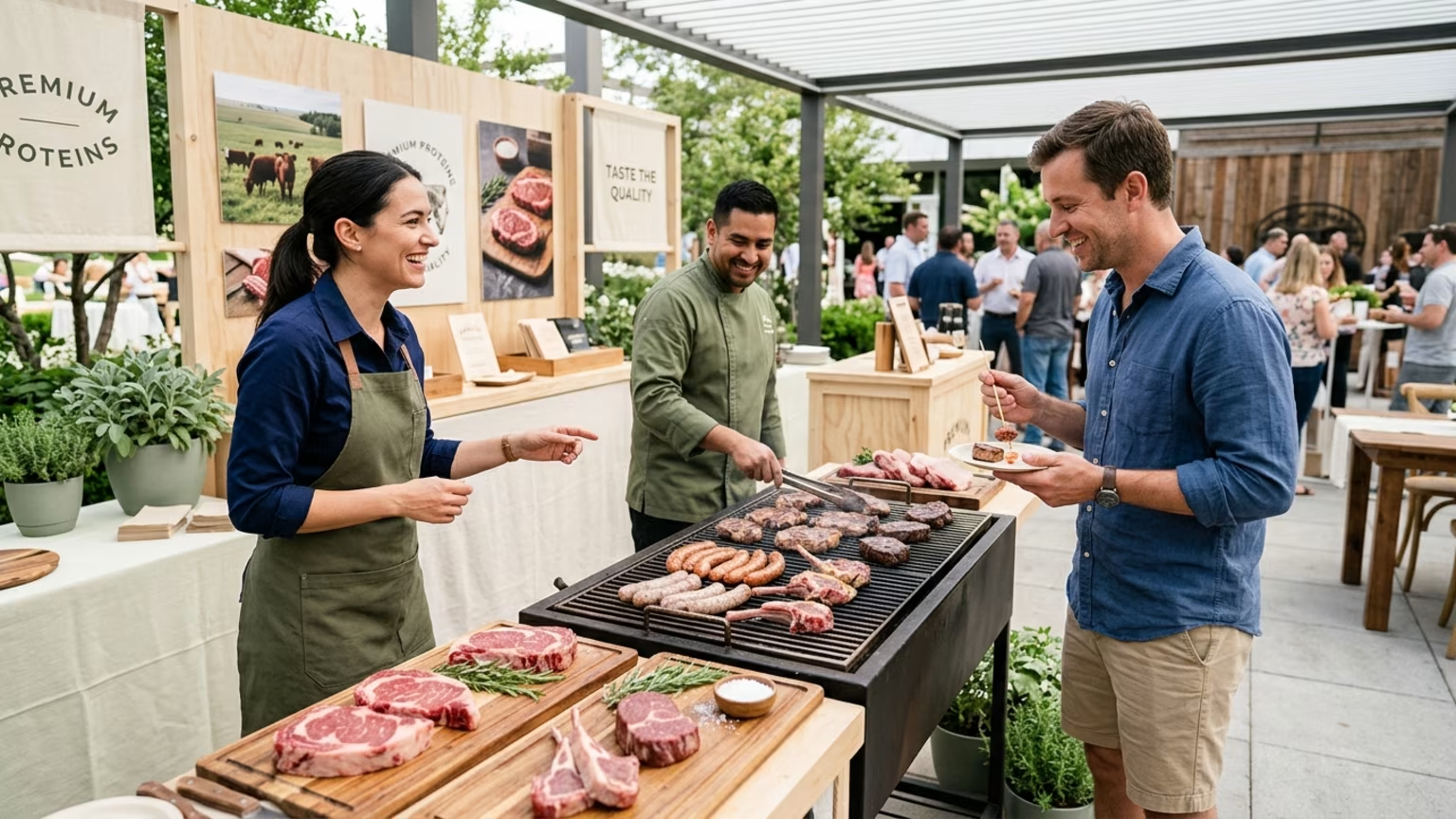
The Meat N' Bone model highlights a critical truth for modern food and beverage operators. Complex products require live education before consumers commit to premium price points. A butcher or trained hospitality professional can explain cut selection, cooking technique and quality in a live setting. This face-to-face interaction reduces hesitation and builds immediate trust.
For CPG brands, field marketing is no longer just a promotional expense. It is a necessary engine for driving trial and boosting retail sell-through. Across our history, we have delivered more than 1,000 campaigns in all 50 states for more than 200 brands. That history has given us deep experience across different retail settings, target audiences and market conditions. We deliver carefully executed, face-to-face marketing experiences designed to capture attention and generate measurable sales pipeline.
A Director of Brand Strategy in the CPG snack division shared: "The Makai team turned our product launch into a sensory event that shoppers still talk about. From creative storytelling to flawless in-store execution, they made snack time unforgettable. We couldn't have asked for a stronger partner." Our team created an in-store experience that left a lasting impression on consumers and became a memorable brand moment.
When a brand integrates its experiential strategy with shopper marketing, the live tasting event becomes a direct entry point into the supply chain. Brands must stop treating live activations as isolated events. We build festival zones, premieres, and pop-ups that turn viewers into fans and fans into advocates. We design moments people want to share, using music tie-ins, screenings, and live stunts to bring stories to life while our crews manage execution and track reach and response metrics. This connected approach builds lasting consumer habits.
Treating physical experience as growth infrastructure creates immediate logistical demands on field marketing teams. Meat N' Bone reports that it has already fulfilled more than 500,000 orders for more than 150,000 guests. Handling that volume while expanding to new retail footprints requires strict inventory management and flawless event staffing. If an experiential program creates demand, the fulfillment network must instantly capture it.
This domino effect changes how marketing teams build their internal playbooks. Live events now require pre-event data capture planning, matched control stores and precise attribution models. Every chef demo or tasting must have a defined path to purchase. This might include a tracked SKU, a loyalty signup or a retailer-specific code. If you launch a physical activation without tracking these conversions, you are running blind. Brands must focus heavily on proving their Return on Investment while standardizing their field operations.
The demand for tight execution extends to the specific concepts a company deploys. Meat N' Bone identifies three food-and-beverage concepts under its umbrella: The Wagyu Bar, The Wagyu House and Get The Cook. Managing multiple hospitality concepts requires specialized national execution capabilities. Staff must be trained uniformly, product handling must be exact and every consumer interaction must meet brand standards. Without disciplined event logistics, a multi-concept rollout quickly fractures.
Professional brand teams require absolute field discipline to protect their investments. A VP of Marketing in the CPG beverage category told us: "Robbie, your leadership and vision turned our campaign into something truly special. The Makai team brought our new drink to life with energy, creativity, and flawless execution. Thanks to you, our brand isn't just tasted, it's remembered." Our team's approach transformed their product launch into a memorable brand experience. Premium brand activation services must lock down these details long before the first consumer sample is served.
Scaling a complex consumer operation requires leaders who understand both the stage and the supply chain. The Meat N' Bone announcement explicitly names advisors with extensive backgrounds in hospitality, experiential marketing and CPG operations. This group includes Barry T. Kates of Innovative Group, which has served organizations like PepsiCo, Heineken and Red Bull. It also includes Rob Wilder of José Andrés Group, an organization operating more than 45 restaurants across North America and the Bahamas.
The advisory committee also brings significant supply chain and social impact expertise. Deb Luster is identified as founder and former president of Annie's Homegrown. Wilder is also identified as a co-founder of World Central Kitchen, which the release says has served more than 500 million meals in humanitarian emergencies. This level of logistical experience proves that scaling physical retail is a matter of strict infrastructure management.
Meat N' Bone CEO Luis Mata noted the strategic intent behind these appointments. He stated that the advisors combine "brand-building prowess, hospitality expertise, supply-chain mastery and capital discipline." This specific combination of skills shows where the industry is heading. A successful retail launch requires the exact same focus on logistics as it does on consumer engagement. Marketing leaders can no longer afford to separate their event teams from their distribution managers.
Is your brand's field marketing strategy generating trackable sales data, or are you just counting the number of samples handed out?
Scaling a physical trial program demands strict operational oversight to connect consumer interactions to real pipeline. When CPG brands face inefficient post event follow up and CRM routing, Makai takes total control of the field logistics. Under our Mobile Sampling Tours capability, we deliver your brand directly to audiences through on the go experiences that drive trial and awareness.

30 Years Experiential & Retail Activation Partner for CPG & Beverage Brands | Multi-Market Demos, Roadshows & Costco/Club Programs That Actually Sell