Robbie Thain
Founder, CEO

Walgreens plans to install digital screens in 1,200 U.S. locations in October 2026. We break down how this retail media rollout impacts CPG field execution.
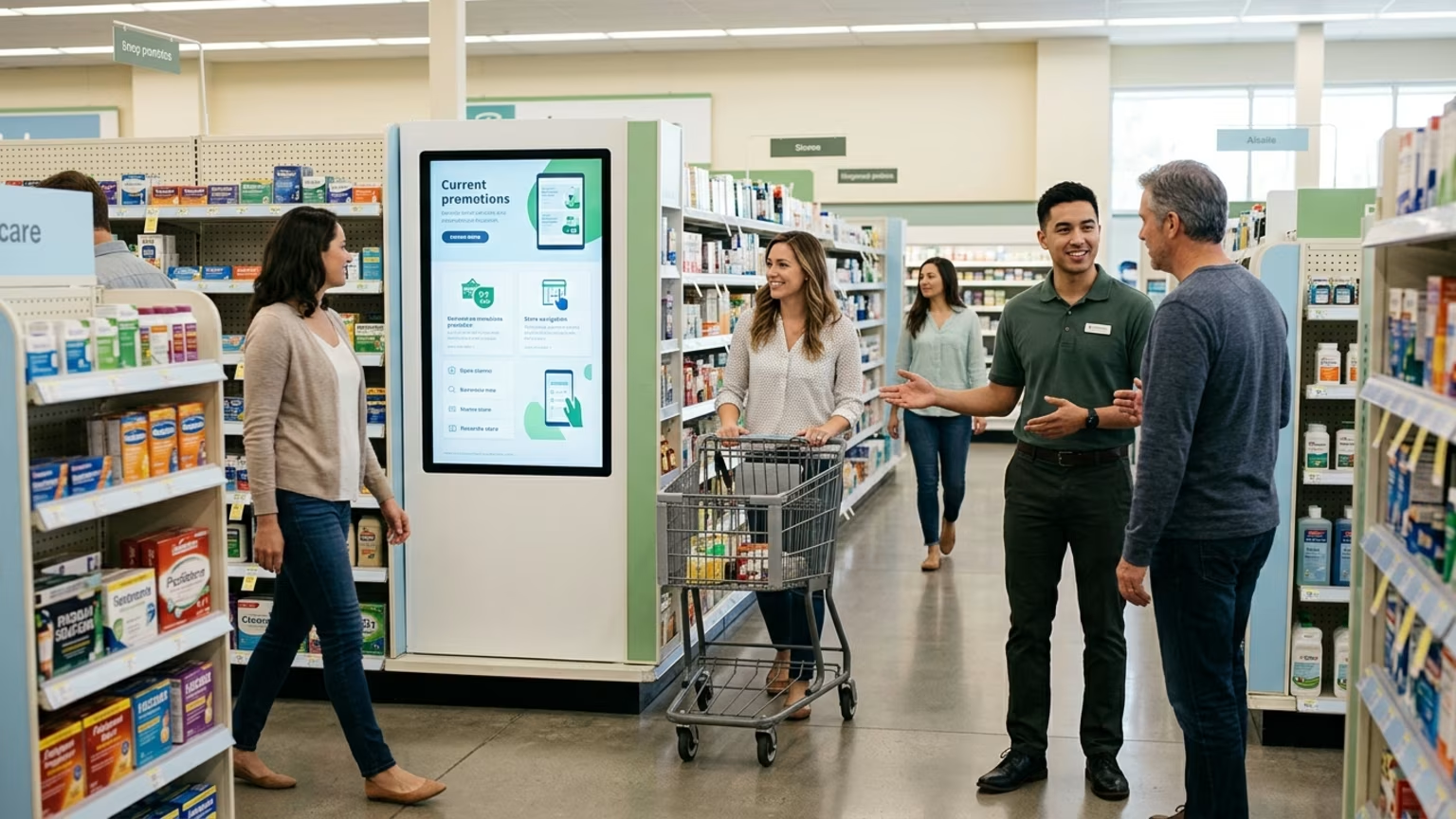
In October 2026, Walgreens plans to begin installing digital screens in 1,200 U.S. stores through a partnership with in-store media company Looma. The initial setup includes two large screens per participating store. One screen will sit near the front of the store, and the other will operate in the pharmacy waiting area. Digital end caps will complete the initial physical footprint.
The structural approach represents a distinct pivot for the retailer. Unlike Walgreens' 2018 deployment of Cooler Screens, these new Looma units will sit alongside products rather than blocking product visibility entirely. The previous Cooler Screens initiative reportedly faced crashes, incorrect product displays, and fires. That relationship ended in a 2023 lawsuit involving a dispute valued at $200 million.
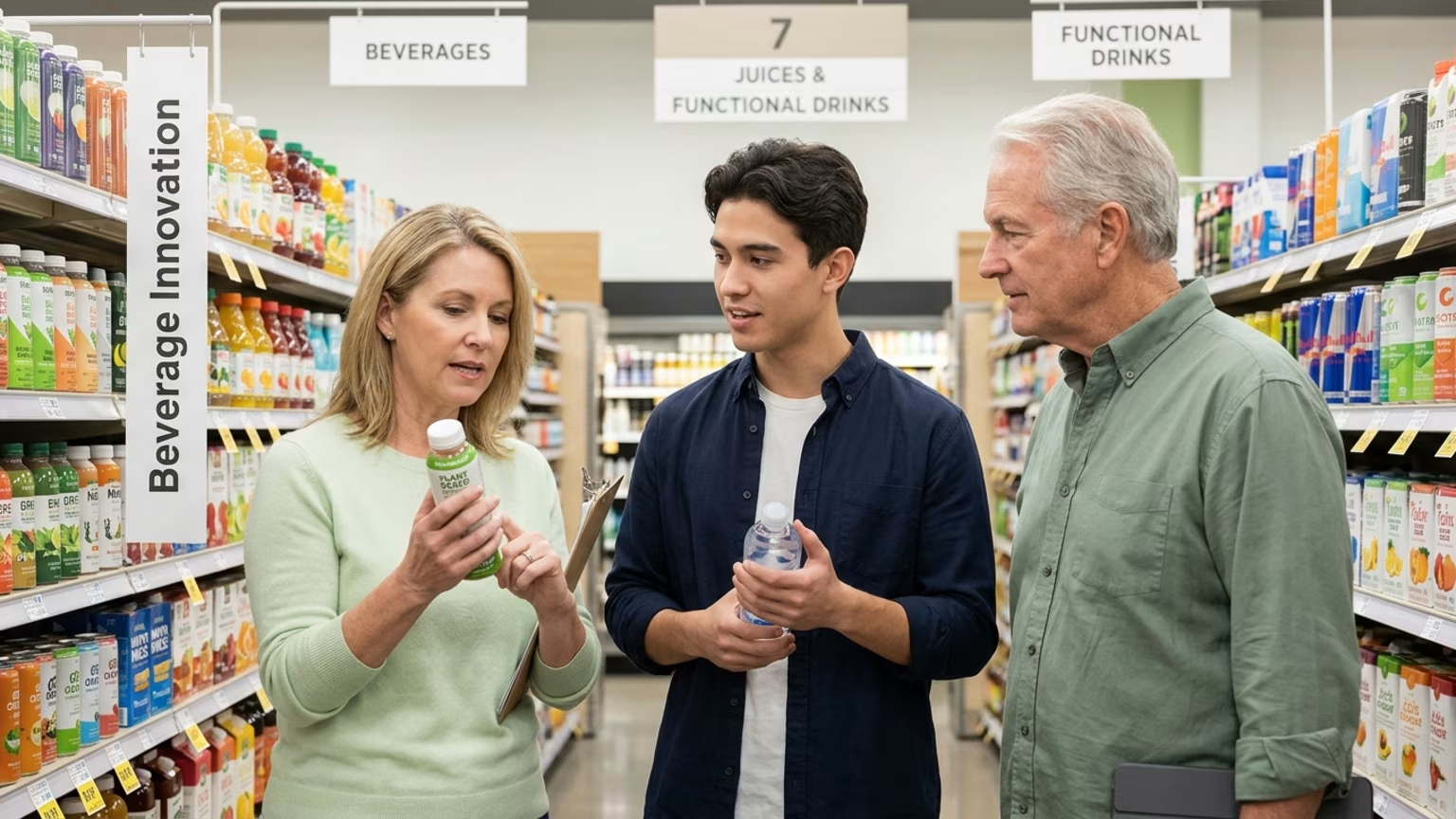
This new program positions screens as complementary merchandising fixtures. Walgreens intends for the screens to carry advertising and educational programming across beauty, personal care, and grocery categories. The displays will also feature content for pharmacy and wellness brands. The retailer chose Looma partly because its hardware is designed to educate rather than interrupt shoppers. Digital end caps will feature single brands or host category-level educational content produced by Looma.
The distinction between blocking shelves and complementing them matters significantly for physical brand activations. The new screens function as contextual signposts that guide shoppers toward the actual inventory sitting right beside them. When a screen runs an educational clip about a wellness product, the consumer can simply reach over to purchase it. This removes the friction that occurs when advertisements are disconnected from the actual point of decision.
John Storms, Walgreens' vice president of digital and retail media, frames the rollout as a push toward higher-performing in-store placements. Storms spent more than 20 years at Target before joining Walgreens recently. The retailer says it will assess campaign performance using full-funnel metrics instead of just counting ad plays. This requirement forces brands to prove that their in-store media actually moves physical inventory.
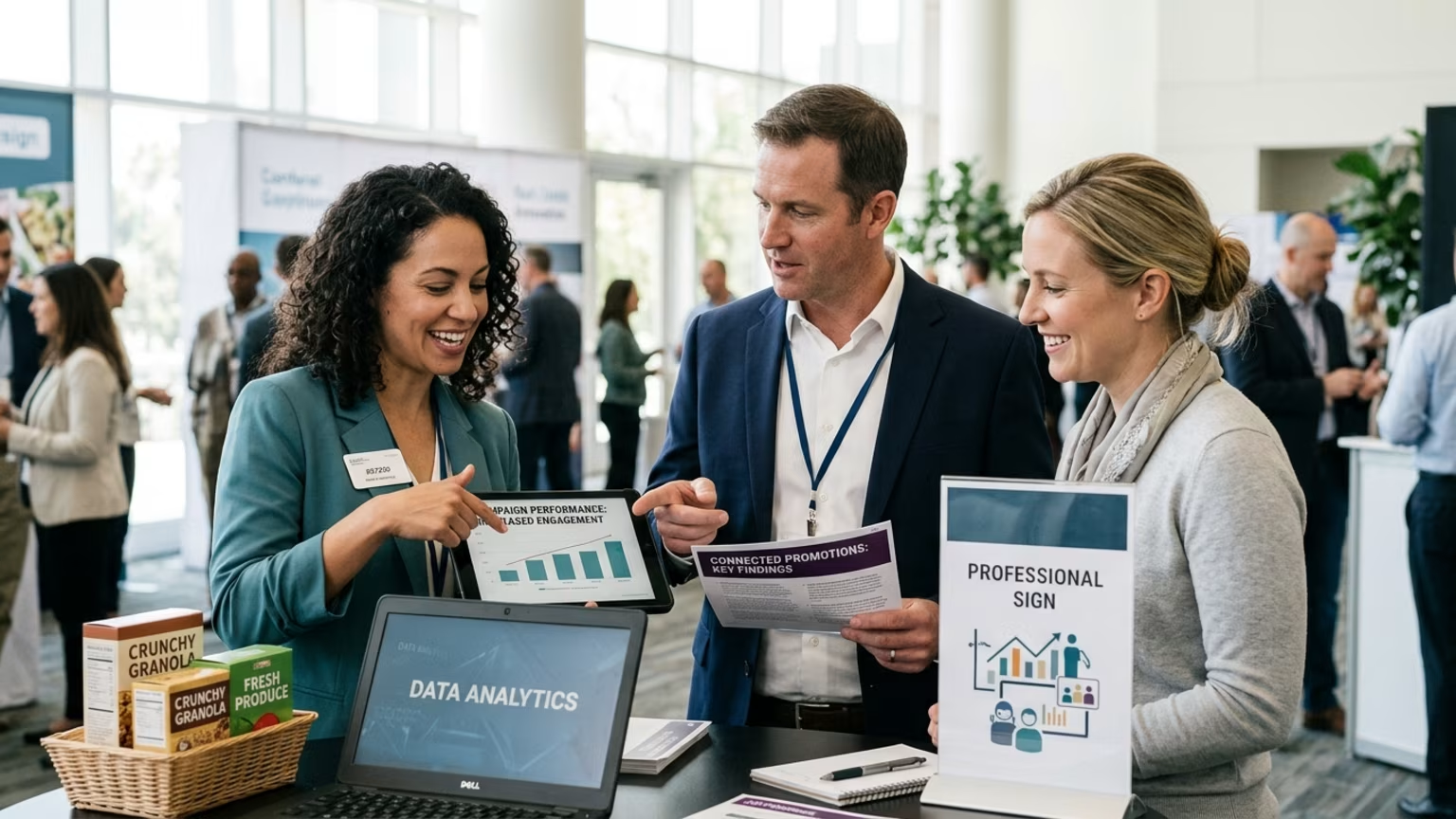
Digital screens create a massive canvas for consumer packaged goods brands, but they do not replace physical operational discipline. A strong creative impression falls flat if the promoted product is out of stock on the adjacent shelf. At Makai, we view these in-store media placements as powerful extensions of a broader physical shopper marketing strategy. They work best when they connect digital awareness to immediate real-world purchasing capability on the floor.
Brands often treat retail media as a detached digital buy, forgetting that the consumer still has to pick up the actual item. We always look at how connecting the grocery aisle with digital tools reshapes field execution across the entire store. A screen next to a product should complement live interactions rather than compete with them. Trained brand ambassadors drive in-store sales through real conversations and product trials, and digital fixtures should reinforce that baseline strategy.
Our team created an in-store experience that left a lasting impression on consumers and became a memorable brand moment. A Director of Brand Strategy in the CPG snack division shared: "The Makai team turned our product launch into a sensory event that shoppers still talk about. From creative storytelling to flawless in-store execution, they made snack time unforgettable. We couldn't have asked for a stronger partner."
When you plan a physical campaign, you need absolute control over the inventory sitting right next to the advertisement. The screen might spark initial curiosity, but the physical presentation of the brand closes the sale. Marketers must integrate their media budgets with their field merchandising efforts to generate measurable sales pipeline. If a digital end cap promotes a beauty item, the corresponding retail trial must be executed flawlessly to capture demand.
The expansion of physical media networks places immediate pressure on field staffing and supply chain coordination. If an end cap displays a continuous educational loop about a new snack line, inventory depletion happens much faster. Field managers will need tighter communication with store-level staff to maintain stock during peak promotional hours. When a brand integrates a sampling event with digital signage, the logistical complexity multiplies rapidly.
Brands relying on physical marketing know that shopper attention is incredibly fragile in a grocery or pharmacy setting. A screen might draw an eye, but if the shelf is messy or empty, the entire investment is wasted. CPG brands adapting to retail media realities face intense pressure to prove event ROI through qualified pipeline. This means supply chain coordination must match the speed of the digital content loop to prevent costly stockouts.
Retailers are heavily expanding these formats, forcing brands to navigate an increasingly complex physical environment. CVS expected to have approximately 11,000 digital screens nationwide in 2026. The CVS format includes checkout advertising on point-of-sale systems in about 7,000 stores. CVS had also installed digital end caps in more than 600 stores.
This broad industry rollout means marketing teams have to monitor physical execution across multiple different banner formats simultaneously. Evaluating CPG brand trial and conversion strategies in a fragmented market requires tight discipline. You cannot simply push play on a digital asset and assume the physical store will adjust automatically. Flawless field logistics must back up every digital impression generated at the shelf.
The physical environment dictates how shoppers receive information, making placement critical for field teams. A March 2026 survey of more than 1,000 shoppers found greater receptivity to pharmacy-area advertising than to aisle shelves and cooler screens. Consumer Equity Partners projects U.S. in-store retail-media advertising to grow 33.1% in 2026. However, it still accounts for less than 1% of total U.S. retail-media spending, leaving plenty of room for brands to design better physical interventions.
Understanding shopper psychology remains vital when coordinating these digital and physical layers. Storms noted that Looma's approach considers influencing the point of purchase with merchandising and the customer in mind. He specifically highlighted pharmacy waiting areas as providing tremendous dwell-time exposure for brands. This observation means field teams can strategically plan longer educational interactions in specific zones.
Andrew Lipsman, who collaborated on the March 2026 survey, pointed out that execution quality remains critical. He warned that distracting promotional content that shouts at consumers can damage the overall customer experience. Brands must match the energy of the creative to the exact location where the shopper stands. A waiting area allows for deeper brand education, while a fast-moving aisle requires immediate visual clarity.
We successfully integrated multiple experience layers to convert casual participants into committed brand advocates. A Brand Manager in the CPG space shared: "Makai transformed our test-drive activation into an emotional brand journey. They connected technology, lifestyle, and experience seamlessly, and turned casual visitors into loyal fans." This integration of technology and physical interaction proves that execution dictates the final outcome.
This nuance perfectly illustrates how CPG retail media strategy optimizes in-store engagement and performance. We consistently see that matching the message to the physical zone turns scattered attention into concentrated interest. Brands in health and wellness must verify that their educational claims are properly substantiated beside the physical product. Aligning the digital narrative with the real-world shopping experience builds lasting trust.
These digital networks introduce serious data requirements to a space historically governed by manual observation. Walgreens states it will evaluate performance using full-funnel metrics, demanding that brands justify their physical media spending. Looma currently operates more than 7,000 screens across 10 retail banners and claims to reach 13 million unique shoppers per month. As these networks mature, brands must decide if their internal operations can support this level of integration.
Are your field merchandising and logistics teams equipped to execute flawlessly beside these new digital touchpoints?
Field marketing directors managing multi-regional retail media rollouts require absolute synchronization between their digital displays and physical inventory to convert shoppers. When campaigns suffer from scattered attention and poor booth flow, Makai takes command of the activation. Under our Retail Demonstrations capability, trained brand ambassadors drive in store sales through real conversations and product trials.

30 Years Experiential & Retail Activation Partner for CPG & Beverage Brands | Multi-Market Demos, Roadshows & Costco/Club Programs That Actually Sell