Robbie Thain
Founder, CEO

Pico's US$1 million AI investment signals a major shift in event measurement. Read how CPG brands must adapt to turn physical foot traffic into real ROI.

In late July 2026, experiential events specialist Pico established a US$500,000 Innovation Centre at its Kallang headquarters. This launch anchors a broader move by the company to invest US$1 million in artificial intelligence capabilities for its MICE clients. The funding covers new talent, structured training, and data literacy initiatives. It also supports technology partnerships and new AI powered solutions.
The company says 30% to 35% of its clients are now seeking AI powered and measurable event experiences. Demand for data driven event measurement has increased 20% over the past two years. Pico aims to integrate AI supported solutions into 25% to 30% of its projects by 2030. The company operates as a brand activation and experiential events specialist with a presence in 38 cities.
This financial commitment signals a major industry shift from counting simple attendance toward proving strict commercial value.
Pico developed its testing environment alongside Accenture, which is providing the AI platforms and necessary data infrastructure. Accenture is also delivering the enterprise technology support required to process heavy volumes of live interaction data. The centre operates as a controlled testing environment where Pico and its clients trial new AI applications. Teams assess these technical solutions for usability, security, and user experience before any wider rollout occurs.
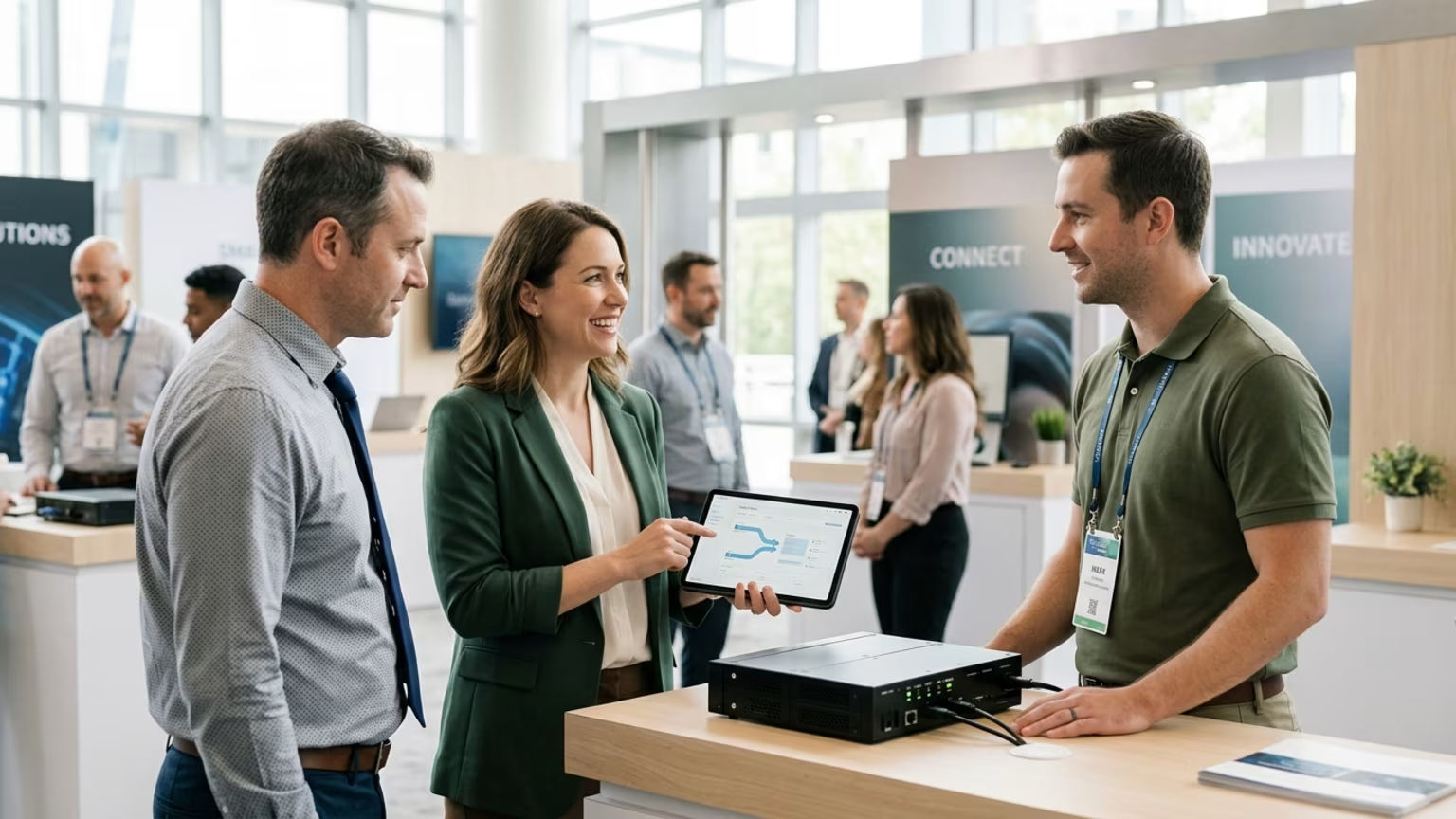
The planned applications span the event journey from initial registration through on site networking and follow up. Potential use cases include real time visitor analytics, event automation, audience response analysis, and personalized session recommendations. The system can also assist with business contact matching and identifying which specific interactions deserve post event follow up. By tracking visitors across the entire engagement timeline, marketing teams gain a clearer picture of actual audience behavior.
The more sensitive the audience or sector, the more critical it becomes to define data retention and access policies. If organizers collect massive amounts of tracking data without a clear plan, they create significant security liabilities. The Innovation Centre allows teams to resolve these compliance issues in a safe space before real consumers interact. This cautious approach ensures that when the AI applications do roll out, they improve the event rather than disrupt it.
Pico has already applied generative AI at the SG60 Heart&Soul Experience at the Orchard Library. The activation transformed visitor conversations and specific choices into highly personalized stories. This resulting interaction data gave organizers live insight into which themes attracted the most interest. The event team then used those insights to refine their overall event design and engagement strategies in real time.
However, this US$1 million initiative is a capability building effort rather than a completed financial success story. The available public reporting does not show a quantified financial return from the Pico investment. The Innovation Centre remains a developmental space where solutions are refined rather than fully proven at scale. The company is building the infrastructure to improve measurement and follow up, but it has not claimed to have solved event ROI entirely.
At Makai, we view this shift as a loud mandate for food, beverage and consumer goods brands. A crowded trade show booth can indicate strong brand visibility, but it does not by itself demonstrate qualified interest. We know that basic attendance numbers, post event surveys, and anecdotal feedback do not adequately show who was genuinely interested. Brands using physical experiences for product trial or retail engagement must track metrics that prove actual commercial impact.
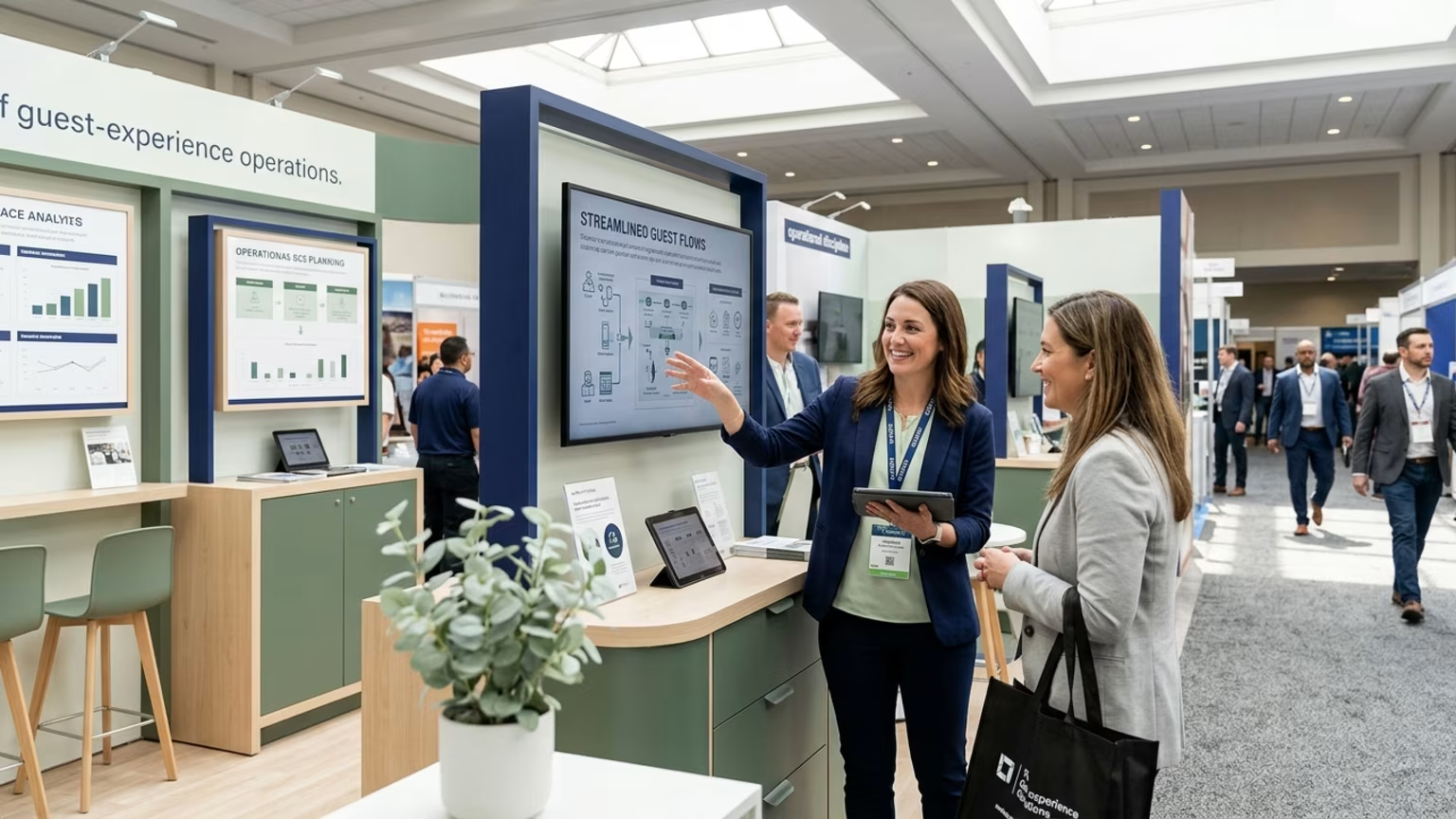
We build festival zones, premieres, and pop ups that turn passive viewers into dedicated fans and active advocates. We design moments people want to share, using music tie ins and live stunts to bring stories to life. While our crews manage the heavy execution, we track reach and response metrics to validate the investment. Experiential marketing practitioners commonly recommend tracking unique attendees, dwell time, engaged minutes, and qualified leads rather than just footfall.
When brands operate without these physical constraints, they often misinterpret passive traffic as genuine demand. A field marketing director who cannot distinguish between a passing glance and a dedicated conversation will inevitably miscalculate their return on investment. Marketing operators who understand how automated lead capture connects live event engagements to real revenue hold a massive strategic advantage.
Across our history, we have delivered more than 1,000 campaigns in all 50 states for more than 200 brands. That extensive range has given us deep experience across different products, retail settings, and market conditions. We know that scaling a physical trial program demands strict operational oversight to connect consumer interactions to real pipeline. You cannot simply bolt new software onto a poorly planned footprint and expect high quality sales leads.
The correct key performance indicator always depends on the specific activation objective your team sets. A beverage sampling program may prioritize product trial and retail lift, while a business exhibition may prioritize qualified meetings. Connecting those live promotional offers to closed loop measurement requires flawless execution on the retail floor.
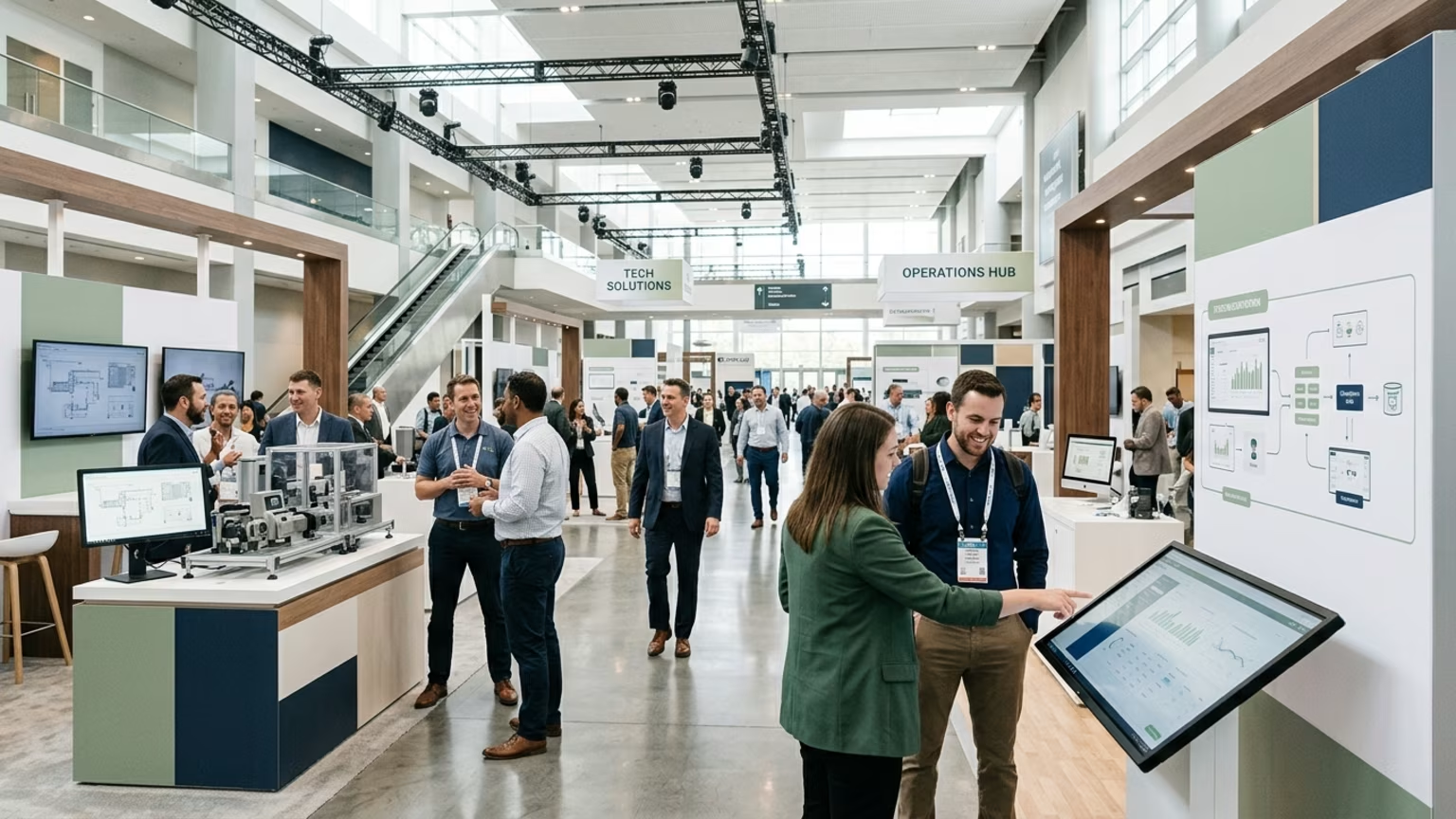
Tracking visitors across their engagement journey fundamentally changes how field marketing directors allocate their labor. Trade show measurement guidance suggests that live traffic data can help teams adjust staffing dynamically during the event. Combining traffic metrics, lead scans, and engagement activity can produce a more complete post event report than maintaining separate spreadsheets. Real time visitor flow information helps teams identify busy periods, underused zones, and moments when staffing needs to shift.
For a consumer brand activation, that flexibility means moving product specialists toward a busy demonstration area when necessary. It also allows teams to add staff when qualified visitors arrive, or to prioritize high value accounts over general traffic. A standard trade show ROI calculation is commonly expressed as revenue generated minus total investment, divided by total investment. However, trade show measurement specialists constantly note that this formula is only meaningful with consistent data capture.
Experiential marketing campaigns often struggle because they fail to track the progression from initial awareness to a qualified opt in. By defining what constitutes an engaged minute versus a passing glance, event teams can feed cleaner data into their CRM systems. That calculation only holds meaning when the event team captures data consistently from the initial interaction through to revenue. Building a structured labor model for your physical footprint ensures your staff can capture this data accurately.
The measurement challenge requires marketers to separate mere physical attention from a truly qualified business engagement. A person walking past a booth and a person completing a product demo represent entirely different levels of value. Event reporting should carefully distinguish among total entries, unique visitors, dwell time, and actual product demonstrations. Field marketing directors must define their minimum lead fields and qualification rules long before the physical event begins.
This proactive approach ensures that the captured records are clean enough for sales teams to actually act upon. If data is collected without a clear business purpose, teams end up with more dashboards but no better decisions.
Lim Kian Meng, Pico Group's senior vice president of operations for Asia Pacific, summarized the required mindset perfectly. "We start with the experience, not the technology," Lim said regarding the company's new AI testing environment. He argued that AI should make interactions more relevant and clarify what those specific engagements actually achieved. He warned against simply making live events more technologically elaborate without a clear business purpose.
Lim stressed that technology alone does not create tangible value for the brand or the consumer. Teams must possess the data literacy and operational ability to apply AI meaningfully to the attendee experience. People, rather than software tools alone, determine whether an artificial intelligence system creates actual business value. Event teams must be able to interpret patterns, recognize incomplete data, and decide what operational action to take.
AI recommendations require human judgment to prevent automated errors from damaging consumer trust. A poorly trained team might blindly follow a software recommendation that makes a trade show booth feel robotic and unwelcoming. The broader initiative identified three main implementation challenges: client readiness, data governance and security, and required analytical skills.
For organizations handling sensitive customer information, strict privacy protocols and regulatory compliance must be secured before launch. Personalization based on attendee behavior must always be designed around clear consent and secure data handling practices. If a brand ignores these governance controls, it risks alienating the exact audience it wants to engage.
The most practical takeaway for a brand marketer is to define the commercial objective before adding measurement technology. The strongest measurement model always begins before the show and continues long after the physical activation ends. First, identify your target audiences, key accounts and required data fields during the pre event phase. Then, capture accurate attendance, behavioral patterns and qualification signals while operating on site.
We designed and managed a 40 by 20 foot trade show environment for Glanbia at Natural Products Expo West 2025. We handled the concept, operations, staffing, and breakdown, bringing multiple major nutrition brands into one unified space. We distributed more than 14,000 recorded product samples across the coordinated activation stations for think!, Isopure, Optimum Nutrition and Amazing Grass. By keeping our physical operations tight, we ensured that the massive volume of interactions translated into clean, trackable data.
Immediately after any event, marketing teams must route leads, trigger relevant follow up, and review overall performance. Later in the cycle, you must connect those physical event interactions with booked meetings, pipeline opportunities, or retail sales. The practical value of any event technology is simply whether it helps a team allocate people more effectively. Your immediate next step is to audit your most recent activation report and ask a hard question.
Did this data improve our business decisions, or did it just tell us our booth was busy?
Overhauling how your brand measures audience engagement across the event journey requires a partner who understands physical execution. When marketers struggle with the difficulty measuring real ROI from live events, Makai implements strict operational controls to validate performance. Under our Costco Roadshows capability, we manage end to end Costco roadshows that bring brands to shoppers through live demos, real conversations, and measurable sales impact.

30 Years Experiential & Retail Activation Partner for CPG & Beverage Brands | Multi-Market Demos, Roadshows & Costco/Club Programs That Actually Sell