Robbie Thain
Founder, CEO

Learn how B2B go-to-market teams use targeted outreach and automated lead capture to turn chaotic trade shows into predictable, multi-million dollar pipelines.

The booth is packed with eager faces, but your top rep is busy explaining logistics to an intern. By the time they turn back around, the key buyer has vanished into the crowd. You just lost a massive deal, and you will never even know it happened.
Connecting live experiences to actual revenue requires replacing manual processes with automated qualification systems. By integrating targeted pre-show outreach with strict on-site data capture, brands can consistently transform fleeting floor interactions into measurable pipeline growth.
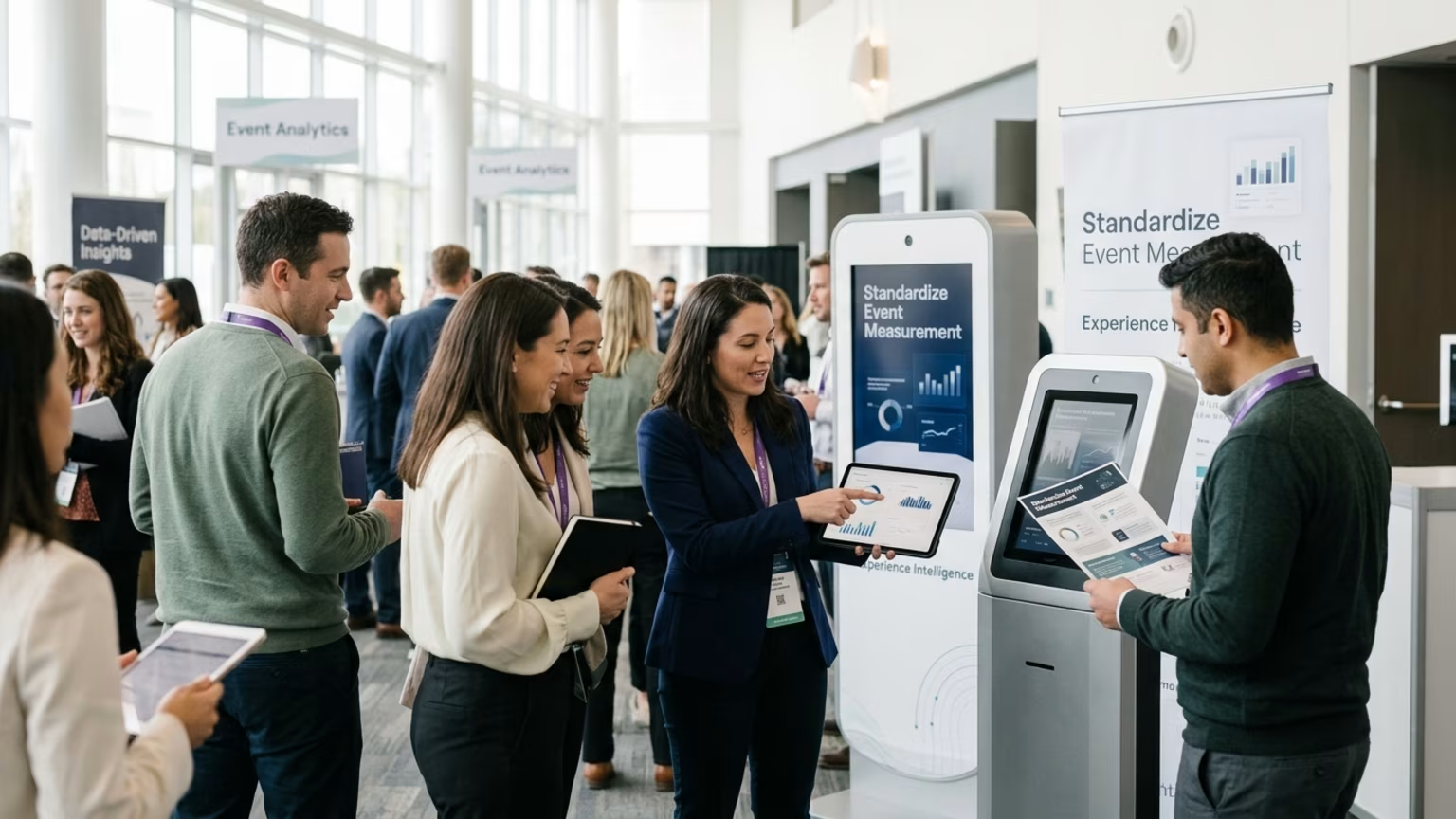
Proving Return on Investment (ROI) from live events is a massive headache for field marketing leaders. The reality of a trade show floor is often a blur of missed connections, frantic conversations, and untracked interactions. Field teams spend months planning beautiful booths, coordinating logistics, and designing engaging product displays. Yet, the actual capture of prospect data frequently falls back to outdated paper forms, dropped business cards, and manual entry.
This chaotic environment creates a massive gap between brand engagement and direct sales follow-up. When reps are tired and the aisles are packed, disciplined qualification often goes completely out the window. Attendees walk away with a free product sample, a branded pen, or a nice tote bag. The brand walks away with a pile of useless contact information that sits on a desk for three weeks.
By the time sales reps finally start calling those leads, the prospects have forgotten the conversation entirely. This delay kills conversion rates and makes it impossible to justify the massive budgets spent on physical activations. Marketing leaders are left trying to report on vanity metrics like foot traffic instead of actual sales revenue. Without a real qualification system, the entire event becomes an expensive and untrackable branding exercise.
The disconnect often starts long before the actual event day even arrives on the calendar. Marketing teams get so consumed by complex shipping schedules and promotional items that they treat lead capture as an afterthought. They assume that having a good product and a nice booth is enough to generate meaningful business conversations. This naive approach ignores the brutal reality of how buyers actually behave when walking a busy convention.
Broader industry analysis, including recent B2B strategy reports from the Los Angeles Times, confirms that connecting live experiences to actual revenue requires replacing manual processes with automated qualification systems. A recent 2026 field marketing roundup detailed how one business to business go to market team generated 473 product demonstrations. This highly coordinated effort resulted in over 10 million dollars in measurable sales pipeline. They did not achieve this through bigger booths, flashier giveaways, or massive celebrity appearances. Instead, they relied on disciplined pre-show outreach, tight on-site qualification flows, and immediate post-event data routing.
This framework works by deliberately removing human error from the most critical moments of the event lifecycle. The approach treats the physical booth as just one strategic node in a larger digital conversion machine. You must prime the audience with targeted digital messaging before they ever step foot in the convention center. Once they arrive, the technology must force your reps to qualify them immediately through structured data capture.
When you connect these digital systems, you stop hoping for good conversations and start manufacturing qualified pipeline intentionally. Building a clear link between trade show activations and pipeline requires an integrated strategy that bridges field marketing and sales operations. Every physical touchpoint must map directly to a permanent digital record in your primary database. This is how seasoned operators turn expensive trade shows into highly predictable revenue engines for their companies.
Technology alone will never solve a fundamentally broken field marketing process. Your team must map the entire buyer path from initial awareness to final sale. This means writing targeted email sequences that address the exact pain points your event audience experiences daily. It requires training your staff to stop talking endlessly about product features and start asking targeted qualifying questions.
Translating this overarching strategy into real life takes military precision and absolute adherence to a proven tactical playbook. Field marketing teams must follow a strict sequential process to capture and qualify prospects without slowing down booth traffic.
These operational steps eliminate the traditional post-show processing lag that consistently kills sales momentum and deal velocity. By avoiding common lead capture pitfalls in experiential campaigns, marketing operators protect their event budgets and give their sales teams exactly what they need.
These specific protocols are completely useless if your on-site staff refuses to adopt them in practice. You must conduct mandatory training sessions before anyone is allowed to step onto the active exhibition floor. During these sessions, run mock scenarios where reps practice cutting off unproductive conversations gracefully and professionally. They must understand that their primary job is accurate data capture, not endless socializing with casual attendees.
You cannot effectively manage what you do not accurately measure. Building a strong financial business case for experiential marketing requires moving far past superficial engagement numbers. You must track specific lead and lag metrics to prove that your live events actually generate profitable financial returns.
For lead metrics, marketing leaders must monitor pre-booked on-site meetings, qualified badge scans per hour, and target accounts engaged. These numbers tell you immediately if your team is actually capturing the right kind of attention during the live show. If your hourly scan rate drops suddenly, you can adjust your floor strategy immediately instead of waiting for the post-event wrap-up. Real-time data visibility is the absolute only way to correct course before the expensive event officially ends.
Lag metrics provide the final verdict on your comprehensive campaign performance. You should track the total number of qualified opportunities created, the velocity of event leads, and total closed-won revenue attributed. When you focus relentlessly on these hard numbers, you stop defending your event budget and start proving your financial value.
Reporting these distinct metrics accurately requires a massive shift in how you configure your marketing technology platforms. You must build distinct digital campaign codes for every single physical event you attend throughout the year. This prevents valuable event data from getting lost in the general marketing pipeline noise. Clear digital attribution is the only way to prove your field team generates real financial impact.
This disciplined approach applies just as perfectly to premium consumer brands as it does to complex corporate sales cycles. We have executed over 1000 campaigns across all 50 states, bringing brands to life in every major U.S. market. From retail demos in Seattle to roadshows in Miami and events in Honolulu, our teams activate brands wherever our clients' audiences are located. In every single location, the difference between success and failure comes down to pure operational consistency.
Consider a recent national product launch for a premium beverage company trying to secure deeper physical retail placement. The brand needed to prove strong consumer demand to regional buyers who were skeptical about stocking the new line. Instead of just handing out free samples and hoping for the best, the activation team used targeted digital offers. This system captured critical first-party data and tracked actual retail sell-through following the live consumer event.
The resulting data proved conclusively that consumers who engaged with the physical activation purchased the product at a much higher rate. This concrete evidence allowed the brand to negotiate better store shelf placement and expand their retail footprint rapidly. They used hard experiential data rather than subjective stories to build a powerful business case for their retail sales team. The physical experience built the necessary emotional connection, but the automated data capture closed the deal.
The shift from vanity metrics to hard revenue completely changed the internal conversation with the executive board. Instead of constantly asking to cut the event budget, leadership started looking for fresh ways to scale the activation strategy. They realized that a properly managed live event was actually their most efficient and predictable customer acquisition channel. This proves that solid data capture transforms marketing teams from perceived cost centers into respected revenue generators.
A well-executed event should never feel like a stressful gamble for your busy marketing department. When you align strict operational discipline with modern data capture tools, your live activations become the most predictable part of your sales funnel. The true magic of experiential marketing happens when raw human connection meets flawless technical execution on the ground.
Start by auditing your next event plan and removing any manual data entry steps from your field team workflows. If you are ready to turn your trade show chaos into measurable pipeline, book a strategy call with our team today.

30 Years Experiential & Retail Activation Partner for CPG & Beverage Brands | Multi-Market Demos, Roadshows & Costco/Club Programs That Actually Sell