Robbie Thain
Founder, CEO

A September 2026 Resident.com playbook urges teams to map CRM fields and assign dedicated staff roles, transforming chaotic booth traffic into clean pipeline.
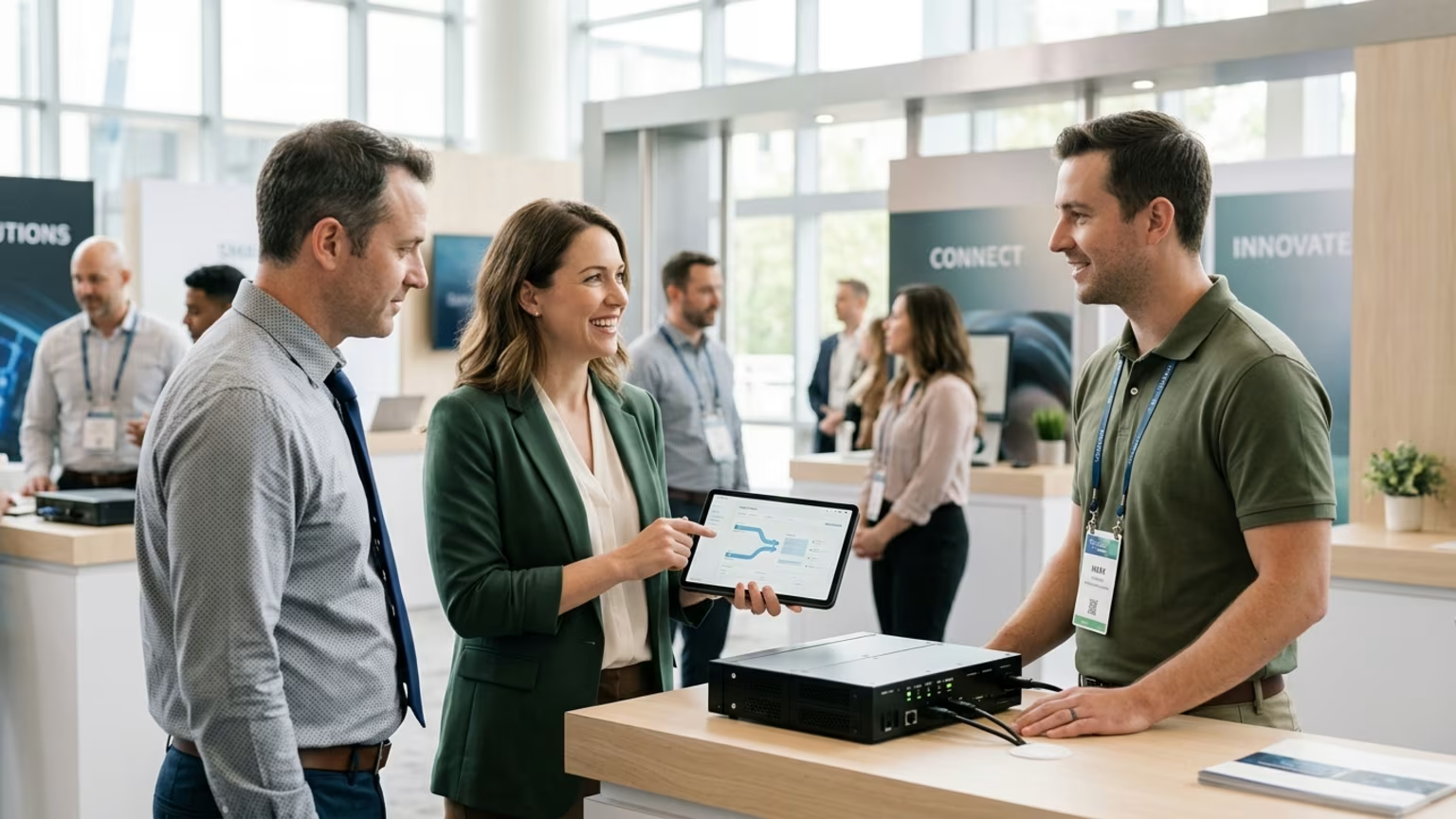
On September 9, 2026, Resident.com published “How Agencies Capture More Qualified Leads at Events.” The six-minute article detailed a rigorous playbook for transforming crowded booth traffic into verified sales pipeline. It challenged event marketers to abandon unstructured contact lists and manual note-taking habits. Instead, the publication proposed mapping qualifier fields directly to CRM software before field teams even reach the venue.
The core logistical change involves breaking booth staff into highly specialized roles. The playbook divides event personnel into "openers" and "closers" to manage traffic efficiently. Openers handle the initial attraction phase by scanning contacts and asking preliminary qualification questions. Closers, typically senior business development staff, take over the conversation once a prospect matches predefined criteria.
Staff need quick reference tools to execute these strategies rapidly on the floor. Resident.com recommends giving every booth worker a one-card ideal-client profile. This simple asset outlines observable qualification signals like company size, budget ranges, and clear disqualifiers. It also lists specific trigger events such as a leadership change, an agency review cycle, or a recent funding round.
Mounting hardware expenses are pushing teams toward flexible software alternatives. Resident.com estimates that official event lead-retrieval scanners cost approximately $350 to $735 per representative per show. These figures are based on published 2026 exhibitor order forms from ATD and AAOS. Furthermore, deploying a basic four-person agency booth can cost roughly $800 to $1,000 before scanning expenses.
Organizations are adopting app-based platforms to manage this overhead and centralize data. The article highlights Wave Connect as a lead-capture tool supporting badge, business-card, and QR-code scanning. The software markets "Waterfall Lead Enrichment" to automate research using multiple data providers and AI search algorithms. This feature verifies contact information such as email addresses, telephone numbers, LinkedIn profiles, and office locations.
The days of waiting until Monday to process gathered contacts are permanently over. Resident.com advises completing the CRM handoff within 24 hours of the event concluding. It specifically names HubSpot, Salesforce, and Zoho as platforms capable of receiving custom field mappings from capture workflows. Nightly synchronization allows follow-up messaging to begin while the brand interaction remains fresh.
For consumer brands relying on physical marketing, adopting this strict qualification process is vital. A raw badge scan does not prove that a contact holds actual buying intent. Registration data often lacks context regarding purchasing authority, retail distribution footprints, or product trial interest. Brands need actionable pipeline metrics rather than just massive interaction counts to justify their field investments.
Corporate leadership understands that real Return on Investment demands verifiable business outcomes. IAEE reports that face-to-face exhibitions continue to command the largest share of marketing budgets across all budget sizes. Exhibitors and leadership teams evaluate these events based on lead volume, generated pipeline, opportunities, and deals closed. Teams focused on evaluating footprint performance must align their field operations with these exact executive priorities.
Meaningful interactions require targeted questions that avoid an immediate or aggressive sales pitch. The Resident.com playbook suggests four questions to uncover what the prospect is working on and who handles it today. It also asks when the work needs to go live and who else participates in selecting a partner. These inquiries surface service interest, incumbent relationships, and timeline details naturally.
While agencies might lean on these specific questions, consumer goods brands must adjust their criteria. Food and beverage companies need to verify retailer status, current trial objectives, and impending launch timing. Connecting live engagements to downstream data is a non-negotiable requirement for physical marketing programs today. Leaders seeking to improve contact qualification must define their success metrics well before the show begins.
Physical activations no longer operate in a vacuum separate from digital marketing efforts. IAEE describes digital marketing and live exhibitions as complementary rather than mutually exclusive channels. Digital activity can support pre-event promotion, audience engagement, and post-event follow-up protocols. Meanwhile, the physical exhibition provides the crucial face-to-face engagement required to build lasting commercial trust.
This operational framework demands a complete redesign of the live consumer journey. Predefining staff roles means event spaces must physically accommodate smooth handoffs between openers and closers. A recommended booth conversation typically lasts three to five minutes under this structured model. However, the first 90 seconds are especially important for determining if a conversation becomes a potential opportunity.
Event success extends far beyond the physical boundaries of the corporate activation space. The playbook recommends utilizing a floater who works the aisles and educational sessions instead of remaining static. This person identifies opportunities outside the main footprint and seamlessly routes them back to the closers. It adds a layer of proactive field engagement to an environment that often becomes dangerously reactive.
Field execution now requires a rigid, centralized process for managing collected information. The playbook strongly recommends assigning a dedicated data owner to review records at the end of each day. This person checks for missing fields, lead priorities, and ownership assignments while conversations are still clear. Notes recorded immediately after an interaction are far more specific than those reconstructed back at the office.
The recommended workflow relies entirely on structured fields rather than broad free-text paragraphs. Suggested categories include service interest, priority, and projected timeline. Teams can also track the budget band and specific event source. Staff should always capture one specific conversation detail like a competitor mention or a named stakeholder. Implementing this rigid system requires structuring event data correctly and training personnel thoroughly in advance.
Moving data nightly introduces significant technical, privacy, and compliance requirements for the brand. Resident.com recommends checking vendors for SOC 2 Type II certification, offline operation, and shared access controls. Offline capability is particularly vital because convention center connectivity frequently fails during peak attendance hours. Brands must test these systems extensively to verify that timestamps and consent records synchronize properly.
Brands can also leverage sponsored educational content to capture highly verified audience interest. Freeman reports that 84 percent of surveyed attendees were open to sponsored learning when the sponsorship was disclosed. Furthermore, 66 percent said they would attend a sponsored session regardless of sponsorship if the topic interested them. This data proves that attendees will gladly trade their time and attention for genuinely valuable insights.
Technology can verify basic contact details, but it cannot manufacture actual buyer intent. Wave Connect’s published pricing starts at $10 per enriched lead and includes 10 free trial records. However, the Resident.com article explicitly cautions that enrichment addresses contactability rather than actual buying relevance. A verified phone number attached to a poor-fit prospect simply remains a poor-fit prospect.
The Resident.com playbook from September 9 provides a rigorous baseline for structuring chaotic event data. It demonstrates that mapping CRM fields, defining staff roles, and syncing records nightly can replace outdated manual habits. Yet, success ultimately requires balancing strict qualification standards with a natural, welcoming attendee experience. Over-qualification can rapidly turn an exciting brand moment into an exhausting administrative form.
Are your field operations capturing actionable demand signals, or is your team just collecting names in the dark?
Balancing rigid data capture with a natural consumer experience requires absolute field discipline. When food and beverage brand managers struggle with navigating complex event logistics, permits, and staffing, Makai takes command. We manage end to end Costco roadshows that bring brands to shoppers through live demos, real conversations, and measurable sales impact. Request a proposal

30 Years Experiential & Retail Activation Partner for CPG & Beverage Brands | Multi-Market Demos, Roadshows & Costco/Club Programs That Actually Sell