Robbie Thain
Founder, CEO

Learn how to fairly benchmark experiential marketing events by normalizing metrics like cost per lead, baseline sales lift, and objective-based performance.
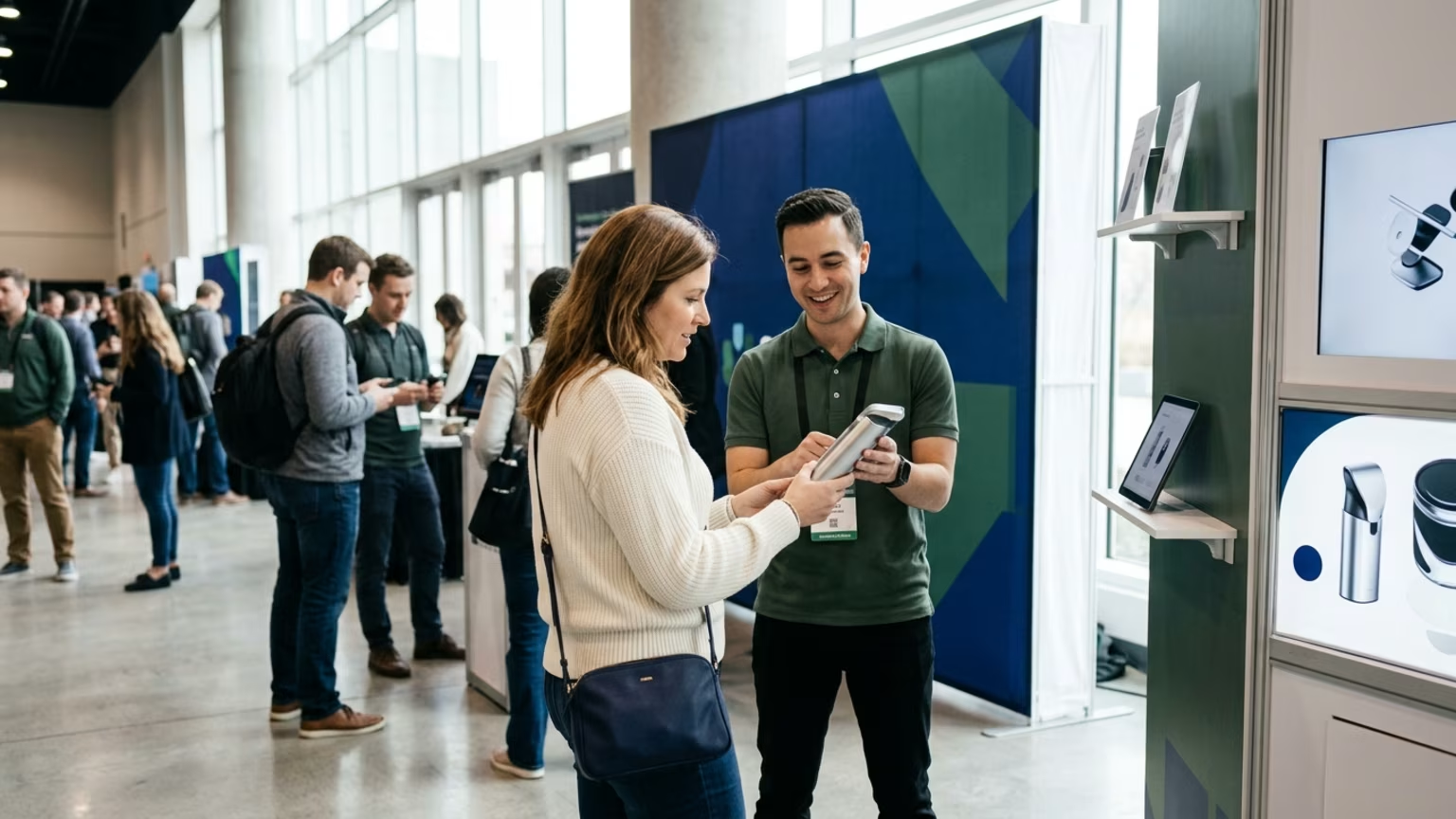
Raw foot traffic is an activity metric, not a commercial outcome. A larger audience does not automatically guarantee a better Return on Investment. Real benchmarking requires normalizing data against cost, audience quality, and specific business objectives.
Good benchmarking starts months before the actual event takes place. Complex field activations require unglamorous prep work to produce clean data. You must map your lead capture routing paths long before your brand ambassadors step onto the floor. If the underlying data architecture is broken, your final performance comparisons will be entirely useless.
We have executed over 1000 campaigns across all 50 states, bringing brands to life in every major U.S. market. From retail demos in Seattle to roadshows in Miami and events in Honolulu, our teams activate brands wherever our clients' audiences are located. That operational experience proves that messy field execution always creates compromised reporting. If you ignore the physical reality of the event, your spreadsheets will lie to you.
You must establish strict permitting timelines to ensure your venue access aligns with expected crowd flow. A delay in securing a municipal permit can shrink your operating window and artificially inflate your cost per interaction. Vehicle staging must be coordinated carefully to avoid last minute disruptions that ruin your setup hours. These logistical details dictate your total operational cost, which forms the denominator of every benchmark calculation. Precise execution is the core of strong operational planning.
Field managers must conduct rigorous training on lead capture software before shipping tablets to the venue. A badly configured form field will ruin your data collection strategy on day one. Your teams must test wireless connectivity and offline syncing capabilities at the actual activation site. If your technology fails during a massive crowd rush, you will lose hundreds of valuable contacts.
Comparing a retail demo directly to a massive corporate sponsorship is a massive analytical mistake. You need a structured operational playbook to evaluate performance across different environments fairly. Follow these exact steps to benchmark your field marketing campaigns.
Before comparing different formats, assign a specific primary goal to each activation. MOGXP, citing 2025 EventTrack data, reports that lead generation was an objective for 66% of surveyed B2B event marketers and direct sales for 61%. A trade show focused on pipeline generation must be measured entirely differently than a consumer pop up designed for product trial.
Track sheer volume alongside commercial relevance. MOGXP explicitly distinguishes activity metrics from outcome metrics such as qualified leads, meetings, opportunities, and revenue. High attendee numbers mean nothing if the audience lacks purchasing power or product fit.
Convert your raw interaction totals into standardized unit economics. Calculate your true cost per qualified lead by dividing the total activation budget by only your verified contacts. This levels the playing field between a highly targeted dinner and a massive convention hall footprint.
You must determine what would have happened if your activation never existed. Compare unit sales during the event window against historical seasonal data or unexposed control markets. This proves true incremental impact rather than just taking credit for existing momentum.
Always record situational variables like local weather, venue type, and competitive noise. You must account for retail distribution and physical stock levels during shopper marketing campaigns. This ensures you do not blame a solid creative format for a failure caused by low inventory.
Ensure your entire organization agrees on what constitutes a meaningful engagement. Different teams often use conflicting experiential attribution models if rules are not set early. A standardized data dictionary prevents regional managers from inflating their own performance metrics.
Your brand ambassadors represent a significant portion of your total event investment. You must track their specific interaction rates and overall throughput during peak traffic hours. A highly productive team can make a mediocre venue location perform exceptionally well. Conversely, poorly trained staff will waste premium footprint space by ignoring qualified prospects.
A trade show lead often requires months of nurturing to become a closed opportunity. Measuring only onsite conversions will severely undervalue events with long sales cycles. Extend your attribution window to match your actual customer purchasing timeline. This ensures your field marketing team receives proper credit for pipeline they actually generated.
Brands frequently derail their own reporting through preventable tracking mistakes on the show floor. The most common failure is relying on flawed data capture methods that lose critical prospect information. Collecting loose business cards or tracking leads on bad clipboards ruins your cost calculations entirely. Every interaction must route directly into a secure digital architecture using proper first-party data capture practices.
Another major failure point is failing to qualify booth traffic before logging it into the system. Amateurs treat every single badge scan as a legitimate prospect, which destroys their downstream conversion rates. You must train your field staff to disqualify irrelevant visitors quickly and politely. Inflating your total lead count only creates massive headaches for your sales team weeks later.
Misinterpreting sponsorship metrics remains a massive blind spot for marketing leaders. Mordor Intelligence, citing 2025 sponsorship research by the World Federation of Advertisers and Lumency, identifies Return on Investment measurement as a leading sponsorship management challenge. Amateurs simply count physical logo impressions and claim absolute victory. True operators demand evidence of qualified conversations, verified content downloads, and downstream retail lift.
Many brands fail because they ignore the operational disruption of the venue itself. A premium venue may provide higher quality access, but it often requires greater fees and complex security protocols. If a team fails to calculate these hidden labor costs, their benchmark efficiency will look completely distorted.
Finally, amateurs frequently make the error of comparing a targeted hospitality event against a high volume sampling tour. A small dinner may only reach fifty executives, but it could close millions in pending deals. A sampling cart might distribute five thousand units, but only generate minor brand awareness. Judging both formats strictly by total audience size completely ignores their differing strategic purposes.
A single activation is merely the starting line for serious revenue tracking and pipeline analysis. You must carefully watch how event sourced contacts progress through your sales funnels over long periods. Look closely at the late stage conversion rates of the leads pushed into your marketing automation systems. Short attribution windows often undervalue campaigns that simply involve much longer buying cycles.
Shopper marketing managers must continuously cross reference event dates with local store scanner data. This ongoing analysis reveals the true timeline of consumer purchase behavior after a physical brand interaction. If a massive retail lift disappears the moment your field team leaves the parking lot, your retention strategy is failing. The goal is long term behavioral change, not just a temporary spike in weekend sales.
Physical interactions will continue to drive serious commercial value for brands that measure them correctly. A report cited by Demand Gen Report found that 73% of working professionals wanted their companies to allocate more spending to in person events. Furthermore, 92% said in person gatherings helped them stay current in their industry. True measurement is a quiet act of patience that waits for the real outcomes to finally arrive.
Normalizing performance data across different event formats requires rigorous measurement controls on the floor, which is where Makai assumes full operational command. We eliminate the problem of low quality leads from crowded trade shows through Engagement Marketing, turning audiences into participants with live and digital experiences that invite people to try, share, and act.

30 Years Experiential & Retail Activation Partner for CPG & Beverage Brands | Multi-Market Demos, Roadshows & Costco/Club Programs That Actually Sell