Robbie Thain
Founder, CEO

A practical reading of NACS Show 2026 on sampling flow, staffing, replenishment and reporting for CPG and beverage marketing leaders.
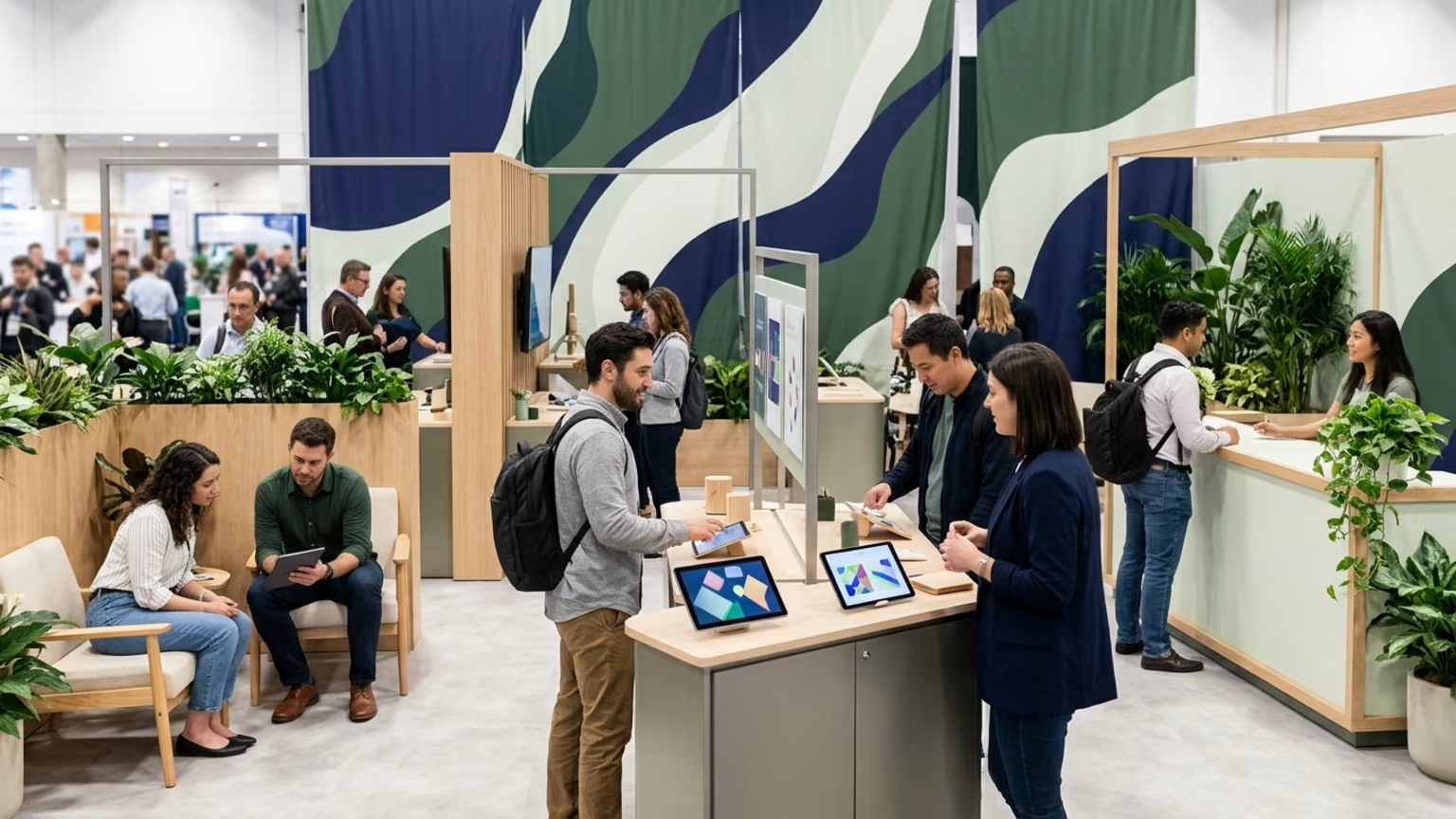
On October 6, 2026, NACS Show 2026 opened in Las Vegas for a run through October 9. CSP Daily News reported 25,572 attendees from 74 countries and territories. The Expo featured 1,090 exhibitors across 442,600 square feet.
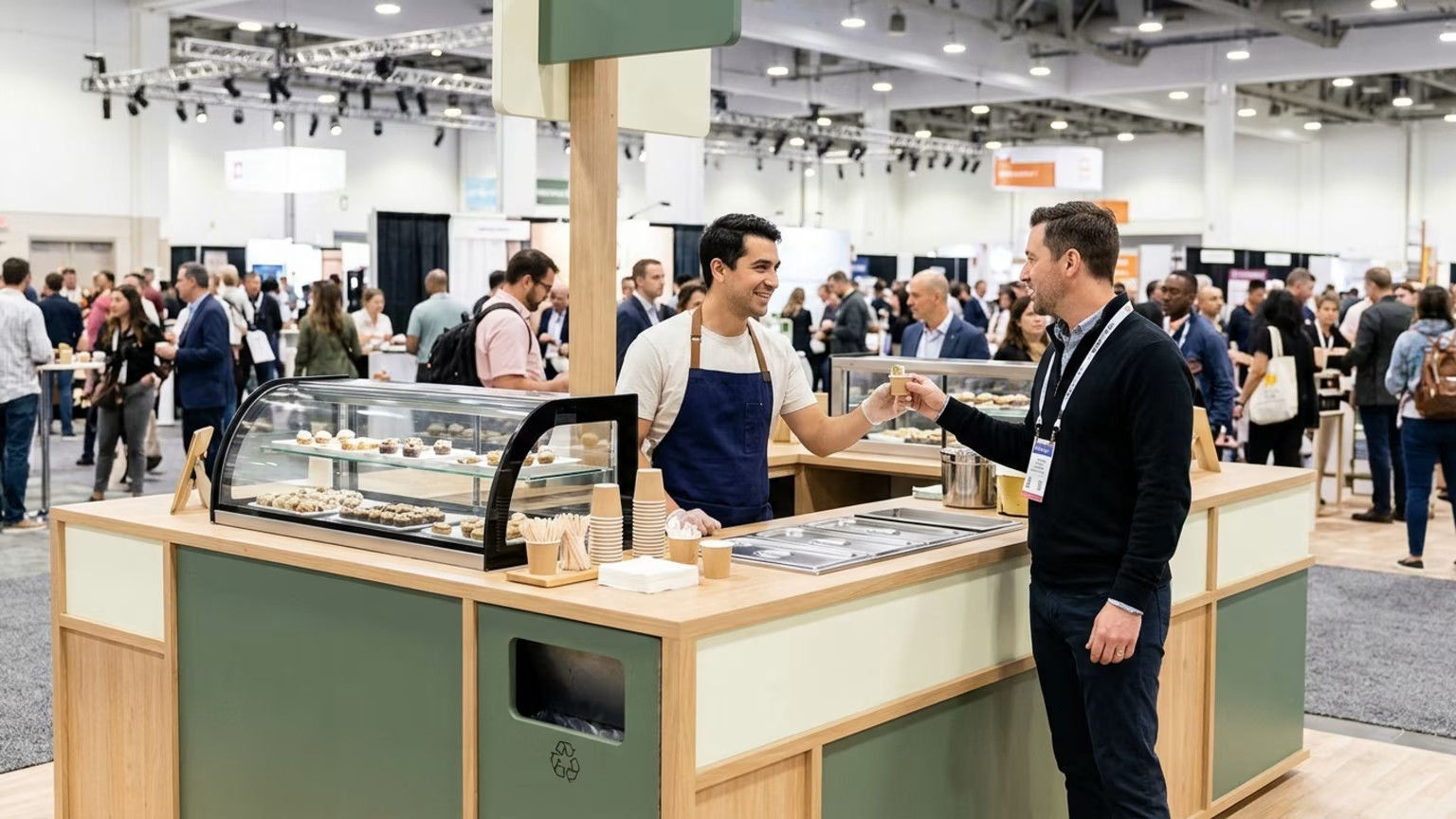
For food and beverage marketers reading the post-show coverage, the practical takeaway is not another booth aesthetic. A recap by Czarnowski Collective put sampling stations alongside visitor flow, replenishment and cleanup in the design conversation. The recommendation gives the work behind the counter a place in the creative brief.
Czarnowski Collective identified six trends its team observed on the floor. They included personalization, brand extensions and candy texture. The other observations covered protein, functional products and seasonal flavors.
What matters operationally is how those ideas become physical experiences. The recap described Hershey offering attendees a personalized photo wrapper. It also highlighted candy whose texture or sensory qualities could be experienced through sampling.
For sampling-focused exhibits, the recap recommends planning visitor movement and servicing alongside the stations themselves. It also recommends clear packaging, messaging and display placement when a familiar brand enters a new format.
These are practitioner observations rather than a representative market ranking. The coverage does not establish that a particular layout generated higher sales or Return on Investment (ROI). Attendance and product scans measure event scale and interaction rather than the commercial effectiveness of an individual booth.
Our reading is practical: the operating plan belongs inside the design brief rather than behind it.
For Makai, aloha means making people feel welcome. Discipline means taking the work required to serve them seriously. We believe a generous product experience should be matched by a clear plan for the people delivering it.
This matters to CPG and beverage brands because the business objective extends beyond handing out product. Our positioning centers on face-to-face experiences designed to generate measurable sales pipeline. A sample is an opportunity for a conversation, not a substitute for that objective.
Our retail demonstrations put trained brand ambassadors into stores to drive sales through real conversations and product trials. That is the human interaction we value in a trade show brief too: a product experience with room for someone to explain it.
Our services also connect the visible activation with its less visible support. Makai handles storage and nationwide coordination for sampling product and event gear. Our trade show work includes planning and managing spaces intended to attract attention and start customer conversations. We see those as connected responsibilities rather than separate definitions of success.
We designed and managed a 40 by 20 foot trade show environment for Glanbia at Natural Products Expo West 2025. The space brought think!, Isopure, Optimum Nutrition and Amazing Grass into one coordinated environment. We handled concept, operations, staffing and breakdown. More than 14,000 recorded product samples were distributed across the activation stations.
The useful lesson here is coordination across a shared footprint, not the sample total alone. Our view is that separate brand experiences still need a common operating plan. Connecting product trials with buyer conversations requires attention to what happens between stations as well as at them.
Across our history, we have delivered more than 1,000 campaigns in all 50 states for more than 200 brands. That experience covers different products and audiences as well as retail settings and events. We believe the right planning question is which interaction the product needs, then what operational support makes that interaction practical. A single format should not stand in for that judgment.
The downstream effect is a more explicit brief for staffing and floor space. Our practical reading of the recap is to make each movement visible: visitor participation and the work that keeps it running.
Start with the sequence supported by the recap: approach, queue, sample, view packaged product and exit. Then account for any hands-on activity and the moment a visitor receives a take-home item.
A personalized wrapper has a different participation sequence from a quick taste. The planning question is where that interaction sits within the overall journey. Distinct experience zones make sense when they help explain benefits or separate activities.
This is also where a brand extension needs a readable connection to the familiar product. Following the recap's recommendation, packaging and display placement should help visitors understand what is new. The product story should be legible from the same route that carries the sampling experience.
Texture-led sampling and brand-extension messaging also ask different things of the space. A product that needs a taste or a tactile action needs a place for that experience. A familiar brand in a new format needs a clear connection between its established identity and the package on display. Our view is to let that communication task shape the zone instead of adding activities for their own sake.
The recap's recommendation creates a practical staffing discussion. The brief should name the work involved in welcoming visitors, supporting participation and maintaining the sampling area. Replenishment and cleanup belong in that discussion rather than outside the experience plan.
This is not a call for a fixed crew size. It is a call to match responsibilities to the planned interaction. Our judgment is that product conversation deserves explicit attention alongside product service.
That distinction matters for pipeline planning. A sampling interaction and a deeper product conversation serve different purposes in the brief. A clear brief can describe both without treating every visitor as the same kind of lead.
Replenishment and cleanup also have a spatial dimension. A useful planning review shows how staff reach the sampling area while visitors approach and leave. That puts the service route in the same discussion as the queue and the display.
Reviewing the same station from the staff side adds a useful test of the concept. The plan should describe where replenishment meets the sampling area and how cleanup fits into its operation. That is a more concrete discussion than a general promise that the booth will be easy to manage.
Our reading is to review the footprint as a working environment rather than a collection of attractive stations. Keeping booth operations coordinated is a planning responsibility, not an extra visual feature.
The recap also suggests modular displays for changing launches and seasonal messages. Where messaging changes, flexible graphics or components belong in the design discussion. The operating brief should account for that changeable product story alongside the physical station.
CSP Daily News reported that the Cool New Products Preview Room displayed 342 products and recorded more than 9,000 attendee scans. That gives the post-show discussion a concrete engagement measure.
For Makai, the next step is to name the measures that answer the activation's actual objective. Sampling volume, qualified conversations and opt-ins should remain distinct measures. Follow-up meetings deserve their own line rather than being folded into an activity total.
Define the commercial meaning of each measure before the show. Sampling volume answers a delivery question. Qualified conversations and follow-up meetings address a different part of the commercial objective. For our audience of CPG decision-makers, the useful report preserves those distinctions so the team can evaluate what happened without turning every interaction into the same result.
That is the reporting discipline behind evaluating sampling against commercial objectives. Keep the interaction count visible while giving qualified pipeline its own definition.
The Las Vegas show has closed, but its sampling recommendation belongs at the beginning of the next planning cycle. The design brief should describe what a visitor does and what the team must do to support that experience. Creative presentation and operational servicing deserve the same planning conversation.
For your next show opening, will the plan you approve as CMO or VP of Marketing make replenishment and cleanup as visible as the sample in a visitor's hand?
For brands taking a show-floor tasting into retail execution, Makai delivers in-store demonstrations with trained ambassadors who connect product trials and shopper conversations to sales. Alongside that retail work, Makai plans and manages trade show spaces for CPG teams dealing with scattered attention and poor booth flow, with visitor conversations directed toward customer conversion.

30 Years Experiential & Retail Activation Partner for CPG & Beverage Brands | Multi-Market Demos, Roadshows & Costco/Club Programs That Actually Sell