Robbie Thain
Founder, CEO

Learn how CPG brands leverage temporary developer partnerships and mixed-use retail spaces to execute measurable mobile roadshows and experiential activations.
On August 9, 2026, CMO Magazine published its Experiential Marketing Guide, outlining strict measurement protocols for temporary retail and mobile brand activations. This industry guidance establishes how marketing teams must measure short-term pop-up programs and developer property partnerships. The publication details how brands must shift away from vanity attendance metrics when executing temporary footprints in urban mixed-use developments. It provides a concrete framework for structuring mobile roadshows that drive trackable, data-backed retail performance.
Developers increasingly rely on temporary activation models to program vacant ground-floor retail spaces before permanent tenants arrive. These partnerships typically operate through short-term space rentals, curated vendor markets or event sponsorship fees. By inviting premium brands to execute temporary activations, developers generate interim property activity while signaling commercial viability to prospective permanent tenants. This creates a mutually beneficial structure where property managers secure immediate site activity and brands secure prime urban access.
Developers require interim revenue mechanisms to offset the massive capital expenses associated with new construction. Temporary retail agreements help offset these holding costs while signaling commercial viability to prospective permanent retail tenants. Marketers who understand this financial pressure can negotiate highly favorable access terms for their mobile assets. Brand teams can transform these empty development corridors into highly effective product sampling environments.
The core logistical shift centers on managed execution. Developers supply the physical space while coordinating local utilities and security protocols. The property team frequently provides waste management, maintenance response and direct social media promotion to surrounding residents. Simultaneously, the brand or its activation partner handles the actual vendor curation, daily programming and post-event reporting.
These curated markets demand strict operational alignment between the property manager and the visiting brand team. A successful temporary footprint requires detailed agreements regarding public access hours, permitted uses and exact load-in schedules. Both parties must establish clear boundaries regarding insurance liability, damage provisions and weather contingency plans before any consumer arrives. Establishing these logistical protocols guarantees that the interim activation runs smoothly without disrupting the property's ongoing permanent leasing activities.
At Makai, we view these temporary developer partnerships as a highly efficient vehicle for premium CPG brands to secure reliable urban footprints. Securing the right physical space for a localized product launch often involves endless municipal permitting delays and unpredictable street closures. This developer framework offers managed urban spaces with built-in property management infrastructure, reliable electrical access and immediate exposure to surrounding residential communities. It gives brand directors a heavily structured environment to execute our flagship Experiential Marketing campaigns without fighting chaotic street-level friction.
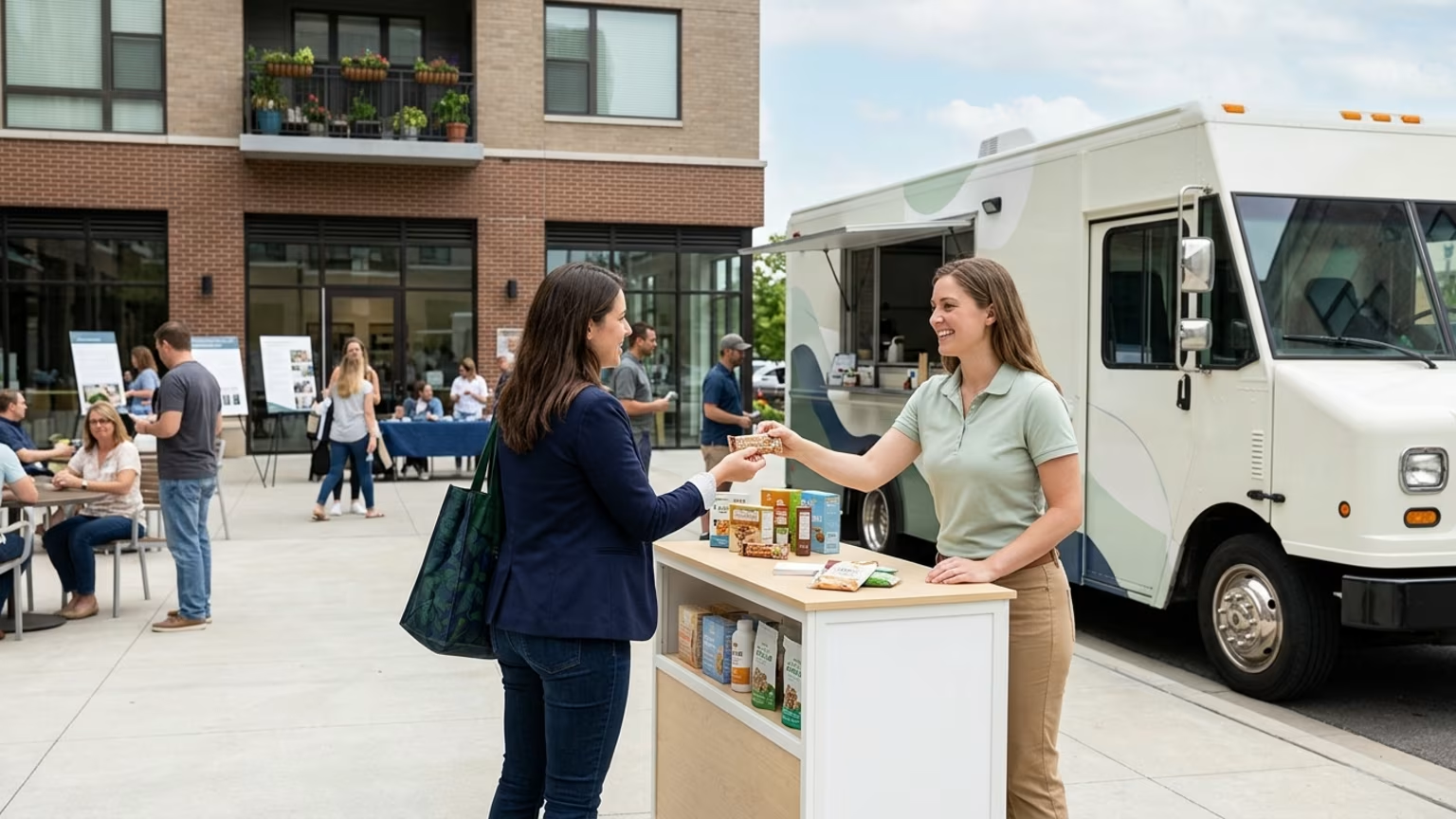
When a snack or beverage company needs to drive measurable consumer trial, deploying a branded sampling asset in an active mixed-use courtyard guarantees immediate access to a qualified target demographic. We consistently design mobile activations and roadshows that accelerate consumer trial, build brand trust and boost retail velocity during critical 90-day product launch windows. This localized approach aligns seamlessly with our disciplined methodology for high-volume field execution. It replaces the unpredictable variables of public street traffic with a secure, highly controlled consumer environment.
Marketing teams planning CPG brands mobile pop-up tours must approach these property agreements with strict operational boundaries. A recurring weekend market can easily generate massive foot traffic without producing any profitable or strategically qualified visitors. We maintain that physical brand activations must turn fleeting public interactions into documented retail pipeline. Securing a premium plaza location is only financially viable if the field marketing team connects that live physical interaction to verifiable downstream sales data.
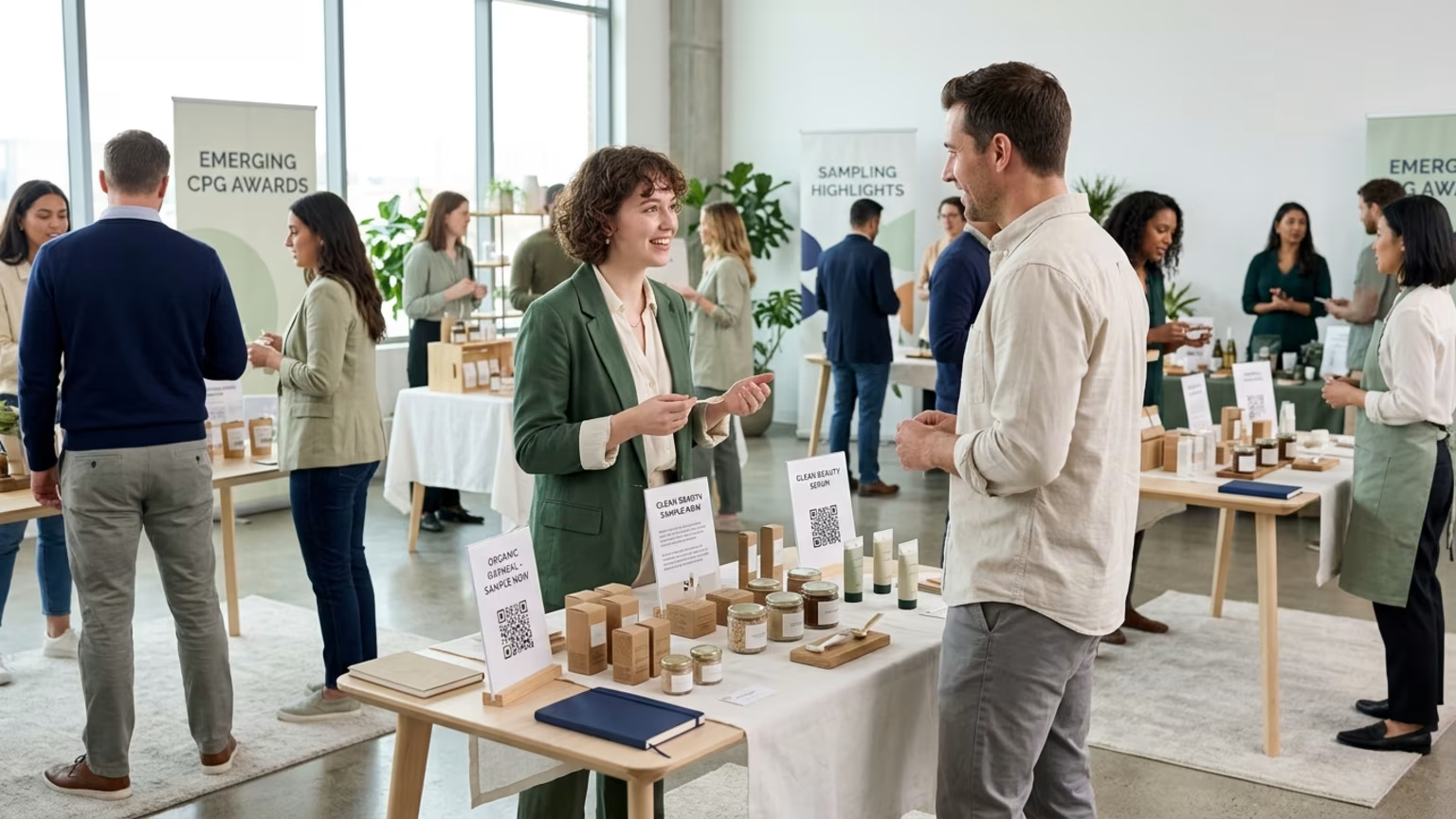
We blend physical and digital experiences by integrating QR codes, mobile technology and real-world activations into a cohesive layer across retail environments. This digital integration ensures that when a brand parks a trailer in a developer's plaza, the consumer immediately connects to a measurable data ecosystem. Upgrading the physical footprint with digital touchpoints turns an ordinary plaza activation into a trackable pipeline generator. It gives brand teams absolute control over how they capture local demand.
In our experience, we ran the Little Debbie Share a Smile Tour as a 21-market mobile activation using a branded truck, a custom trailer and Cupcake Smart Cars. Across the tour, we distributed 224,534 cupcakes and captured 9,500 photos alongside 340 videos. We earned coverage from three local television stations while generating more than 2.4 million brand impressions. Applying this level of nationwide logistical control to urban developer partnerships guarantees that localized pop-ups deliver predictable, massive scale.
Operating inside a partially vacant development radically alters how field marketers plan their logistics. Establishing strict event performance indicators that align field activations with revenue protects the marketing budget. Brand teams must treat the property developer as a true distribution partner and demand clear accountability for utilities and maintenance response. Field operations must shift their entire focus toward proving the actual commercial impact of the activation footprint.
According to the August 2026 experiential marketing guide from CMO Magazine, foot traffic and social mentions alone absolutely do not demonstrate that an activation changed consumer behavior. Leveraging new retail technology for mobile activations ensures that field teams capture clean downstream data. The CMO Magazine guide recommends pairing a control or holdout market with post-event brand-lift research to prove actual commercial value. It strongly advises connecting the live experience to a trackable downstream action like a unique promo code, a loyalty-linked purchase or a QR redemption tied directly to point-of-sale data.
The CMO Magazine guidelines force field marketing directors to completely overhaul their reporting structures. When a brand deploys a mobile sampling tour inside a mixed-use courtyard, the field staff must track exact product distribution numbers against local store inventory. Setting up a formal holdout market requires the brand to monitor a comparable city where the activation does not take place. Comparing the activated property against the clean holdout market reveals the true incremental sales lift generated by the physical footprint.
Connecting the live experience to downstream actions demands rigorous technical preparation before the activation ever launches. Integrating a QR redemption system requires coordinating point-of-sale data with local retailers to ensure every scan registers properly. Tying a physical sampling moment to a loyalty-linked purchase gives the CMO undeniable proof that the physical event drove digital retention. This methodical approach transforms a temporary property lease from a vanity marketing expense into a highly accountable sales channel with a proven Return on Investment.
Will your next temporary urban activation capture trackable downstream purchase data, or will it simply settle for unqualified weekend foot traffic?
Marketing directors programming vacant mixed-use developments for temporary pop-up spaces need total command over their data collection to validate the physical footprint. When brands face low quality leads from crowded trade shows, Makai implements strict measurement protocols to secure trackable pipeline. Under our Experiential Marketing capability, we create hands on brand moments that connect emotionally and turn customers into ambassadors. Request a proposal

30 Years Experiential & Retail Activation Partner for CPG & Beverage Brands | Multi-Market Demos, Roadshows & Costco/Club Programs That Actually Sell