Robbie Thain
Founder, CEO

Stop losing leads to setup failures. See how field marketing teams integrate event logistics into supply chain planning for flawless on-site execution.
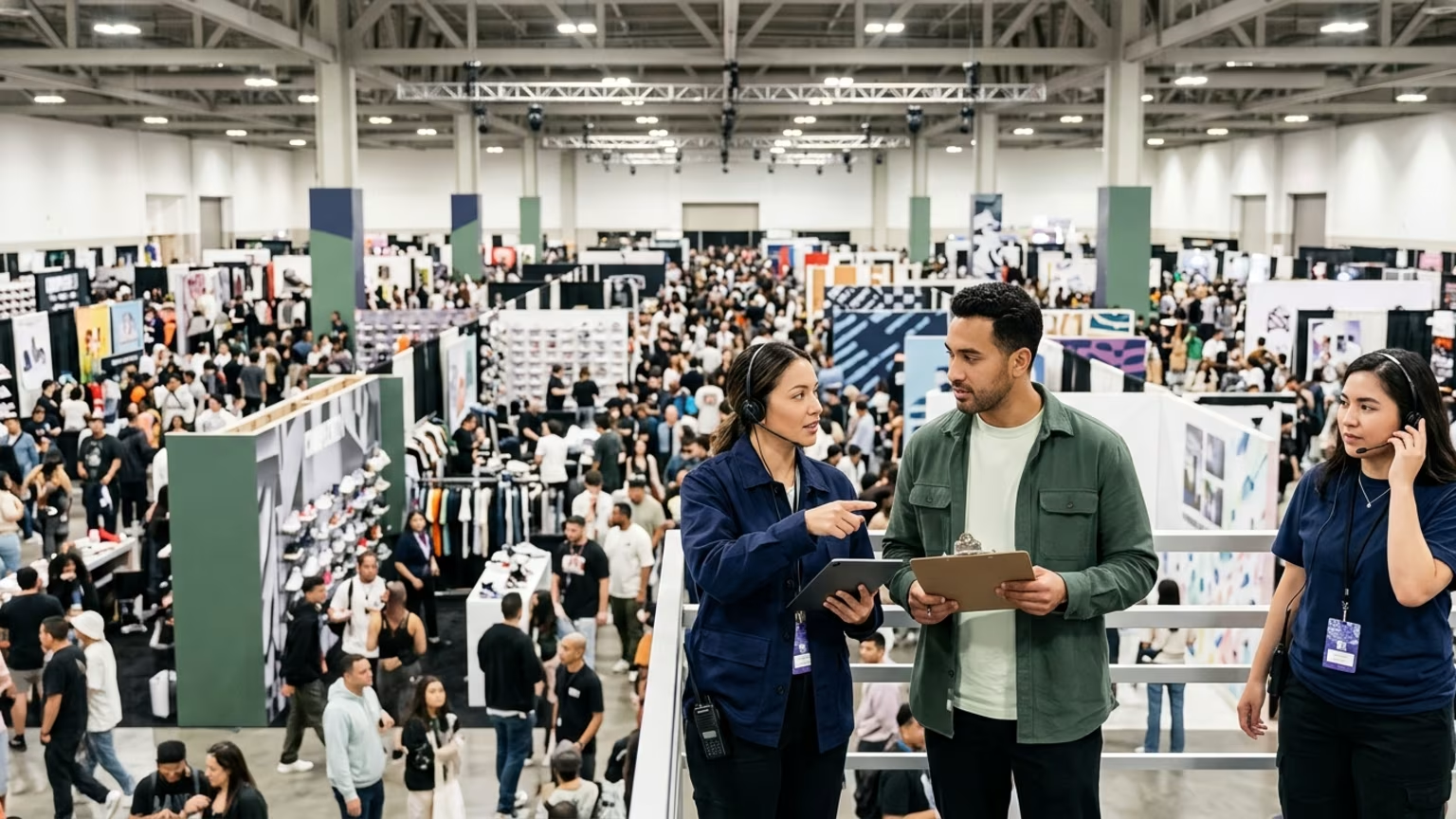
Experiential marketing is shifting from reactive coordination to a highly disciplined supply chain operation. By integrating event assets into your core supply network, field marketing teams can eliminate on-site failures and guarantee reliable brand execution.
The trade show doors open in two hours, but your primary sampling booth is missing its core display units. A freight carrier dropped your pallets at the wrong loading dock across the convention center. Your promotional inventory is stuck in transit, leaving your brand ambassadors with empty tables and nothing to sample. This is a common nightmare for operators who treat live events as isolated projects.
The financial cost of these logistical errors adds up quickly for major brands. Paying emergency freight charges to rush a replacement pallet destroys your activation budget. Brand ambassadors standing idle still charge their hourly rate regardless of whether the product arrives. Retail partners lose faith in your marketing commitments when pop-up events look disorganized.
When field marketing teams ignore logistics, they inevitably face frantic mornings filled with missing shipments and damaged displays. Relying on sheer willpower to fix shipping errors often ruins the actual consumer experience. The real problem is a lack of operational discipline. Event materials are critical inventory that require precise tracking, forecasting, and fulfillment.
Many brand directors assume that high logistical costs are just the standard price of doing business in field marketing. They accept frequent on-site failures as an unavoidable byproduct of working in live environments. This mindset traps entire marketing departments in a perpetual cycle of stress and budget overruns. The true root cause is always a disconnected operational strategy.
Large brands are increasingly treating event logistics as a core supply chain function to improve visibility and on-site reliability. They view pop-up kits and sampling materials as distributed inventory rather than isolated marketing swag. According to Jabil supply chain resilience guidance, companies must define a sourcing strategy linked to supply chain risks. This strategic shift connects high-level planning directly with ground-level execution.
Industry analysts report that modern supply networks face constant volatility from transportation constraints and labor shortages. A reactive approach to event logistics guarantees higher failure rates when geopolitical or trade disruptions occur. Supply chain leaders are urging brands to unify their demand signals and supply data. This discipline forces marketing teams to plan their activations with the same rigor used for retail product distribution.
Historically most marketing teams treated each trade show as a unique event with its own dedicated shipping plan. This siloed method prevents teams from sharing excess materials across different regional activations. Adopting a supply chain mindset forces organizations to look at the entire event calendar holistically. Planners can pool resources and stage regional inventory hubs to service multiple tour stops efficiently.
Integrating event logistics into enterprise supply chain planning also improves internal corporate alignment. Marketing teams traditionally operate in a silo away from procurement and transportation departments. Breaking down these walls allows event managers to utilize existing corporate freight discounts and vetted carrier networks. Your field activations benefit immediately from the massive operational scale already built by your retail distribution team.
Current guidance from supply chain experts emphasizes the need for continuous data visibility. Field marketing platforms must integrate directly with warehouse management systems to track assets in real time. This technical alignment eliminates the guesswork that usually plagues the final days before a major event. Teams gain the ability to spot delays early and deploy backup materials before the venue even opens.
The main operational benefit of this integration is a dramatic reduction in on-site failures. Better forecasting leads to fewer missed deliveries, improved venue readiness, and more consistent execution across regional markets. Brands that invest in mastering event logistics can confidently scale their experiential programs without fearing constant setup disasters. A true network-based planning model treats tour stop replenishment as a predictable math equation.
Moving from project-based coordination to a network-based model requires structural changes in how teams plan activations. Field marketing leaders must build systems that anticipate errors, buffer stockouts, and standardize setups. You can protect your pipeline by following a strict operational playbook for every activation.
These steps shift an organization from reactive problem-solving to planned exception management. A well-planned logistics network provides peace of mind for the entire marketing department. Proper execution means your physical brand presence arrives safely, on time, and fully ready for action.
A rigid supply chain strategy actually creates more room for creative freedom on the floor. Your design teams can focus entirely on consumer engagement instead of chasing missing freight trucks. Standardized operations give brand directors the confidence to launch multiple regional campaigns simultaneously. Predictable logistics ultimately become a competitive advantage in crowded trade show environments.
Measuring the true success of an activation requires tracking the operational data that makes the event possible. Brands must establish clear lead indicators to monitor the health of their logistics network before the event begins. On-time-in-full delivery rates tell you exactly how reliably your freight carriers perform across different regions. Setup completion rates track whether your field teams actually have the time and materials to build the booth properly.
Lag metrics then reveal how those operational successes translate into financial wins. You must measure lead-generation volume, sales lift in adjacent retail stores, and total consumer trials. When logistics fail, the cost of that failure directly damages your Return on Investment. On-site misses undermine retailer confidence, waste expensive sponsorship fees, and drastically lower your conversion rates.
Tying these data points together gives marketing leaders a complete picture of event performance. A high setup completion rate usually correlates directly with increased consumer dwell time and higher product sampling numbers. You can only prove your value when your distributed inventory networks perform exactly as designed.
Retail buyer feedback serves as another powerful lag metric for field marketing success. Store managers actively monitor how professionally a brand executes an in-store demo or parking lot roadshow. Flawless execution proves to the retailer that your company can support expanded shelf space. Tracking these qualitative wins alongside hard sales data validates the expense of upgraded logistics.
Many organizations fail to track the hidden costs associated with poor event logistics. Expedited shipping fees and last-minute material printing often get buried in generic promotional budgets. Isolating these exact expenses provides a clear financial incentive to adopt network-based planning. When you reduce emergency operational spending, you can reinvest those dollars directly into better consumer engagement strategies.
We always recommend integrating your event reporting directly into the main corporate CRM system. Field ambassadors should log setup completion times and inventory counts alongside consumer lead capture data. This unified reporting structure gives senior leadership absolute transparency into the performance of every campaign stop. Data-driven organizations use these insights to continuously refine their regional logistics models.
We have executed over 1000 campaigns across all 50 states, bringing brands to life in every major U.S. market. From retail demos in Seattle to roadshows in Miami and events in Honolulu, our teams activate brands wherever our clients' audiences are located. This national footprint taught us that relying on ad-hoc logistics is a massive liability.
A recent national beverage roadshow required our teams to manage complex refrigerated sampling units across twenty different markets. The beverage client initially struggled with frequent stockouts at their most popular event stops. Their legacy agency used a fragmented shipping model that relied entirely on individual truck drivers hitting exact delivery windows. We completely overhauled this system by treating the roadshow route as a continuous supply chain loop.
Our planners established regional cross-docking stations that fed fresh inventory to the mobile teams every three days. This operational pivot completely eliminated product shortages during peak sampling hours. The field staff spent their energy engaging thirsty consumers instead of making desperate calls to freight dispatchers. Consistent product availability translated into a measurable spike in grocery channel sales surrounding each event location.
True experiential success always requires matching high-impact creativity with operator-grade execution. Every successful CPG activation requires this exact blend of creative energy and operational discipline. The brands winning in physical environments are those whose displays and teams reliably arrive in the right condition. If you want to stop losing leads to setup failures, you need to upgrade your execution strategy today. Book a strategy call to align your experiential marketing with enterprise-grade logistics.

30 Years Experiential & Retail Activation Partner for CPG & Beverage Brands | Multi-Market Demos, Roadshows & Costco/Club Programs That Actually Sell